10 Small Living Room Ideas for Keeping a Pet Bed Out of the Walkway
A pet bed can fit into a small living room when it uses the quiet edges of the existing seating layout instead of claiming the path between the sofa, door, and television. These ideas pair a defined resting spot with nearby pet essentials while leaving ventilation, cleaning access, and everyday movement clear.
As an Amazon Associate I earn from qualifying purchases.
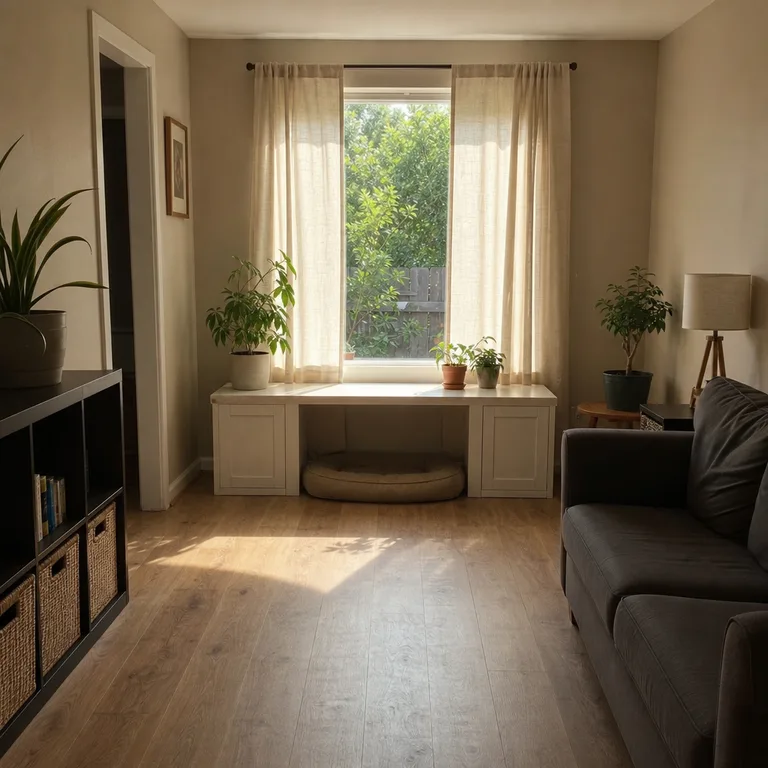
1.Slide a Low Bed Under the Sofa’s Open Front Edge
A raised sofa can hide a thin pet mat or low bolster bed beneath its front edge. This keeps the pet close to the seating area without putting the bed in the route between the sofa and coffee table.
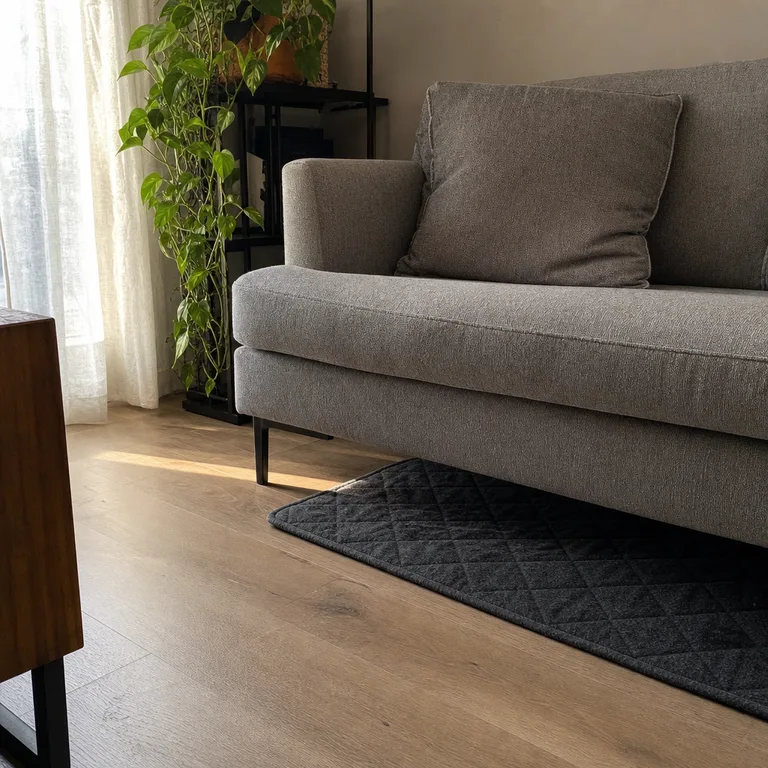
Choose a fully washable bed with a non-slip base, and check that the pet can enter, turn, and lie down comfortably. Furniture risers can add clearance, but they need to be stable and should not make the sofa feel unsafe.
Worth knowing: This only works with a sofa that has genuinely open, well-ventilated space underneath; a low or skirted sofa will make the bed cramped and harder to clean around.
Related: 10 Coffee Table Alternatives That Make a Small Living Room Easier to Use
2.Place a Round Bed in the Corner Beside the Sofa Arm
The corner beside a sofa arm is often too small for another chair but works well for a round pet bed. Its curved shape softens the corner and avoids sharp bed corners sticking into the room.
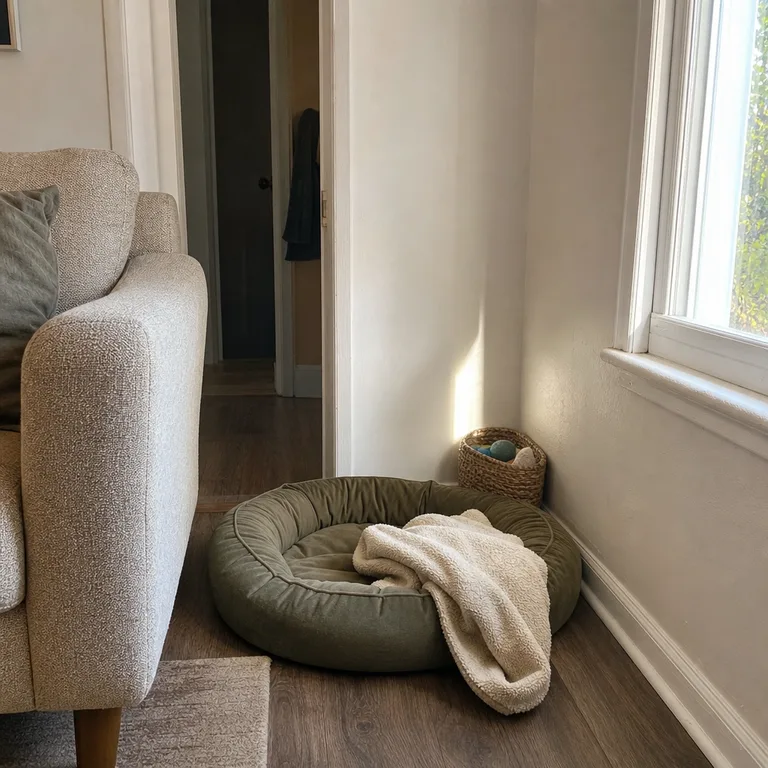
Keep a small handled basket nearby for a brush, a few toys, and a folded blanket. A washable cover is useful here because this spot can collect dust and fur along the baseboard.
Worth knowing: A corner near an exterior wall may be drafty or cold, so it may not be a comfortable resting place in every climate.
3.Use the Space Behind a Floating Chaise Section
A chaise section that sits slightly away from the wall can create a sheltered spot for a rectangular pet cushion behind it. The sofa forms a visual boundary, so the bed feels intentional rather than left in the middle of the room.
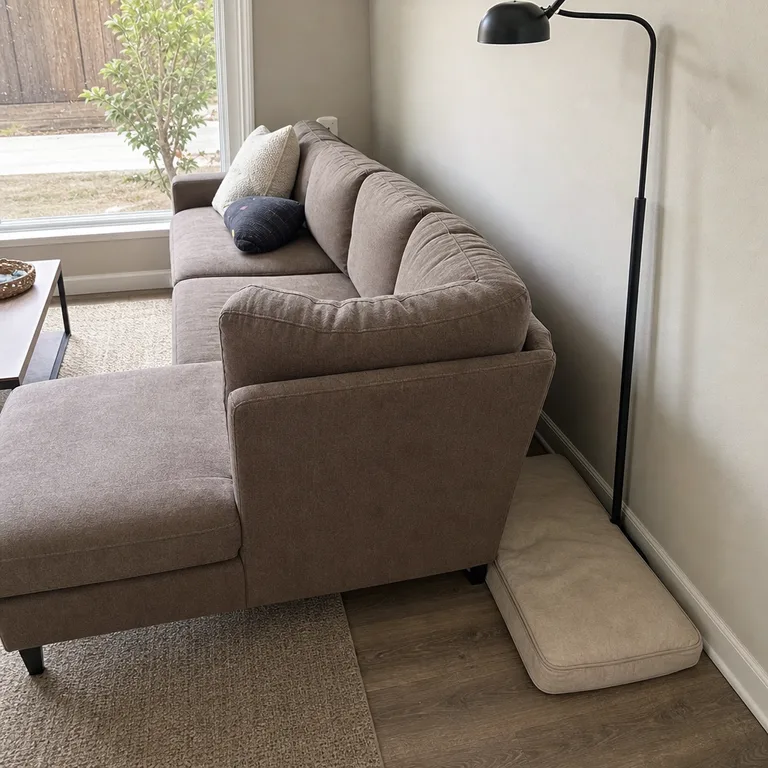
Only use this gap if nobody needs it to reach a window, outlet, or curtain. A slim lidded bin or small cart can hold supplies nearby without turning the narrow space into clutter.
Worth knowing: This arrangement is unsuitable if the gap is part of the room’s circulation route or if cords and outlets behind the sofa need regular access.
Related: 12 Small Living Room Layout Ideas That Leave Room to Walk
4.Tuck a Crate-Style Bed Under a Console Table
A narrow console table can do double duty when its open lower section holds an open-front crate-style bed. The tabletop still supports a lamp or daily drop-zone items, while the pet gets a sheltered place along the wall.
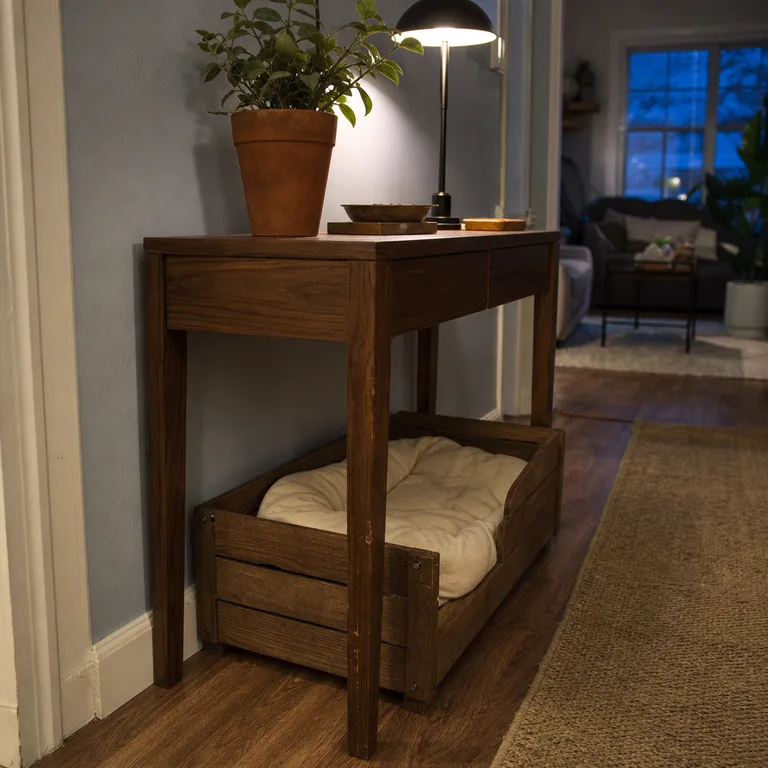
Use a bed with an open entrance and breathable sides rather than closing a pet inside furniture. Choose a machine-washable pad, and leave enough space around it to remove the bed for cleaning.
Worth knowing: A console in a narrow entry passage can become a collision point, so this setup needs a clear route around both the table and the bed.
5.Build a Window Seat Nook Along One Wall
An open window bench can create a useful pet nook below the seat, putting a cushion on a wall that is already serving a purpose. It keeps the floor center open and can make a plain wall feel more finished.
A simple low bench or an existing open storage unit can achieve a similar effect without custom work. Position the cushion away from direct radiator heat, strong sun, and cold drafts, then use a removable cover for easy washing.
Worth knowing: Pets that react strongly to outdoor activity may not settle well beneath a busy window.
6.Give One End of a Media Wall to Pet Supplies
Reserve the open space at one end of a low media cabinet for a small bed, rather than filling every inch with decor. This makes a resting spot feel connected to the room’s main furniture and keeps it out of the central floor area.
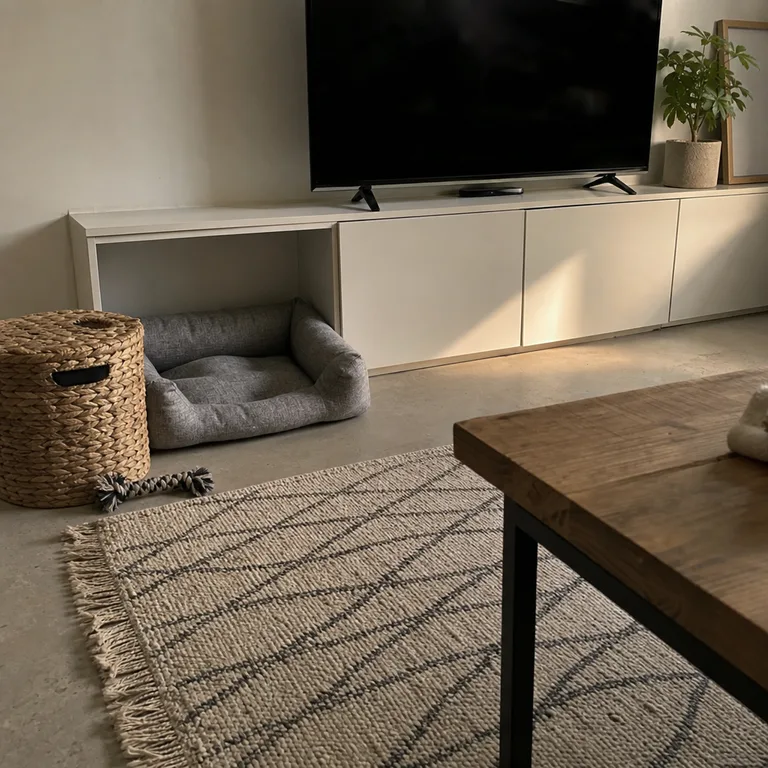
Use one closed bin, basket, or drawer for toys, wipes, and leashes. Closed storage helps shared living rooms look calmer, especially when pet supplies would otherwise collect around the sofa.
Worth knowing: Keep beds and supplies clear of hot electronics, dangling cables, and cabinet doors that need room to swing open.
7.Set a Bed Under the Side Table at the Sofa End
A sturdy open-leg side table at the sofa end can frame a small donut bed or flat cushion beneath it. The table defines the pet’s place without narrowing the main passage in front of the sofa.
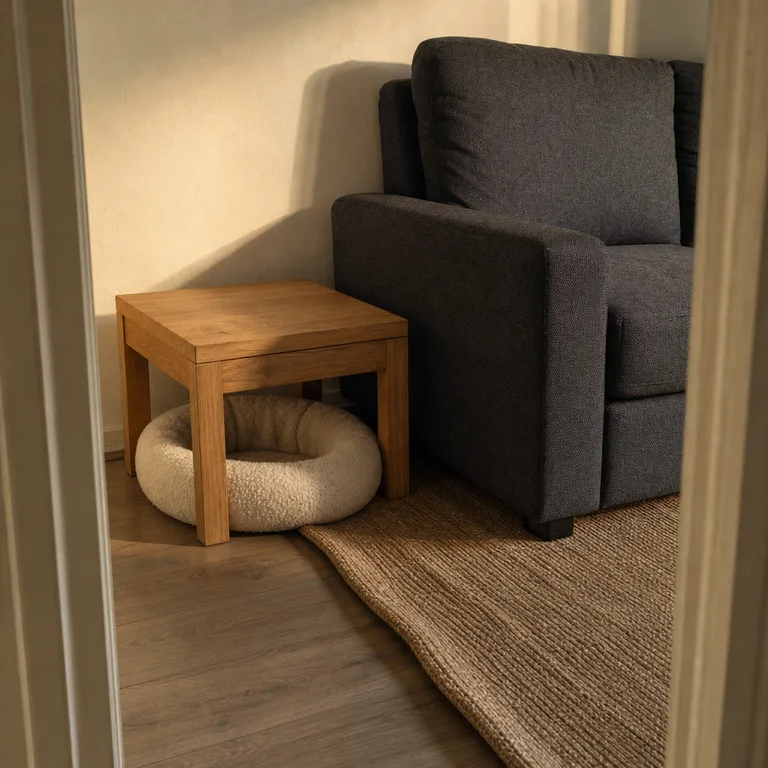
Pick a table with a broad, stable base and enough open space for the pet to turn around. A small tray on top can hold remotes, while a washable mat below helps keep the floor cleaner.
Worth knowing: This is not a good fit for a heavy, playful pet that could bump or shift a lightweight side table.
Related: 12 Small Living Room Seating Ideas Beyond a Second Sofa
8.Make a Defined Pet Zone Beside a Bookcase
The end of a shallow bookcase often leaves a quiet strip of wall that is too narrow for seating but useful for a flat pet bed. Adding a narrow washable runner beneath it visually marks the zone and protects rental flooring.
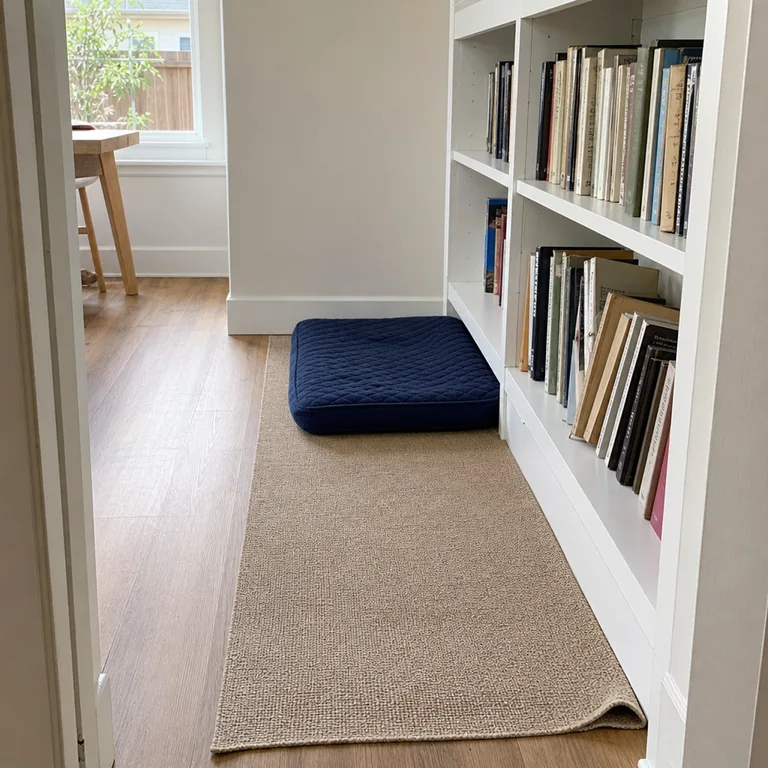
Store a lint roller, spare cover, or small toy basket on a lower shelf if the pet cannot reach and chew the contents. Keep the runner flat with a non-slip layer so it does not bunch under paws.
Worth knowing: A bookcase beside a busy hall or doorway will still leave the pet exposed to foot traffic, even if the bed itself is against the wall.
9.Use a Storage Ottoman as the Boundary for a Bed
Place a low pet bed against the back or side of a storage ottoman to separate it from the walking lane. The ottoman creates a clear edge while still working as a footrest, tray surface, or extra seat when needed.
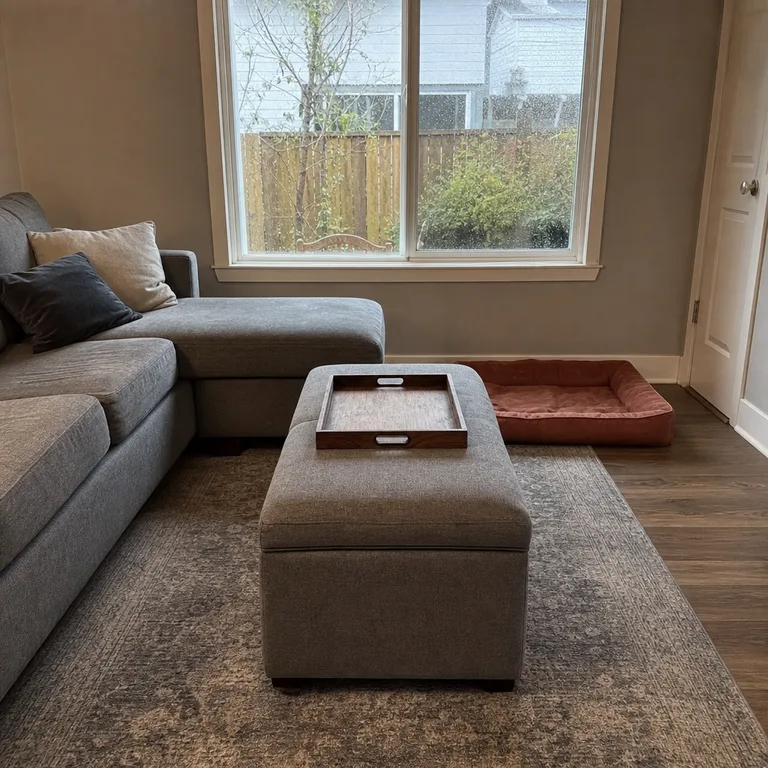
Use the interior for grooming tools, spare bed covers, or toys that do not need to stay out. This approach is cheaper than adding another piece of furniture because the ottoman already earns its place in the layout.
Worth knowing: The bed needs enough clearance behind the ottoman for the pet to enter easily, so it will not suit a tightly packed seating arrangement.
10.Place a Bed Along the Inside Edge of an Area Rug
Set a flat pet bed along the rug’s inside edge beside the loveseat or sofa, rather than placing it by the doorway. The rug helps the bed look connected to the seating group while preserving the clear entry route.
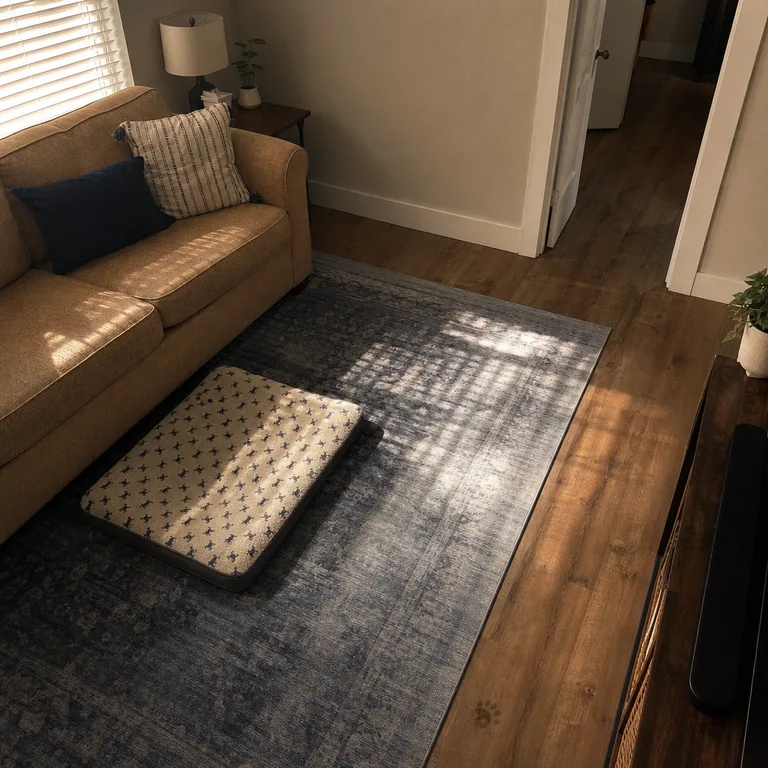
Choose a bed with a grippy underside or add a non-slip pad below it. A low-profile style is easiest to step around and is less likely to become a tripping hazard in a compact room.
Worth knowing: A pet bed placed on a pale or high-pile rug may make fur, spills, and frequent vacuuming more noticeable.
About the author
Dana Ruiz, Senior editor
Dana writes about small-space living, storage and low-cost decorating.
Keep reading
10 Small Entryway Ideas for Coats When You Have No Coat Closet
October 5, 2026
10 Pedestal Sink Ideas for Bathrooms With Almost No Counter Space
October 4, 2026
10 Budget Headboard Ideas That Work With a Basic Bed Frame
October 6, 2026
10 Budget Bedroom Rug Ideas for Rooms With Existing Carpet
October 6, 2026