10 Cottage-Style Patio Ideas You Can Build Around What You Own
A cottage-style patio does not require new paving or a fixed garden plan; it comes together through layered seating, useful containers, soft textiles, and materials that look at home beside an ordinary house. These movable details can be adjusted for changing seasons, rental rules, sunlight, and the furniture already on hand.
1.Soften Existing Chairs With Mismatched Outdoor Cushions
Give the chairs already on the patio a less rigid look with seat cushions and a small mix of striped, checked, floral, or plain pillow covers. The slight mismatch is useful here: it makes metal, plastic, or aging wood chairs feel collected rather than like a matching set.
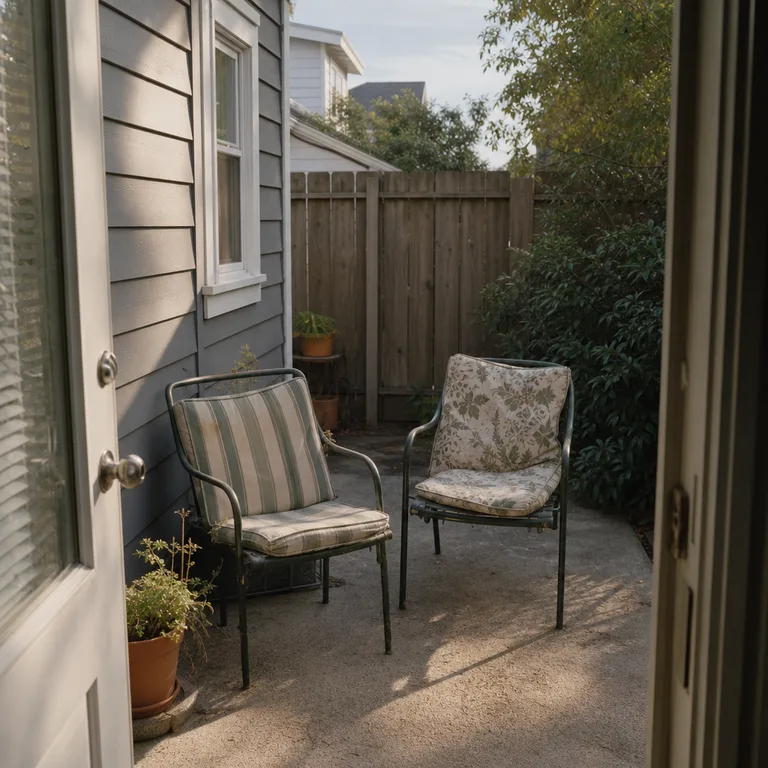
Use weather-suitable fabrics and keep the palette tied together with a repeated color, such as faded blue, soft green, or warm red. Bring loose cushions in during prolonged rain and store them at the end of the outdoor season so damp padding does not become a maintenance problem.
Worth knowing: Soft furnishings need regular drying and storage in wet climates, and they may not be practical where wind frequently blows through the patio.
Related: 12 Small Patio Seating Ideas on a Budget
2.Group Ordinary Pots Into a Loose Cottage Border
Line up existing containers along one patio edge, leaving a few uneven gaps rather than making a formal row. Combine low leafy plants, fuller flowering pots, and one or two taller containers so the group reads like a relaxed border viewed from the seating area.
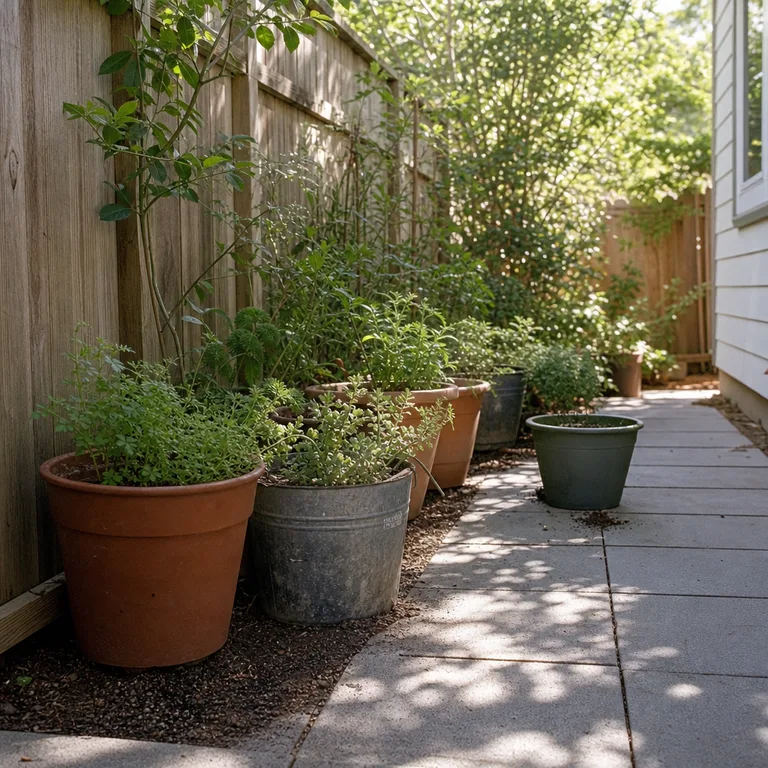
Reuse pots in different materials and heights, even if some are plain plastic placed behind more visible terracotta or ceramic pieces. Choose plants for the actual sun, wind, and watering conditions at that edge of the patio; a shaded fence line needs different plants than a hot, exposed slab.
Worth knowing: Container groups need more frequent watering than in-ground beds, especially on patios that reflect heat.
Related: 12 Container Garden Ideas for a Small Patio on a Budget
3.Use a Small Table as a Garden Work Surface
Turn a side table, stool, or compact bistro table into a useful focal point instead of treating it as decoration alone. A tray for drinks, a small planted pot, and a lantern or candleholder create the layered, lived-in feeling associated with cottage gardens.
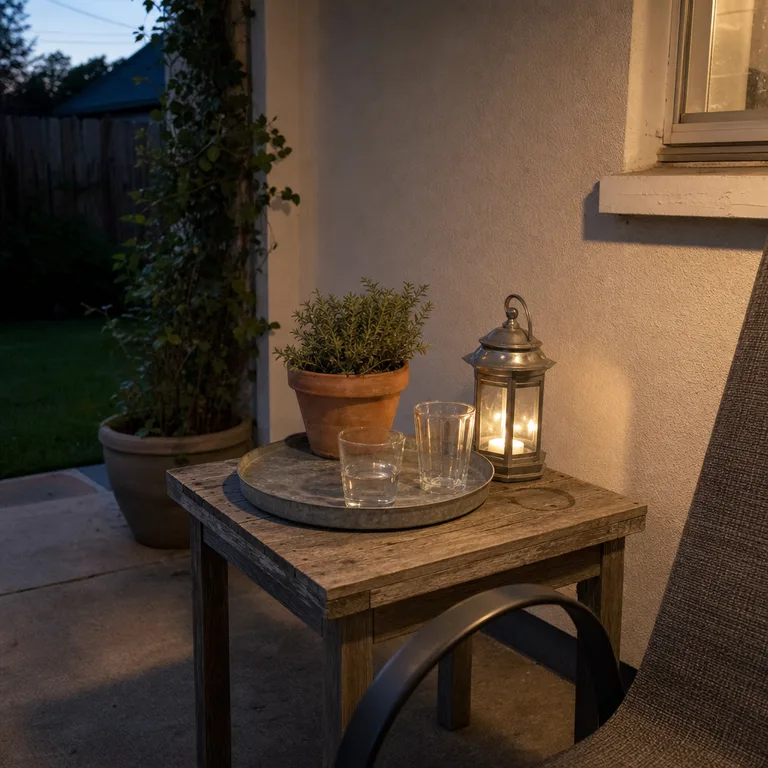
Use what is already available, but select a tabletop that can tolerate splashes and outdoor humidity. A simple tray also makes the arrangement easy to clear when the table is needed for coffee, a book, or potting a small plant.
Worth knowing: Unsealed wood and indoor furniture can deteriorate quickly if left exposed to repeated rain.
Related: 10 Small Patio Dining Ideas Without a Big Furniture Set
4.Lay a Washable Rug Under the Seating Area
Place an outdoor-rated or easily washable rug under a pair of chairs and a small table to make a bare patio feel like a defined room. A faded floral, narrow stripe, or muted geometric pattern can add softness without competing with containers and foliage.
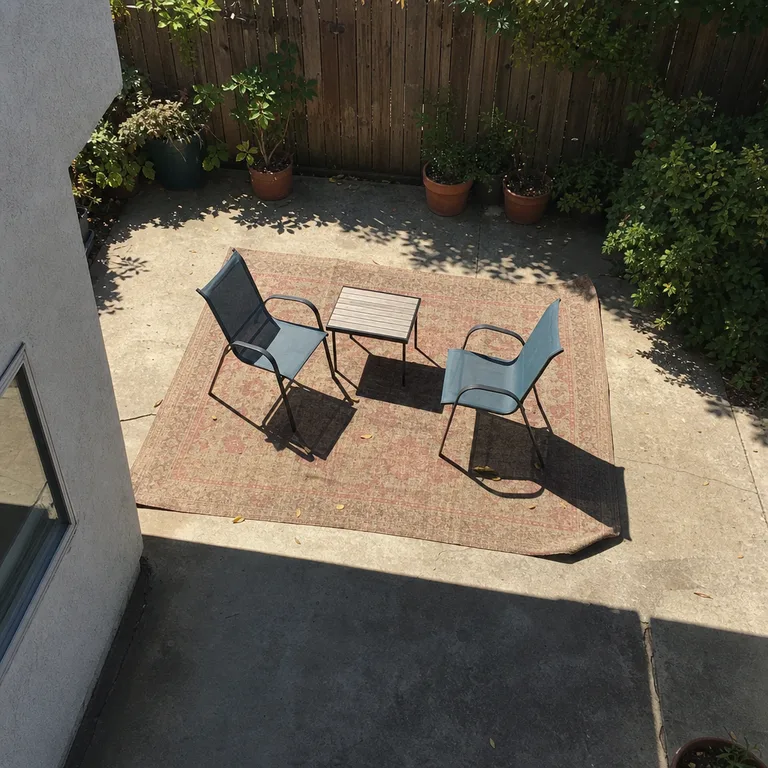
Choose a rug that leaves a clear path to the door and does not cover the entire surface. On patios with slow drainage, lift it to dry after rain and sweep underneath it regularly so moisture and debris do not collect against the concrete or decking.
Worth knowing: A rug is not a good fit for a patio that stays damp, floods, or has little chance to dry between storms.
5.Create Height With Freestanding Plant Supports
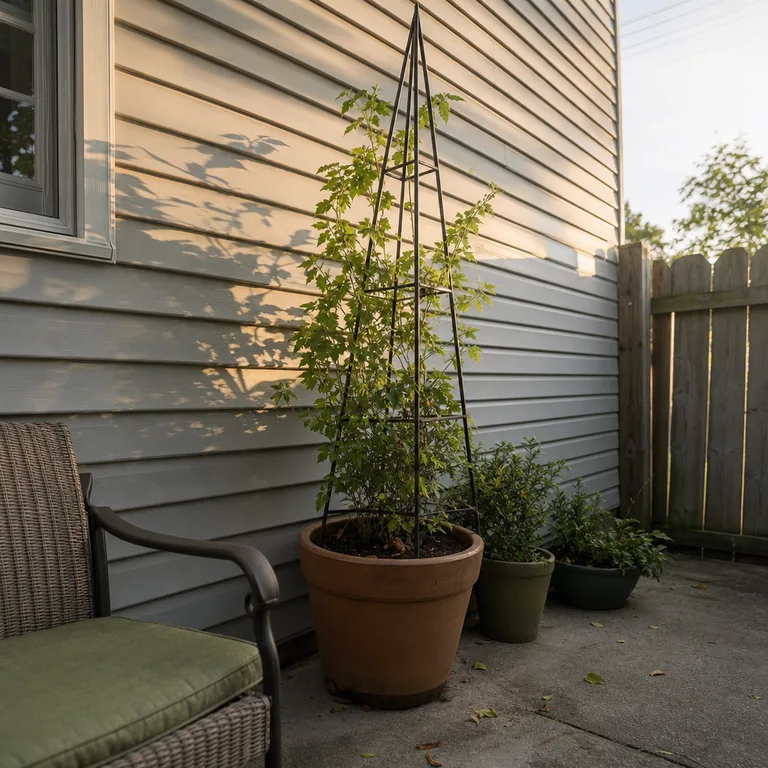
Add vertical shape with a pot-based trellis, obelisk, or plant stand placed among lower containers. This draws the eye upward and gives a small patio the layered silhouette of a cottage garden without building a permanent feature.
Keep the support freestanding rather than attaching plants to siding or fencing. Use a sturdy pot and select a plant suited to the local climate and available light, then position it where mature growth will not block a walkway or brush against the house.
Worth knowing: Tall supports can tip in strong wind unless the container is stable and weighted appropriately.
6.Mix One Painted Piece Into Weathered Furniture
Use one painted stool, small table, or plant stand among plainer outdoor furniture to break up an overly matched arrangement. A subdued painted finish can make weathered wood, old metal, and terracotta pots look intentional together.
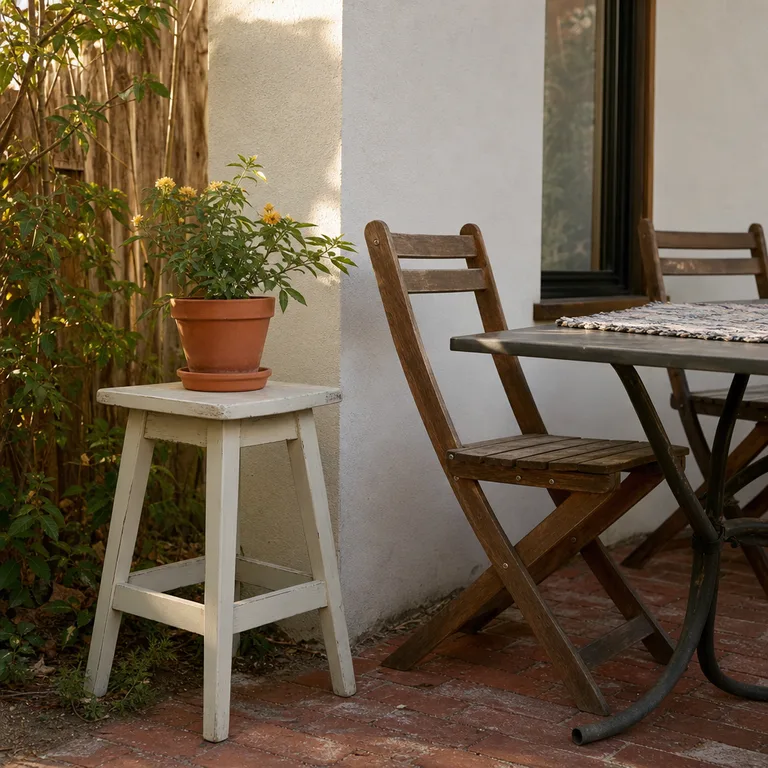
Refresh a piece already on hand rather than painting every item on the patio. Clean loose or peeling paint first, use a finish suitable for exterior exposure, and place the piece where it can act as a plant stand or an extra landing spot beside a chair.
Worth knowing: Painted surfaces in full sun or frequent rain will need touch-ups over time.
7.Hang Light From Portable Lanterns and Clip-On Fixtures
Set rechargeable lanterns, battery candles, or removable clip-on lights around the seating area for gentle evening light. Small pools of light on a tabletop, step, or plant stand feel warmer than one harsh overhead fixture and can move with the patio layout.
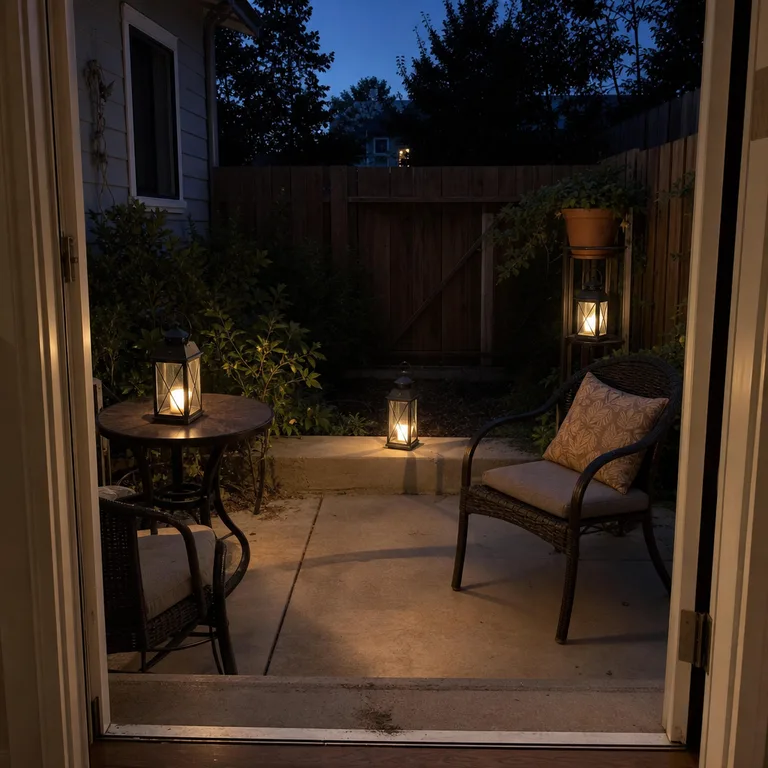
Keep lighting simple and portable so it suits rental homes and changing seasons. Use outdoor-rated items where exposure is likely, protect charging connections from rain, and avoid running cords across a walking route.
Worth knowing: Portable lights need recharging or battery changes, and they will not replace bright task lighting for cooking or detailed garden work.
8.Bring in a Movable Bench for Flexible Seating
A narrow bench adds casual seating without committing the patio to a large furniture set. It can hold guests for a short visit, carry a row of pots, or slide against a wall as a side surface when more open floor space is needed.
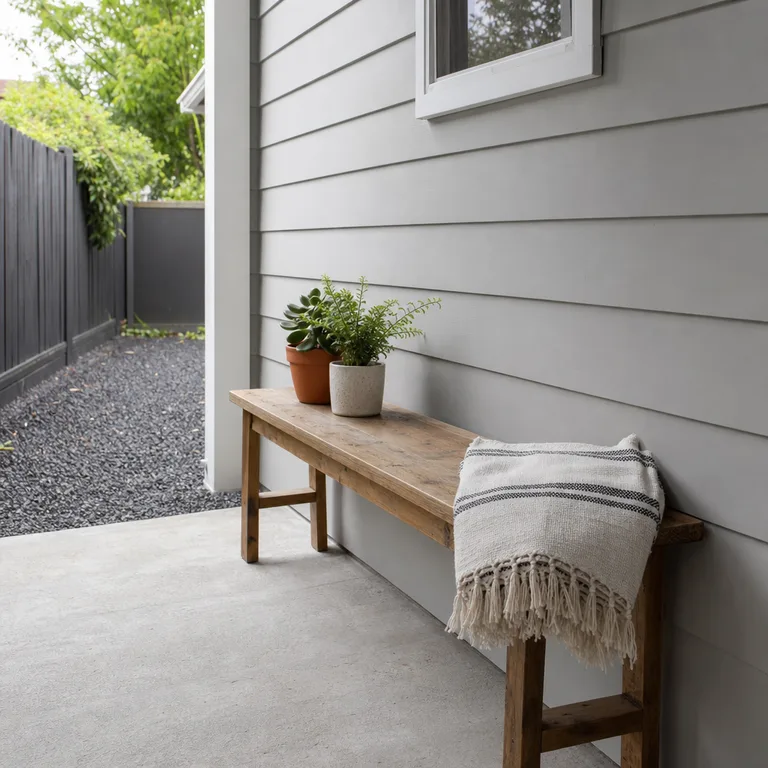
Look for a simple bench with a depth that suits the patio passage and leave door clearance fully open. Place it where it will not interrupt a drainage path, and use a folded outdoor throw only when conditions are dry enough for fabric to air out afterward.
Worth knowing: A bench can make a narrow patio feel crowded if it blocks the main route between the door and yard.
9.Add a Small Birdbath or Bowl as a Garden Accent
Place a shallow bowl, glazed saucer, or compact birdbath among patio containers for a traditional garden focal point. Water catches light, breaks up a dense cluster of leaves, and gives the patio a small detail that feels at home with cottage-style planting.
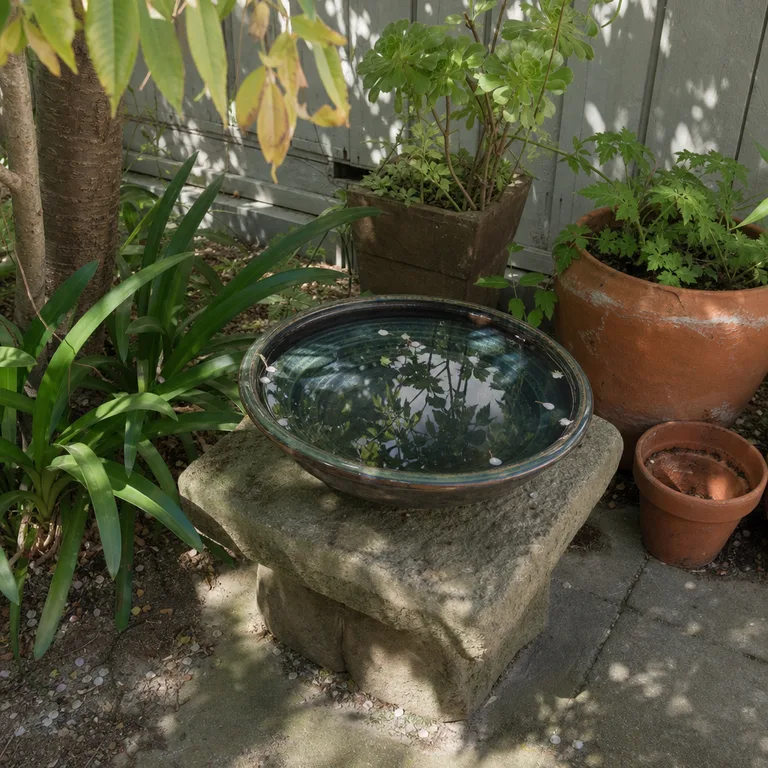
Choose a spot that is easy to reach for rinsing and refilling, preferably away from the heaviest leaf drop. A stable low pedestal or level surface matters, especially where children, pets, or gusty weather could knock over a shallow bowl.
Worth knowing: Standing water requires frequent cleaning and may attract insects if it is neglected.
10.Finish With a Basket for Everyday Garden Gear
Keep a handled basket or open crate near the seating area for gardening gloves, a hand trowel, a folded throw, or simple outdoor games. This adds useful texture while stopping small items from collecting across the patio table and chairs.
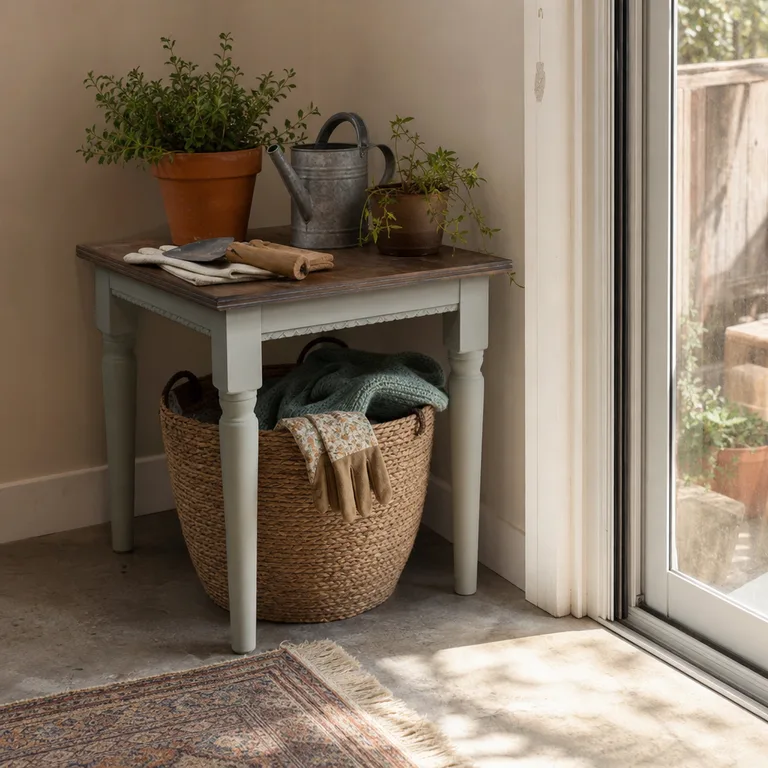
Choose a piece that can be carried indoors when wet weather is expected. A weathered crate, coated metal bin, or basket used under cover can work well; natural fiber baskets last longer when they are kept off damp concrete and out of repeated rain.
Worth knowing: Natural woven baskets are best treated as temporary outdoor accessories because moisture can cause staining, mildew, or weakening.
About the author
Dana Ruiz, Senior editor
Dana writes about small-space living, storage and low-cost decorating.
Keep reading
10 Shade Garden Ideas for a Small Yard on a Budget
September 22, 2026
10 Small-Space Game Night Ideas Without a Dedicated Game Room
September 23, 2026
12 Small Living Room Seating Ideas Beyond a Second Sofa
September 21, 2026
10 Small Laundry Nook Ideas for Homes Without a Laundry Room
September 21, 2026