10 Budget Garden Trellis Ideas for a Small Growing Space
Small trellises, cages, and wall supports can open up vertical growing space on a patio, balcony, or narrow border without crowding the ground. The best choice depends on a plant’s mature weight, how much wind reaches the spot, available sun, and whether the support can stand alone rather than attach to a neighbor’s structure.
As an Amazon Associate I earn from qualifying purchases.
1.Bamboo Teepee for Lightweight Annual Vines
A bamboo teepee is a simple support for sweet peas, compact pole beans, and other light annual vines. Set several canes in a circle, push them firmly into the soil, and tie the tops together with jute twine.
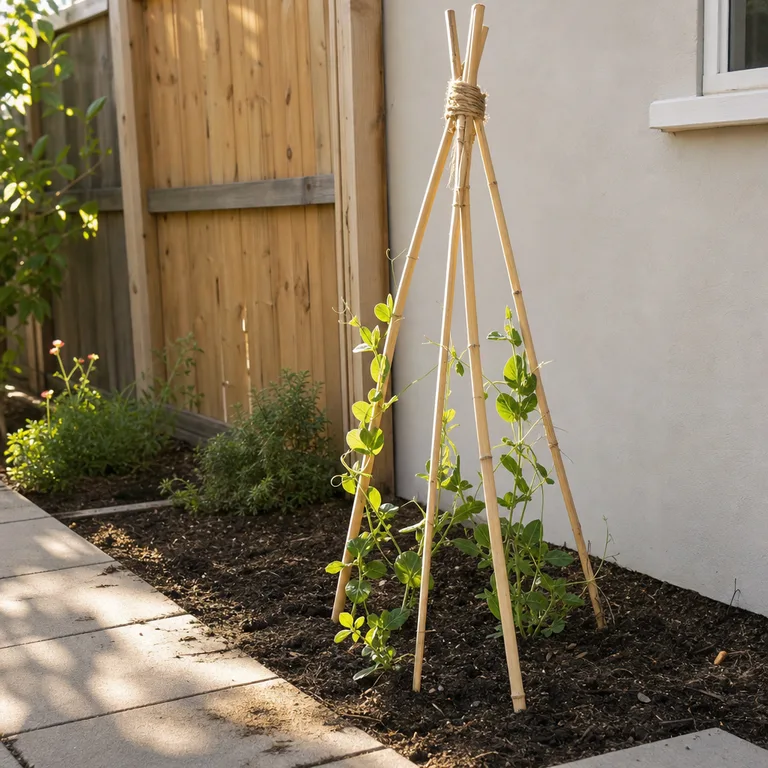
The shape gives young plants several routes upward while keeping the planting area compact. It also makes harvesting easier than a dense wall of foliage, especially when the teepee is kept low enough to reach comfortably.
Use plain bamboo stakes and garden twine rather than a prebuilt support. In windy spots, sink the legs more deeply and add a lower twine ring to stop the canes from spreading apart.
Worth knowing: A bamboo teepee is not dependable for heavy squash, large perennial vines, or plants that become top-heavy in exposed wind.
Related: 12 Container Garden Ideas for a Small Patio on a Budget
2.Folding A-Frame Trellis for Beans and Peas
A folding A-frame gives peas or beans two climbing faces without taking up much bed width. Plant along both sides, then guide the first shoots toward the slats or netting.
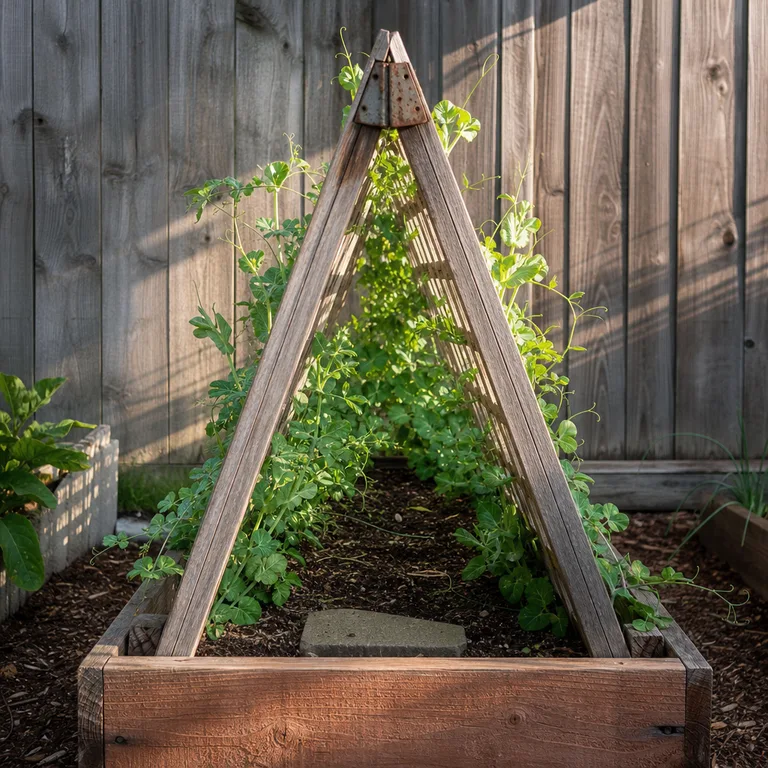
The open center improves access for watering and picking, and the frame can be folded away between seasons. It is useful in narrow raised beds where a flat trellis would shade the planting space behind it.
A basic wooden frame can be made from exterior-suitable slats, or a simple folding model can be reused each year. Check the hinges, feet, and any added netting after strong weather so the frame does not shift as plants fill in.
Worth knowing: An A-frame needs enough room on both sides for planting and will not suit a bed that is only accessible from one direction.
Related: 15 Budget Landscaping Ideas That Make a Small Yard Feel Finished
3.Cattle Panel Arch for a Productive Pathway
A cattle panel bent into an arch can support heavier crops, including indeterminate tomatoes and some smaller-fruited squash. Anchor both ends securely in sturdy beds or with suitable posts before planting.
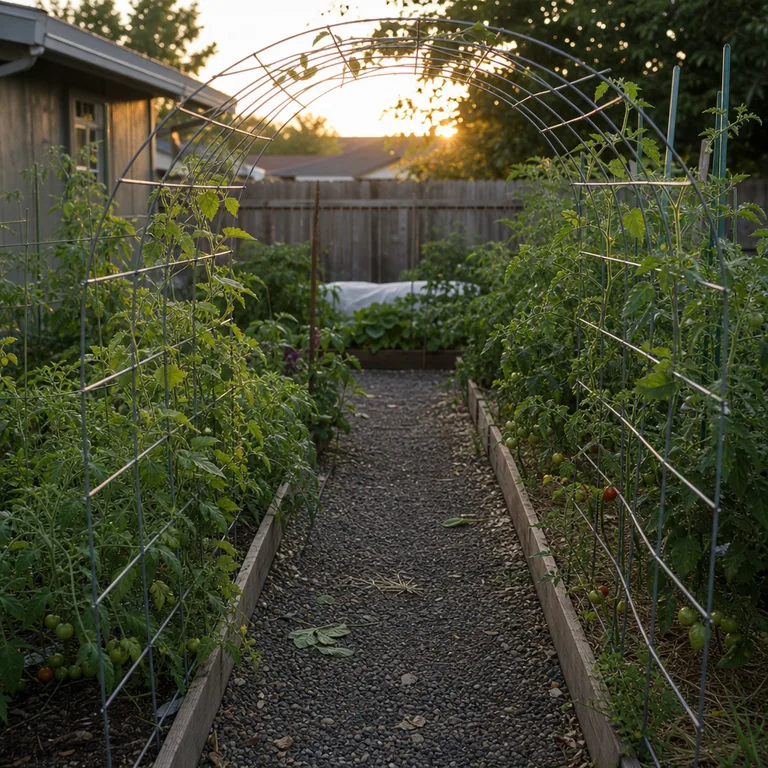
An arch turns the path itself into growing space, letting vines climb overhead while the ground below stays open. It also separates two small beds without adding a solid visual barrier.
Use a short section of rigid livestock panel rather than lightweight wire fencing. Leave a clear path beneath it for watering, carrying a harvest basket, and reaching plants on both sides.
Worth knowing: This is a more demanding installation than a pot trellis, and a low or narrow arch can become awkward to walk beneath once crops are full.
4.Obelisk Trellis for a Large Patio Container
A narrow obelisk adds height to one deep patio pot for a container-suitable clematis or another restrained flowering vine. Place its legs inside the pot at planting time so the support is stable around the root area.
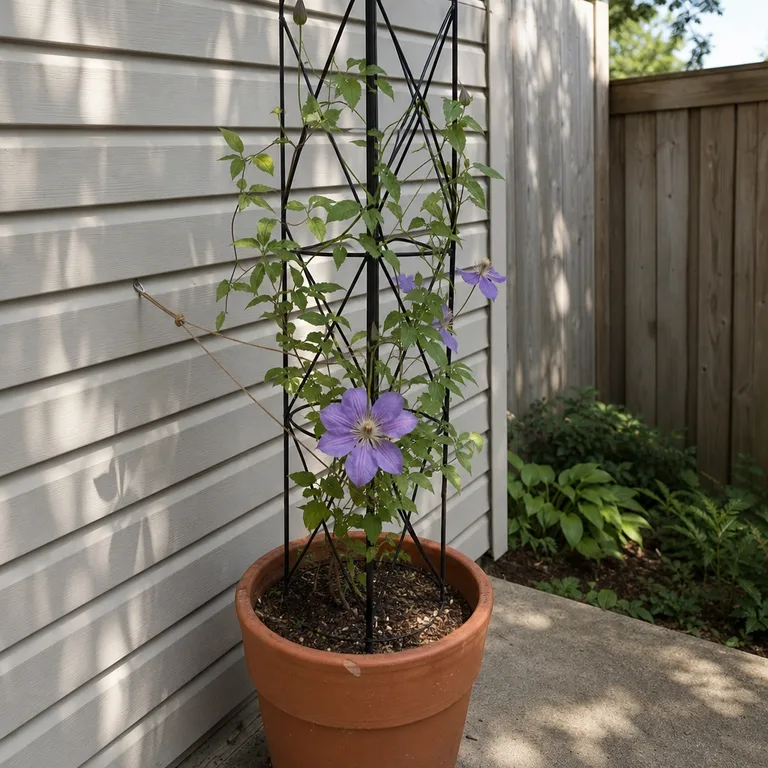
The upright shape keeps foliage gathered over one container instead of spreading across a small patio. It can make a plain corner feel planted without requiring a border or wall attachment.
Choose a pot with a broad, weighty base and drainage holes, then use a free-draining potting mix. Match the vine to the available sun and local winter conditions, since container roots are more exposed to cold and heat than roots in the ground.
Worth knowing: A tall support in a light pot can tip in wind, and perennial container vines need ongoing pruning and seasonal care.
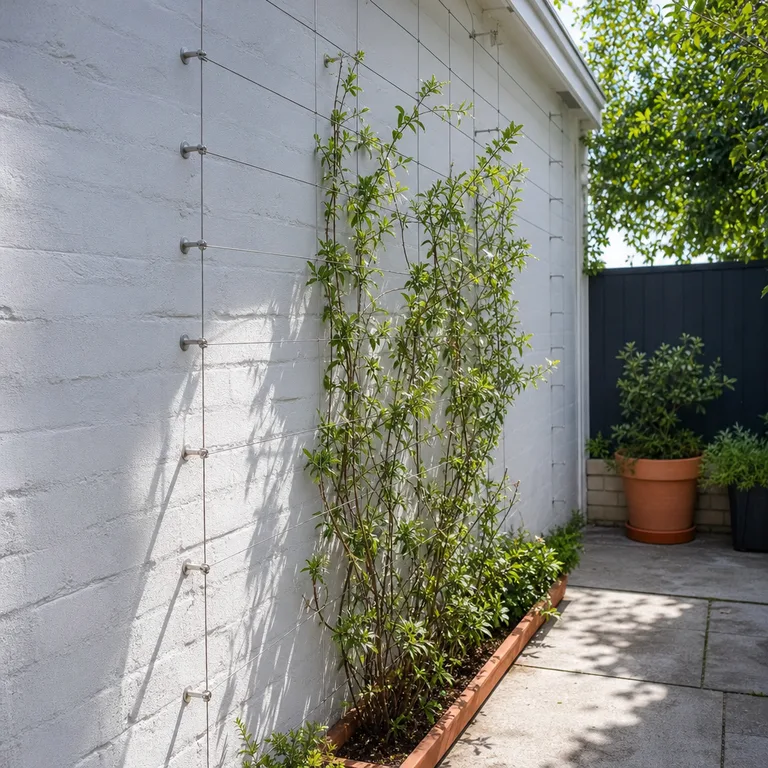
5.Wall-Mounted Wire Grid for Light Climbers
A wire grid makes a tidy climbing surface for light jasmine, small clematis, or similar vines on a sunny wall. Install the wires with stand-off spacers so stems and damp air are not pressed directly against the wall.
The simple line pattern uses vertical space without the bulk of a timber lattice. As the plant fills out, it can soften a blank wall while still allowing light and air through.
A cable kit and a few carefully positioned fixing points can cost less than covering the wall with a large panel. Use the correct fasteners for brick, masonry, or timber, and train new stems loosely rather than pulling them tight against the wire.
Worth knowing: Wall mounting may be prohibited in rentals, and it should not be attached to a neighbor’s fence, wall, or other structure without permission.
Related: 10 Budget Patio Privacy Ideas for a Small Seating Area
6.Fan Trellis for a Narrow Fence Border
A fan trellis spreads a climbing rose or clematis across a shallow border beside a fence. Its angled slats encourage stems outward, rather than letting them pile into one narrow vertical column.
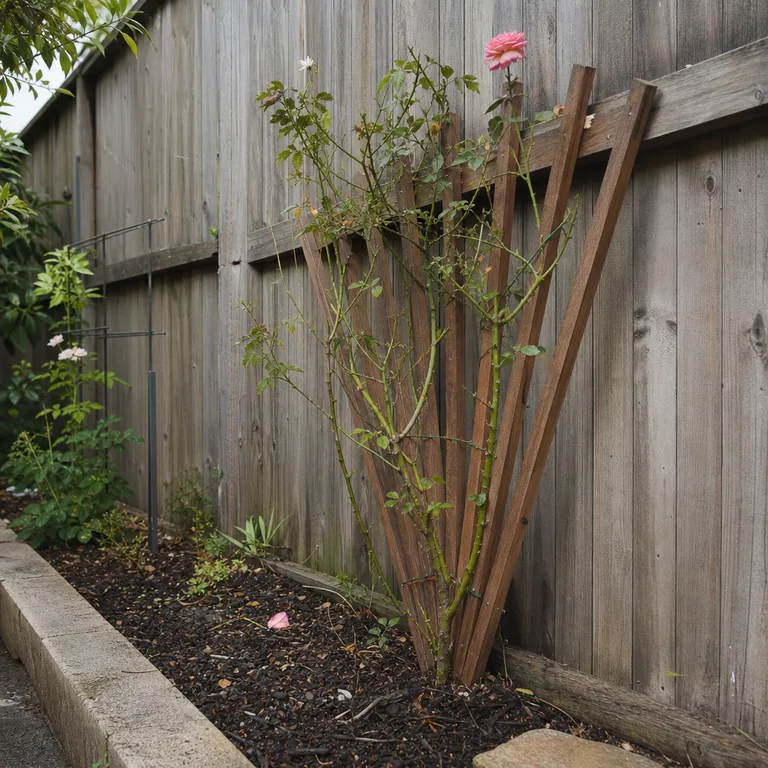
The broad, low shape can cover an empty section of fence while leaving more headroom and light than a dense hedge. It works especially well where the border is too slim for a wide shrub.
A basic wood fan can be fixed to posts within the garden bed or positioned just in front of the fence where appropriate. Tie stems with soft, flexible ties and check them through the growing season, since crosswinds can rub canes against the wood.
Worth knowing: Climbing roses need regular pruning and tying, and thorny growth can make a very narrow path harder to use.
7.Tomato Cage for Compact Edible Climbers
A sturdy tomato cage is one of the fastest supports for compact tomatoes, and it can also help hold branching tomatillos upright. Set the cage over the plant while it is young so stems grow through the rings instead of being forced into place later.
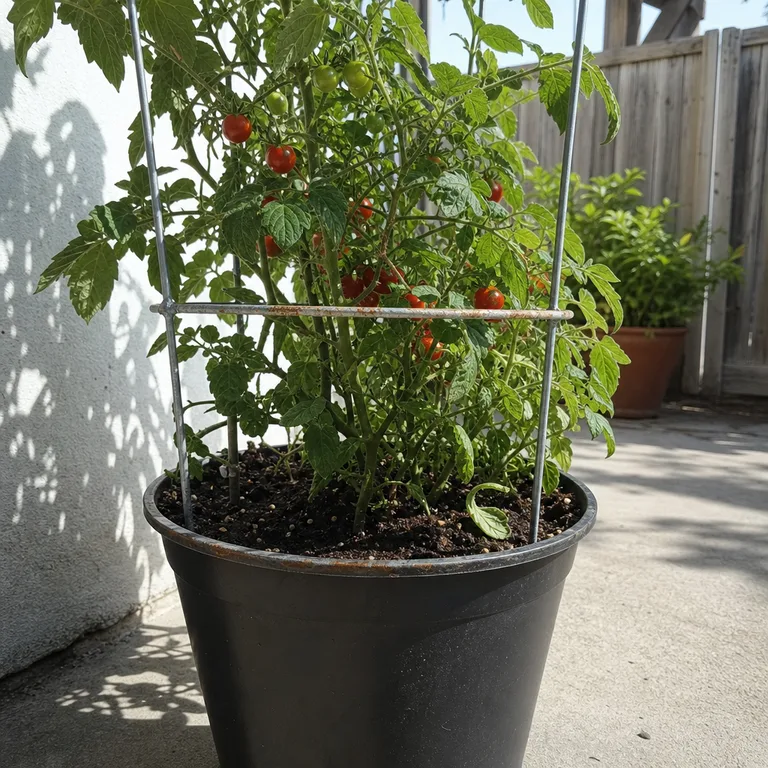
The circular shape supports fruiting stems from several sides and takes up little floor space in a container garden. It is also easy to remove and store after the season.
Choose a heavier-gauge cage with wide legs, then push it well into the potting mix or soil. Add soft clips or ties as fruit develops, because the rings alone may not hold every loaded branch in place.
Worth knowing: A tomato cage is not a true climbing support for vigorous pole beans or large vines, which will quickly outgrow its height and width.
8.Willow Ladder Trellis for a Cottage-Style Pot
A willow ladder trellis suits delicate vines such as black-eyed Susan vine or compact morning glory. Lean or set it firmly in a pot, then guide the first stems through the lower rungs.
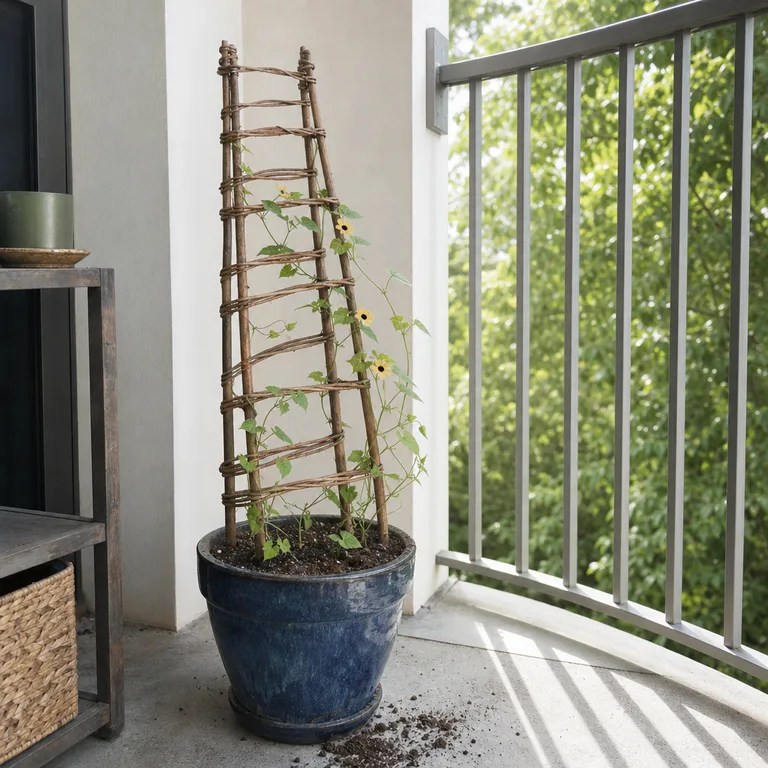
The woven material looks softer than metal and gives a small flowering pot a casual cottage-garden feel. Its narrow profile is useful on a balcony or beside a doorway where a wider support would feel crowded.
Willow supports are often a straightforward seasonal option for lightweight plants. Use a pot with drainage and a saucer or drip tray where water needs to be contained, particularly on a balcony.
Worth knowing: Natural willow weathers and can become brittle, so it is best treated as a lighter-duty support that may need replacing.
9.String Trellis Between Two Freestanding Planters
Two weighted planters with upright stakes can hold a simple run of vertical twine for peas or lightweight beans. Tie the twine at the top and bottom so each plant has its own line to climb.
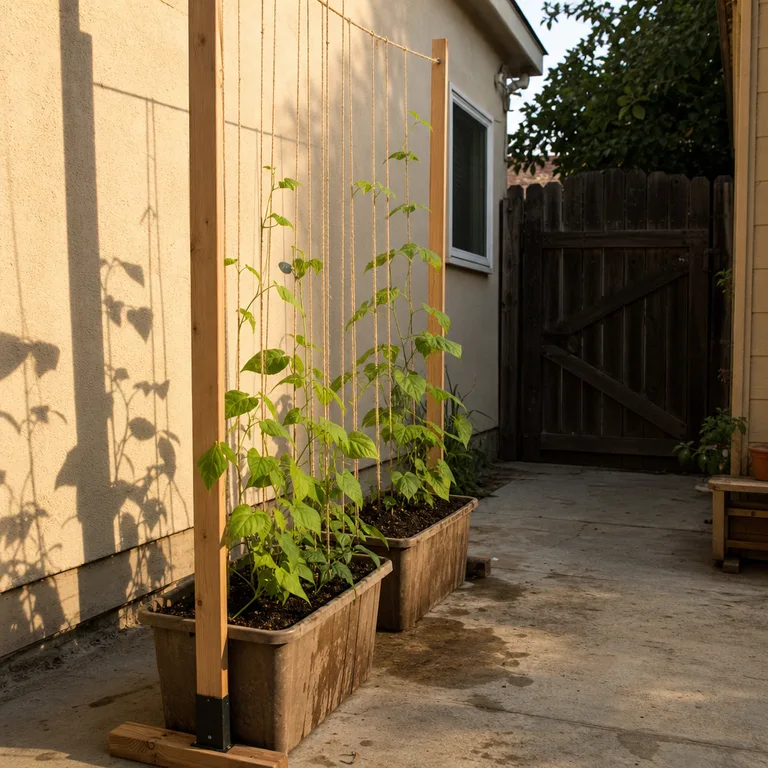
This setup creates a narrow green screen without drilling into a wall or fence. It can divide a small courtyard, frame a seating area, or make use of a bright paved edge.
Use planter boxes that are large enough to resist movement, and add weight only in a way that does not block drainage. Cotton or jute twine is easy to replace at the end of the season, while the planters and stakes can be used again.
Worth knowing: String moves in gusty conditions, so this support is best in a sheltered location and is not suitable for heavy crops.
10.Grid Panel on a Freestanding Planter Box
A rigid grid panel fixed to a planter box provides a stronger climbing surface for medium-weight vines and a modest layer of patio privacy. A young star jasmine or another suitable vine can be trained across the grid as it grows.
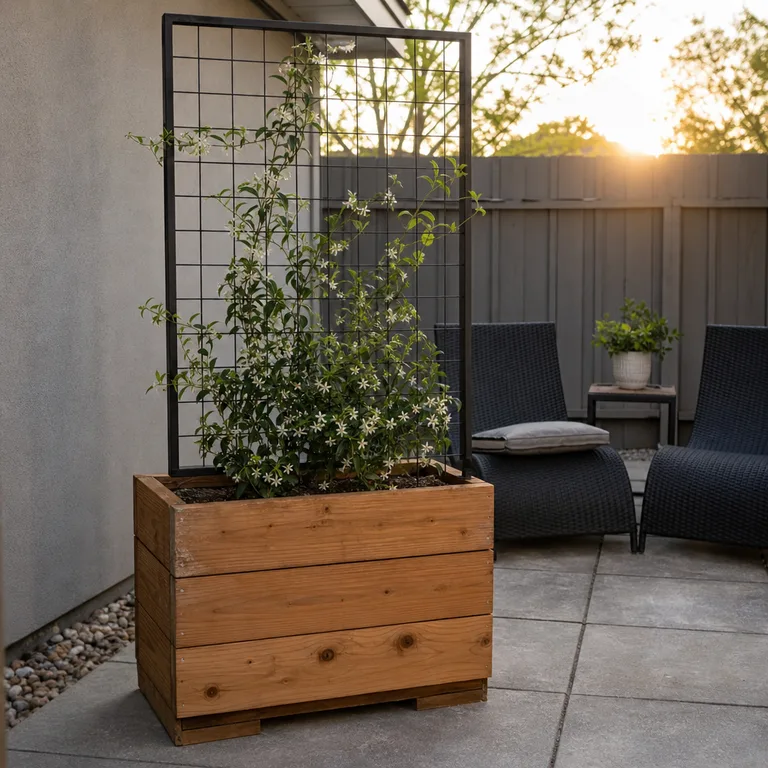
The combined planter and screen makes one useful feature from a small footprint. It can define the edge of a seating area without relying on a wall, fence, or a neighbor’s structure.
Choose a box with drainage holes and enough room for roots, then add a drainage layer only if it does not reduce the soil depth too much. Ballast the base as needed and fasten the grid securely to the planter frame, especially where wind funnels across the patio.
Worth knowing: A freestanding grid planter becomes heavy to move once filled, and a dense vine can increase wind pressure on the panel.
About the author
Dana Ruiz, Senior editor
Dana writes about small-space living, storage and low-cost decorating.
Keep reading
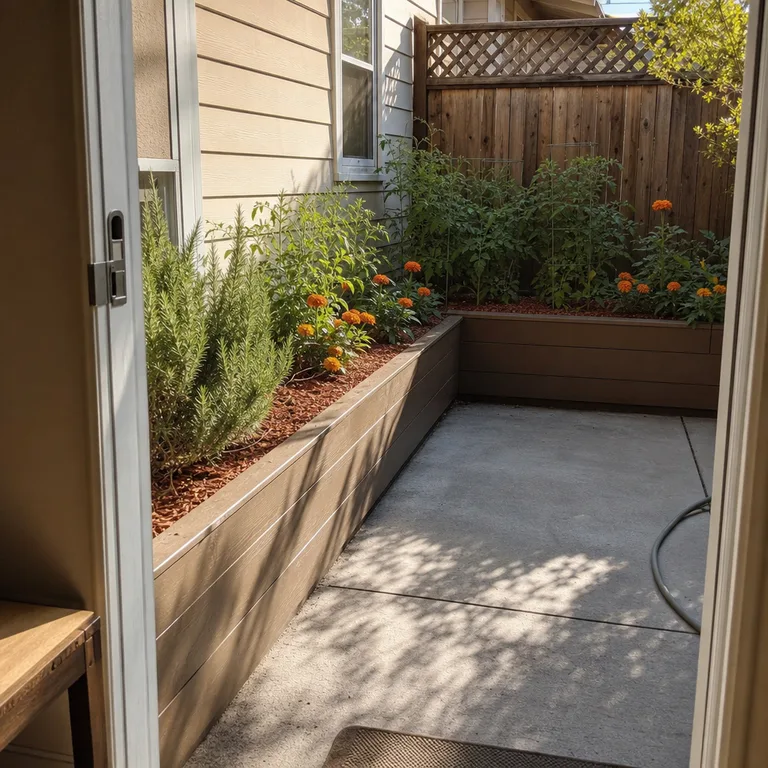
10 Small Raised-Bed Garden Ideas for Beginners on a Budget
October 4, 2026
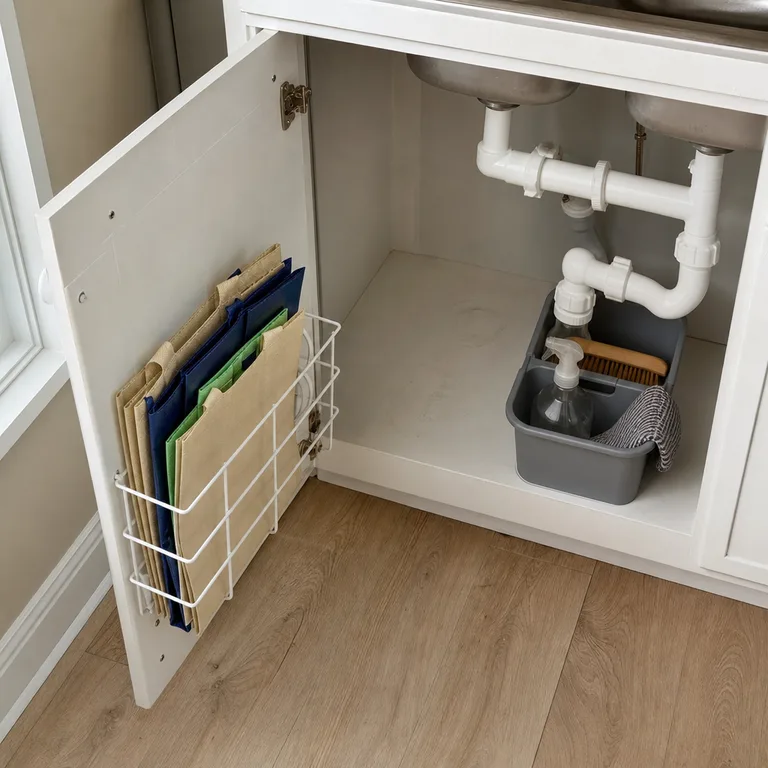
10 Reusable Grocery Bag Storage Ideas for Small Kitchens
October 9, 2026
10 Handbag Storage Ideas That Help Bags Keep Their Shape
October 8, 2026
10 Baking Sheet Storage Ideas for Narrow Kitchen Cabinets
October 6, 2026