10 Budget Garden Path Ideas for a Short Backyard Route
A short backyard route works best when it follows the shortcut people already take, then gives that line a firm, intentional surface. These ideas suit ordinary small yards and use simple materials, with attention to base preparation, runoff, sunlight and access needs.
As an Amazon Associate I earn from qualifying purchases.
1.Set Large Concrete Stepping Stones in Lawn
Wide concrete pavers turn a worn line through the lawn into a clear route from the door to a bench, patio, or garden gate. Grass between the stones keeps the path from taking over a small yard, while the larger surfaces feel steadier underfoot than small scattered stepping stones.
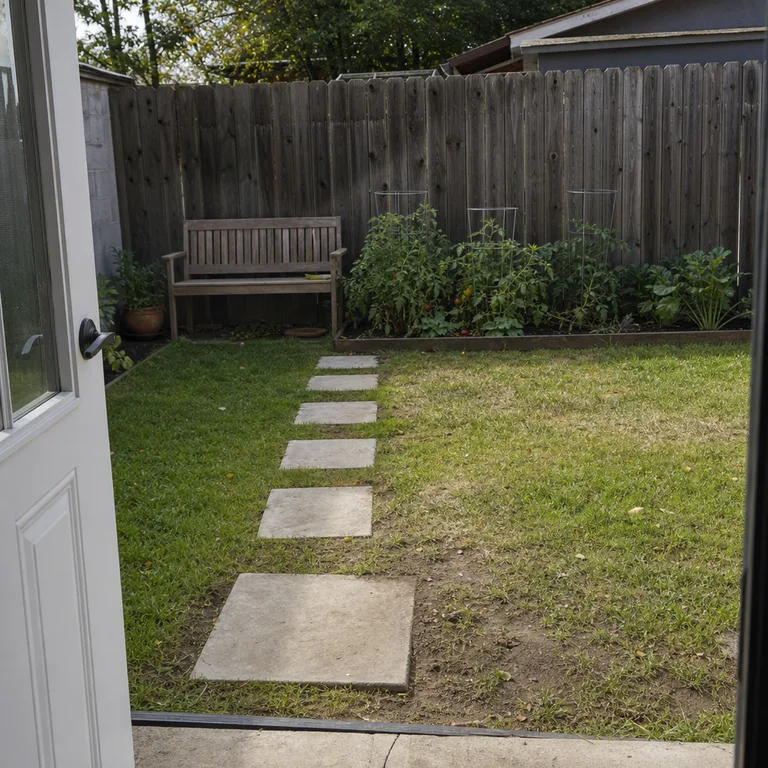
Set each paver into a shallow, level bed of compacted base material so it sits close to the surrounding grass. Keep the tops nearly flush with the lawn to reduce mower scalping, then repair disturbed grass around the edges with seed or small plugs.
Worth knowing: This is less suitable for a route that needs continuous, wheelchair-friendly access.
Related: 15 Budget Landscaping Ideas That Make a Small Yard Feel Finished
2.Build a Compact Crushed Gravel Path With Steel Edging
A narrow crushed-gravel path gives a patio-to-garden route a tidy, finished edge without the formality of a solid paved walk. It works especially well beside planting beds, where the permeable surface can help keep rain from pooling on top of the path.
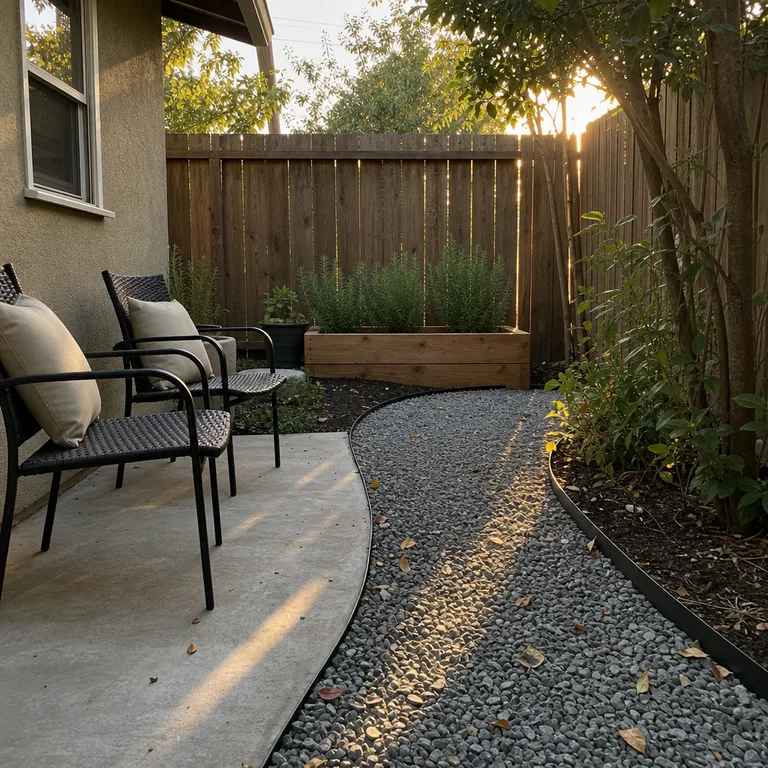
Use angular crushed gravel rather than rounded stones, and contain it with steel edging so it does not spread into the lawn or beds. Excavate for a compacted base and shape the route with a slight fall away from the house, particularly where it begins near a door.
Worth knowing: Loose gravel can be difficult for wheelchairs, walkers, and some strollers to travel over.
Related: 12 Small Patio Seating Ideas on a Budget
3.Lay Reclaimed Brick in a Simple Running Bond
Reclaimed brick gives a short backyard shortcut a durable surface with more character than a plain utility path. A straight running-bond pattern is easy to understand visually and limits the amount of cutting needed at the sides.
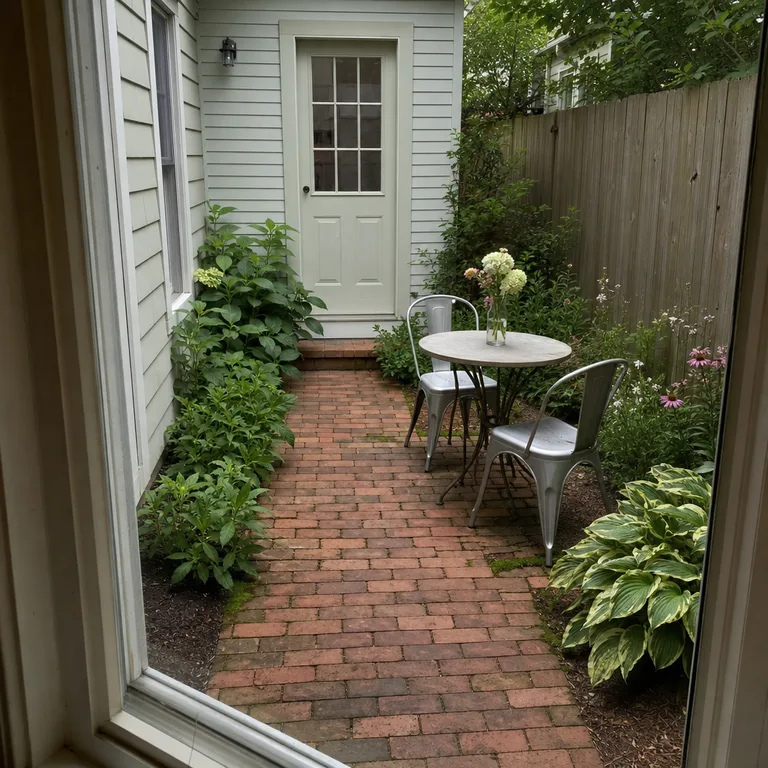
Lay the bricks over a compacted paving base, using a straight edge to keep the route even from the door to the destination. Grade the finished path subtly away from the house so water does not settle at the threshold, and sweep jointing sand into the gaps to help lock the bricks together.
Worth knowing: Brick installation takes more excavation and careful leveling than a mulch or stepping-stone path.
Related: 10 Small Patio Dining Ideas Without a Big Furniture Set
4.Make a Mulch Path Between Productive Garden Beds
A wood-chip path makes sense where the main purpose is reaching vegetable beds, cutting flowers, or a compost area. It softens a working garden, covers bare soil, and gives muddy shoes a cleaner place to land than a narrow strip of grass.
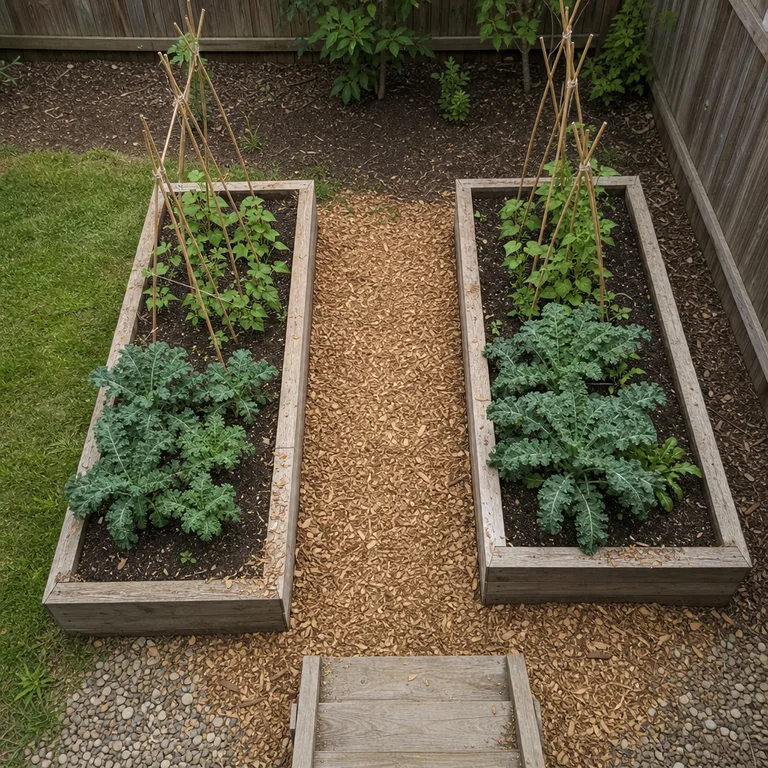
Define the route with bed boards or simple edging, then lay a generous layer of natural wood chips over cleared ground. Top it up as it breaks down, and pull stray chips back into place after harvesting or heavy rain.
Worth knowing: Wood chips decompose and need periodic replenishing, especially in wet climates.
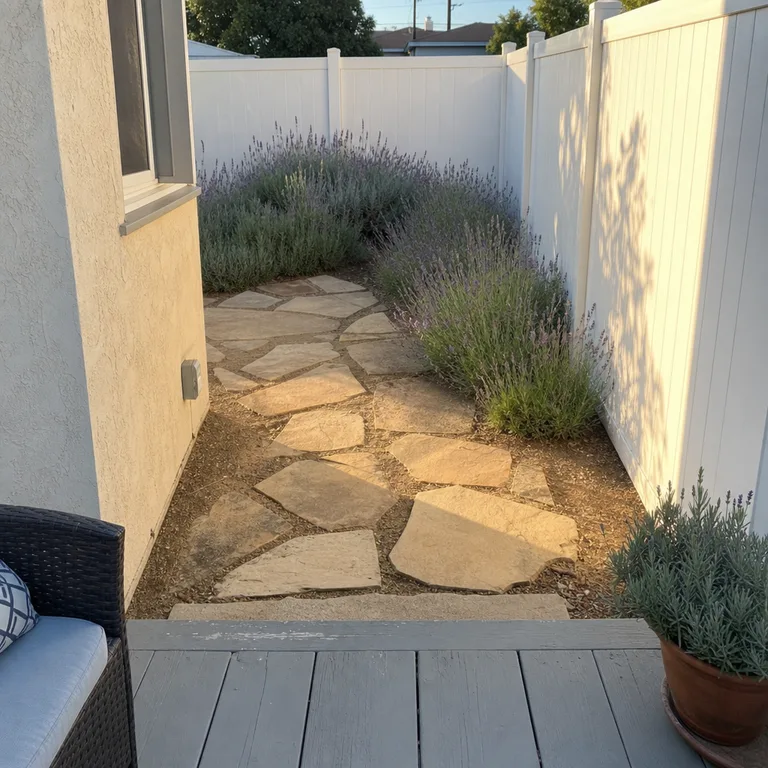
5.Use Flat Flagstones for a Dry, Sunny Shortcut
Irregular flagstones make a direct route feel relaxed while still providing broad, solid places to step. They suit a sunny side yard or a route from a deck to a border because their natural variation looks less rigid than identical pavers.
Choose stones with relatively flat faces and set them into compacted base material instead of placing them directly on soil. Keep the joints narrow enough to avoid awkward gaps, and use grit or stable jointing material where grass is unlikely to thrive in full sun.
Worth knowing: Flagstones can be heavy and awkward to position without help.
6.Create a Simple Boardwalk Over a Damp Patch
A low boardwalk gives feet a dry line across a spot that stays soft after rain. It can turn an otherwise unusable strip between a back stoop and seating area into a deliberate connection rather than a muddy detour.
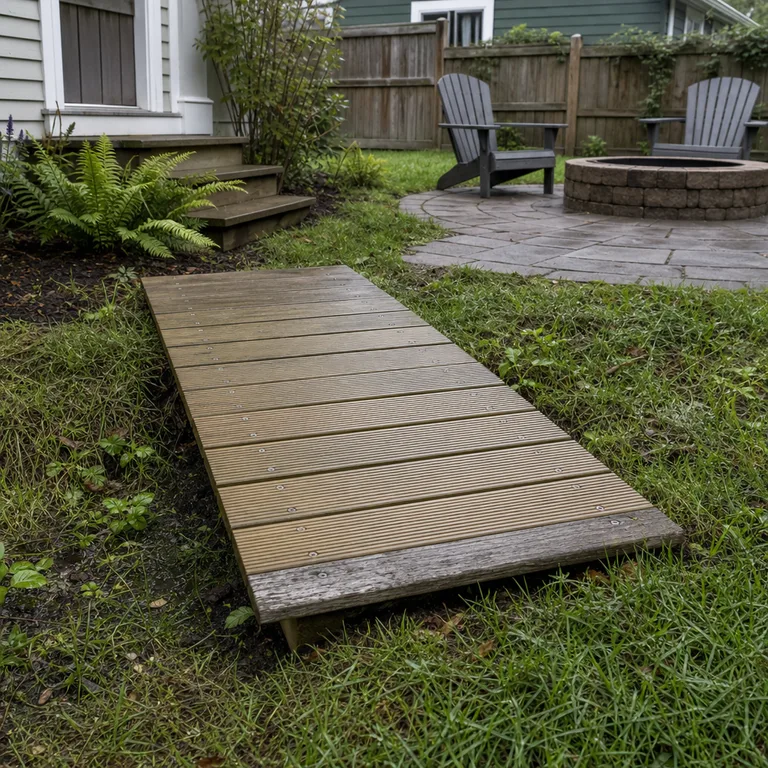
Build the walkway on stable supports over a prepared drainage layer, leaving some airflow beneath the boards to help the timber dry. Use outdoor-rated fasteners and boards with a textured surface, and address the source of standing water if downspout runoff is feeding the low spot.
Worth knowing: A boardwalk manages foot traffic over damp ground but does not solve major drainage problems on its own.
7.Connect the Door and Patio With Interlocking Grid Pavers
Open-cell grid pavers create a firmer route while keeping more of the yard visually green than a solid concrete strip. Fill the cells with grass for a softer look or gravel for a lower-maintenance surface where shade or frequent use makes grass thin out.
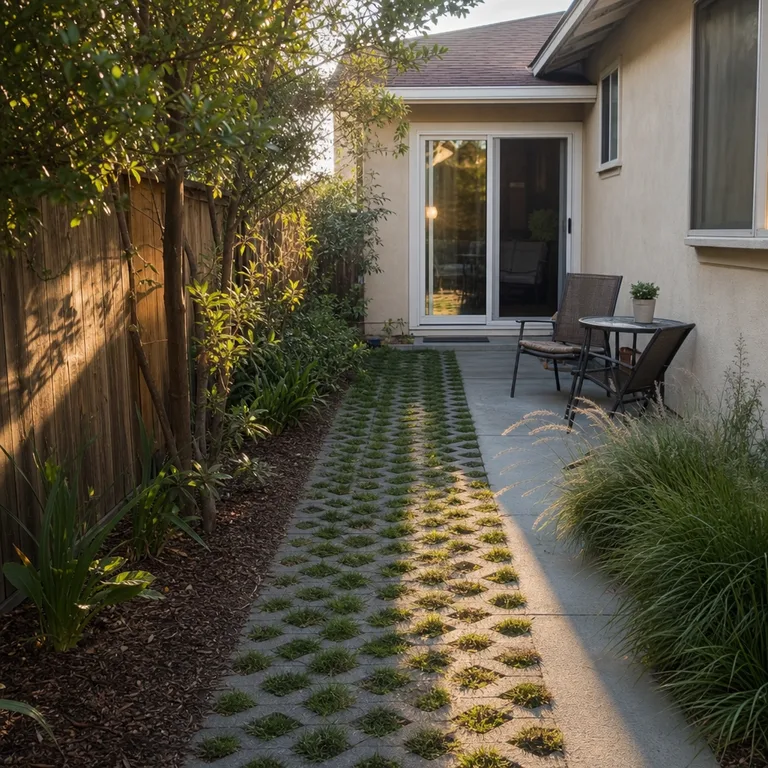
Excavate deeply enough for a compacted base so the finished grid is flush with the lawn and does not become a raised trip edge. Check the route after rain, since a well-prepared base and gentle slope matter more than the grid itself for preventing puddles.
Worth knowing: Grass-filled cells may wear thin along the most heavily used walking line.
8.Border a Narrow Bark Path With Simple Timber
A bark path framed with low timber is a useful answer for a narrow strip beside a fence, shed, or house wall. It gives a neglected side yard a clear purpose and can curve around existing shrubs or utility access points without complicated cutting.
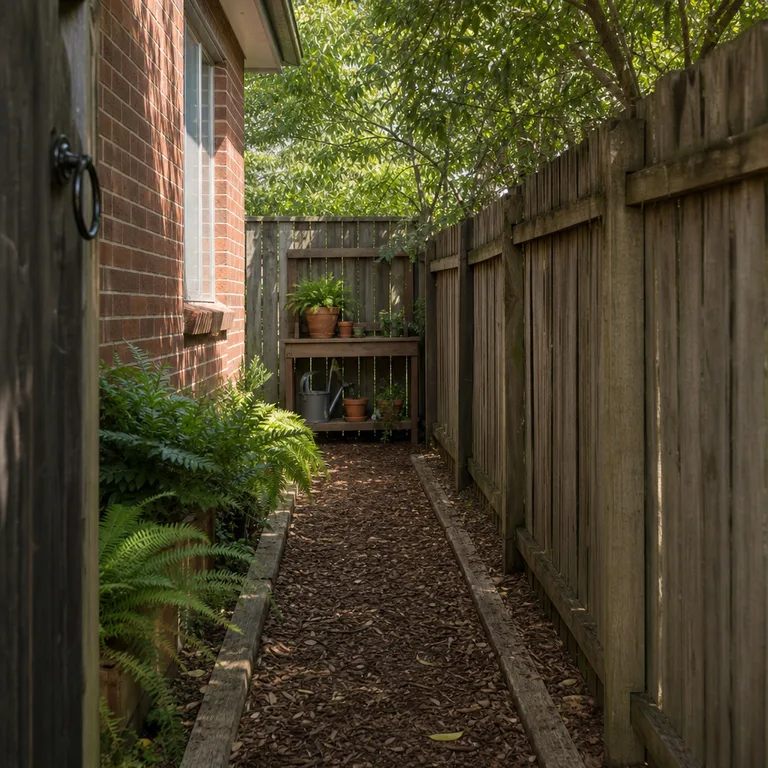
Install the timber border first to hold the bark in place, then clear weeds and add a permeable underlay where needed. Keep organic mulch away from wood siding and inspect the path in damp weather, when bark can break down faster and shift underfoot.
Worth knowing: Bark is not the best choice for a high-traffic route that needs a firm, stable surface.
9.Widen the Route With Smooth Poured Concrete
A plain poured-concrete walk is a practical choice for the route used most often, such as the line from a back door to a patio, gate, or bin area. A continuous surface is easier to sweep and easier to navigate than loose materials, particularly for households needing steadier footing.
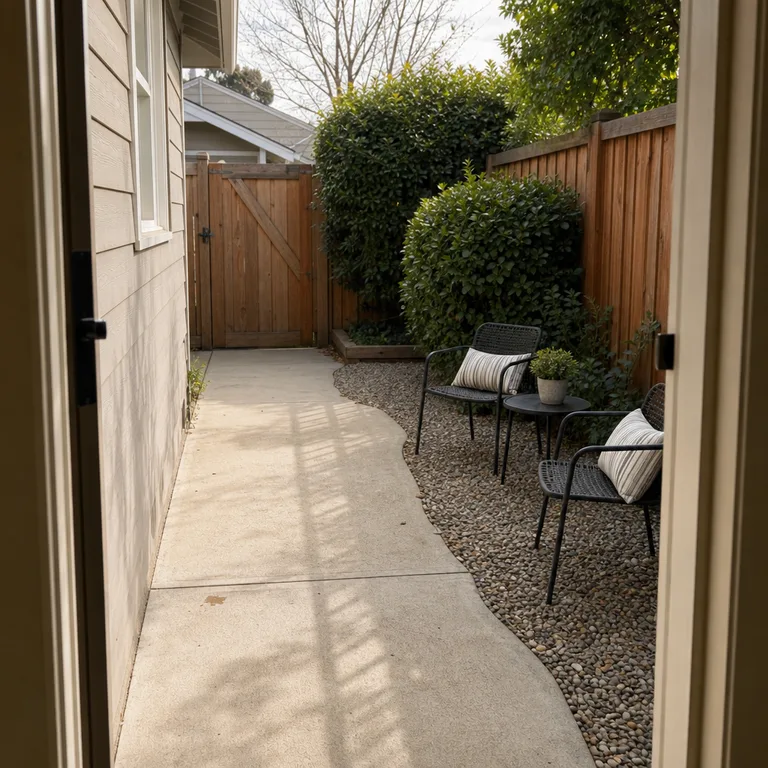
Keep the finish simple and use a broom texture for traction rather than adding costly decorative treatments. Plan the slope, drainage direction, and control joints before any concrete is poured, and make sure the path does not direct water back toward the house.
Worth knowing: Concrete is difficult to alter once installed, so layout and drainage mistakes are costly to correct.
10.Combine Pavers and Gravel for a Small Patio Link
Broad rectangular pavers set in gravel create a short route that can double as extra standing space beside outdoor seating. The pavers give more secure footing where people pause, while the gravel keeps the overall surface from looking like an extension of the patio slab.
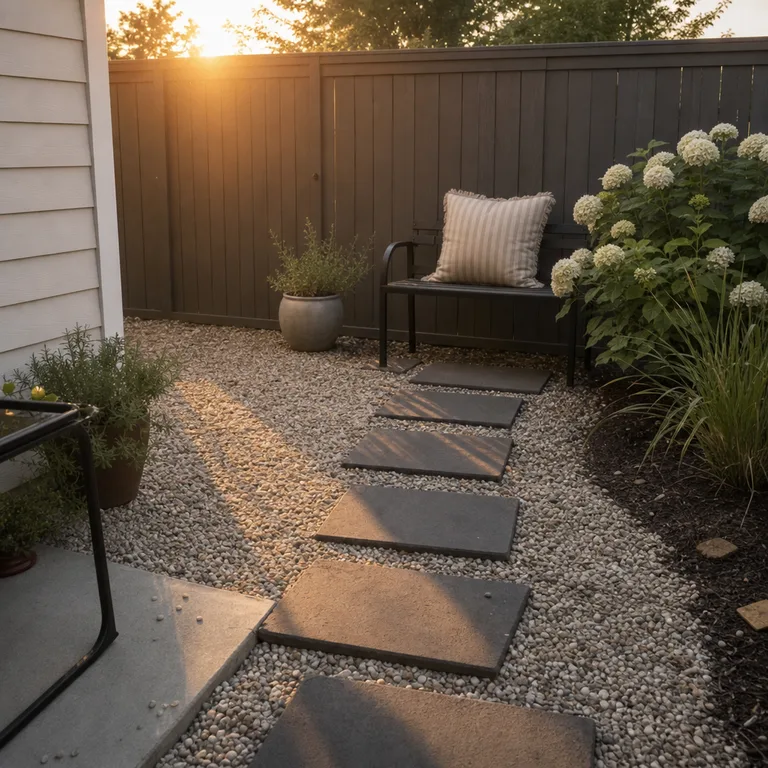
Use edging around the gravel field and set the pavers on a compacted base so they do not rock or sink at different rates. Keep the layout simple, with even gaps and a clear line toward the bench, garden, or side gate.
Worth knowing: Gravel can migrate onto the patio and needs occasional raking back into place.
About the author
Dana Ruiz, Senior editor
Dana writes about small-space living, storage and low-cost decorating.
Keep reading
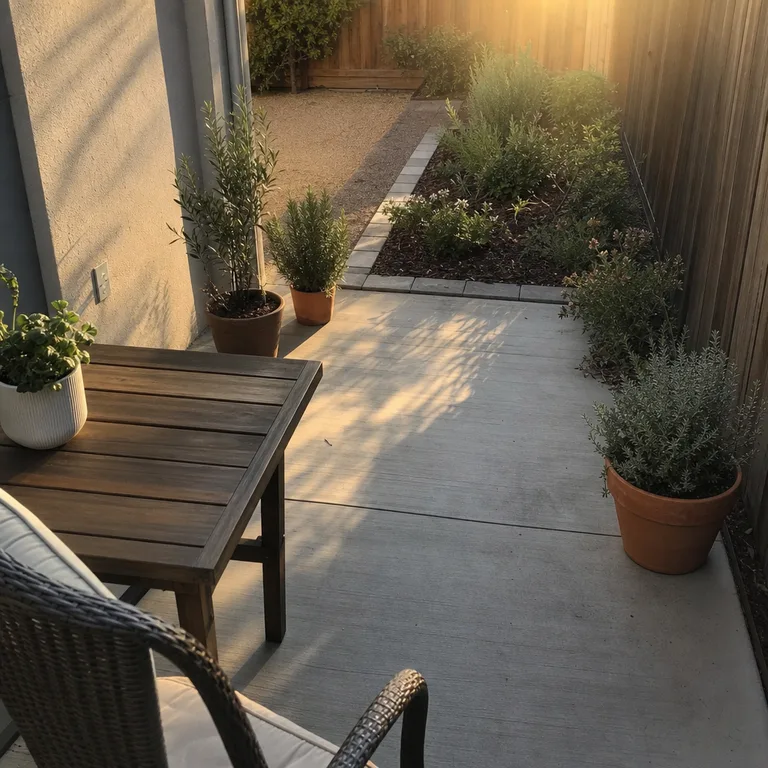
12 Budget Garden Edging Ideas for One Small Flower Bed
September 29, 2026
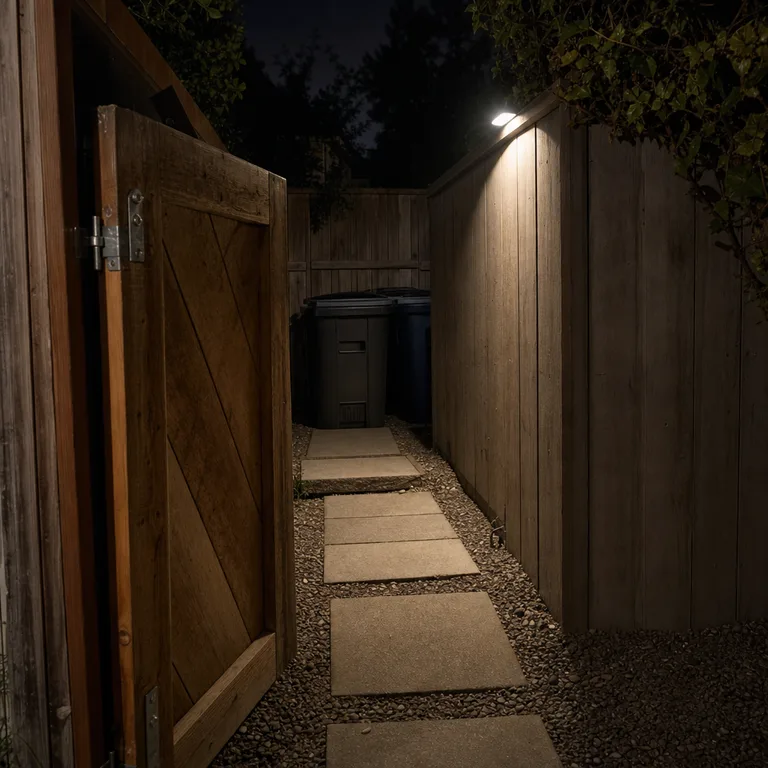
10 Outdoor Lighting Ideas for a Small Yard Without New Wiring
September 28, 2026
10 Small Bedroom Vanity Ideas That Share Space With a Desk or Dresser
September 30, 2026
12 Christmas Decoration Storage Ideas Using Boxes You Already Have
September 30, 2026