10 Small Bedroom Vanity Ideas That Share Space With a Desk or Dresser
A small bedroom vanity can work as part of a desk, dresser, nightstand, or wall ledge instead of claiming space for another furniture piece. These shared-use setups keep grooming supplies contained, preserve seated clearance, and make it easier to switch the surface back to work or clothing storage.
As an Amazon Associate I earn from qualifying purchases.
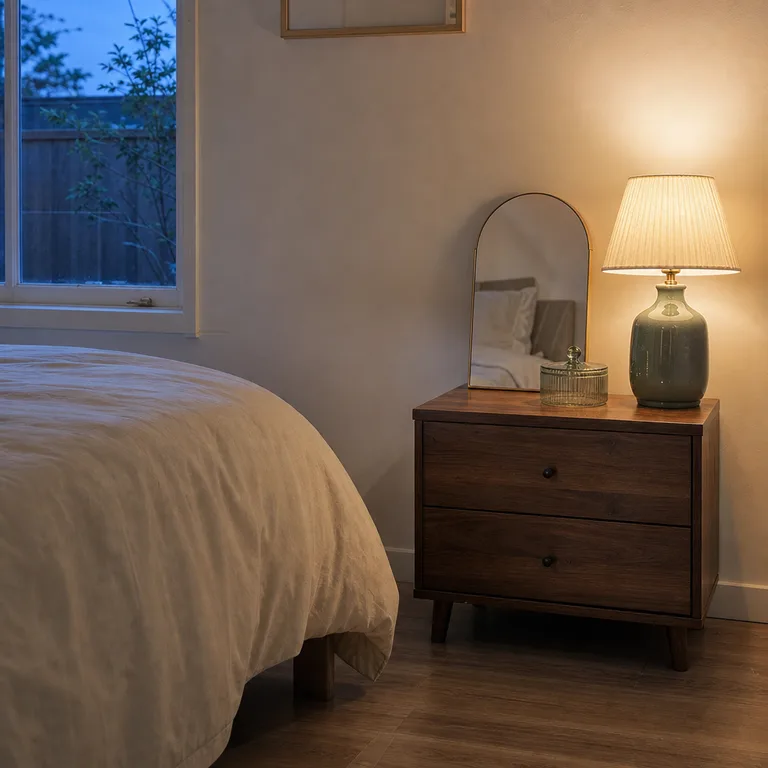
1.Use One End of a Desk as a Morning Vanity
Give the desk end nearest a window one clear job: grooming. A tabletop mirror, a shallow tray, and a small organizer create a defined vanity zone while leaving the larger section open for a laptop, papers, or other work.
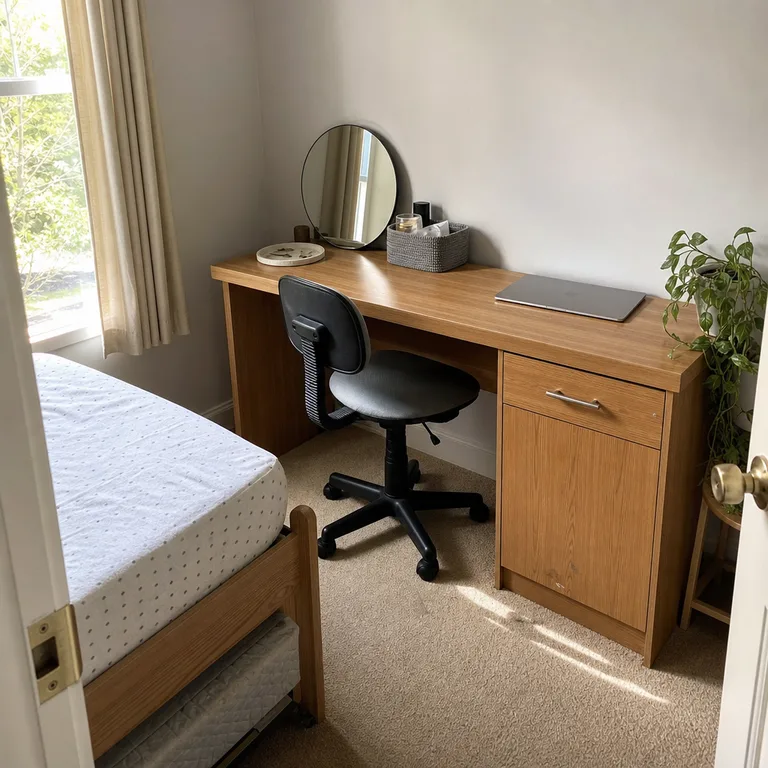
Keep daily items in one desk drawer or a lidded bin that can be put away when the desk changes use. Place the chair so it can slide back comfortably without catching on the bed, and use a task lamp if the window is behind the seat rather than in front of it.
Worth knowing: A shared desk works best for a light routine; larger tools and a wide collection of products will quickly take over the work surface.
Related: 12 Small Desk Organization Ideas That Clear Your Work Surface
2.Turn the Top of a Dresser Into a Contained Vanity Zone
Set a mirror over one end of the dresser and limit grooming items to a narrow divided organizer. The other side remains useful for laying out clothes, holding a laundry basket briefly, or serving as a daily drop zone.
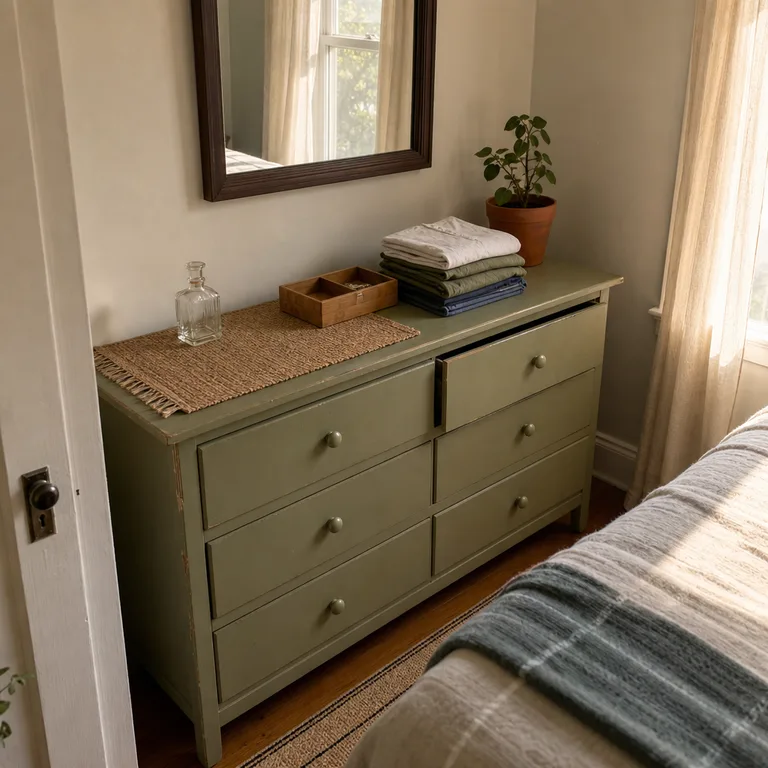
A runner or tray can visually contain the vanity section without covering the entire top. Choose containers with lids if the room collects dust, and keep heat tools elsewhere so the dresser surface does not become a permanent styling station.
Worth knowing: A dresser top can feel crowded in a bedroom shared by two people, especially if it already handles folded laundry or personal items.
3.Fit a Flip-Up Mirror Into a Desk Drawer
A shallow center drawer can hold a hinged mirror and small divided trays, leaving the desktop almost empty between uses. This makes a basic writing desk feel more flexible without adding a mirror stand or another storage unit.
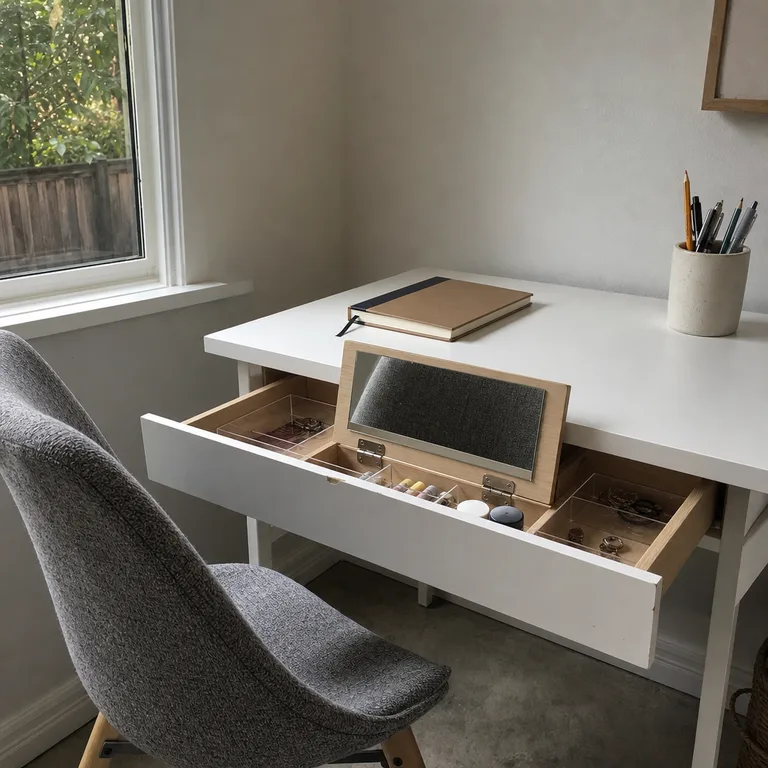
Measure the drawer interior and its clearance before choosing organizers or hardware. The drawer also needs to open fully when the chair is pulled out, so check that it will not hit the bed frame, a rug edge, or nearby furniture.
Worth knowing: This option depends on having a suitable shallow drawer and may require careful installation to keep a hinged mirror secure.
4.Add a Wall Mirror Above a Narrow Desk Surface
Mounting a mirror above a narrow desk or wall shelf frees the surface from a bulky mirror base. It makes a slim work surface feel intentional as both a desk and a grooming spot, particularly in a room where the walkway beside the bed is tight.
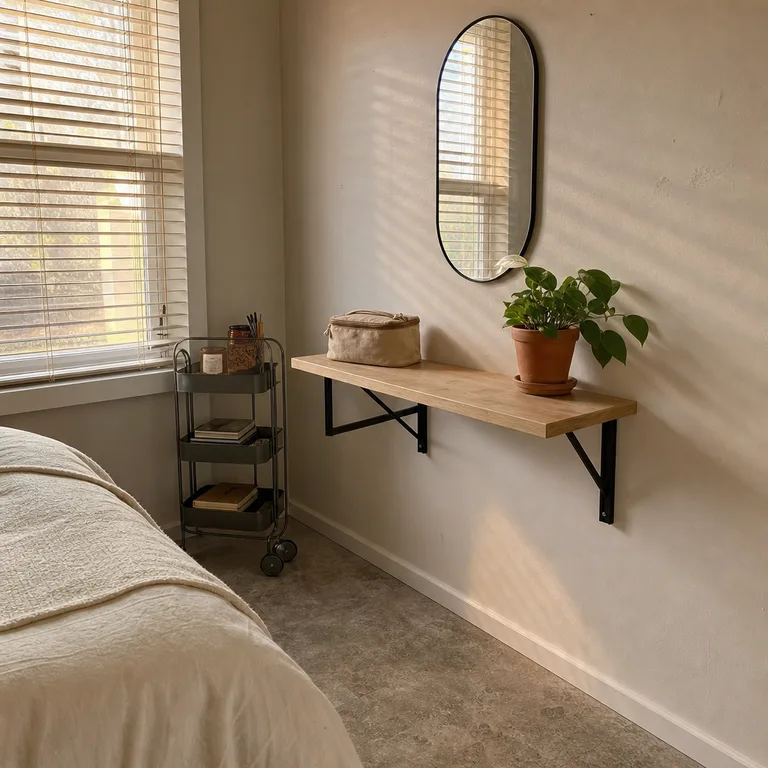
Store supplies in a compact rolling cart, a drawer pedestal, or a pouch that fits below the surface. Make sure the mirror height works from the chair, and use anchors appropriate for the wall type rather than relying on lightweight adhesive strips.
Worth knowing: Wall mounting is not always allowed in rentals, and a narrow shelf may not support a full work setup as well as a standard desk.
5.Make a Bedside Table Serve as a Compact Vanity
A deeper nightstand can support a small mirror, a lidded organizer, and a lamp for an evening routine. This works especially well for skincare, jewelry, or a few daily items that do not need much spread-out space.
Choose a mirror that stays stable against the wall and keep the center of the top clear enough for a book, glasses, or a drink. A drawer or covered box prevents the bedside surface from looking cluttered when the room is used for sleep rather than getting ready.
Worth knowing: The setup must still leave easy access to the bed, and a small bedside table is not practical for a long grooming routine.
6.Use a Desk With a Lift-Top Mirror Compartment
A lift-top desk hides a mirror and supplies inside the furniture itself, then closes into a clean writing surface. It is a useful choice for a bedroom that needs to switch quickly between work, grooming, and rest.
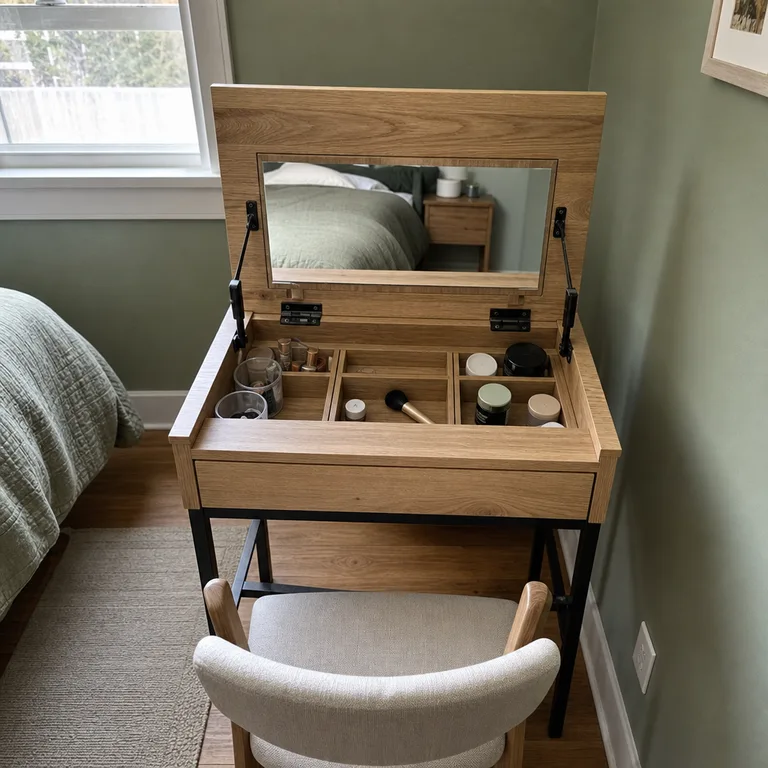
Use small cups or dividers inside so items do not roll around when the lid opens. Check the lid's swing before placing the desk under shelves, art, or a window ledge, and leave room behind it if the top lifts upward toward the wall.
Worth knowing: The compartment limits the size of stored items, and the desk cannot be used normally while the top is open.
7.Pair a Dresser Mirror With a Tuck-Under Stool
A dresser can become an occasional seated vanity when paired with a low stool that slides completely underneath. Keeping the stool tucked away protects the path around the bed and avoids the look of an extra chair left in the middle of the room.
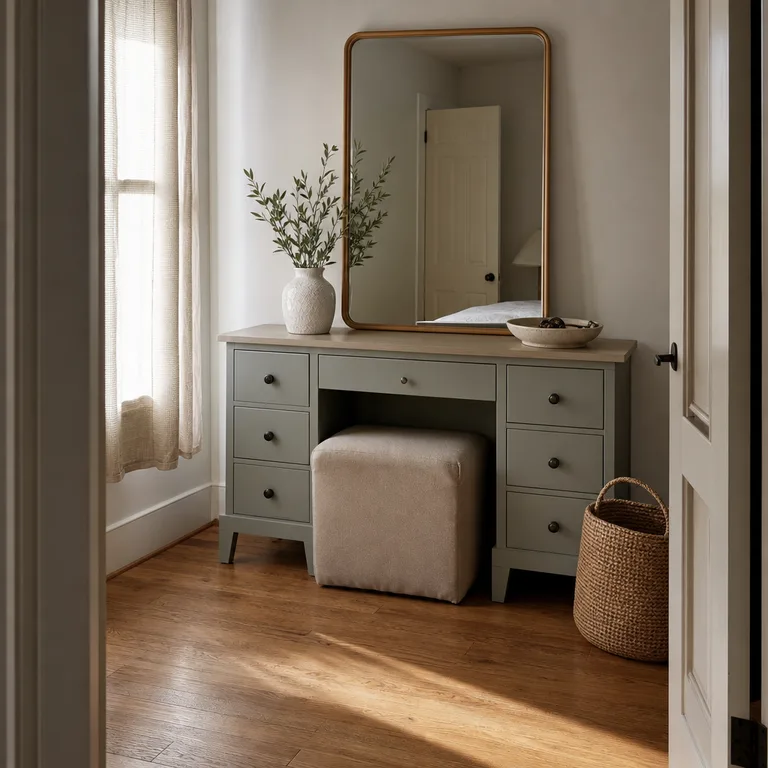
Choose a stool height that lets the user see comfortably into the mirror without hunching. A lightweight stool is easier to pull out, while a fabric or felt pad under the feet can reduce scratches on hard flooring.
Worth knowing: Not every dresser has enough knee space underneath, and a stool that sticks out even slightly can make a narrow room feel harder to move through.
8.Set a Folding Mirror on a Window-Side Desk
A folding mirror opens for grooming and closes flat when it is time to work. Position the desk so window light falls in front of the seated user or slightly from one side, which is more useful than light directly behind the chair.
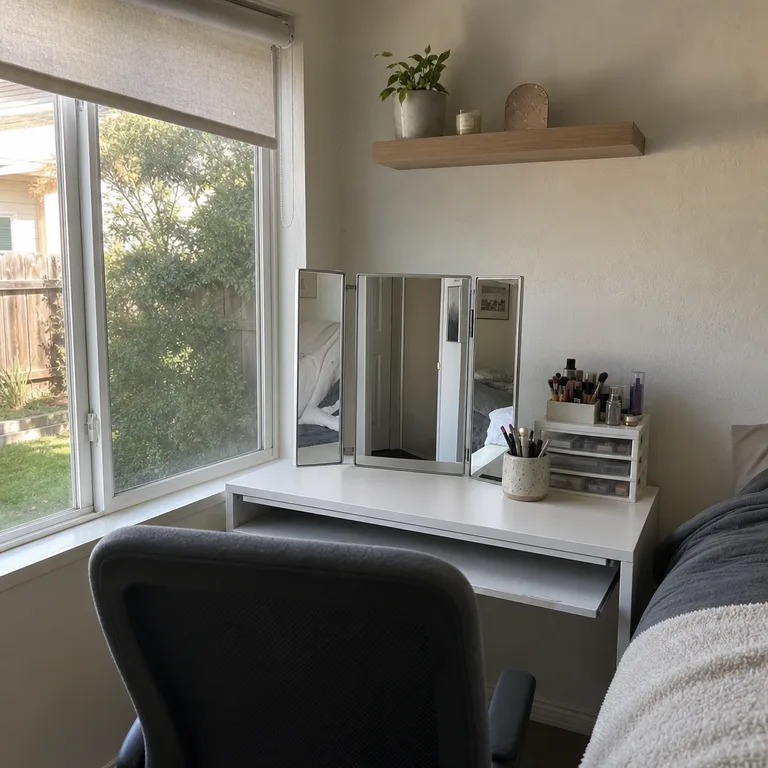
Keep brushes and small products in a single cup or zip pouch so the desk can return to its work role in a minute. A mirror that folds shut also protects the reflective surface from dust and reduces visual clutter in a bedroom.
Worth knowing: Direct sun can create glare and heat on the desk, so this arrangement may need a shade or supplemental lamp at certain times of day.
9.Create a Vanity Shelf Above a Dresser Corner
Install a short shelf above one corner of a dresser to move a few frequently used items upward. The dresser top stays clearer for clothing while the shelf holds a small mirror, covered jars, or a compact tray.
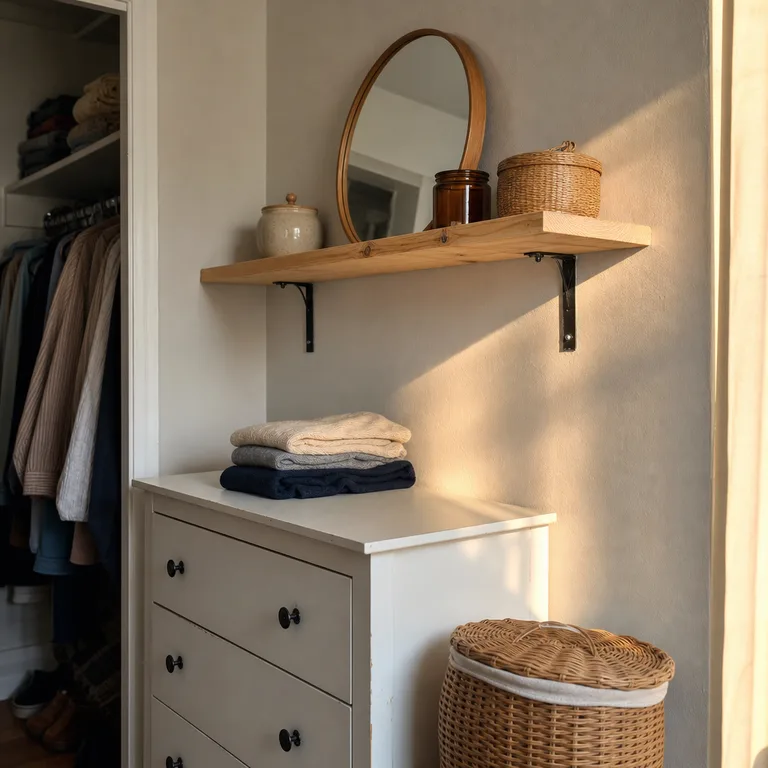
Keep the shelf low enough to reach and use while seated at the dresser, but high enough that it does not interfere with opening drawers or placing folded clothes below. Use brackets and anchors rated for the wall material, especially if glass containers or a heavier mirror will sit there.
Worth knowing: A shelf adds vertical storage but does not create much elbow room, and incorrect mounting can damage walls or create a safety issue.
10.Use a Dresser Drawer as a Portable Vanity Kit
A handled caddy turns one dresser drawer into a portable grooming kit. It can be carried to a desk, window-side surface, or bathroom as needed, then returned to the drawer so the room does not need a dedicated vanity top.
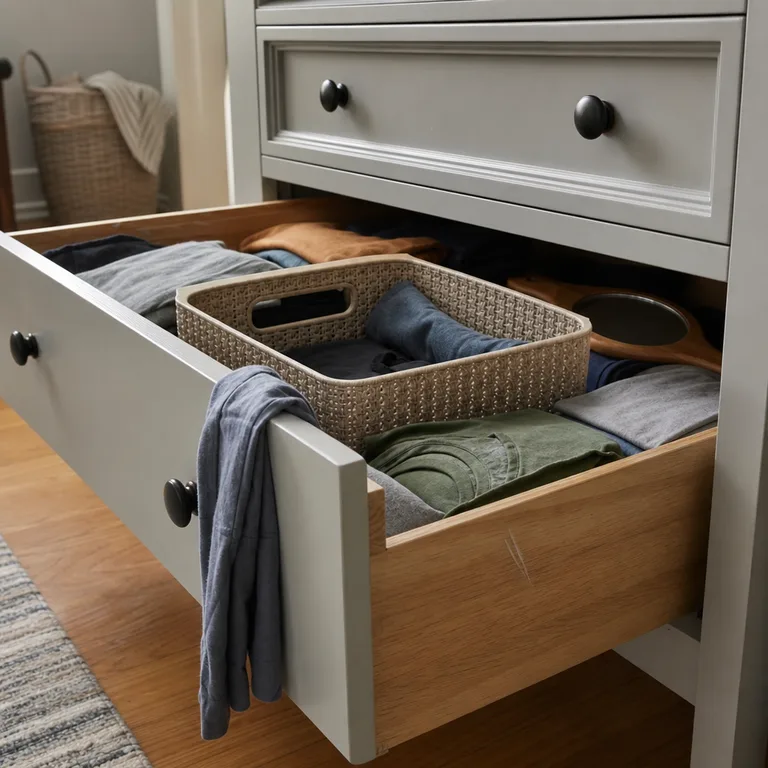
Separate products from clothing with a drawer divider or a washable pouch, and keep liquids upright in the caddy. This is also a simple approach for shared bedrooms because each person can keep their supplies contained and remove them without taking over common surfaces.
Worth knowing: A portable kit requires putting everything away after use, and the drawer needs enough unused depth to prevent the caddy from crushing clothing.
About the author
Dana Ruiz, Senior editor
Dana writes about small-space living, storage and low-cost decorating.
Keep reading

10 Christmas Tree Placement Ideas for a Small Living Room
September 27, 2026
10 Bedroom Wardrobe Ideas for a Room With No Built-In Closet
September 27, 2026
12 Christmas Decoration Storage Ideas Using Boxes You Already Have
September 30, 2026

10 Budget Garden Path Ideas for a Short Backyard Route
September 30, 2026