12 Christmas Decoration Storage Ideas Using Boxes You Already Have
Christmas boxes, delivery cartons, shoe boxes, and lidded household containers can keep ornaments, lights, and soft decorations sorted without buying matching storage bins. The useful approach is to match the box to the item, cushion fragile pieces, label what is inside, and keep everything dry until next season.
As an Amazon Associate I earn from qualifying purchases.
1.Divide a shallow delivery box into ornament cells
Turn a shallow delivery box into a tray for fragile baubles. Cut strips from another cardboard box, slot them together into a simple grid, and line the cells with tissue or plain packing paper.
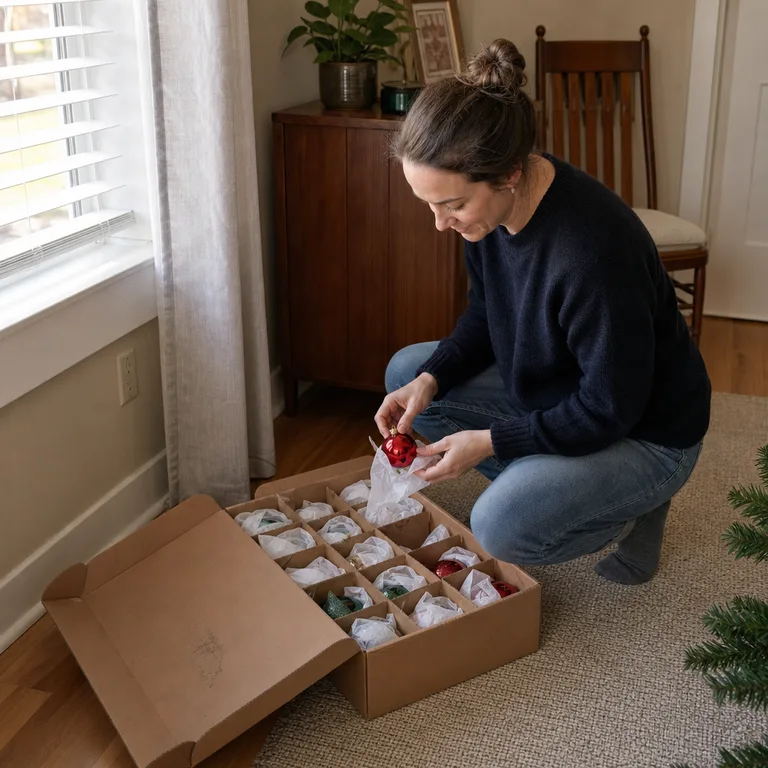
Separate compartments stop ornaments from rolling into one another, while a low box makes it easier to see what is inside. Keep the lid on and place this carton where it will not sit beneath heavier holiday boxes.
Use paper already saved from parcels or gifts rather than buying a dedicated insert. Mark the outside as fragile and store it on a shelf or at the top of the stack.
Worth knowing: Thin cardboard dividers are best for lightweight ornaments; very heavy glass pieces need extra padding and a sturdier box.
2.Use egg cartons for miniature ornaments
Paper egg cartons are useful for tiny bells, miniature baubles, small figurines, and other pieces that disappear in a large box. Put one dry item in each cup, with a small piece of tissue around especially delicate surfaces.
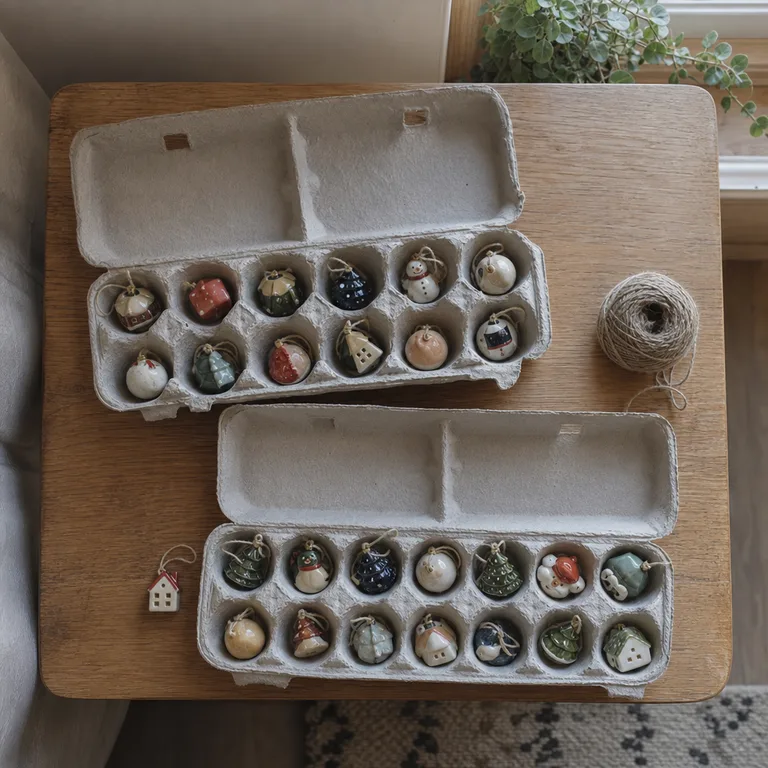
The individual cups keep small decorations from knocking together and make a quick visual inventory. Several closed cartons can then go inside one larger labeled box so they are not separated over the year.
Choose clean paper cartons rather than cartons with food residue, and avoid packing anything damp. This is an easy solution for ornaments that are too small to wrap one by one.
Worth knowing: Egg cartons do not protect larger ornaments or pieces with long, fragile protrusions.
3.Layer flat decorations in a pizza box
A clean, unused pizza box or other flat food-service carton can hold lightweight signs, tree toppers, paper decorations, and shallow wooden shapes. Lay kraft paper, tissue, or clean scrap paper between each item so painted surfaces do not rub together.
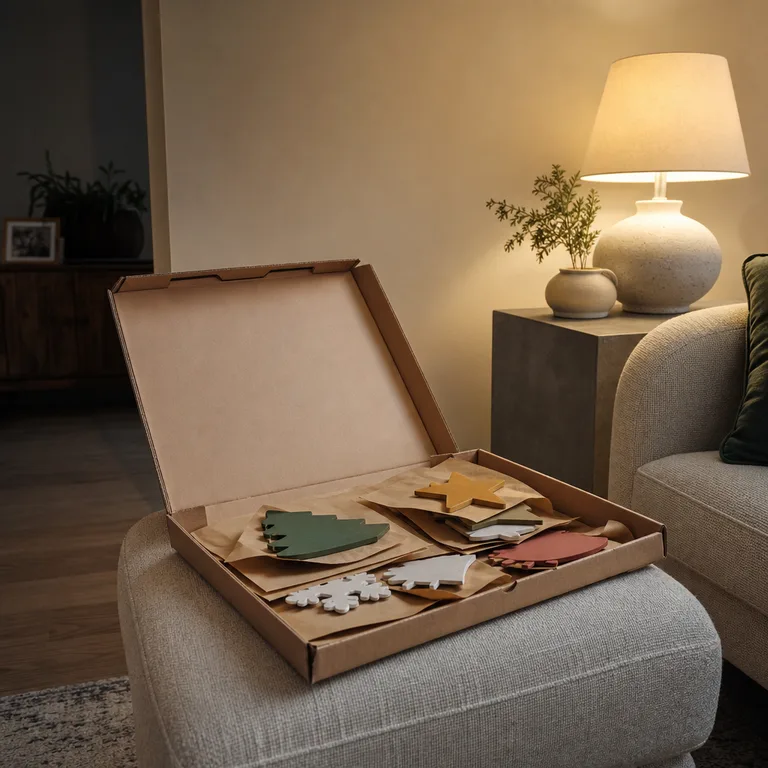
Flat storage prevents thin decorations from bending at the bottom of a deep box. The broad shape also slides neatly onto a closet shelf, where it is easier to retrieve than a stack of loose pieces.
Do not overfill the box or force the lid closed over a raised decoration. Add a plain label to the spine so it can be identified while stored flat.
Worth knowing: This approach is not suitable for heavy toppers, thick ceramic pieces, or decorations that need rigid edge protection.
4.Wind string lights around a cut cardboard panel
Cut a firm rectangle from a cardboard box and make small notches at both short ends. Wind one light strand around the panel in loose, even loops, then secure the plug loosely so it does not unravel.
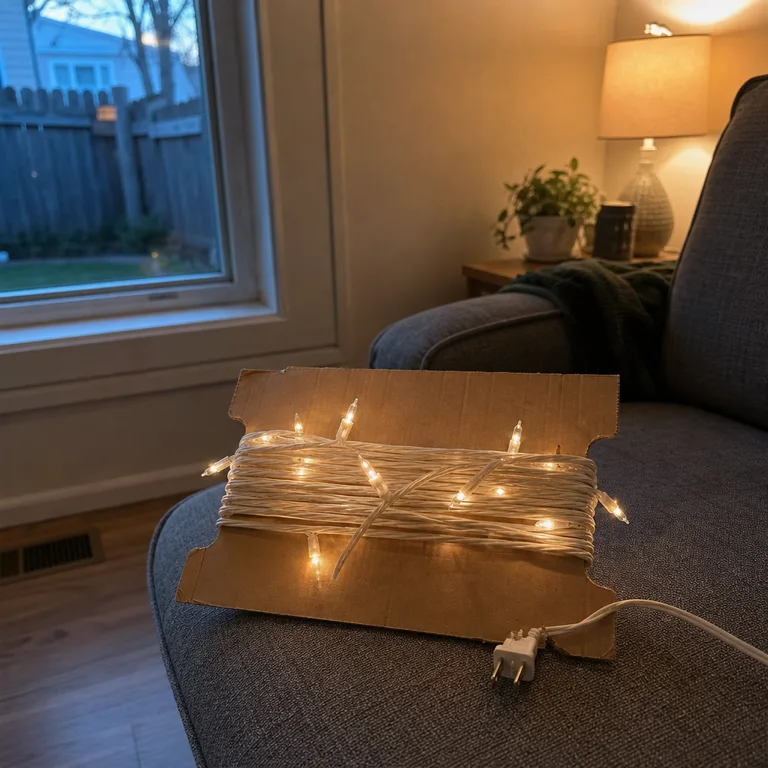
A flat panel keeps wires visible and reduces the knot of cords that can form in a bin. It also makes it easier to check each strand before decorating next season.
Remove batteries from battery-operated lights according to their instructions, and store only strands that are fully dry. Write the tree, window, or outdoor area served by each strand directly on the cardboard.
Worth knowing: Cardboard panels work best for lighter strands; bulky outdoor cords may need a round container instead.
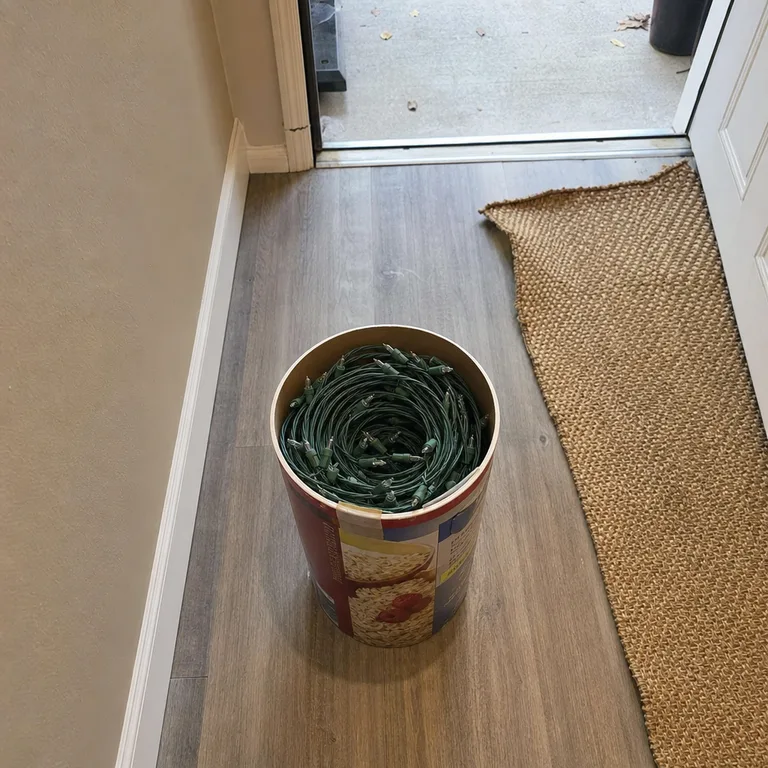
5.Coil heavier light strands in a round oatmeal container
A round pantry container, such as an empty oatmeal canister with a lid, can hold a loose coil of thicker holiday lights. Coil the strand without sharply bending the wire near plugs or bulb sockets, then tuck the end inside before closing the lid.
The round shape follows the natural curve of heavier cords and offers more protection than a loose bundle in a carton. It is particularly useful when several outdoor-rated strands need to stay separate.
Make sure the lights are dry, and inspect cords for damaged insulation before packing them away. A small label on the lid can identify the location where the strand is used.
Worth knowing: One container usually holds only one thicker strand comfortably, so this can use more shelf space than cardboard panels.
6.Store garland in a wardrobe box with a hanging rail
Use a leftover wardrobe-moving box for long garland and lightweight wreaths. Hang each piece from the rail with ribbon, twine, or a hanger so the foliage is not compressed at the bottom of a carton.
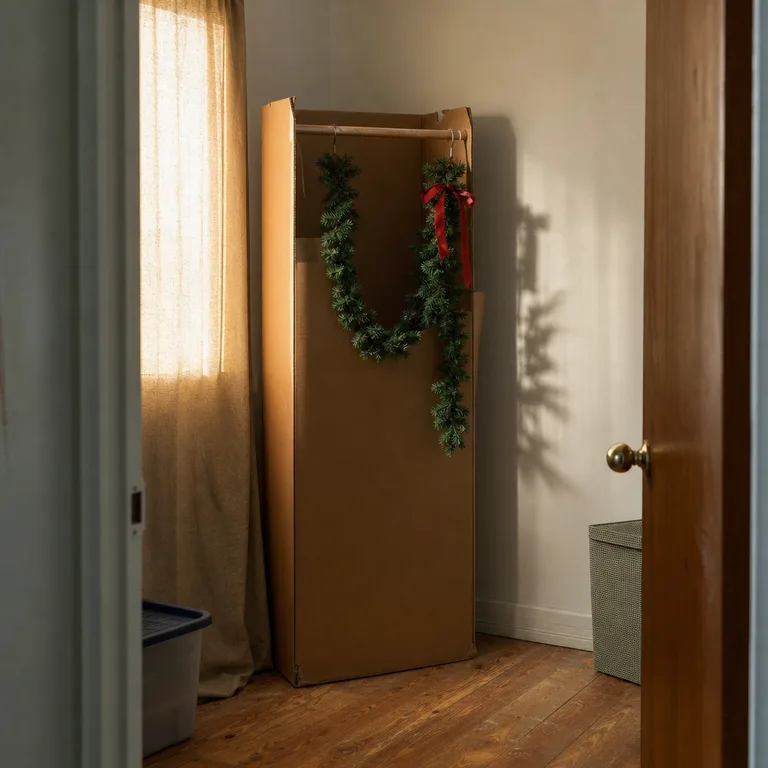
Hanging storage helps garland keep its shape and reduces the time needed to fluff crushed branches next year. It also separates wired garland from soft textiles that could snag on it.
Set the box in a dry closet, interior storage room, or other protected area. A damp basement, known leak area, or humid garage can encourage mildew on fabric ribbons and damage cardboard.
Worth knowing: Wardrobe boxes are tall and awkward to store in small homes without a suitable closet or storage corner.
7.Pad a wreath inside a large appliance box
Lay a wreath flat inside a large appliance or moving box, then surround it with crumpled packing paper. A cardboard collar cut to the wreath’s diameter can help keep it centered and prevent the outer branches from getting crushed.
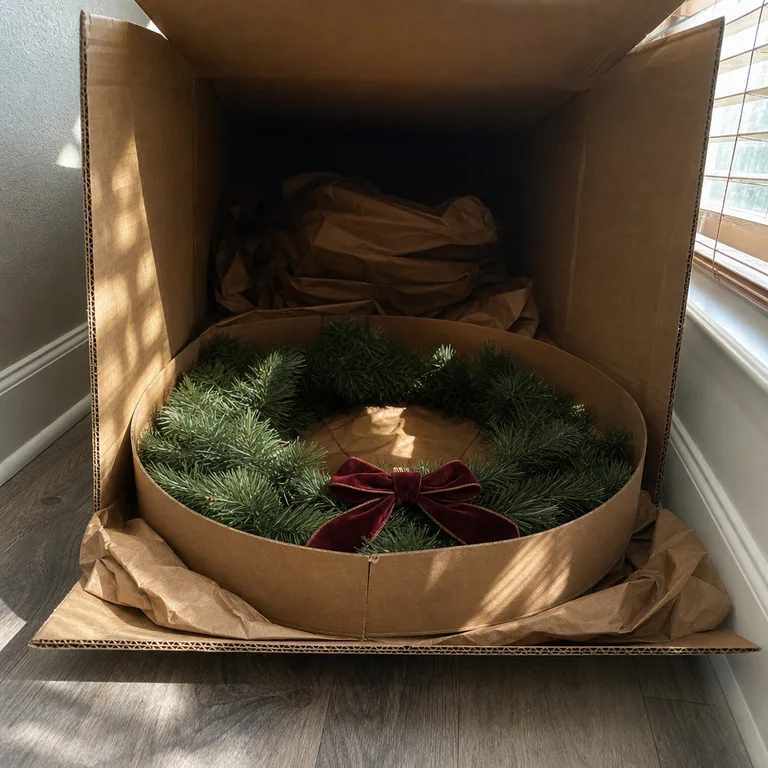
This gives a wreath room to retain its circular form without requiring a purpose-made storage case. It is also a practical use for a large box that would otherwise take up space after an appliance delivery.
Keep the box off damp concrete and away from attic heat, which can affect faux foliage, glue, and ribbon. Store it flat, with nothing heavy resting on the lid.
Worth knowing: A large wreath box takes up considerable storage space, especially in apartments and small closets.
8.Fold tree skirts and stockings into labeled shoe boxes
Fold clean, fully dry tree skirts, stockings, fabric ribbon, and small cloth decorations into loose bundles. Put related pieces into reused shoe boxes, with a simple paper label on each lid.

Shoe boxes prevent soft decorations from spreading through larger cartons, and labels make it easier to find the stockings without opening every box. Keeping fabrics together also avoids snagging them on ornament hooks or wired garland.
Do not pack textiles while they are damp from washing or outdoor display. In a humid climate, an indoor closet is usually a safer choice than a shed or basement.
Worth knowing: Bulky quilted tree skirts or thick knitted stockings may need a larger carton to avoid being tightly compressed.
9.Keep hooks and small hardware in a takeout container
Wash and thoroughly dry a lidded takeout container for ornament hooks, replacement bulbs, hanging strips, and other small holiday hardware. Small paper cups inside the container can divide the contents by type.
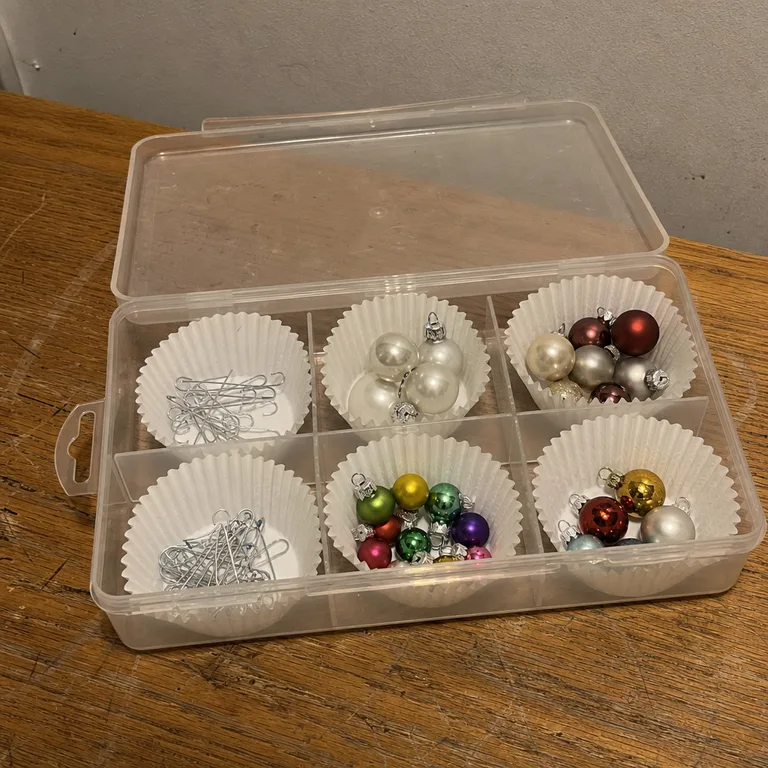
Keeping these pieces together avoids the annual search for hooks after the tree is already up. A secure lid also stops sharp metal hooks from scattering through a box of textiles or ornaments.
Cover sharp hooks or place them in a small folded-paper packet before adding them to the container. Label the lid clearly, since a plain food container can otherwise be mistaken for leftovers or recycling.
Worth knowing: Thin reused containers can crack if heavy boxes are stacked on them.
10.Make a taped cord box for extension leads
Choose a sturdy carton for extension cords, timers, power strips, and remote controls used with holiday displays. Reinforce weak seams with packing tape, then add cardboard dividers to give each category its own section.
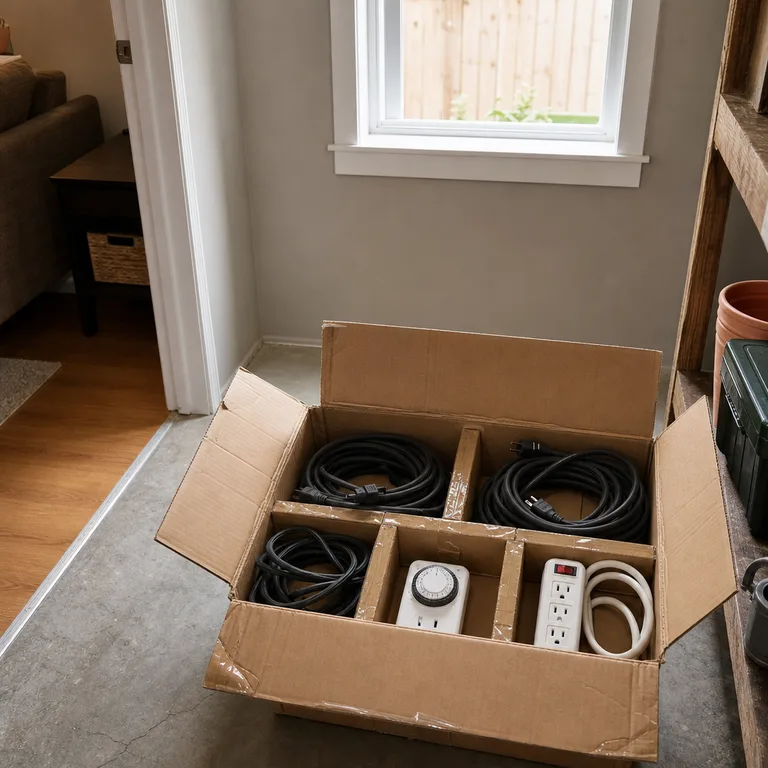
Loose coils are easier on cords than tight bends around plugs, and separated sections make setup less confusing next year. Add a label for indoor or outdoor use if both types are stored in the same box.
Check cables for damage before putting them away, and keep the box dry. Avoid storing electrical items in a place with condensation, flooding risk, or large temperature swings.
Worth knowing: A cardboard cord box will eventually wear out if it is moved often or filled with very heavy power equipment.
11.Turn a gift box into a sentimental ornament archive
Reuse a rigid gift box for the ornaments that are most delicate, meaningful, or difficult to replace. Create padded compartments with folded cardboard and tissue so each ornament has its own protected place.
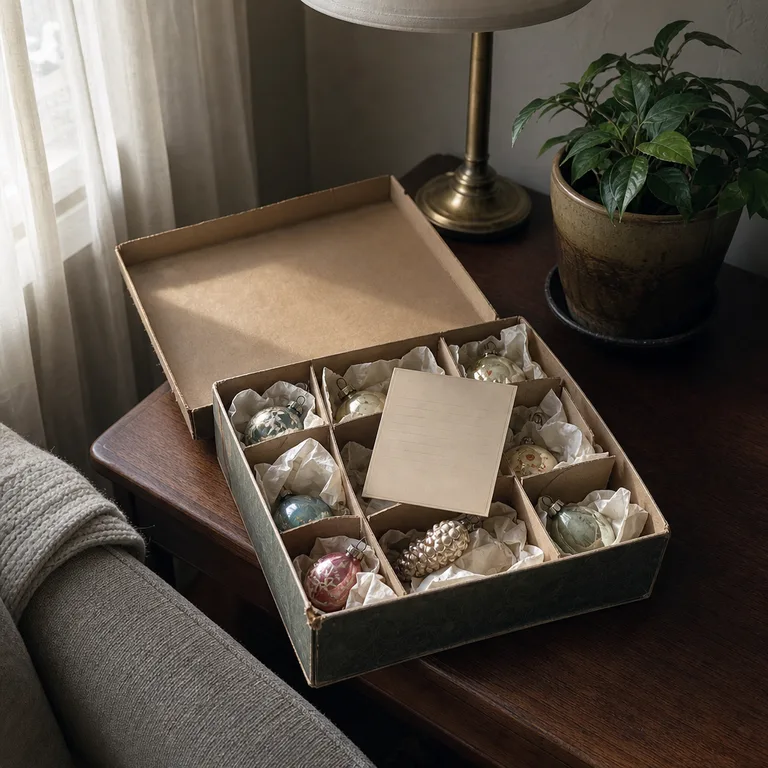
A dedicated archive keeps special pieces from being mixed into everyday tree decorations. Add a short inventory card inside the lid to show what belongs in the box and make missing pieces easier to notice.
Use plain, dry tissue rather than printed paper that could transfer color onto delicate finishes. Place this box high in the storage stack, where it will not be crushed.
Worth knowing: A gift box protects only a small collection, so it is best reserved for the most fragile ornaments.
12.Stack labeled cartons on a raised shelf
Once each category is packed, group boxes for ornaments, lights, textiles, and outdoor items on a raised closet shelf or sturdy shelving unit. Put heavier cartons on lower levels and lighter, fragile boxes above them.
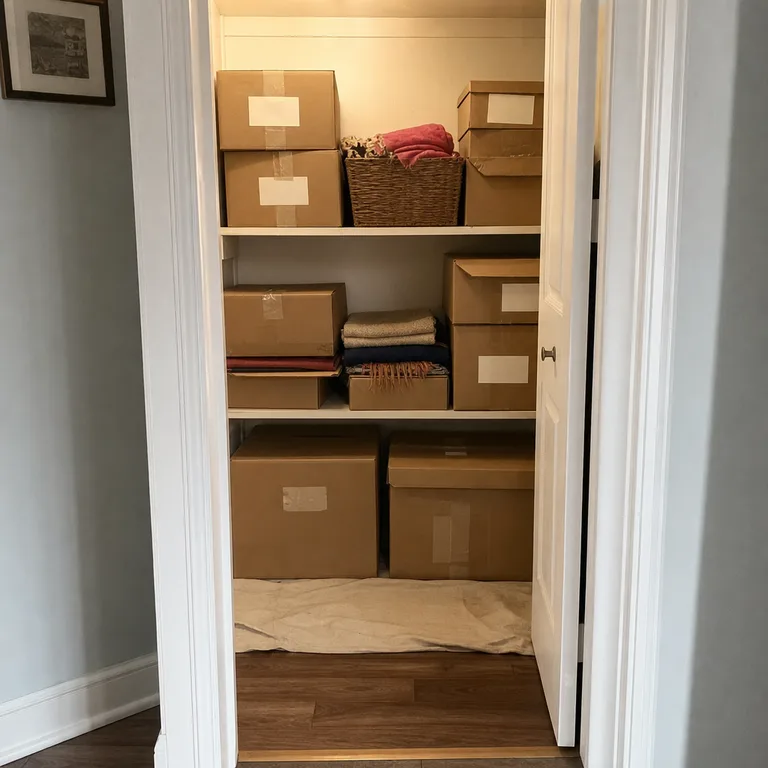
A simple category system makes decorating and packing away faster because the right box can be found without opening everything. Labels can be brief: the contents, room or use, and whether the box is fragile.
Avoid hot attics, damp basements, and any storage spot with a known leak. If shelving is not available, raise boxes above the floor with a stable, dry surface rather than placing cardboard directly on concrete.
Worth knowing: Raised shelves must be strong enough for the load and safely installed, which can be difficult in rentals or on lightweight closet shelving.
About the author
Dana Ruiz, Senior editor
Dana writes about small-space living, storage and low-cost decorating.
Keep reading
10 Pot Lid Storage Ideas That Stop the Cabinet Avalanche
September 28, 2026

10 Mail and Key Organization Ideas for a Tiny Entryway
September 28, 2026
12 Corner Kitchen Cabinet Organization Ideas Without a Remodel
September 28, 2026

10 Small Bedroom Vanity Ideas That Share Space With a Desk or Dresser
September 30, 2026