10 Easy Backpack Storage Ideas for a Clear Small Entryway
A small entryway works better when each school bag has a fixed return spot near the door, along with a nearby place to unload papers, lunch containers, and library books. These setups keep the walking route open while making next-day pickup part of the same short routine.
As an Amazon Associate I earn from qualifying purchases.
1.Use a Low Dedicated Backpack Rail Beside the Door
Mount a sturdy rail at a height children can reach, leaving enough room beneath each hook for a full backpack. Add a shallow wall sorter below it for folders, permission slips, and anything that needs to come out of the bag that afternoon.
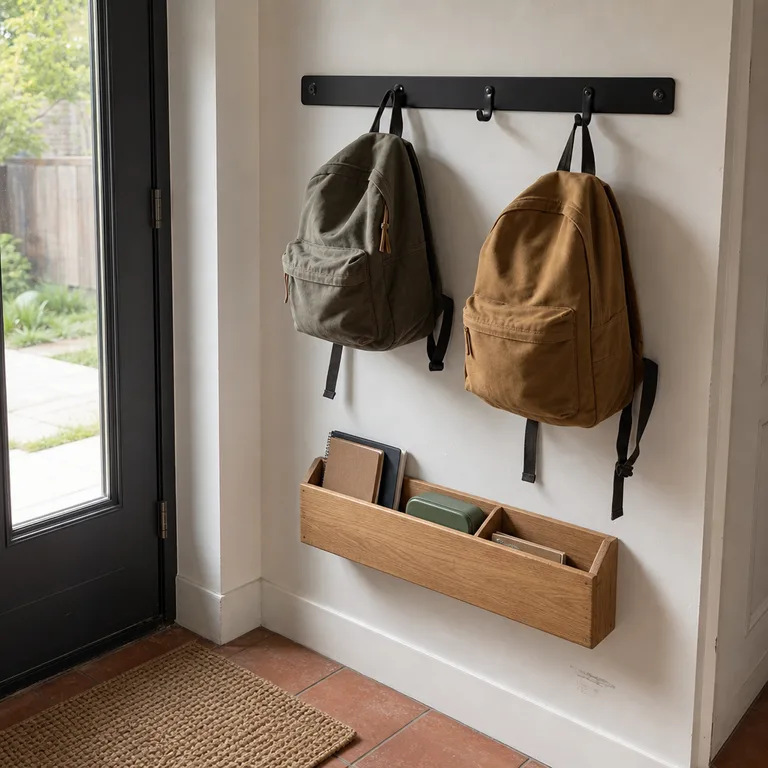
This creates a simple arrival sequence: hang the bag, empty the papers, and return the bag to the same place for morning. A basic utility rail or separate heavy-duty hooks can work well on a narrow strip of wall that would otherwise go unused.
Worth knowing: A rail needs secure mounting into suitable wall support, and overcrowded hooks can make bags hard to grab without bumping the door.
2.Give a Storage Bench Separate Bag Cubbies
Use a narrow bench with open lower cubbies and assign one bay to each backpack. The seat gives children a stable spot to open folders, check lunch containers, or repack supplies without spreading them across the floor.
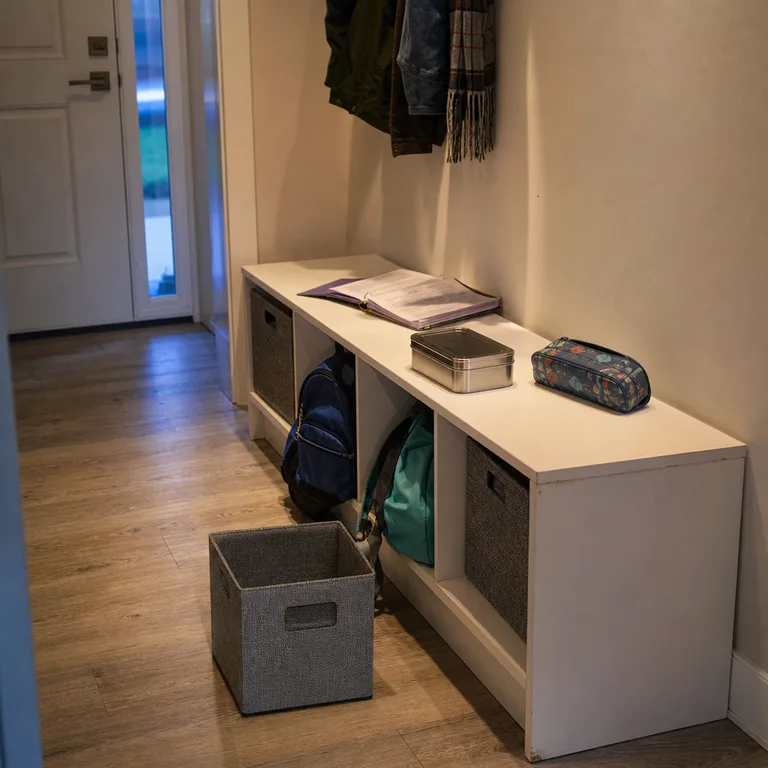
A secondhand bookcase-style bench or simple cube unit can provide this setup without custom cabinetry. Keep the bench shallow enough that the door swing and the main walking route remain clear.
Worth knowing: A bench can become a dumping surface unless the top is reserved for the short daily emptying and packing routine.
3.Mount Open Wall Baskets as Bag Parking Bays
Install deep wall baskets that hold backpacks upright rather than letting them spread across the entry floor. Place a smaller basket below or beside them for lunch boxes, papers, and library books that need attention.
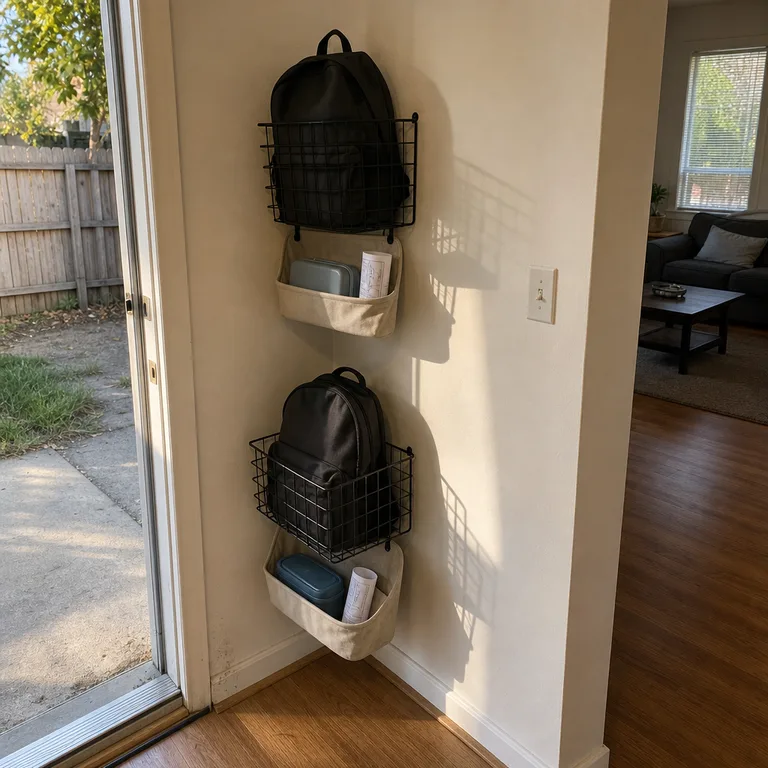
Wall-mounted bins keep storage off the floor, which is useful in an especially tight hall. Reused wire baskets, sturdy magazine bins, or open utility baskets can give each child a clear bag bay.
Worth knowing: Baskets must be mounted for the weight of loaded school bags, and their depth should not intrude into a narrow walkway.
4.Turn a Short Bookcase Into Backpack Lockers
Set a low bookcase against the wall and use one shelf per backpack. Leave the top clear enough for a shared unloading counter with a paper basket and a place for lunch containers.
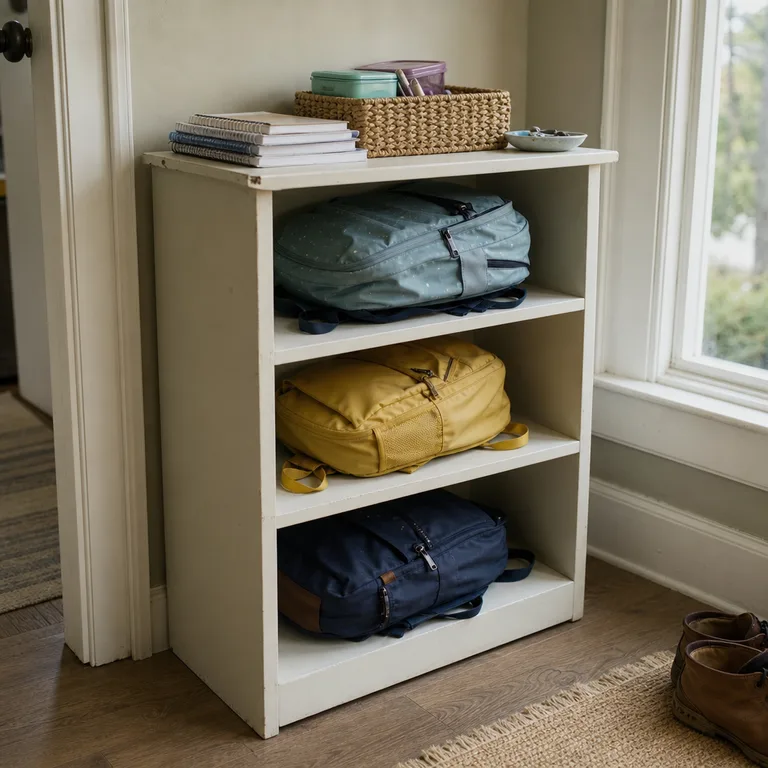
An older bookcase can become more purposeful with labels, removable bins, or simple pull handles on baskets. Open shelves make it easy to see whether a bag is home, packed, and ready for the next school day.
Worth knowing: Choose a low, stable piece and anchor it when needed, especially if children will pull bags in and out independently.
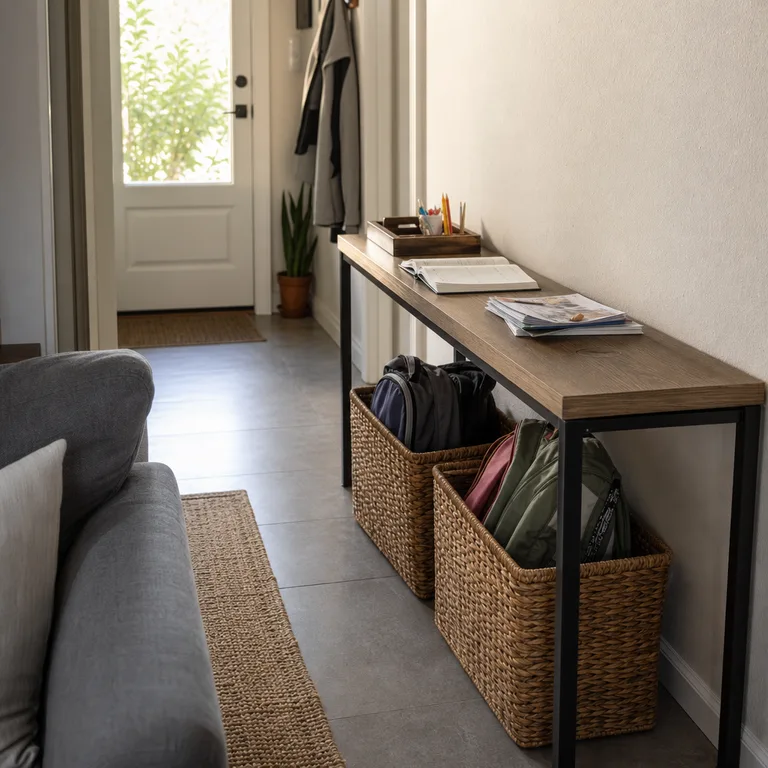
5.Pair a Slim Console With Under-Table Bag Baskets
Place roomy baskets beneath a shallow console so backpacks can stand upright under the tabletop. Use the surface for the evening reset: sorting school papers, returning supplies, and setting aside items that need to leave the house tomorrow.
This arrangement separates bag parking from the paperwork that tends to collect near the front door. A reused side table or slim console paired with mismatched baskets can look intentional when the baskets are similar in size.
Worth knowing: This works best when baskets can slide out without blocking the entry, so it may not suit a very tight door clearance.
6.Use the Inside of a Closet Door for Backpack Pockets
Hang an over-door pocket organizer inside an entry closet to hold lighter backpacks, folders, and small school supplies. Keeping the system inside the closet protects the hall from visual clutter and leaves more room near the door.
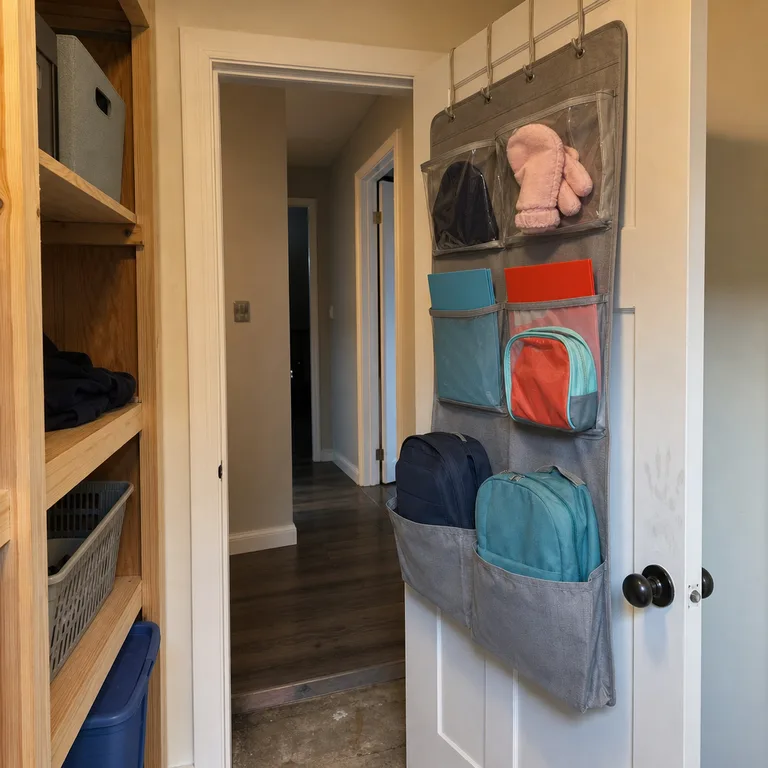
Use the larger lower pockets for compact bags and the smaller pockets for lunch bags, mittens, notes, and chargers. The closet shelf can handle bulkier items that do not fit neatly into the organizer.
Worth knowing: Over-door organizers are better for lighter loads; a heavily packed backpack may strain the hanger or prevent the closet door from closing properly.
Related: 10 Small Entryway Ideas for Coats When You Have No Coat Closet
7.Make a Rolling School-Day Cart Beside the Entry
A slim rolling cart gives school items their own movable station: backpacks on the lowest level, papers in trays at the middle, and lunch containers or next-day supplies on top. Park it against the wall during the school week and roll it aside when the entry needs to be open.
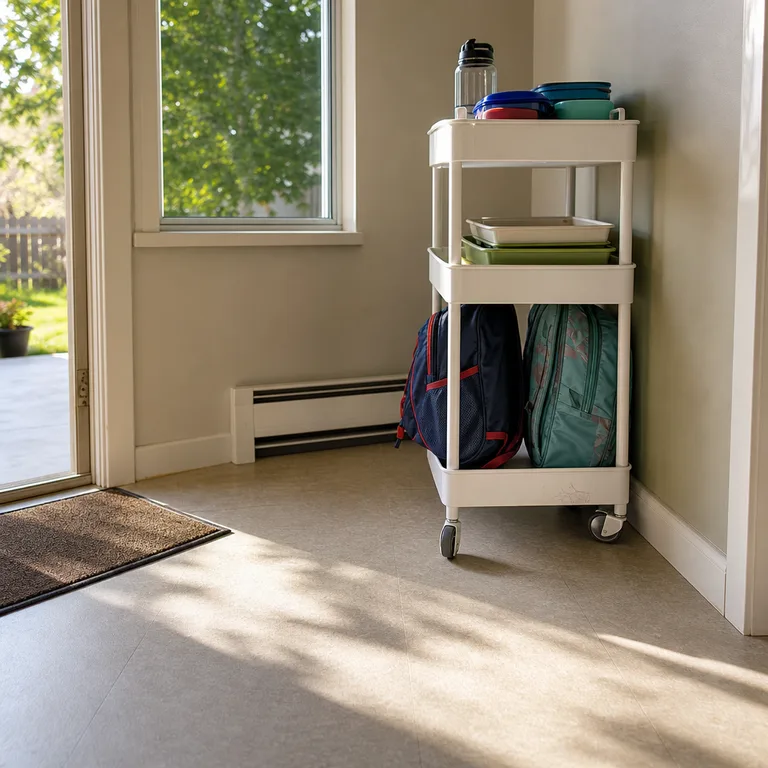
This option is useful for families whose daily needs change often or who cannot mount storage to the wall. A basic utility cart can be improved with trays, bins, and labels rather than a matching set of organizers.
Worth knowing: The cart needs locking wheels or a stable parking spot so it does not roll into the walkway or door path.
8.Build a Backpack Stop on the Stair Landing Wall
If the front door opens toward stairs, use the landing wall as the school bag stop rather than carrying bags farther into the home. A shallow shelf for papers above floor baskets creates a compact place to unload and repack without narrowing the stairs.
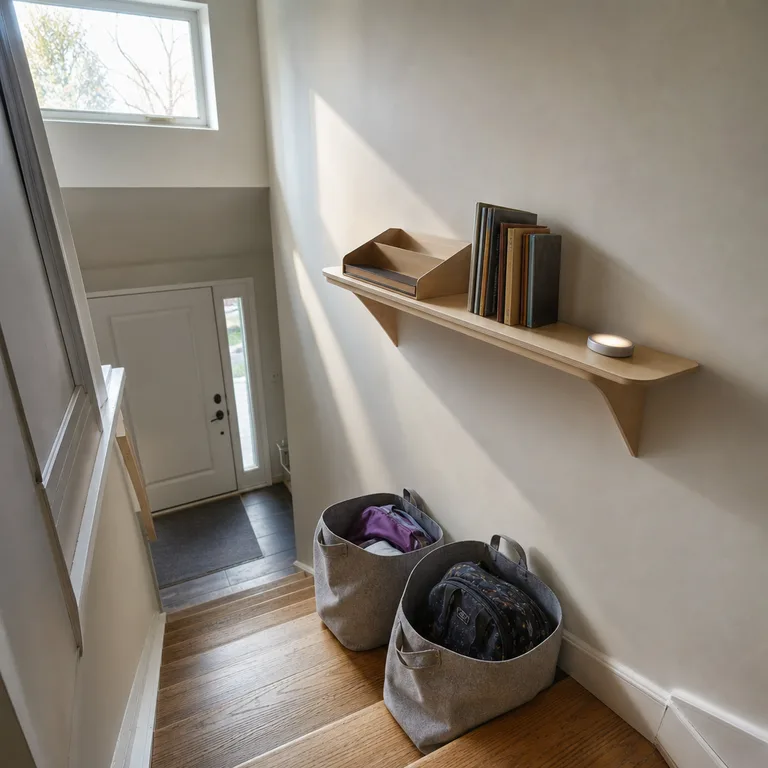
Felt baskets or sturdy handled bins can hold backpacks at the base of the wall, while the shelf catches library books and forms that need review. This is an attainable weekend project using a simple board, brackets, and reused baskets.
Worth knowing: Keep every piece clear of stair treads and handrails, and avoid creating a trip point on a small landing.
9.Set Up a Pegboard Wall for Bags and Daily Supplies
Create a flexible school station with a pegboard, deep bag hooks, a paper tray, and small baskets for pencils or lunch supplies. The layout can change as children grow, bags get larger, or the family’s routine shifts.
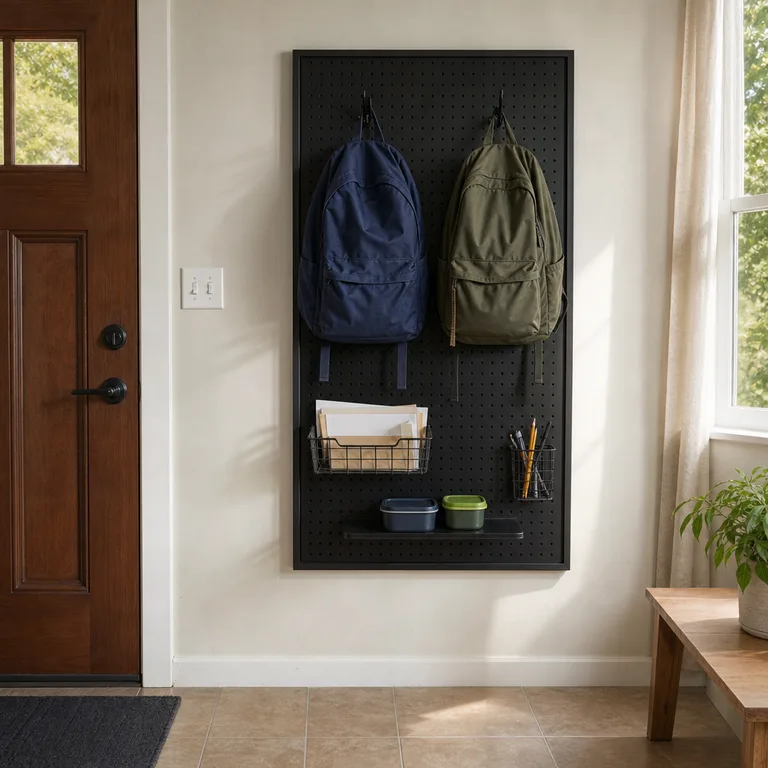
A framed pegboard panel makes use of a narrow blank wall while keeping small items visible during the evening reset. Use hooks rated for the expected load rather than relying on lightweight craft hooks for full backpacks.
Worth knowing: Pegboard hardware can loosen under repeated heavy use, so secure the panel well and check hooks regularly.
10.Dedicate the Lower Half of a Shallow Cabinet to School Bags
Use the lower compartments of a tall, shallow cabinet as open backpack parking, with one section assigned to each child. Reserve upper shelves for folders, charging items, lunch containers, and other supplies that need to be checked each evening.
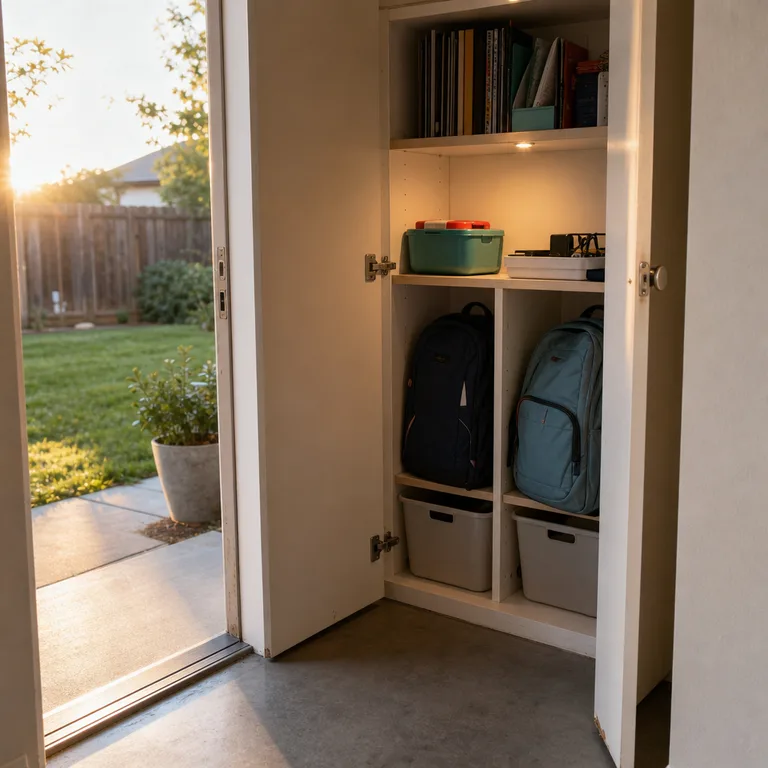
A secondhand cabinet or simple storage unit can hide much of the visual clutter while still giving bags an easy pickup point. Keeping lower doors open during the busy school week can make the routine faster, then closing them later makes the entry look calmer.
Worth knowing: Measure loaded backpacks before choosing a cabinet, since many shallow units are not deep enough for bags to fit without crushing straps or blocking the doors.
About the author
Dana Ruiz, Senior editor
Dana writes about small-space living, storage and low-cost decorating.
Keep reading
6 Budget Umbrella Storage Ideas to Keep a Small Entryway Dry
November 6, 2026
8 Budget Baseball Cap Storage Ideas That Avoid Crushing
November 6, 2026
10 Easy Decluttering Wins for a Home That Feels Too Full
November 6, 2026
8 Budget Ways to Make a Gravel Garden Look Intentional
November 7, 2026