8 Towel Drying Arrangements for Two People Sharing a Small Bathroom
A small bathroom can dry two in-use bath towels without turning the door, radiator, or vanity into a damp pile. These arrangements give each person a defined spot and leave enough exposed surface for air to move around the fabric.
As an Amazon Associate I earn from qualifying purchases.
1.Give Each Person a Separate Hook on the Back of the Door
Use two individual hooks on the inside face of the bathroom door, leaving a useful gap between them. Assign one hook to each person so towels stay easy to identify instead of being layered together on a single hook.
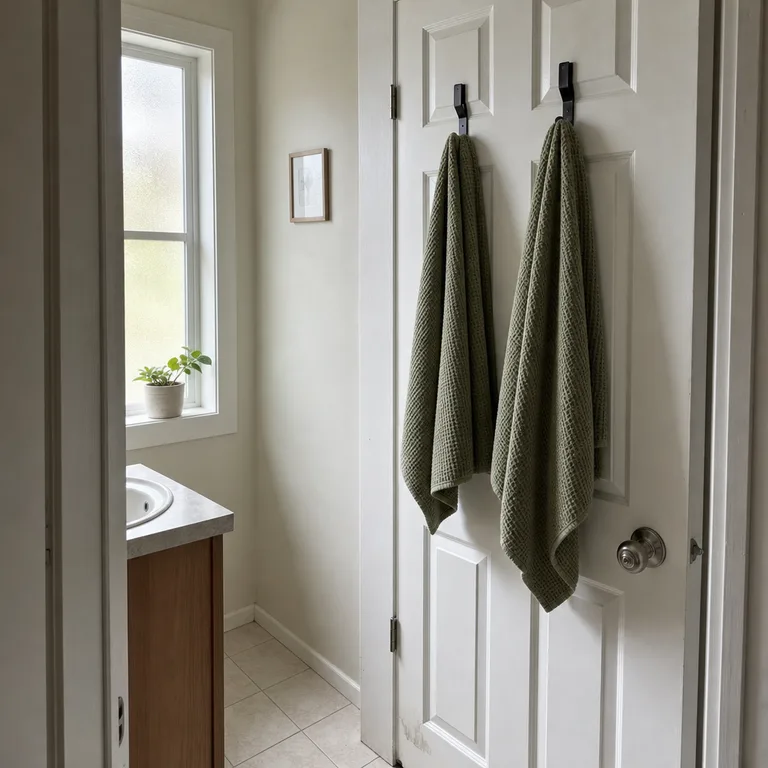
Over-door hooks are the simplest option where drilling is not allowed, while screw-mounted hooks are more secure if the door can take them. Hang towels fully open as far as the hook shape allows, and check that the door can still open without hitting a wall, radiator, vanity, or toilet.
Worth knowing: A hook exposes less towel surface than a rail, so drying can be slow in a bathroom with weak ventilation.
2.Install Two Short Towel Rails Side by Side
Two short rails on the same wall give each person a dedicated drying area without needing one long stretch of wall. This works especially well above a vanity or beside a shower when the towels can hang without overlapping.
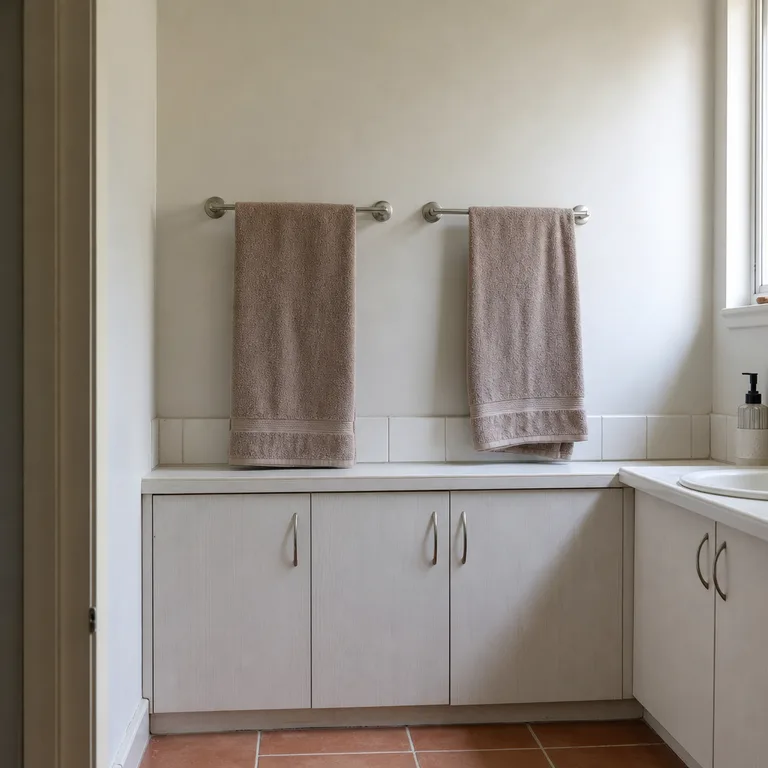
Choose rails that fit the available wall space and mount them at a height where the towel hems clear the vanity, floor, and nearby fixtures. Reusing matching hardware from elsewhere in the home can keep the update simple, but use suitable fixings for drywall, tile, or masonry.
Worth knowing: This arrangement needs a clear section of wall wide enough to keep two damp towels from touching.
3.Add a Door Hook to an Existing Wall Rail
Keep one person’s towel on the wall rail already in place, then add a separate hook on the door for the second towel. It solves the common one-rail problem without removing hardware that still works.
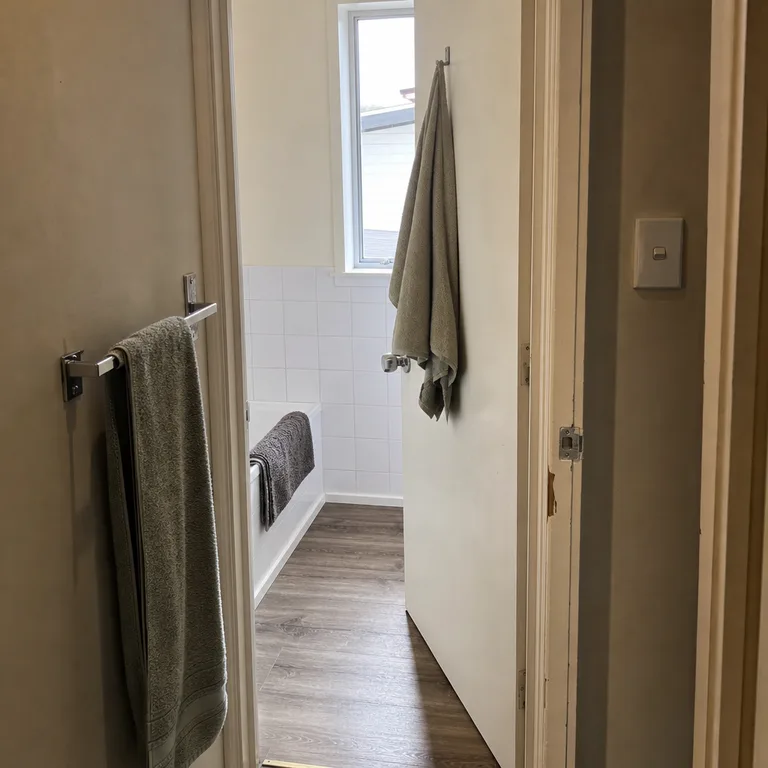
A slim over-door hook is useful for renters, while a fixed hook may be steadier on a solid door. Position the hook on the bathroom side and test the door’s full swing, including whether a wet towel will brush against the wall or another fixture.
Worth knowing: The two towels will dry at different rates if the door area receives much less air circulation than the wall rail.
4.Place a Compact Freestanding Towel Rack by the Shower
A small freestanding rack gives two towels separate horizontal bars without drilling into tile or walls. Put it near the shower for convenience, but outside the area that receives direct spray.
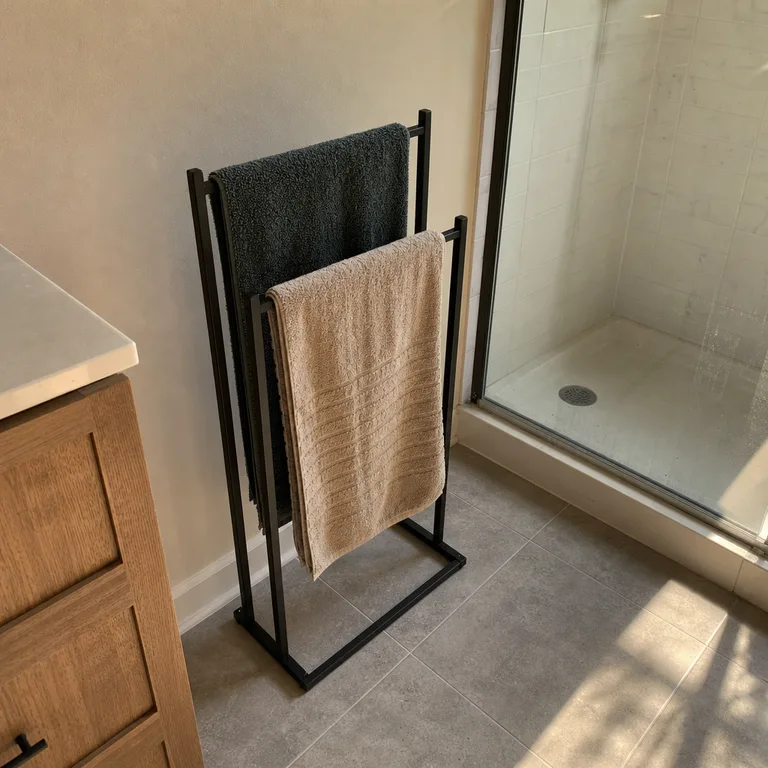
Look for a rack with a stable base and enough distance between bars for the towels to hang without being pressed together. Pads beneath the feet can help protect finished flooring and reduce slipping, especially on smooth tile.
Worth knowing: A freestanding rack takes up floor space and can become an obstacle in a very narrow bathroom.
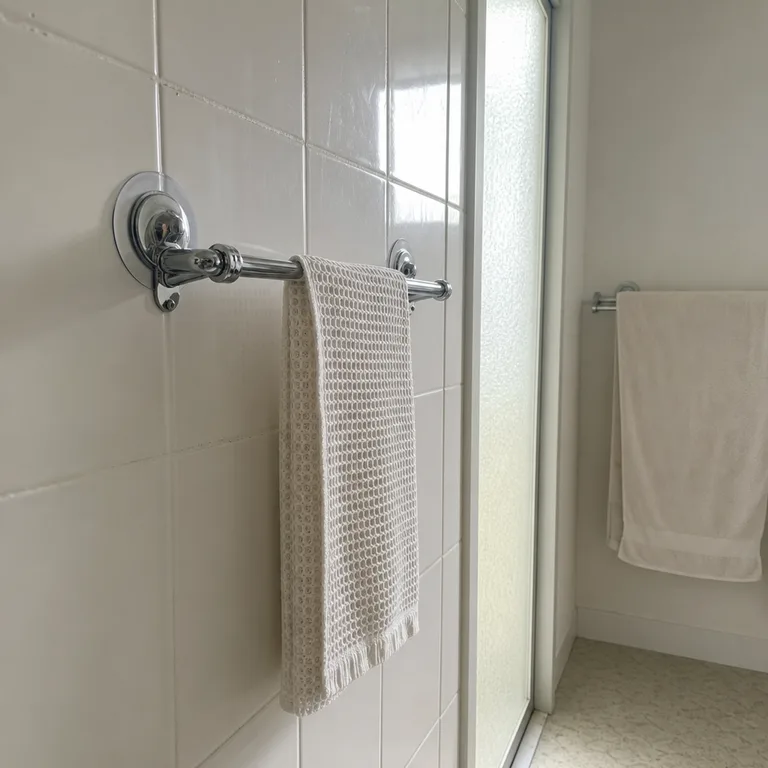
5.Use a Suction Towel Rail on Suitable Smooth Tile
A suction rail can turn an unused patch of smooth tile into a drying spot for a lightweight towel. It is most useful when one fixed rail already handles the other person’s bath towel.
Follow the manufacturer’s surface and weight guidance closely. The tile needs to be clean, glossy, and non-porous, and the suction cups should be checked regularly rather than trusted indefinitely in a humid room.
Worth knowing: Suction rails are not dependable on textured tile, porous grout, uneven surfaces, or for heavy soaked towels.
6.Fit a Swing-Arm Rail on an Open Wall
A swing-arm rail holds two towels from one compact mounting point, with each arm opened outward to create air space. It can be a strong choice near a vanity where there is wall space but not enough width for side-by-side rails.
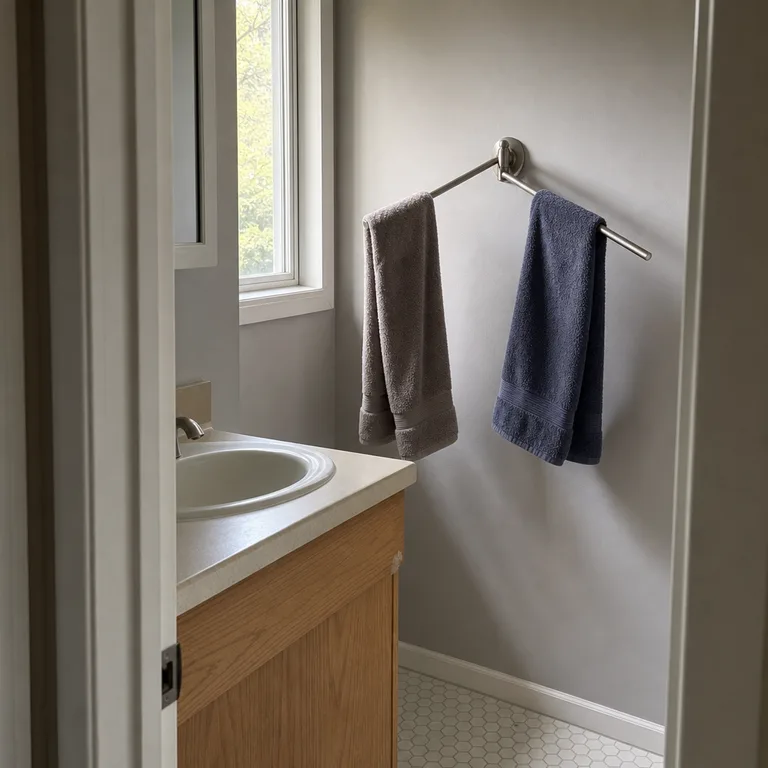
Mount the rail into suitable structure or use the anchors specified for the wall type and towel load. Open the arms only as far as the room allows, making sure they do not block cabinet doors, mirror access, or the route through the bathroom.
Worth knowing: This option requires secure installation and may not suit rentals or thin walls without reliable anchoring.
7.Choose a Two-Level Rail With Towels on Separate Bars
A two-level rail uses vertical wall space to separate two in-use towels. One towel hangs on the upper bar and the other on the lower bar, leaving the floor and door free.
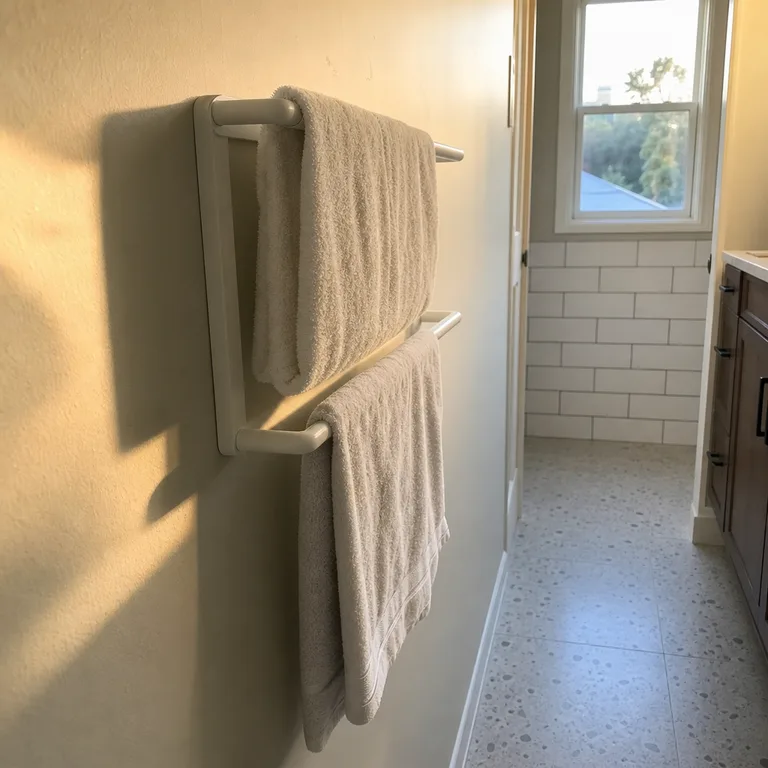
Choose a model with enough projection and vertical spacing that the upper towel does not rest against the lower one. Spread each towel across its bar rather than folding it into a narrow strip, and use the bathroom fan or open window when the climate and privacy allow.
Worth knowing: Shallow two-level rails can trap damp fabric together, making them little better than a crowded single bar.
8.Separate Hand Towels From Bath Towels With a Ring and Rail
Put the shared hand towel on a ring beside the sink and reserve the main rail for the two bath towels. This clears the rail of smaller laundry and makes it easier to keep the towels used after washing hands separate from those used after bathing.
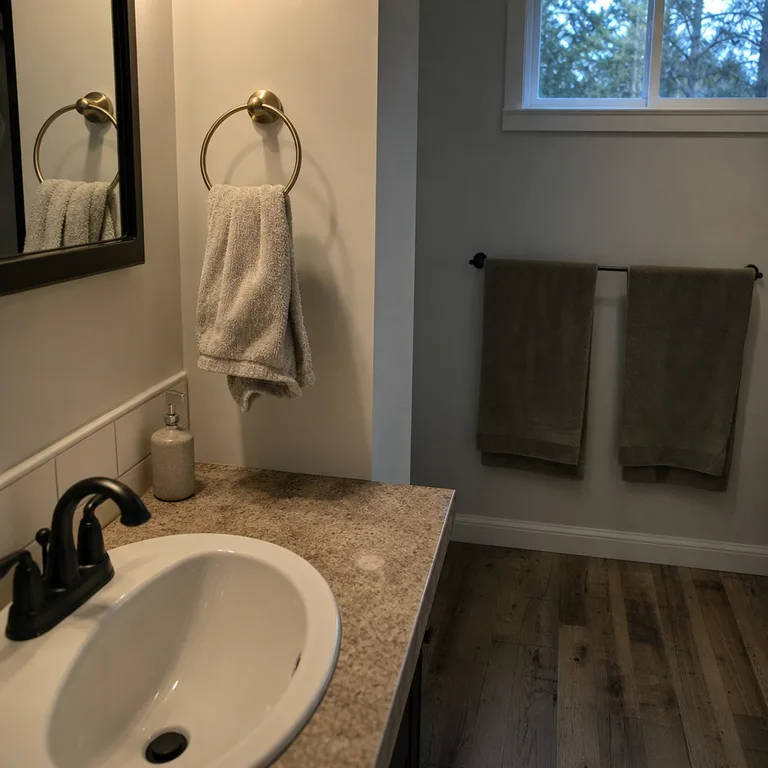
A ring can be mounted near the sink with screws, or with an approved adhesive system where the wall surface and rental rules permit it. Keep it far enough from the bath-towel rail that the hand towel does not brush against damp larger towels.
Worth knowing: A hand-towel ring improves organization but does not create another full-size drying location for a bath towel.
About the author
Dana Ruiz, Senior editor
Dana writes about small-space living, storage and low-cost decorating.
Keep reading
8 Christmas Gift-Wrapping Stations That Pack Away in a Small Home
October 31, 2026

7 Small Bedroom Layouts With Sloped Ceilings
October 31, 2026
8 Christmas Buffet Setups for a Small Kitchen Without an Island
October 29, 2026
7 Rewear Clothes Stations for a Small Bedroom Without a Chair Pile
October 29, 2026