8 Stair Riser Looks That Update Plain Steps Without Rebuilding Them
These updates treat only the vertical riser faces, leaving treads, nosings, traction, rise, and run exactly as they are. Choose a finish approved for the riser substrate and entry conditions, then repeat it consistently from the bottom step to the top landing.
As an Amazon Associate I earn from qualifying purchases.
1.Paint Risers One Grounding Color
Painting every riser one muted color gives a plain staircase a stronger outline without competing with the existing wood, laminate, or painted treads. A deep green, charcoal, soft blue, or warm clay shade can also tie the stairs to an entry wall or nearby door color.
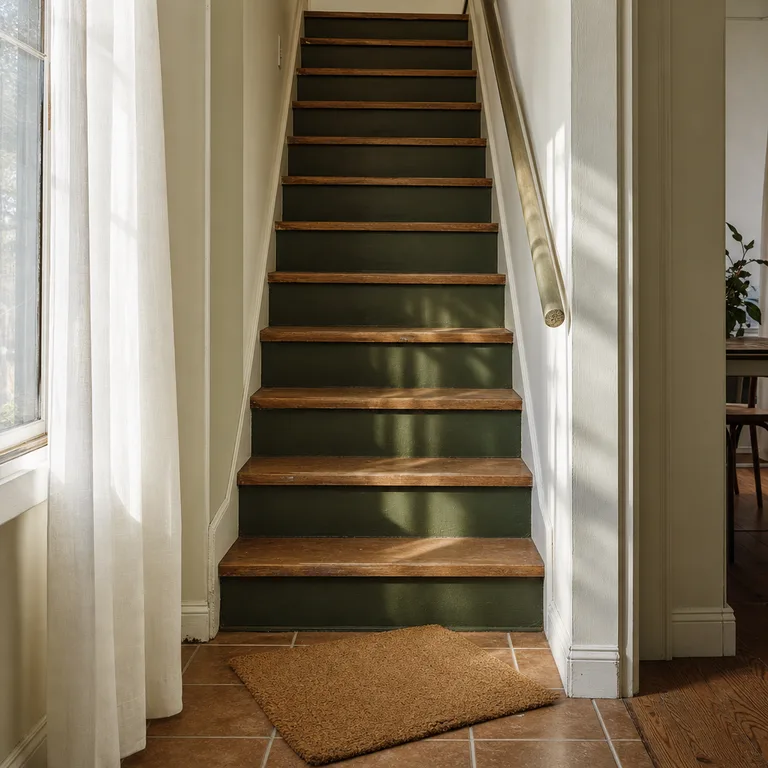
Clean and lightly prepare the riser faces, then use a durable paint compatible with the material already there. Mask along the edges carefully and keep paint entirely off the tread surface and front edge; in a busy entry, allow the finish to cure fully before regular use.
Worth knowing: Paint shows scuffs on heavily used lower risers, especially where wet shoes or bags often brush against them.
2.Add a Narrow Painted Stripe to Each Riser
A single horizontal stripe centered on each neutral riser creates a clean, tailored pattern. It gives the stair a more deliberate look while leaving the visual weight of the treads unchanged.
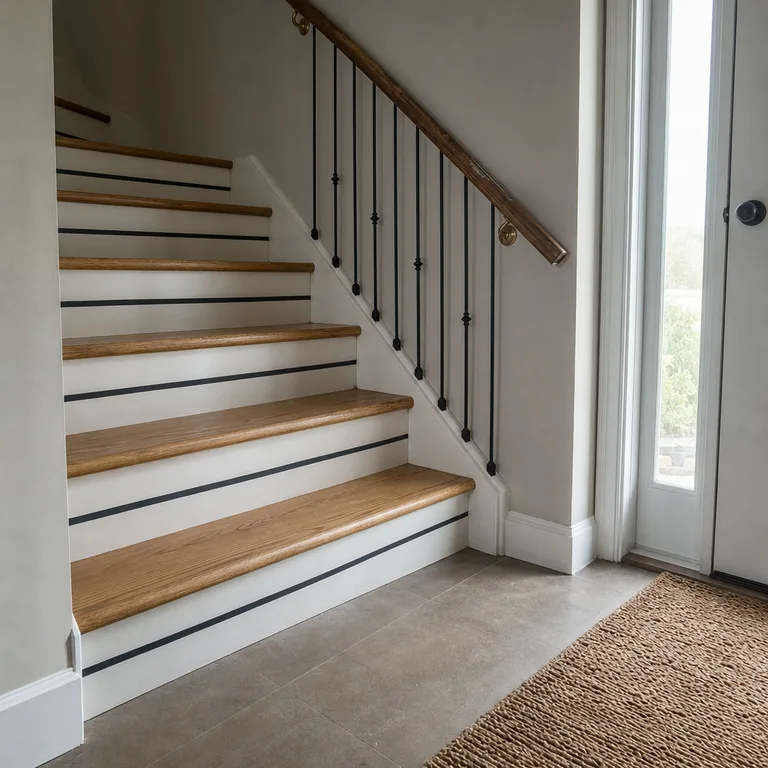
Use the same stripe placement on every step and choose a color with enough contrast to read from the entry. Fine masking tape and a small roller help on smooth risers, but older wood may need extra attention because uneven paint layers and trim can make a straight line look irregular.
Worth knowing: This treatment depends on careful measuring and masking, so it can look distracting if stripe heights vary noticeably from step to step.
3.Cover Risers With Peel-and-Stick Tile Pattern
Peel-and-stick panels with a tile-style pattern can give vertical risers the color and rhythm of a decorative tiled stair. Blue-and-cream geometrics, small checks, or muted Mediterranean-style motifs work best when repeated from the bottom step through the landing.
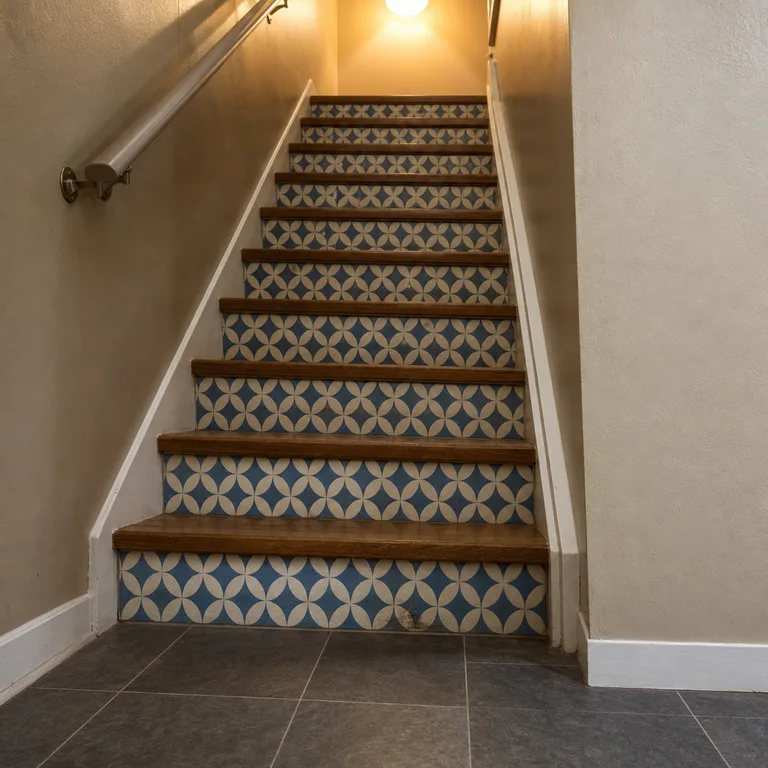
This is an affordable surface update for risers that are smooth, dry, and firmly attached. Wipe away dust and grease, line up the pattern before removing the backing, and press seams and edges firmly without wrapping material onto any tread or stair edge.
Worth knowing: Adhesive panels may lift on textured, damp, or poorly painted risers, particularly near an exterior entry where wet shoes are common.
4.Use Removable Botanical Wallpaper on Risers
Small-scale botanical wallpaper turns the risers into a compact feature wall, especially on a stair enclosed by plain painted walls. A cream ground with sage, blue, or rust details can connect with nearby entry paint without making a narrow stairwell feel overly busy.
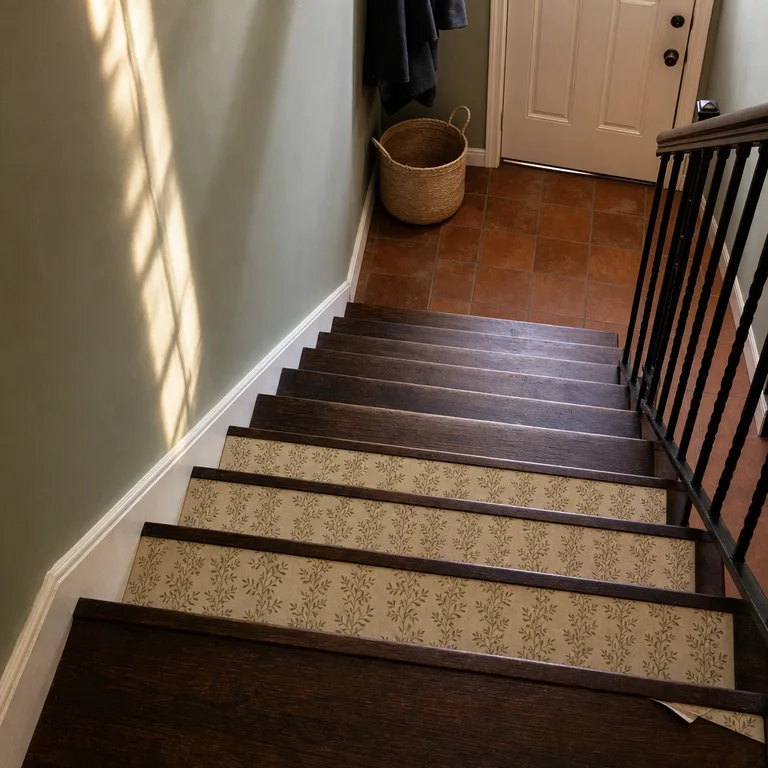
Choose a removable paper only if it is allowed under the home’s rental agreement or building rules, and test a discreet patch first. Cut each piece separately, align the repeat across the risers, and smooth the paper well at the side edges so it stays contained on the vertical face.
Worth knowing: Removable wallpaper is not always truly damage-free, and it may release paint when removed from weak or poorly prepared walls or risers.
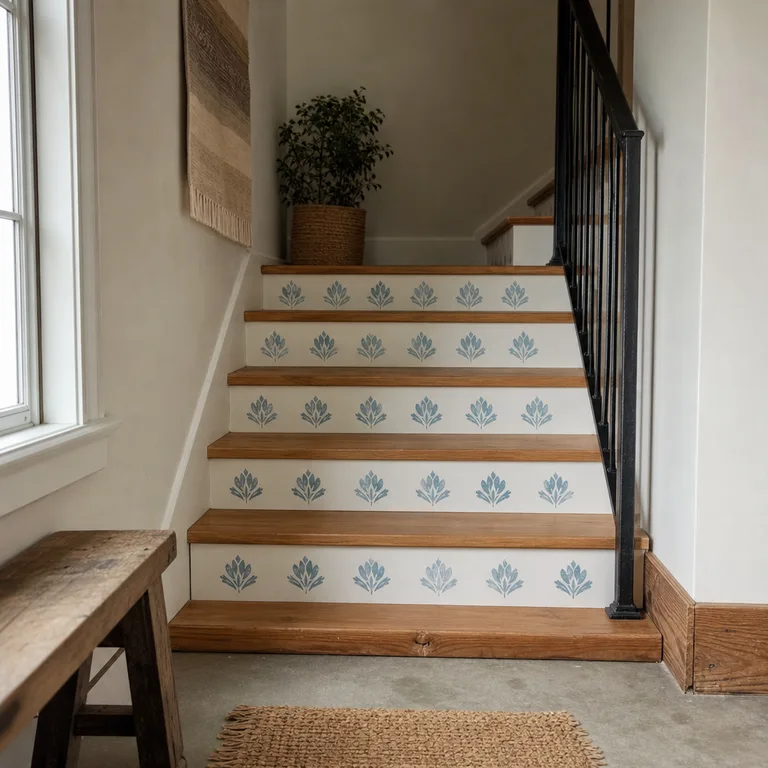
5.Stencil a Repeated Block-Print Motif
A repeated stencil offers the character of patterned tile while keeping much of the original riser color visible. A simple floral, leaf, or block-print shape in one accent color is usually easier to read than a dense multicolor design.
Pick a motif that fits within the shortest riser, then make a placement guide so the pattern sits at the same height on every step. Apply paint with a nearly dry stencil brush or pouncer in light layers, which helps prevent paint from slipping under the stencil edges.
Worth knowing: Stenciling takes patience, and small differences in pressure or paint load can make repeated motifs look uneven.
6.Install Thin Beadboard Panels on Risers
Thin beadboard panels add vertical texture and a traditional finish to otherwise flat risers. White beadboard can brighten a darker staircase, while a painted color can make the grooves more noticeable in a plain entry.
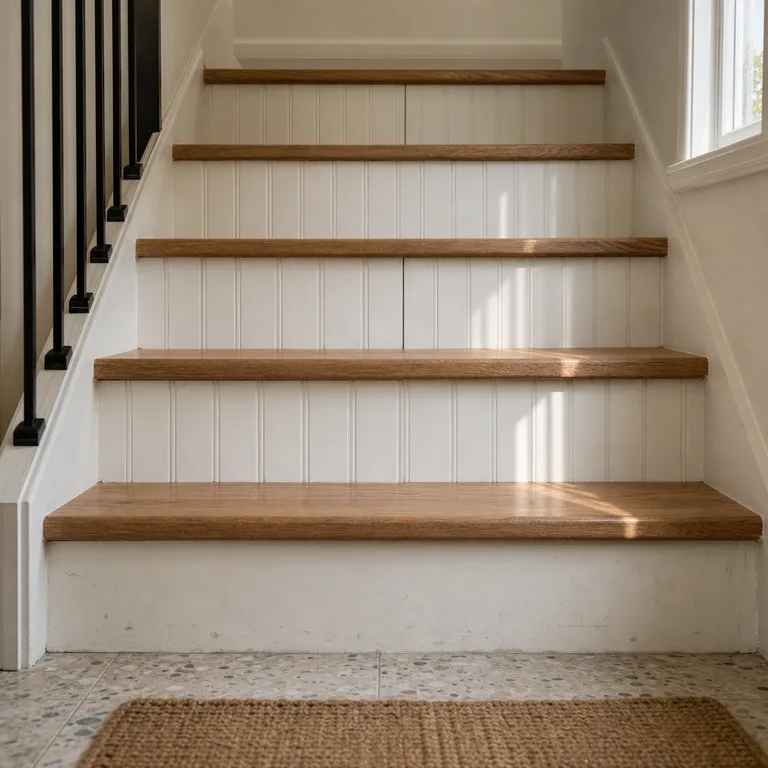
Measure each riser individually rather than assuming every step is identical, especially in an older house. Panels should fit only within the vertical riser area and stop clear of treads, nosings, and side details; secure them to a stable surface with an adhesive and fastening method suited to the existing material.
Worth knowing: Precise cutting is important around stair skirts and trim, so this option is less forgiving than paint or paper for a first-time DIY project.
7.Apply Faux-Terrazzo Contact Paper to Risers
Faux-terrazzo contact paper brings a playful speckled finish to a dated painted stair while keeping the pattern in one controlled area. Pale designs with a few darker flecks work well beside gray, natural wood, or dark-painted treads.
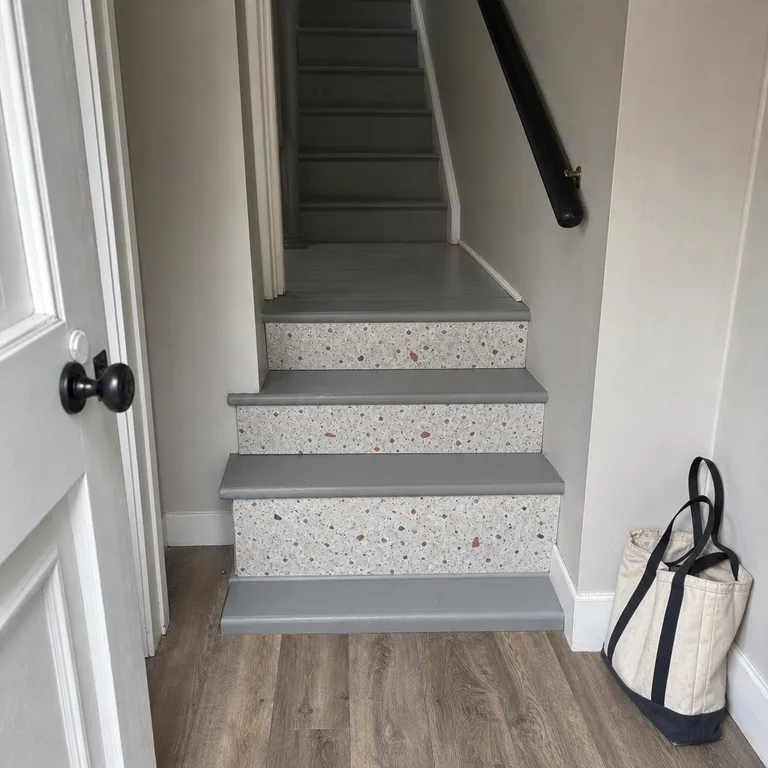
Use a wipeable vinyl made for interior surfaces and apply it to clean, smooth risers in manageable sections. Smooth from the center outward to remove air bubbles, trim closely at the edges, and check that no material reaches onto the walking surface or wraps around the front of the step.
Worth knowing: Contact paper can catch at corners and edges over time, particularly on stairs that are frequently cleaned or bumped by shoes.
8.Set Mosaic Tile Sheets Into Recessed-Looking Risers
Mosaic tile gives a stair a more permanent decorative finish, with small hexagons or simple square mosaics adding texture without covering the treads. Restrained ivory, gray, or soft blue tile can suit an entry that already has ceramic or stone-look flooring.
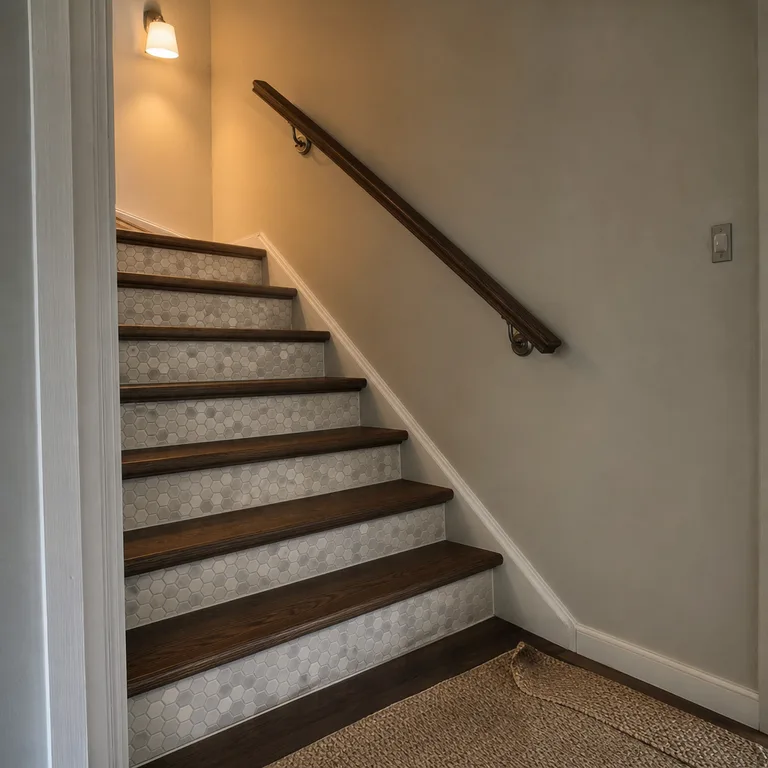
This is best reserved for flat, solid riser faces and should be planned so the finish remains entirely within the vertical plane without affecting stair dimensions or edges. Check the substrate and adhesive compatibility, use a layout that keeps grout lines consistent, and seek landlord or building approval where cosmetic alterations are restricted.
Worth knowing: Tile is the most involved option here and can be difficult to remove or repair if the risers move, crack, or need future refinishing.
About the author
Dana Ruiz, Senior editor
Dana writes about small-space living, storage and low-cost decorating.
Keep reading
10 Living Room Rug Looks That Make Pet Hair Less Noticeable
November 2, 2026
10 Budget Ways to Refresh a Brick Fireplace Without Painting the Brick
November 2, 2026
8 Ways to Update a Builder-Grade Bathroom Mirror Without Replacing It
November 2, 2026
8 Concrete Patio Color and Pattern Ideas for an Existing Slab
November 2, 2026