9 Three-Plant Color Schemes for a Small Flower Bed
A small flower bed looks more intentional when one taller plant, one middle-height plant, and one lower clump share a clear color direction and at least part of their flowering season. These nine combinations suit different sun, soil, and climate conditions, so each can be adapted with a similar plant where local hardiness or summer humidity calls for it.
As an Amazon Associate I earn from qualifying purchases.
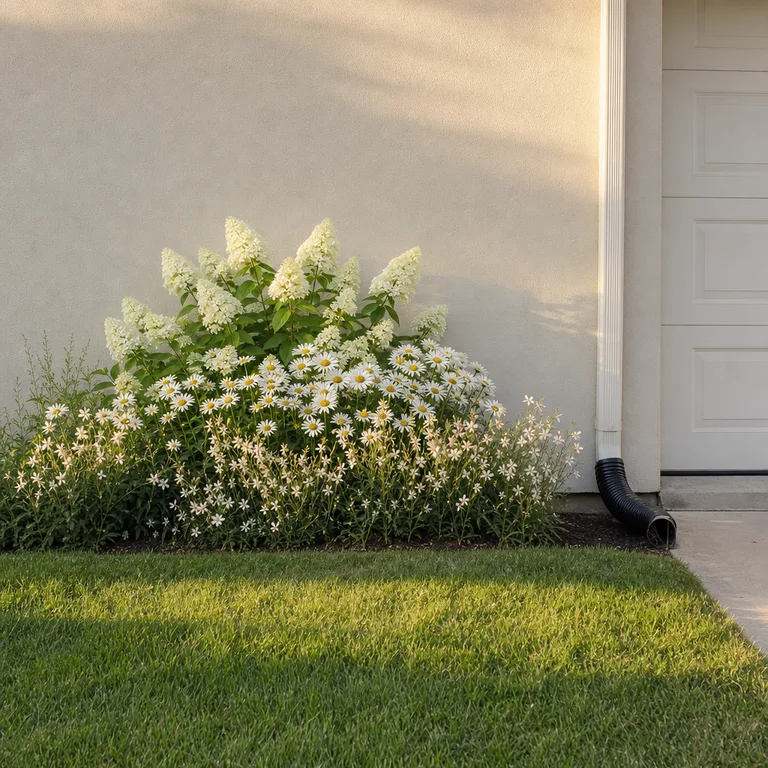
1.Purple and Gold for a Dry, Sunny Bed
Put Russian sage at the back of a sunny bed, with purple coneflower in front of it and threadleaf coreopsis along the front edge. Russian sage reaches about 3 to 4 feet, coneflower about 2 to 3 feet, and coreopsis about 1 to 2 feet, so the plants read as three clear layers rather than one crowded mass.
The purple flowers and silvery foliage make a calm backdrop for the yellow coreopsis, while coneflowers connect the two colors through mid- to late summer. Buy small plants or divide the bed into a few broad clumps rather than trying to fill every open inch at once; each plant needs room to reach its mature width.
This combination fits full sun and sharply drained soil in roughly Zones 4 to 9. In humid areas, give Russian sage open air circulation, or use an airy blue salvia if Russian sage tends to flop or develop foliage problems.
Worth knowing: Russian sage can become wide and woody over time, so it is not a good back-layer choice for a very narrow bed.
2.Rose, Cream, and Lavender for a Moist Sunny Border
Use a panicle hydrangea as the rear anchor, garden phlox through the middle, and rose daylilies at the front. Their usual mature heights—about 4 to 6 feet for the hydrangea, 2 to 4 feet for phlox, and 1 to 3 feet for daylilies—make the arrangement easy to see from a walk or driveway.
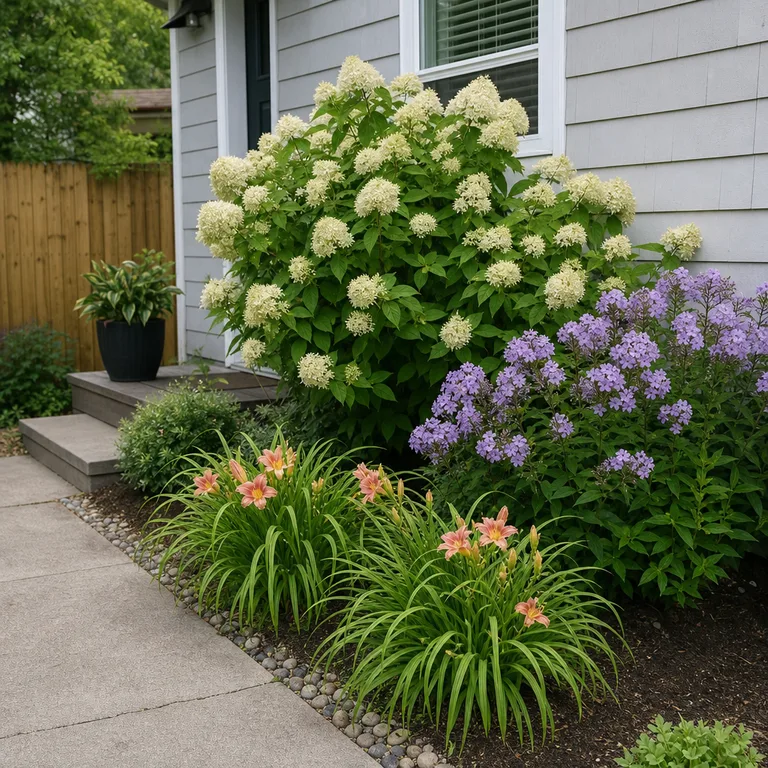
Cream hydrangea flowers, lavender phlox, and rose-toned daylilies create a soft summer palette without relying on matching shades exactly. Hydrangeas and phlox can be the larger, longer-term plants, while daylilies are useful for filling the lower layer with a repeated shape and color.
This scheme works best in sunny beds with dependable moisture, generally in Zones 3 to 8. Choose a mildew-resistant garden phlox where summers are humid, and water during dry establishment periods so the plants do not struggle at different rates.
Worth knowing: Daylily flowers are short-lived individually, so the lower rose color will not look equally full every day of the season.
3.Lilac, Violet, and White for a Late-Spring Bed
Set a compact lilac at the back of the bed, plant ornamental alliums in front of it, and place violet-blue perennial salvia along the front. A compact lilac generally reaches about 4 to 6 feet, alliums about 2 to 3 feet, and salvia about 1 to 2 feet, giving each layer a distinct height.
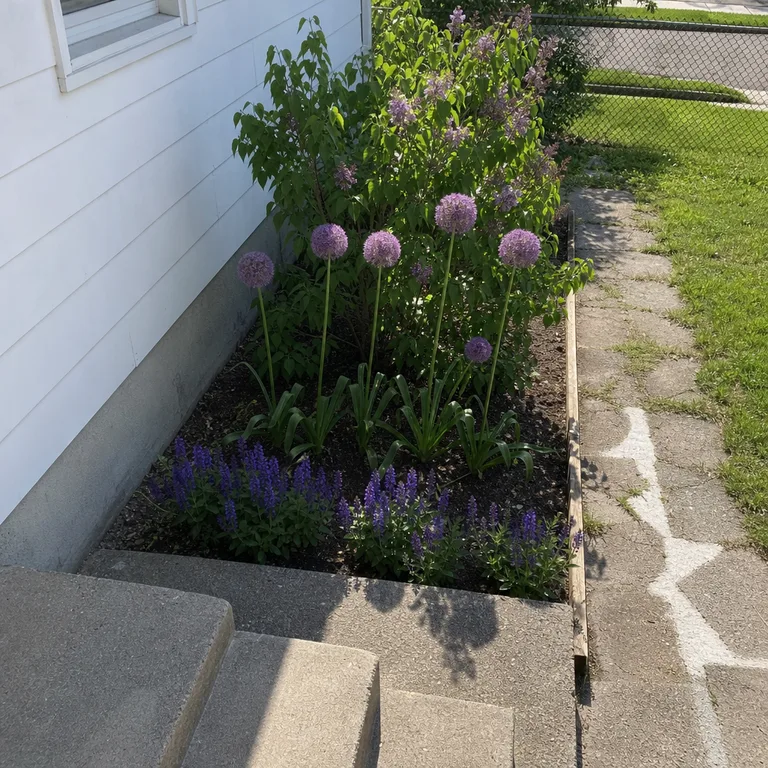
Lilac flowers and round allium heads supply the taller late-spring display, while salvia begins to carry the violet color at the bed edge. Repeating allium bulbs in a loose group is an affordable way to make a small planting look deliberate without adding another plant type.
Grow this combination in full sun with well-drained soil, usually in Zones 3 to 7. Lilacs need adequate winter chill, so gardeners in warm climates can replace the lilac with a compact flowering shrub that is reliable locally.
Worth knowing: The bloom overlap can be brief, and allium foliage may yellow while its flower heads are still attractive.
4.Burgundy, Pink, and Lime for Part Shade
Place oakleaf hydrangea at the rear, add pink astilbe in front of it, and edge the bed with dark-leaved coral bells. Oakleaf hydrangea grows about 4 to 6 feet, astilbe about 2 to 3 feet, and coral bells about 1 to 2 feet, which gives a shaded bed structure even when flowers are not open.
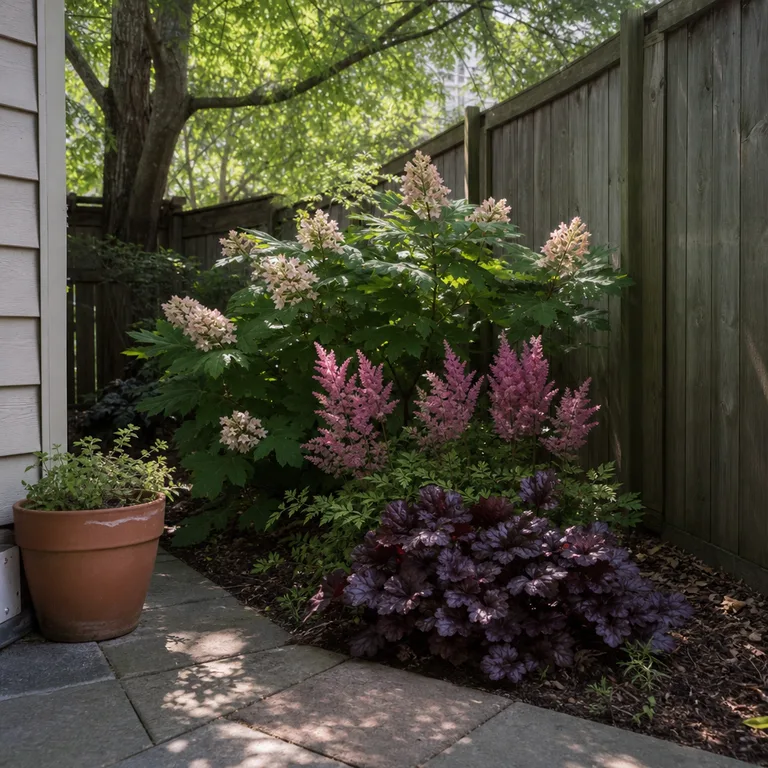
The hydrangea's light flowers and large leaves brighten the back, while pink astilbe adds soft plumes and burgundy coral bells hold color close to the ground. A small number of larger plants is usually enough here because the contrasting leaf shapes do much of the visual work.
This palette suits part shade in roughly Zones 5 to 9 and needs evenly moist soil. Where large trees compete for water, plant away from the thickest roots when possible and check the bed during dry spells.
Worth knowing: Astilbe can look thin or scorched if the soil dries repeatedly, especially in hot afternoon sun.
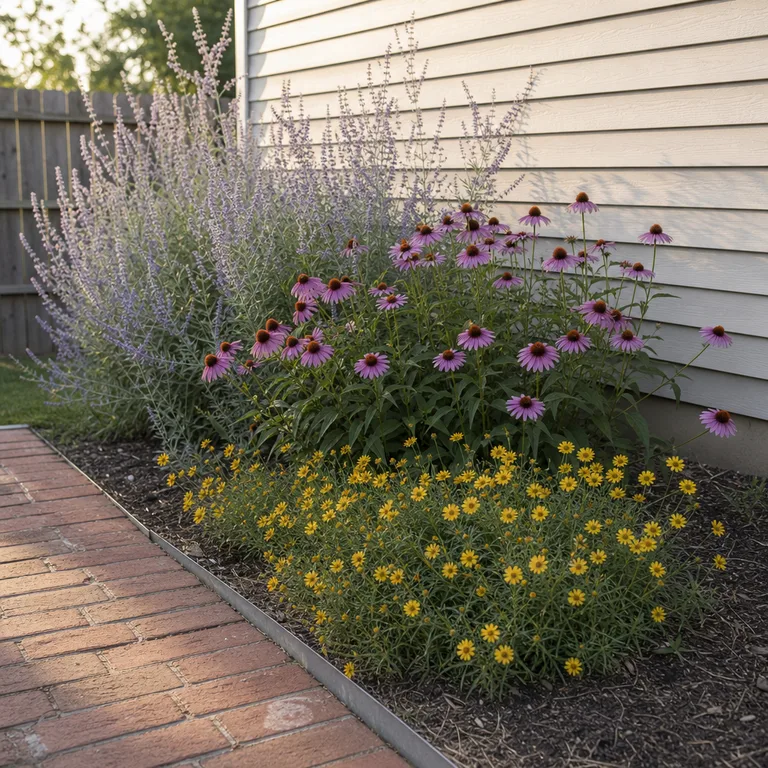
5.White and Soft Green for a Long Summer Display
Arrange a white panicle hydrangea at the back, Shasta daisies in the middle, and white gaura toward the front where its stems can drift naturally. Panicle hydrangea reaches about 4 to 6 feet, Shasta daisies about 2 to 3 feet, and gaura about 2 to 4 feet, though gaura stays visually light rather than forming a solid wall.
White blooms stand out in a narrow sunny bed and keep the planting from feeling busy beside a garage or pale wall. The soft green foliage and open gaura stems make the scheme look less formal, while the hydrangea gives it a dependable focal point from summer into early fall.
Use this combination in full sun in roughly Zones 5 to 9. Start with a hydrangea and a few clumps of the perennials, then leave open space for mature growth instead of packing the bed tightly.
Worth knowing: Gaura can lean or self-seed in exposed locations, and it may need discreet support where wind is common.
6.Red, Yellow, and Blue for Hot, Dry Sun
Use red yucca as the tall accent near the back of a hot, sunny bed, with blue salvia in the middle and yellow lantana at the front. Red yucca forms a clump about 2 to 3 feet tall but can send flower stems up to about 5 feet; salvia reaches about 2 to 4 feet, and lantana usually stays about 1 to 3 feet.
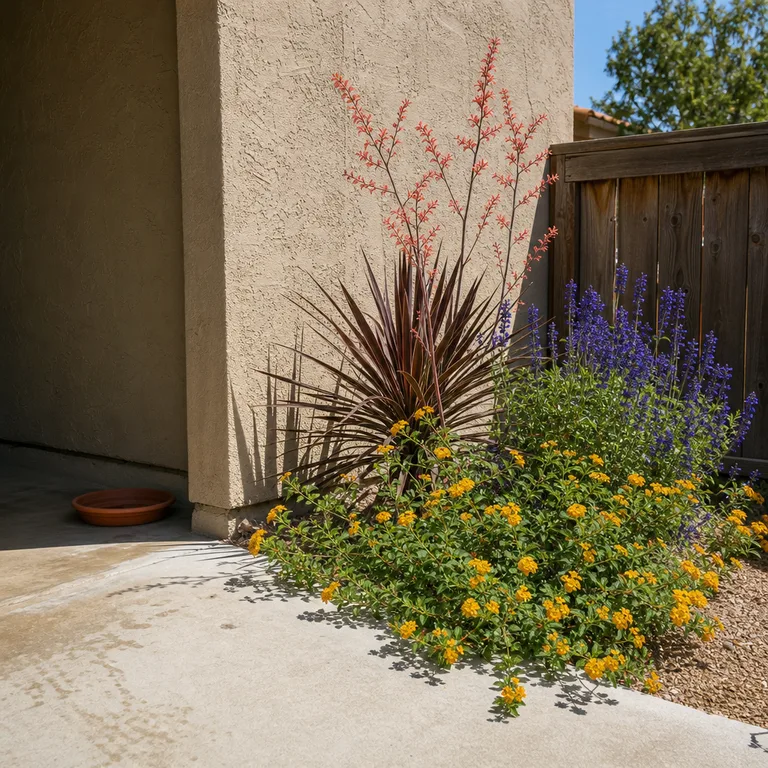
The upright red flower wands give the bed a strong vertical shape, while yellow lantana softens the base and blue salvia repeats that vertical movement at a lower height. The plants suit gravelly or fast-draining conditions better than a bed that stays wet after rain.
This is most dependable in hot climates, generally Zones 8 to 11. In colder places, lantana can be used as seasonal color, while red yucca should be replaced with a locally hardy drought-tolerant accent if it will not survive winter.
Worth knowing: This combination is poorly suited to heavy, slow-draining soil, where red yucca in particular may decline.
7.Pink, Magenta, and Rose for a Summer Pollinator Bed
Plant hardy hibiscus at the rear, bee balm through the middle, and upright rose stonecrop at the front. Hardy hibiscus reaches about 3 to 5 feet, bee balm about 2 to 4 feet, and upright stonecrop about 1½ to 2 feet, so the colors remain visible from the front of the bed.
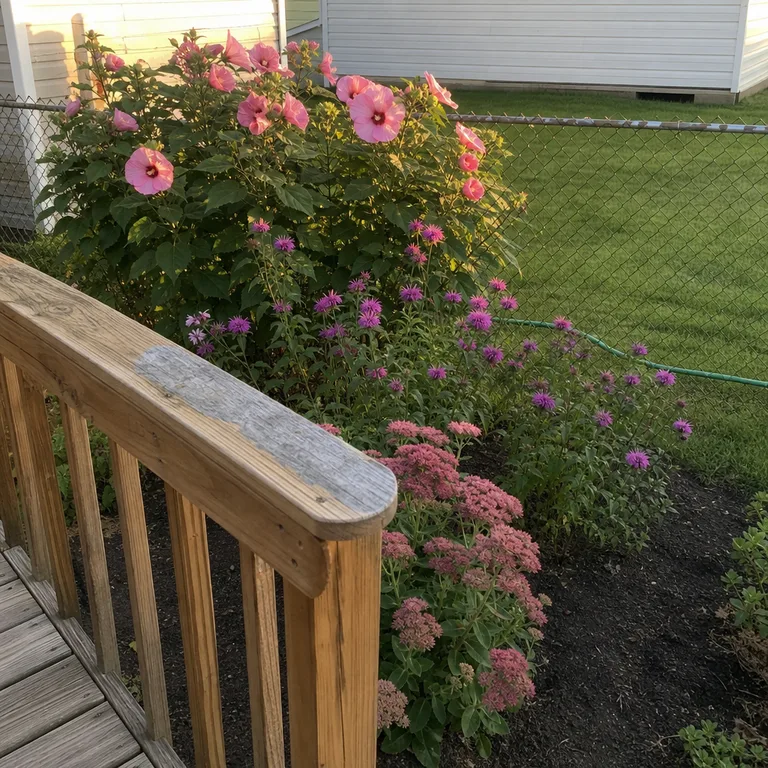
Pink hibiscus flowers, magenta bee balm, and rose stonecrop overlap from late summer into early fall. This makes a fuller end-of-season display than a planting built only around early summer bloomers, and the large hibiscus leaves add substance behind the finer bee balm stems.
Grow this group in sun in roughly Zones 4 to 9. Put the hardy hibiscus in the deepest, more moisture-retentive part of the bed, and keep the soil around stonecrop open and well drained.
Worth knowing: The plants have different water preferences, so this scheme needs thoughtful placement rather than identical watering across the whole bed.
8.Blue, Purple, and Yellow for a Dry Cottage Edge
Place blue agastache at the back of a dry cottage-style edge, use yellow yarrow through the middle, and set lavender near the front where its mounded form is easy to appreciate. Lavender grows about 1 to 3 feet, yarrow about 2 to 3 feet, and agastache about 2 to 4 feet.
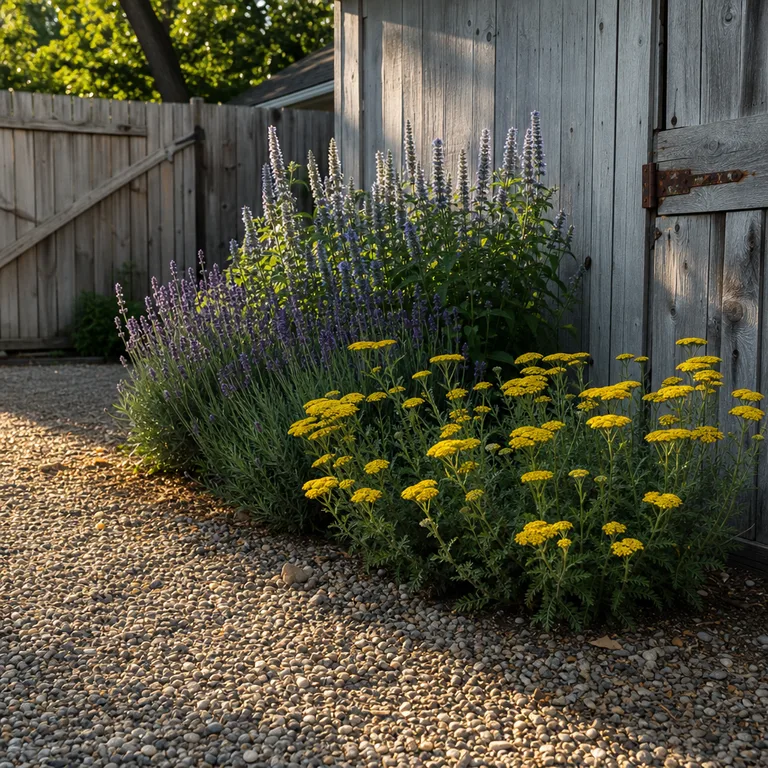
The blue and purple flower spikes contrast with yarrow's flatter yellow flower clusters, giving a small bed several shapes without adding more colors. These plants work well beside a gravel path or shed because their gray-green and narrow foliage suits a dry, informal setting.
Choose full sun and sharply drained soil for this midsummer combination, generally in Zones 5 to 9. In humid climates where lavender struggles, substitute a locally adapted dry-site perennial with a compact, cool-toned foliage or flower color.
Worth knowing: Lavender is often short-lived where summers are humid or winter soil stays wet.
9.Pink, Blue, and Green for a Spring Shade Bed
Anchor the back of a part-shade bed with a compact pink azalea, then add blue columbine in the middle and hellebores at the front. Compact azaleas usually grow about 3 to 5 feet, columbines about 1 to 3 feet, and hellebores about 1 to 2 feet.
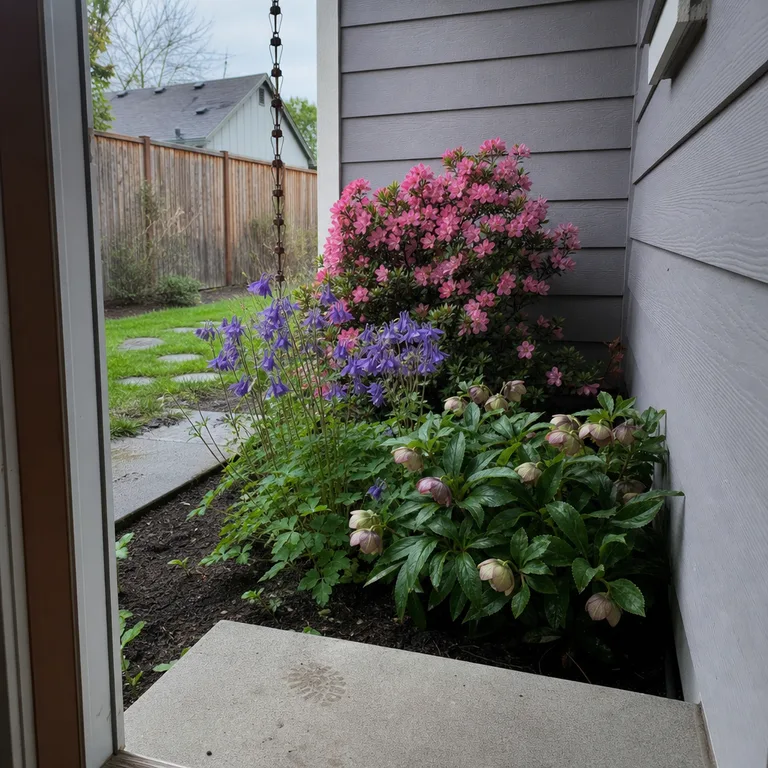
The azalea provides the main pink mass, while nodding blue columbines rise above the leathery green hellebore leaves. Their spring bloom periods can overlap enough to make a small shaded entrance bed feel layered, even if the plants do not peak on the same day.
This pairing generally suits Zones 4 to 8 in well-drained, acidic soil. Azaleas need extra attention where roof eaves or dense tree canopies keep rainfall from reaching the bed.
Worth knowing: Azaleas are not a match for alkaline soil unless the growing conditions are adjusted, and columbines may fade after their spring show.
About the author
Dana Ruiz, Senior editor
Dana writes about small-space living, storage and low-cost decorating.
Keep reading
8 Concrete Patio Color and Pattern Ideas for an Existing Slab
November 2, 2026
8 Winter Porch Decorating Ideas That Still Work After Christmas
November 2, 2026
10 Garden Fence Decorating Ideas That Don't Depend on Climbing Plants
November 1, 2026
10 Living Room Rug Looks That Make Pet Hair Less Noticeable
November 2, 2026