8 Budget Ways to Add Winter Color to a Small Garden
A small garden can stay interesting in winter by relying on plants and structures already suited to local cold, wet, wind, and low light. These ideas focus on the view from the house or patio, rather than storing patio belongings for winter or planting autumn bulbs. Seedheads and sheltered plant structure are left in place where they can support wildlife.
As an Amazon Associate I earn from qualifying purchases.
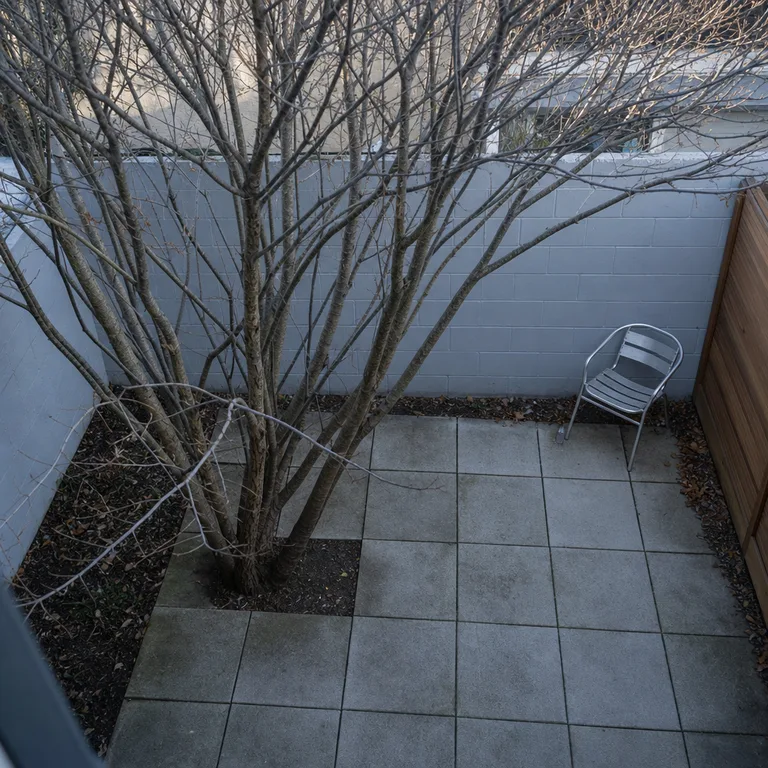
1.Frame the View With Existing Evergreen Shrubs
Established evergreen shrubs give a small garden a steady dark backdrop when surrounding plants are dormant. Use existing conifers, yews, or broadleaf evergreens to frame the patio view, particularly near fences and property edges where their shape can soften hard lines.
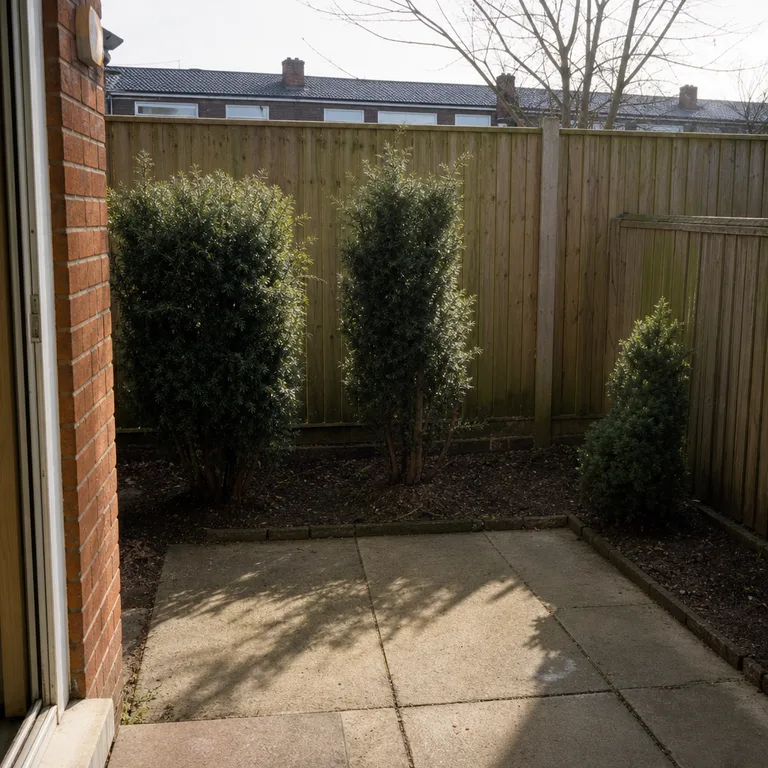
Keep paths clear of branches that may droop under rain or snow, and avoid forcing a shrub into a tight space beside a seating area. A light tidy-up of fallen leaves around the base can make the foliage read more clearly without replacing plants or adding a new border.
Choose any replacement evergreen only from types known to be hardy in the local winter. Local exposure matters: a shrub that handles cold may still struggle with drying wind, salt spray, or reflected heat from walls.
Worth knowing: Evergreen foliage provides color, but it can look sparse or browned after a harsh winter, especially in exposed sites.
Related: 15 Budget Landscaping Ideas That Make a Small Yard Feel Finished
2.Let Colored Bark Stand Out Against Pale Surroundings
Visible stems can bring strong color to a quiet winter bed. Existing dogwoods, willows, and other shrubs with colorful young bark become more noticeable when leaves, lawn, and surrounding perennials have faded back.
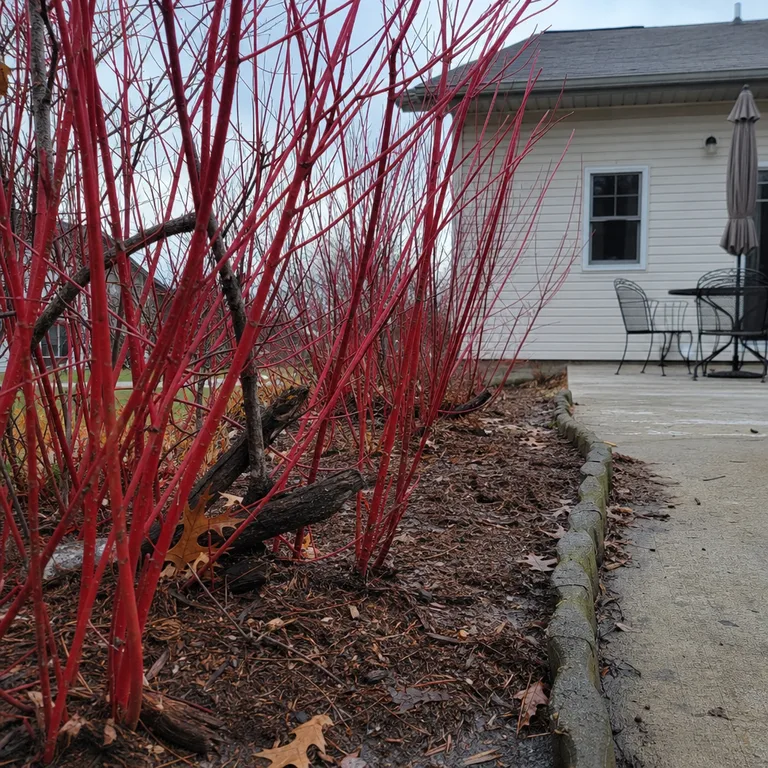
Clear only enough fallen debris to reveal the stems against dark soil or mulch. Where a shrub needs renewal pruning, remove congested older growth at the season appropriate for that plant instead of cutting every stem down before winter.
This is a reuse-first improvement because the shrub is already doing the visual work. Keep the area around its base simple so the bark remains the focal point rather than disappearing into a crowded planting.
Worth knowing: Bark color varies by species, age, light, and local climate, and some shrubs need seasonal pruning to keep younger stems colorful.
3.Keep Sturdy Seedheads in a Sunny Border
Dried coneflower, sedum, allium, and similar sturdy perennials can hold a border together after flowering ends. Their rounded heads and upright stems catch low sun, frost, and light snow, adding detail to the view from indoors.
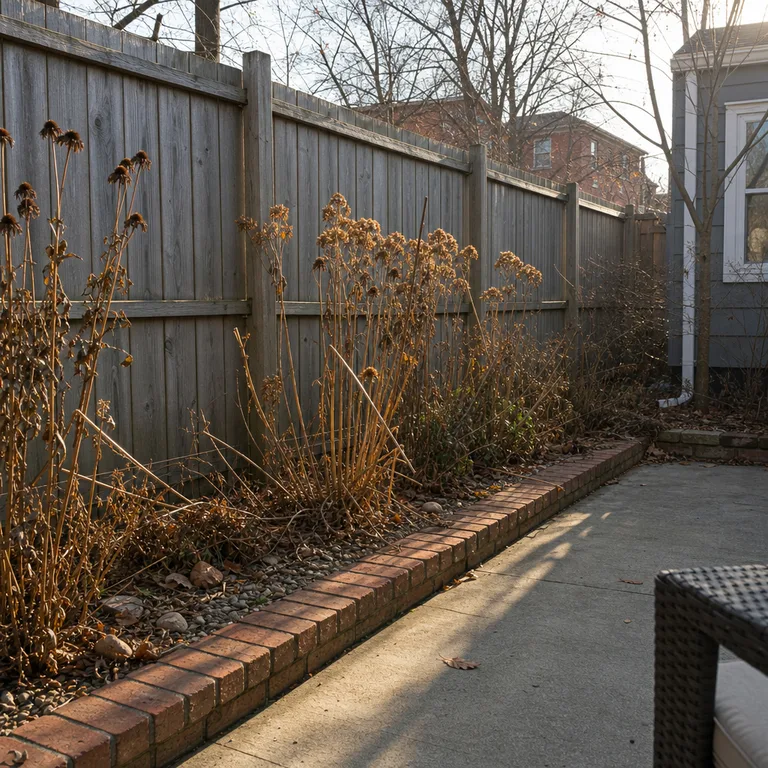
Leave the stems that remain upright and trim only those that flop across a path or patio edge. This approach also preserves some cover and potential food for birds and insects during the quieter part of winter.
A narrow border benefits from selectivity. Retaining a few repeated seedhead shapes looks intentional, while leaving every collapsed stem can make a compact space feel untidy.
Worth knowing: Heavy wet snow, winter rain, and strong wind can flatten delicate stems, so not every perennial will provide reliable winter structure.
4.Use Ornamental Grass as a Soft Screen
A clump of climate-suitable ornamental grass can make a small patio edge feel less exposed through winter. Tawny blades add movement and a softer texture against masonry, fences, and paving without blocking the entire view.
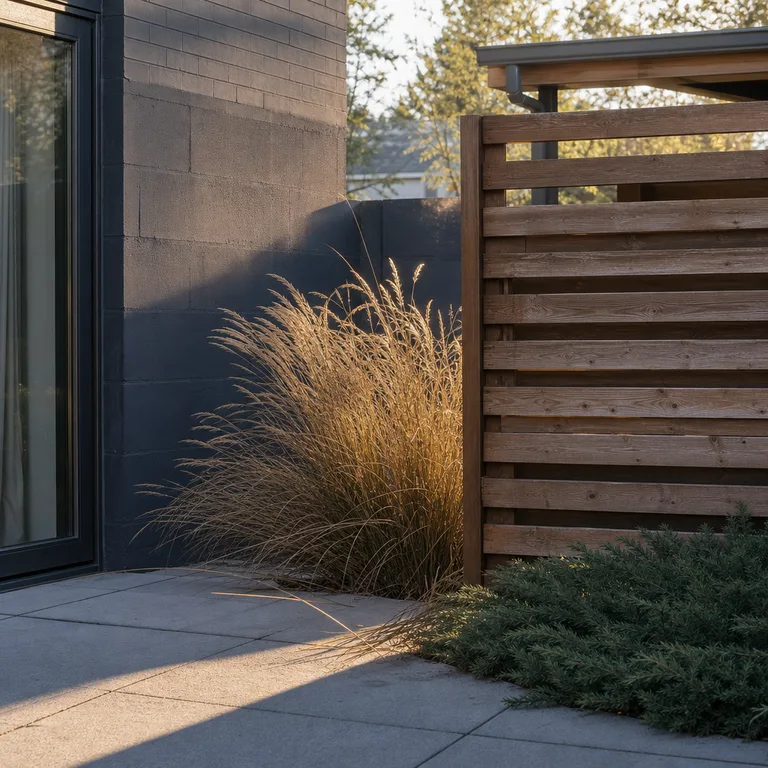
Leave healthy grass standing until late winter or early spring, then cut it back before new growth gets tangled in the old leaves. If the grass leans into a walkway, loosely gather it with a support rather than cutting the whole clump down early.
Use grass where there is enough room for its mature spread and where its dry foliage will not create a slipping hazard on paving. A sheltered sunny position often helps the blades stay upright longer.
Worth knowing: Some grasses become ragged in wet or windy winter weather and may need occasional tidying to keep paths clear.
5.Make One Bare Tree a Focal Point
A small deciduous tree can become the strongest shape in a winter garden once its leaves are gone. Branching patterns, trunk texture, and the shadow cast across paving create interest that flowering plants cannot provide at this time of year.
Keep the view beneath and around the trunk uncluttered so the tree’s form is visible from a window or patio door. Simple dark ground cover, mulch, or a restrained layer of leaves can make pale bark and branching stand out.
Check that branches remain clear of roofs, gutters, and overhead lines. Work requiring climbing, major cuts, or work near utilities should be assessed by a qualified local tree professional.
Worth knowing: A tree can overwhelm a very small garden if its mature size, root spread, or shade was not suited to the site.
6.Repeat Foliage Tones in Frost-Proof Containers
Group existing frost-tolerant pots near the patio with plants that hold leaves through local winter conditions. Evergreen herbs, hardy sedges, heuchera, and suitable ground covers can add green, purple, silver, or bronze tones at eye level.
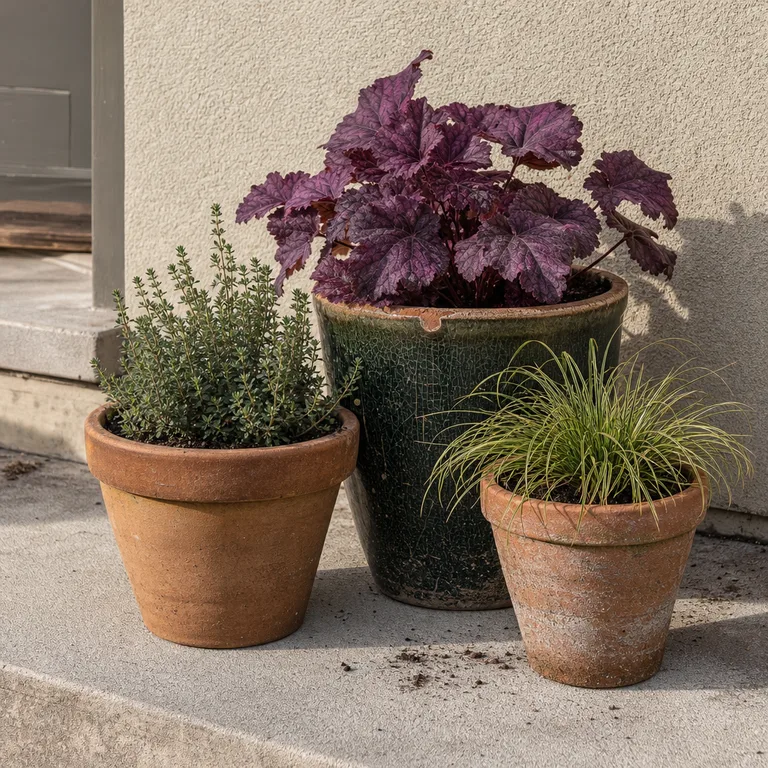
Mismatched containers often look more cohesive when grouped tightly and repeated foliage colors are used across them. Raise pots slightly on feet or risers where appropriate so excess winter moisture can drain rather than pooling beneath them.
Containers need attention even in the cold because their roots are more exposed than plants in the ground. Watering needs depend on local rainfall and freeze-thaw conditions, so check soil rather than assuming winter rain is enough.
Worth knowing: Not all containers are frost-safe, and repeated freezing can crack pots or damage roots in severe climates.
Related: 12 Container Garden Ideas for a Small Patio on a Budget
7.Show Off a Trellis After the Vines Are Bare
A trellis, fence panel, or simple climbing support becomes more visible when deciduous vines lose their leaves. Bare stems reveal the pattern of the support and add a useful vertical layer to a narrow garden or side yard.
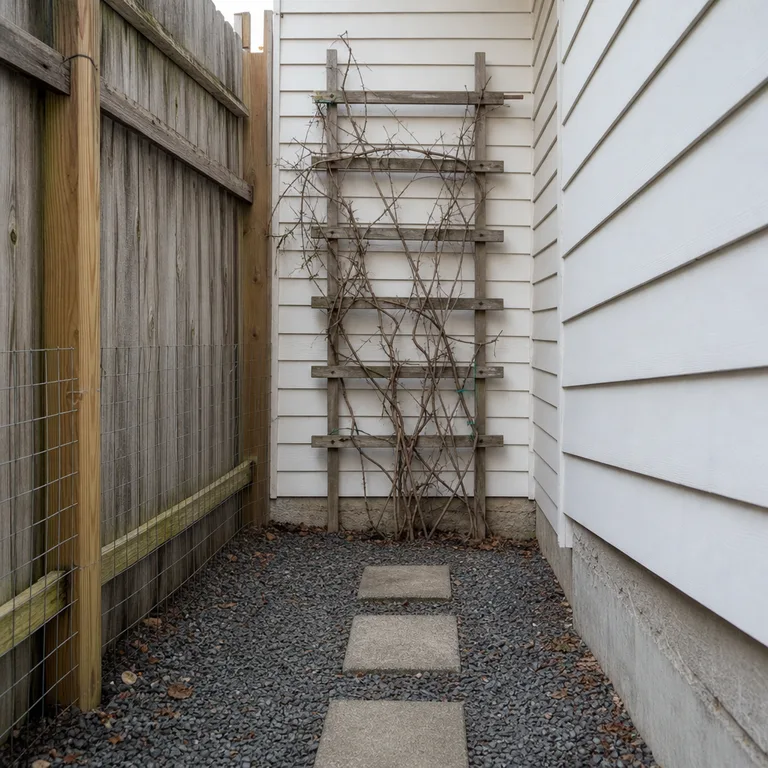
Retie loose stems with a flexible tie where the plant and support are sound, leaving room for stems to move and thicken. Check posts, screws, and wire after wet weather or wind, especially where a climbing plant adds weight to an older structure.
This is an affordable way to make existing garden bones work harder through winter. A weathered trellis can still look purposeful when the surrounding bed is kept clear enough to show its shape.
Worth knowing: Damaged or unstable trellises should be repaired before being relied on to support woody climbing plants through wind or snow.
8.Define Beds With Fallen Leaves and Dark Mulch
Fallen leaves and existing bark mulch can give a winter bed a darker, more finished backdrop. Use leaves gathered from the garden as a loose layer behind edging or around established plants, with mulch filling visibly bare patches where needed.
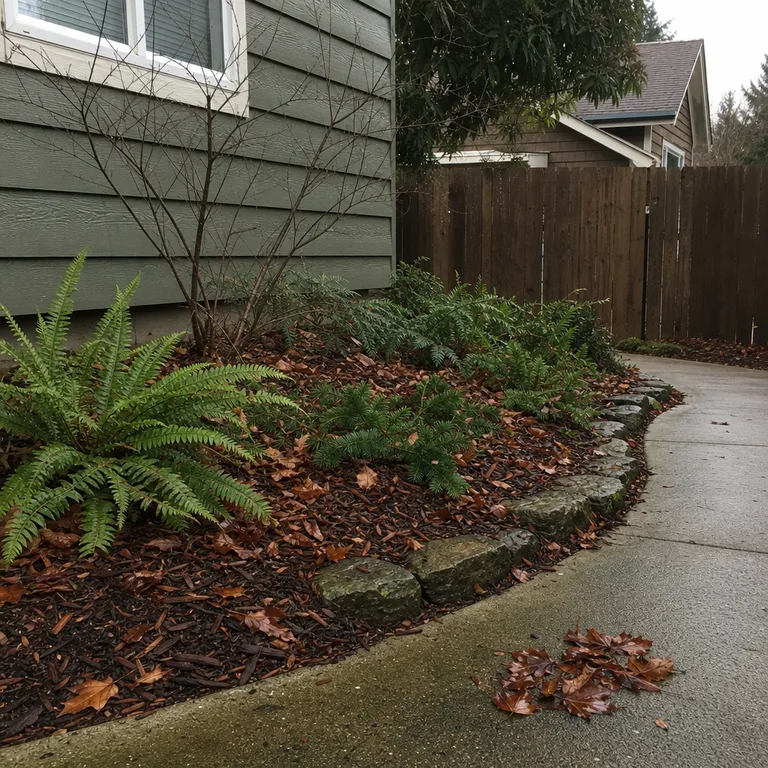
Keep plant crowns, drainage channels, and path surfaces uncovered. Leaves packed tightly against stems can hold too much moisture, while leaves blown onto paving can become slippery after rain or frost.
This approach makes use of material already on site and helps the outline of a small bed stay visible against pale paving. Rake the edge lightly after windy weather rather than trying to keep every surface completely bare.
Worth knowing: Leaf layers need occasional redistribution and are not suitable over every plant crown or in areas where drainage is poor.
About the author
Dana Ruiz, Senior editor
Dana writes about small-space living, storage and low-cost decorating.
Keep reading
8 Budget Ways to Make a Gravel Garden Look Intentional
November 7, 2026
7 Budget Outdoor Christmas Lighting Layouts for Small Homes
November 7, 2026
9 Budget Garden Focal Point Ideas With Secondhand Finds
November 6, 2026

8 Budget House Number Displays for an Easy-to-Find Entrance
November 6, 2026