8 Pet Feeding Spots for a Small Kitchen That Keep Bowls Out of the Walkway
Pet bowls work best in a defined edge zone that does not cut across the path between the sink, refrigerator, and cooking area. These small-kitchen placements use washable mats and stable bowls while keeping water access suited to the animal and leaving room for doors, drawers, and feet.
As an Amazon Associate I earn from qualifying purchases.
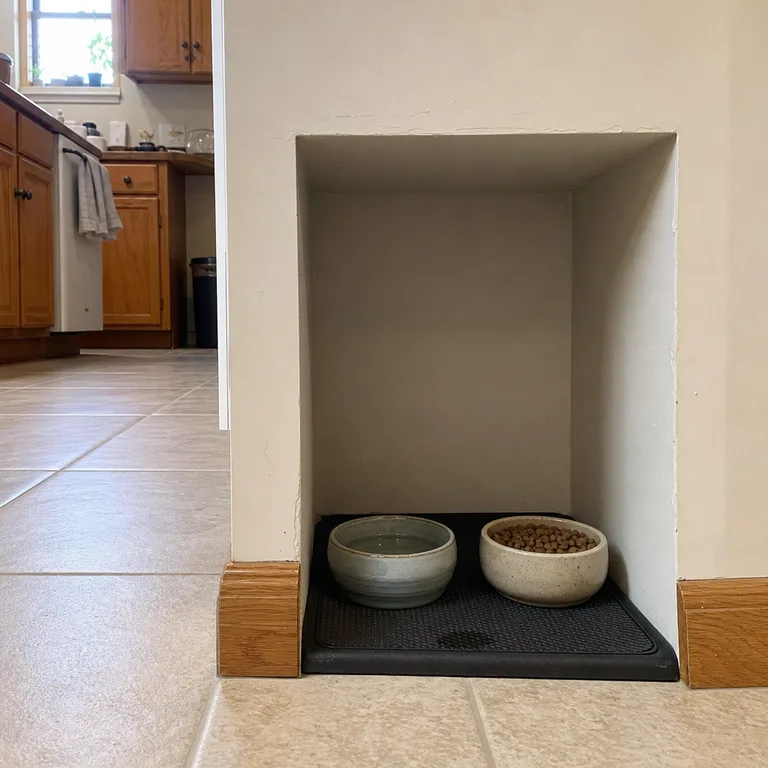
1.Use the Recess at the End of a Cabinet Run
The small return at the outer end of a base cabinet run can make a useful feeding spot. It keeps bowls near the kitchen without placing them in the route between the refrigerator, sink, and stove.
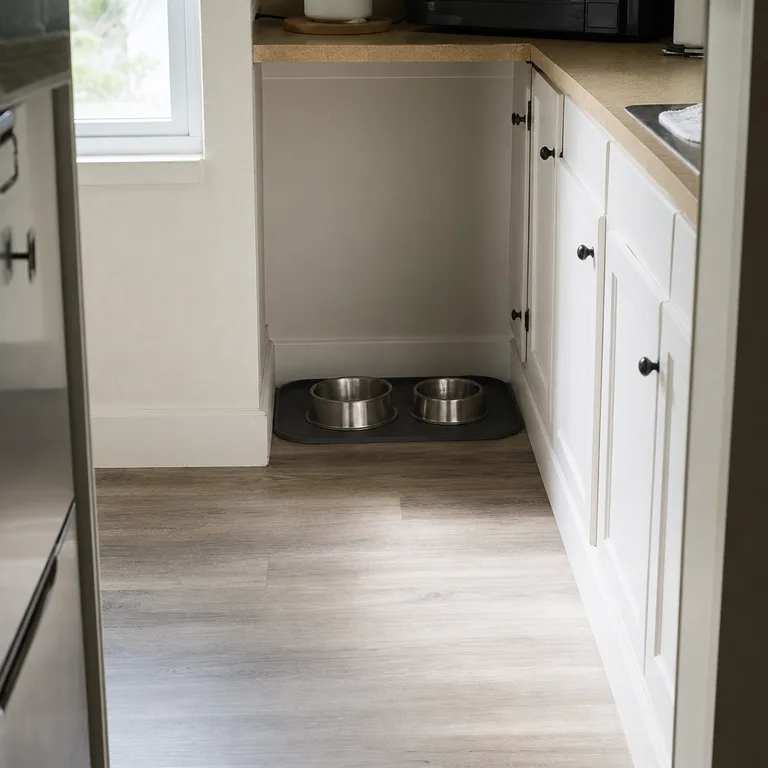
Set a washable mat fully inside the recess, then choose stable bowls that do not skid when the pet eats or drinks. This approach uses an otherwise awkward patch of floor and makes the mat easy to lift when it needs cleaning.
Check that lower drawers, cabinet doors, and nearby appliance doors still open without catching the bowls or mat. A corner that receives frequent bumps may also benefit from a simple edge guard on the cabinet.
Worth knowing: This only works when the recess is deep enough to hold the full feeding mat without protruding into the aisle.
2.Run a Narrow Mat Along a Clear Wall
A blank wall in a galley kitchen can hold a narrow feeding mat lengthwise, rather than pushing bowls toward the center of the room. Keeping the bowls in one straight edge zone makes the kitchen look less cluttered and leaves the main floor open.
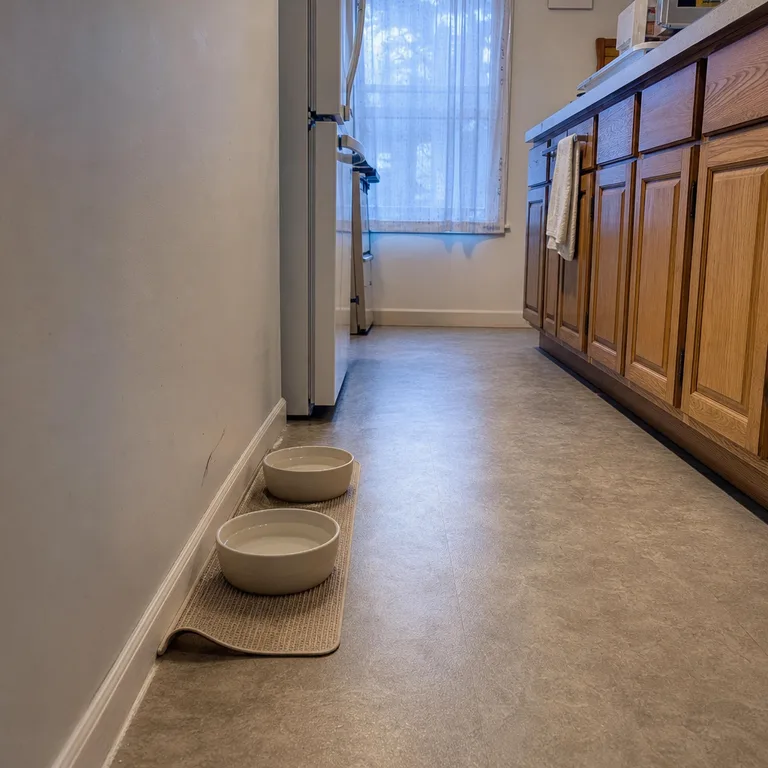
Choose a washable mat sized for the wall-side strip and place the food and water bowls in line rather than side by side. Weighted ceramic or non-slip bowls can help keep the setup from migrating across smooth flooring.
Leave enough clear walking room for ordinary kitchen use, especially where two people may pass each other. Wipe the wall-side floor regularly, since crumbs and splashes can gather in a tight edge space.
Worth knowing: A wall placement is not suitable if it makes a narrow galley kitchen feel tighter or interrupts access to cabinets.
3.Claim an Open Corner Beyond the Prep Counter
An open corner beyond the active end of a prep counter can separate pet feeding from chopping, unloading groceries, and opening drawers. The corner gives bowls a visual boundary without adding another piece of furniture.
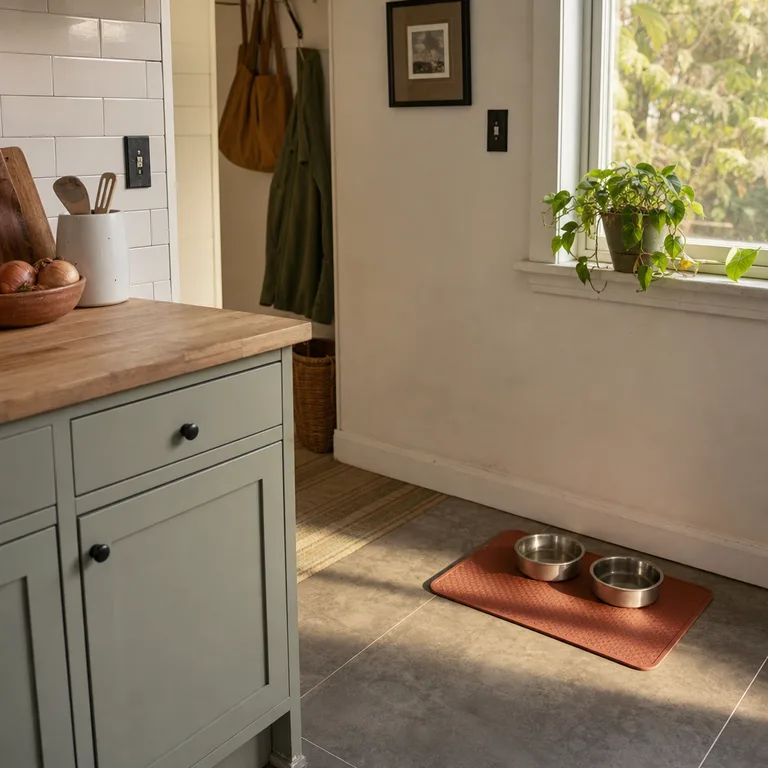
Use a rectangular washable mat that sits flat within the corner, with bowls placed far enough from the counter edge to avoid being knocked during meal preparation. A low-profile mat helps reduce the chance of a foot catching its edge.
Choose a corner away from direct hot sun if the kitchen gets strong afternoon light, particularly for a water bowl. Regularly sweep behind the mat, where pet food can otherwise collect along the baseboard.
Worth knowing: This arrangement is less practical in kitchens where every corner is needed for opening lower cabinets or storing a step stool.
4.Set Bowls Beside a Fixed Pantry End
The fixed outer end of a pantry cabinet or tall storage unit often creates a sheltered strip that is separate from the main work zone. Bowls tucked against this side are easier to see and clean than bowls hidden beneath cabinetry.
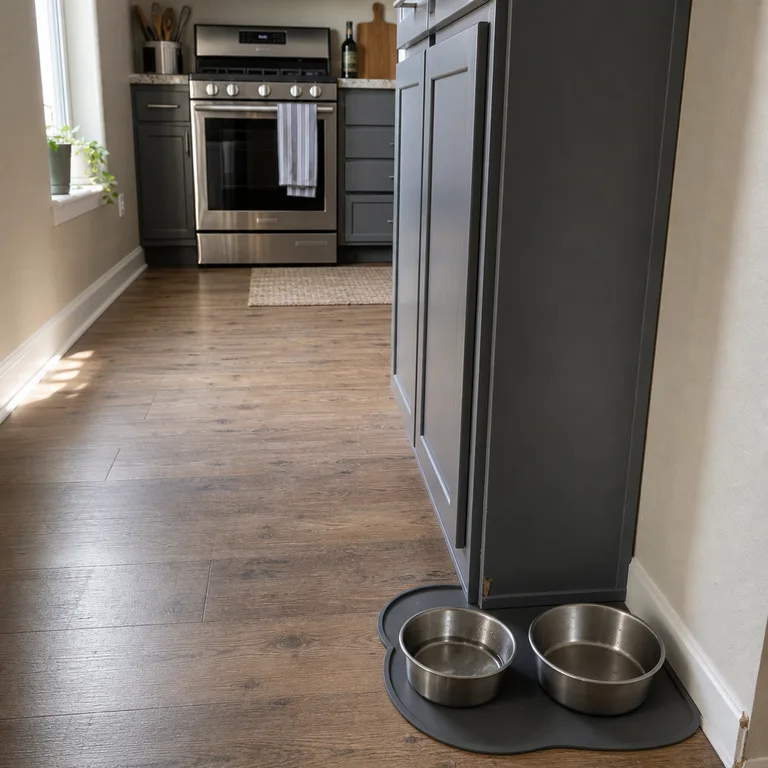
Place a washable mat along the pantry end, not in front of the pantry door. This gives food and water a defined home while keeping the center route toward the stove or sink clearer.
Test the swing of pantry doors and the reach of appliance handles before leaving the bowls there. A mat with a raised edge can help contain water drips, but it still needs to be lifted and washed regularly.
Worth knowing: Do not use this spot if pantry doors, refrigerator doors, or pull-out storage cross over the feeding area.
5.Fit a Shallow Existing Alcove
A shallow wall alcove that is not useful for storage can become a tidy place for food and water bowls. When the mat fits within the wall line, the feeding area stays out of the aisle almost completely.
Measure the usable floor depth and choose a mat that lies flat without curling up at the front. A simple waterproof mat protects the floor, while stable pet-appropriate bowls make daily refills and cleanup straightforward.
Keep the alcove open and easy to reach rather than filling it with containers or décor around the bowls. If the space is dim, make sure spills are still visible during routine cleaning.
Worth knowing: An alcove that is too shallow will still leave bowls or mat edges projecting into the walkway.
6.Use the Kitchen Entry Edge, Not the Door Swing
The wall edge just inside a kitchen entry can work for bowls when it is outside the path of the door and the main passage into the next room. This placement gives a pet a consistent feeding area without blocking the middle of the kitchen.
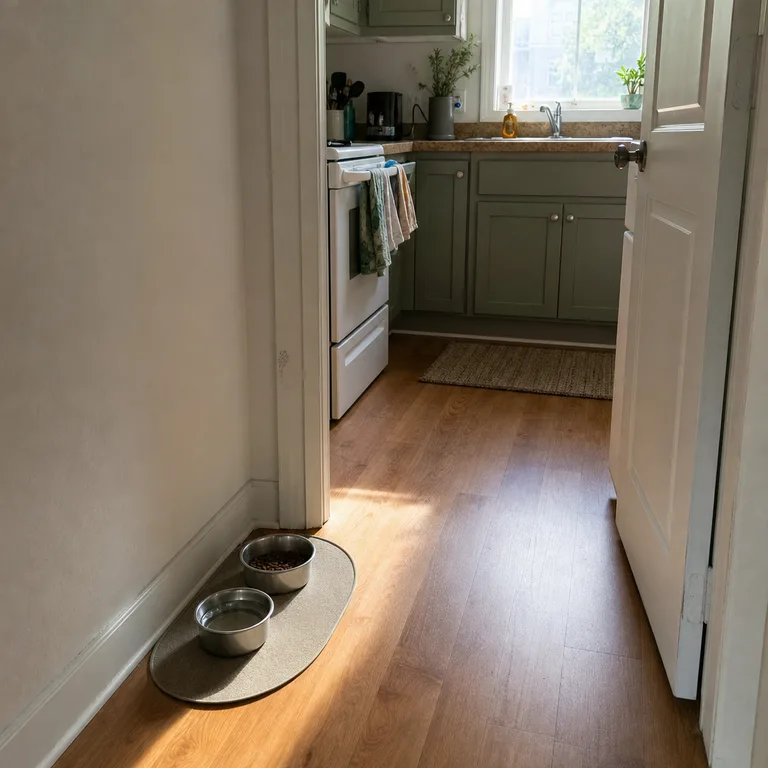
Lay the mat parallel to the wall and check the space with the door fully open. If the kitchen has no door, follow the wall line closely enough that people can enter without stepping around bowls.
This spot is easiest to maintain when it is not a busy drop zone for bags, shoes, or recycling. In a rental, use a removable mat rather than attaching anything to the floor or wall.
Worth knowing: A feeding setup at the entry can become a tripping point if the passage is already narrow or heavily used.
7.Use a Floor-Level Bay in an Open Shelving Unit
A floor-level bay in an open shelving unit can frame a feeding area without raising the bowls. The shelving sides visually contain the mat and can make a pet station look more intentional in a multipurpose kitchen.
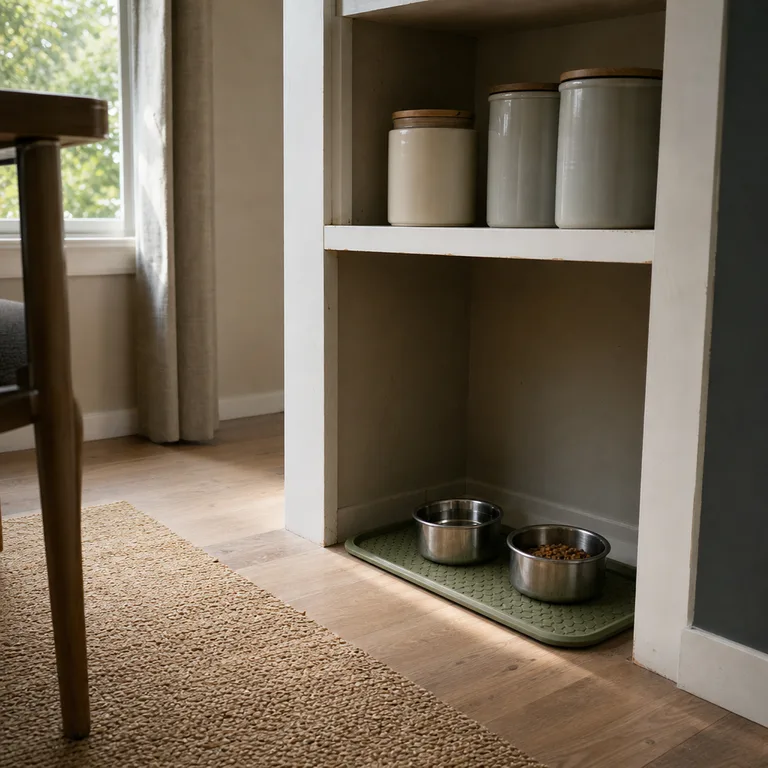
Use only a sturdy unit placed securely against the wall, with an interior surface that can be wiped after spills. Set the mat directly on the floor-level base, and keep the upper shelves for ordinary kitchen items rather than pet food that could fall into the bowls.
Avoid making a new raised feeding platform or adapting furniture in a way that is unstable. If the shelving unit is freestanding, follow its anchoring guidance and keep the feeding bay clear of loose baskets or objects.
Worth knowing: This needs enough floor space for a stable shelf unit, so it may not suit the tightest kitchens.
8.Roll Out a Removable Mat for Set Meal Times
In a very narrow kitchen, a removable mat can be rolled out beside a clear wall for set meal times, then stored flat once the bowls are picked up. It is a flexible option when no permanent floor spot stays out of the route.
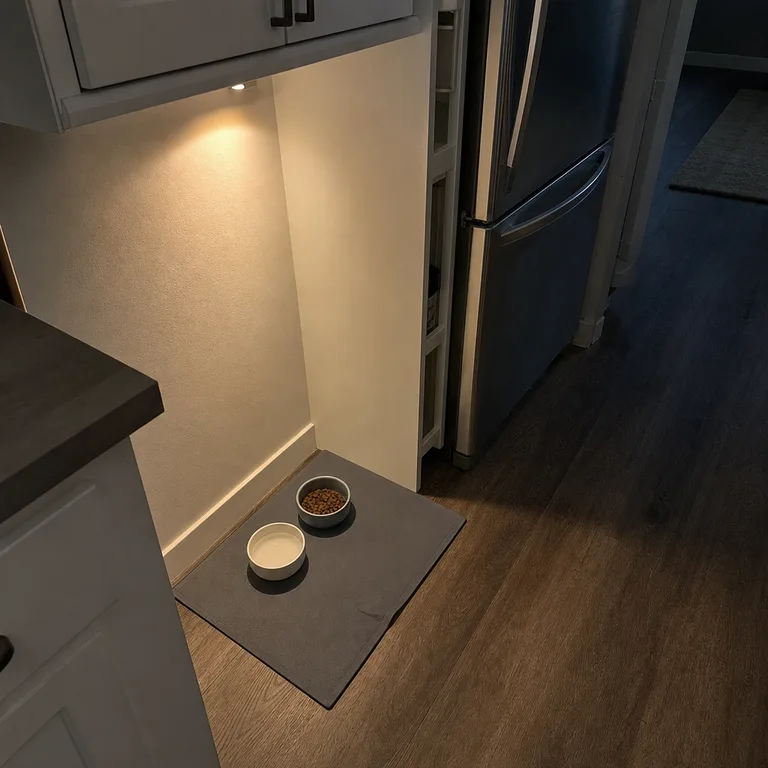
Choose a washable mat that folds or rolls without a bulky edge, and store it in a dry, accessible gap or cabinet when it is not in use. Use stable bowls while the mat is down, and clean both the mat and surrounding floor after feeding.
Water needs may not follow a meal schedule, so keep water access appropriate for the animal rather than treating the removable setup as a reason to limit it. This option works best when the household can keep a predictable feeding routine.
Worth knowing: It requires regular setup and put-away, and it is not a substitute for maintaining suitable water access.
About the author
Dana Ruiz, Senior editor
Dana writes about small-space living, storage and low-cost decorating.
Keep reading
8 Christmas Gift-Wrapping Stations That Pack Away in a Small Home
October 31, 2026
7 Small Bedroom Layouts With Sloped Ceilings
October 31, 2026
8 Christmas Buffet Setups for a Small Kitchen Without an Island
October 29, 2026
7 Rewear Clothes Stations for a Small Bedroom Without a Chair Pile
October 29, 2026