8 Indoor Laundry Drying Setups That Pack Away in a Small Bedroom
These eight bedroom-friendly drying setups compare how much floor or door space they occupy while in use, and how little room they take once folded or stored. Each works best with open airflow around damp fabric, a protected floor, and distance from heaters, sockets, and trailing electrical cords.
As an Amazon Associate I earn from qualifying purchases.
1.Fold-Flat Wing Rack for a Mixed Modest Load
A fold-flat wing rack is the broadest floor-based option here. Its center rails and side wings can take a mixed modest load of shirts, trousers, towels, and smaller pieces without separating everything into several drying tools.
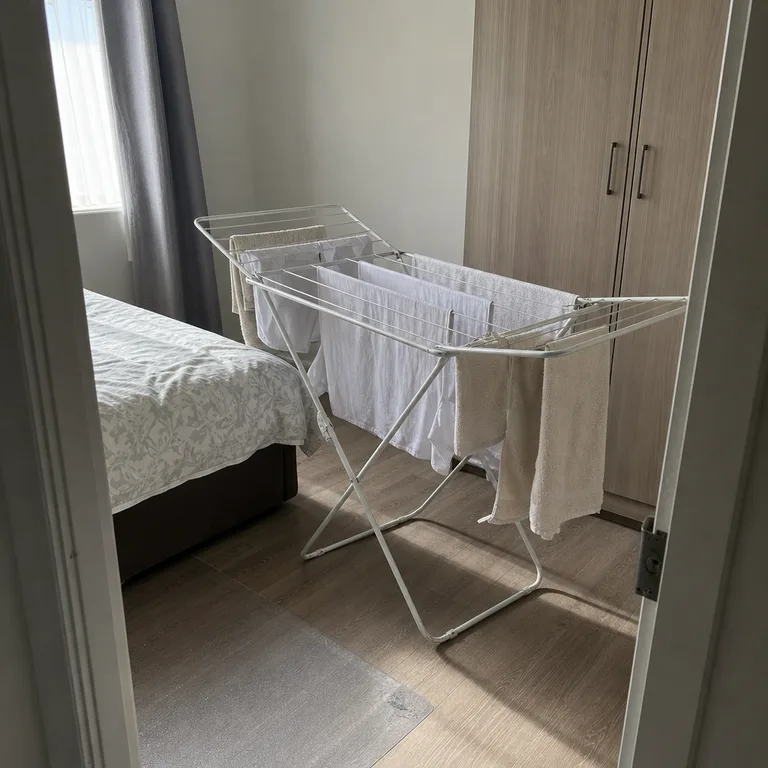
Set it near a window or in an open section of the room, with the wings arranged so fabric does not overlap. A washable mat or other waterproof floor protector catches drips, and rubber feet help keep the rack from marking hard flooring.
When the load is dry, fold the wings inward and store the rack beside a wardrobe or under a bed if there is enough clearance. This is usually a practical reuse-first choice for households that already own a standard folding rack.
Worth knowing: It has the largest open footprint of these setups, so it can make a narrow bedroom difficult to walk through while laundry is drying.
2.Narrow Upright Rack for an Unused Wall Strip
A narrow upright rack uses height rather than a wide spread of floor. It suits the strip between a bed and wall, beside a wardrobe, or another area that is too slim for a wing rack.
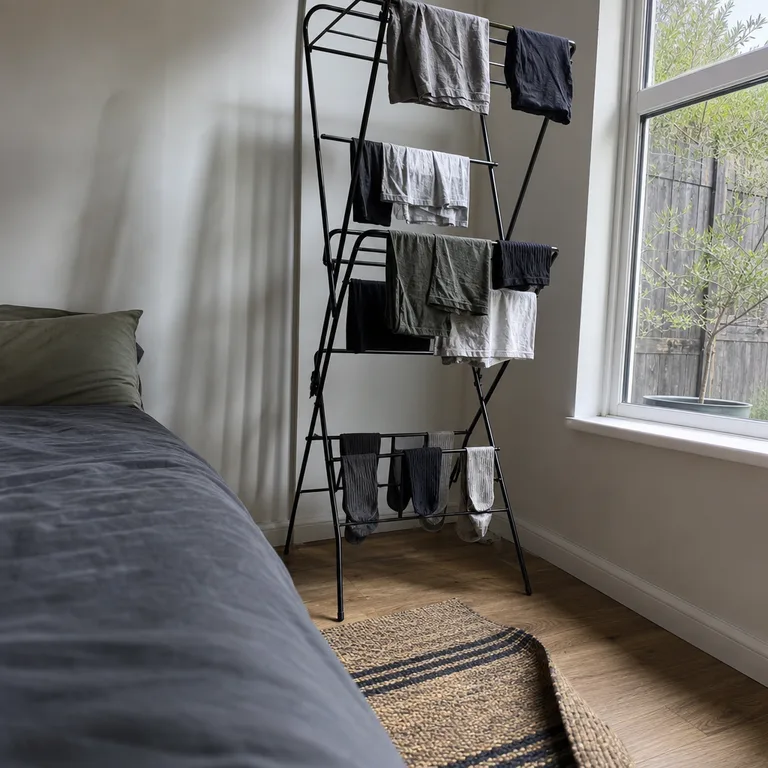
Place lightweight items across different levels and leave gaps between them so damp fabric can release moisture. Put it where air can move around both sides rather than pressing it into a dead corner behind furniture.
Most upright racks fold into a slim panel after use. Check that the full rack clears shelves, curtains, and the ceiling before committing to this layout.
Worth knowing: Closely stacked tiers can slow drying, especially in a cool or poorly ventilated bedroom.
3.Small Clip Hanger for Socks and Underwear
A clip hanger frees the floor entirely by gathering socks, underwear, washcloths, and other small pieces around one circular frame. It is best used for the part of a wash load that would otherwise take up several rack bars.
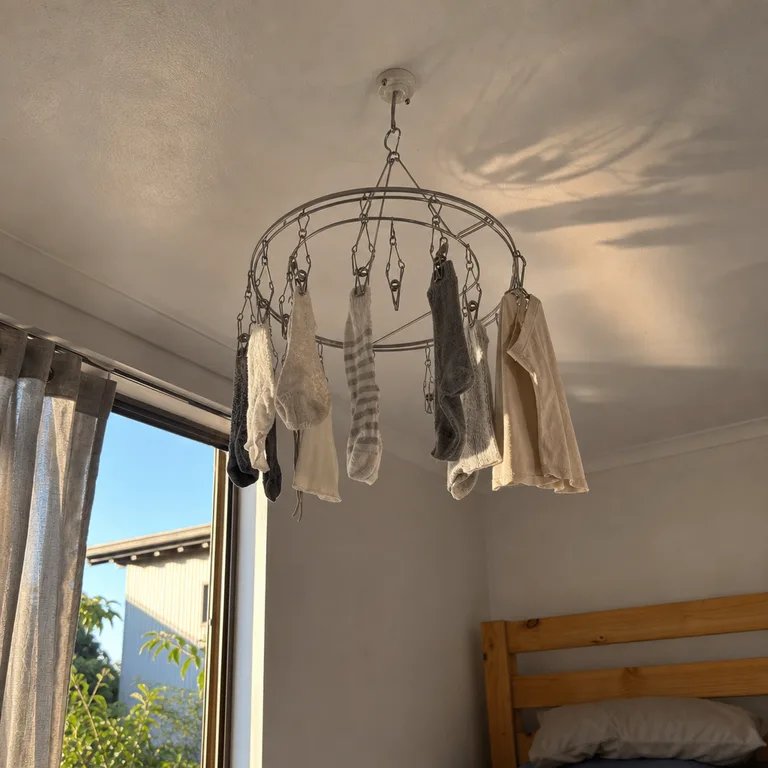
Hang it from a properly installed, weight-rated hook or another fixture specifically designed to carry wet laundry. Position it near open airflow, but keep it clear of the window opening, curtains, lights, and any electrical fittings.
The hanger can be unclipped and stored in a drawer, closet, or laundry basket when empty. It also works alongside another setup, allowing a larger rack to be reserved for shirts and heavier items.
Worth knowing: Ceiling hooks may be unsuitable for rentals, and improvised rods, light fittings, and adhesive hooks are not safe supports for heavy wet laundry.
4.Door-Hung Rack for a Closed-Door Drying Zone
A door-hung rack turns the back of a bedroom door into a small drying zone. It keeps a few T-shirts, hand towels, or lightweight garments off the floor and can disappear from view when the door is open against a wall.
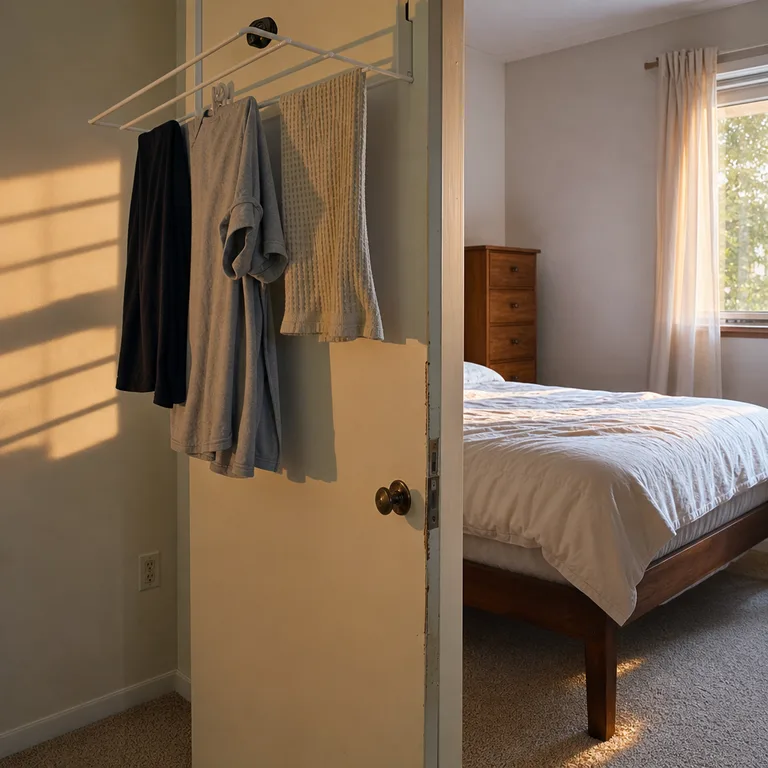
Choose a rack made for the door thickness and protect the contact points with soft pads if needed. Keep the door mostly open while items dry so moisture is not trapped in a closed room or compressed between the door and wall.
This option packs down quickly and is easy to remove when guests visit or the room needs to function normally. It is especially useful where every clear floor strip is needed for walking.
Worth knowing: The door, hinges, and rack all need to be rated for the load, and the setup cannot block an exit or prevent the door from operating safely.
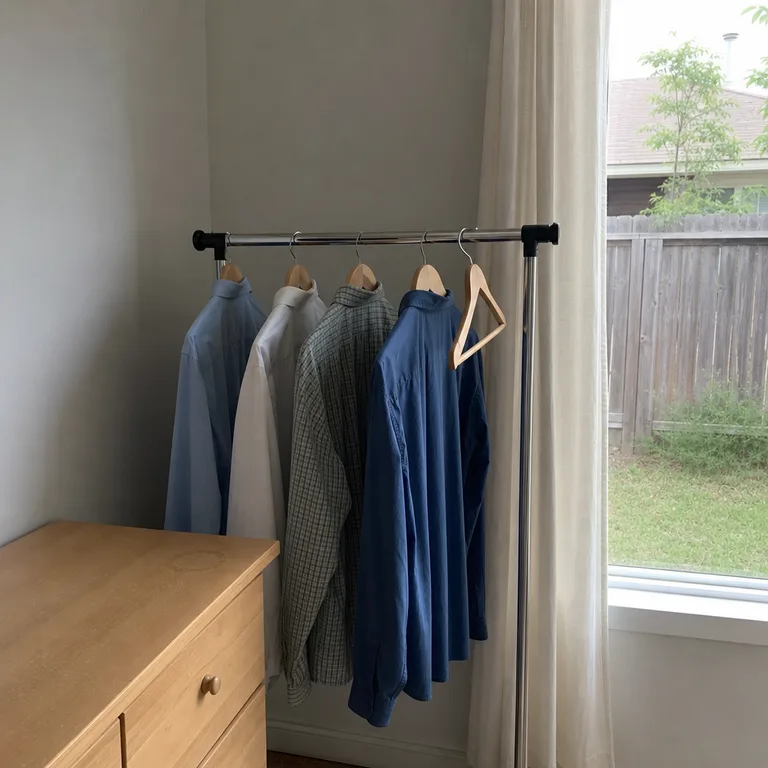
5.Compact Garment Rail for Shirts on Hangers
A short garment rail lets button-downs, blouses, and light dresses dry on hangers, helping them keep a smoother shape. Compared with a rack, it uses a long narrow strip of floor rather than spreading outward in several directions.
Space shirts apart so their sleeves and fronts do not stay pressed together. Set the rail near daylight and airflow, but leave a clear path to the bedroom door and avoid placing damp clothes directly against painted walls or window treatments.
Use hangers already in the closet and choose a rail that can be folded or moved aside after the load is dry. A tray or floor mat beneath the rail is useful if garments are still dripping after washing.
Worth knowing: A garment rail takes up floor space for the full drying period and is not a good fit for a bedroom with only a very narrow circulation path.
6.Mini Rack for Drying Laundry in Batches
A mini rack has a smaller open footprint than a full wing rack and works best when laundry can be dried in batches. Put the most urgent or quickest-drying pieces on first, then rotate dry items out to make room for the next group.
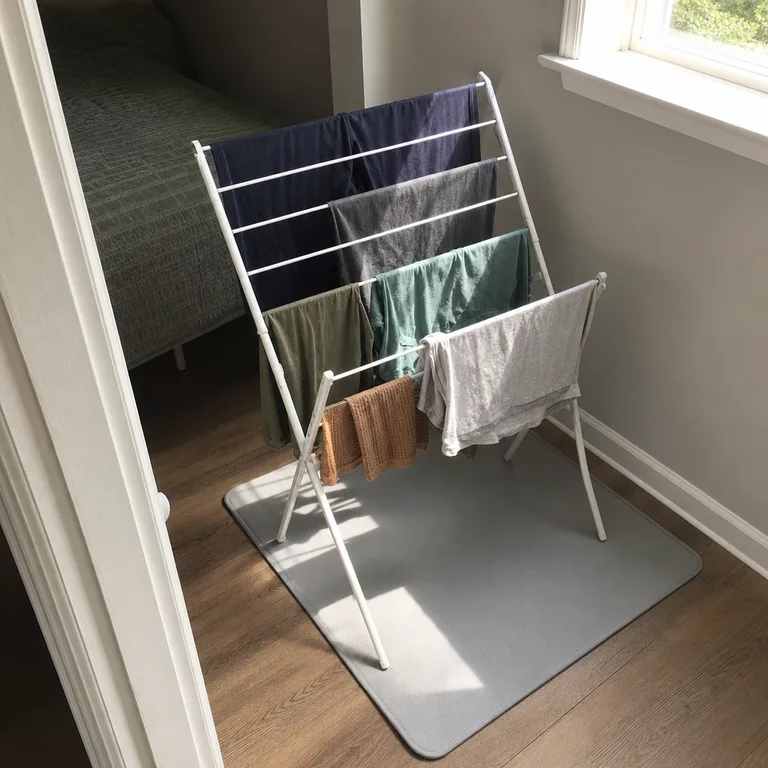
Use the rack for leggings, T-shirts, dishcloths, and similar everyday pieces, with room around each item for air to circulate. A compact waterproof mat beneath it protects carpet, laminate, or other bedroom flooring from drips.
Its main advantage is returning the floor sooner, especially in a bedroom that doubles as a work or sleeping space. When folded, it can often tuck into a closet or beside a dresser.
Worth knowing: A full modest wash load may take several rounds, so this setup requires more sorting and attention than a larger rack.
7.Fold-Flat Mesh Screen for Sweaters and Delicates
A fold-flat mesh screen supports sweaters and delicates horizontally, which helps avoid the stretching that can happen when heavy wet knits hang from a rail. It can sit across a bed, on a clean tabletop, or over another stable surface while the garment dries.
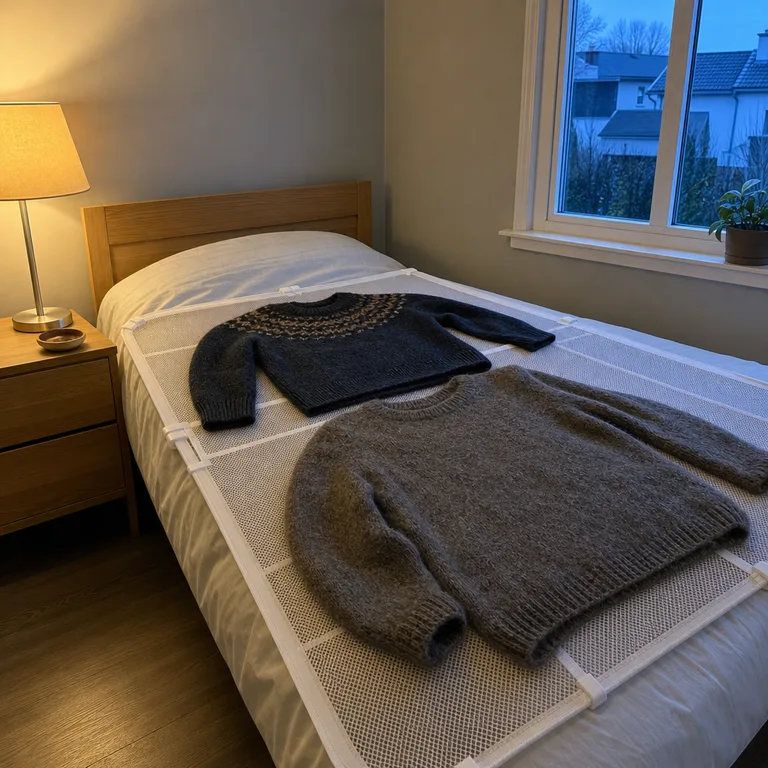
Shape each sweater gently and keep it away from direct heater blasts or intense sun that may be hard on delicate fibers. Open a window when conditions allow, or use ordinary room ventilation, while keeping the bed linen beneath the screen dry and protected.
After use, the screen folds into a thin shape for closet storage. This is a useful specialist tool rather than a replacement for a rack that handles shirts, trousers, and towels.
Worth knowing: It temporarily occupies a bed-sized or table-sized surface, and bulky knitwear may take longer to dry in humid weather.
8.Fold-Flat Tiered Rack for Small Garments
A fold-flat tiered rack concentrates many lightweight small garments into a compact footprint. It suits underwear, baby clothes, socks, and lightweight exercise wear that can be spread across several levels without weighing the rack down.
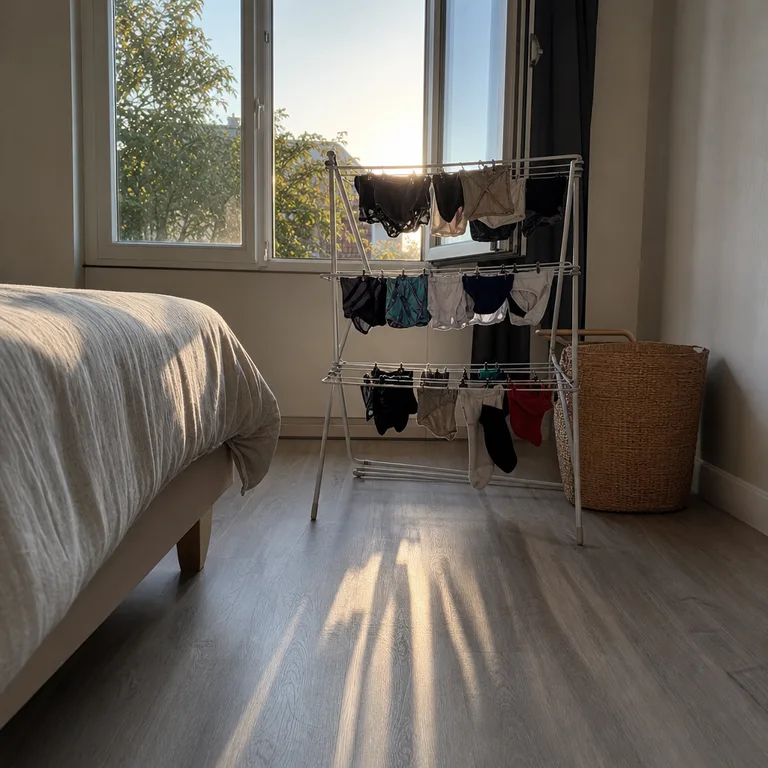
Load the tiers loosely, alternating thicker and thinner pieces instead of filling every bar. Place it near an open, ventilated area and turn or rearrange items if the lower levels are drying more slowly than the top.
When empty, the rack folds flat against a wall, inside a closet, or beside a wardrobe. Pairing it with a clip hanger can make sorting small items simpler without using a larger floor rack.
Worth knowing: Dense layers can trap moisture, so it is less effective for thick towels, jeans, or a tightly packed load.
About the author
Dana Ruiz, Senior editor
Dana writes about small-space living, storage and low-cost decorating.
Keep reading
8 Christmas Gift-Wrapping Stations That Pack Away in a Small Home
October 31, 2026

7 Small Bedroom Layouts With Sloped Ceilings
October 31, 2026
8 Christmas Buffet Setups for a Small Kitchen Without an Island
October 29, 2026
7 Rewear Clothes Stations for a Small Bedroom Without a Chair Pile
October 29, 2026