7 Christmas Wreath Styles Using Suitable Garden Clippings
These seven wreath styles use a sound reused frame and small amounts of permitted, healthy garden material rather than a full premade arrangement. Prepare greens in October or early November for seasonal use, confirm every plant’s identity, keep toxic material away from pets, and discard clippings that show pests or disease.
As an Amazon Associate I earn from qualifying purchases.
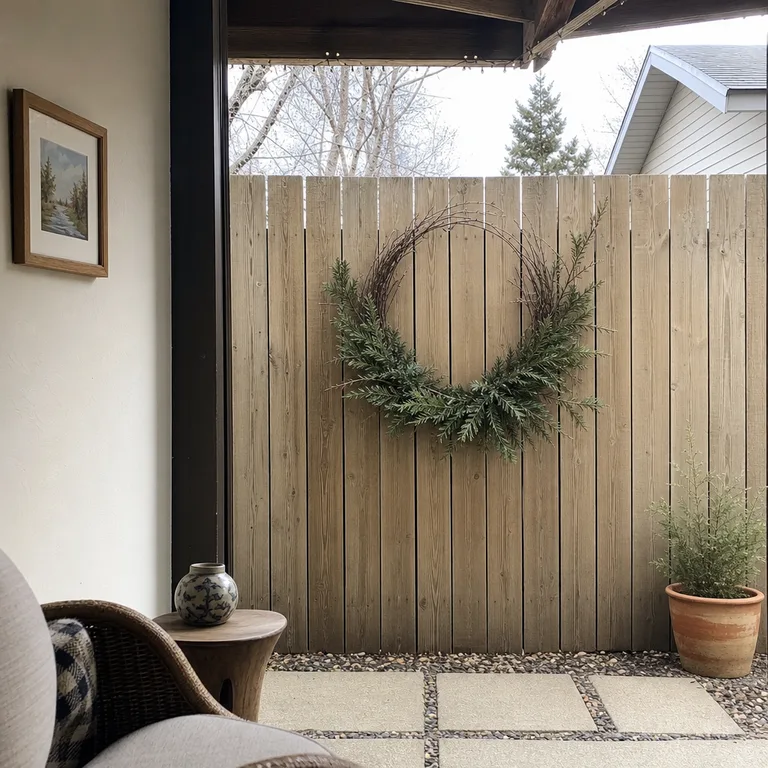
1.Mixed Evergreen Ring With Layered Garden Greens
Use short sprigs from two or three suitable evergreen plants to cover a sturdy reused wire frame. Lay each new sprig over the stem ends of the last and bind them in one direction, then add the fullest pieces around the lower edge for a balanced ring.

The mix gives an ordinary wreath more depth than one foliage type alone: fine needles, broader leaves, and slightly different greens create a fuller surface. Take only modest cuttings from healthy plants you are permitted to prune, and use gloves when handling prickly foliage or sap-producing branches.
Cut lengths that are easy to overlap rather than trying to wire on long, heavy branches. A few lengths of floral wire and a sound frame are usually enough; keep the wreath under cover if the chosen broadleaf foliage marks easily in hard weather.
Worth knowing: Fresh mixed greens can dry at different rates, so a wreath exposed to wind and direct winter sun may become uneven before the season ends.
2.Single-Foliage Wreath for a Quiet, Uniform Look
Choose one plentiful, identified, pet-safe foliage type and make the wreath from similarly sized pieces. Pine is one option where it is available and permitted, but any healthy evergreen with a texture that holds together can work.
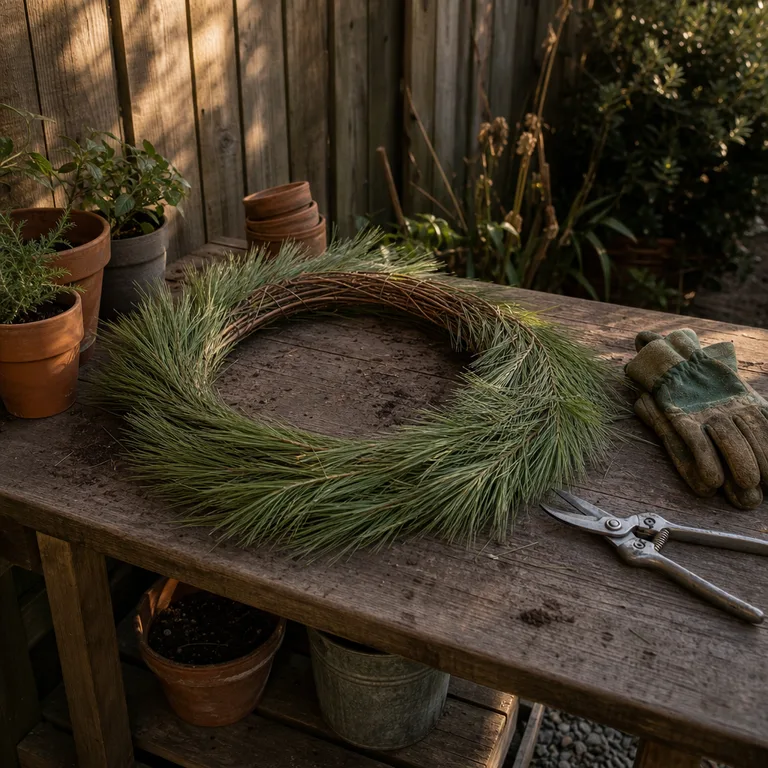
Repeating one material makes the shape look calm and intentional, even on a basic grapevine or wire base. It also reduces the number of plants that need checking for toxicity, pests, or disease before clippings come indoors or near a frequently used entrance.
Bundle and overlap equal sections around the frame, keeping the tips facing the same way. Natural twine can suit a rustic indoor or sheltered display, while wire gives a firmer hold for an outdoor door or gate.
Worth knowing: A single-foliage design relies on consistent clippings, so it can look sparse if the available material varies greatly in color, needle length, or condition.
3.Evergreen Wreath With Pinecone Clusters
Start with a simple evergreen-covered ring, then attach a few clean, fully dry fallen pinecones in small clusters. Position the clusters near the lower half or slightly to one side, where their weight will not make the wreath tip forward on its hanger.
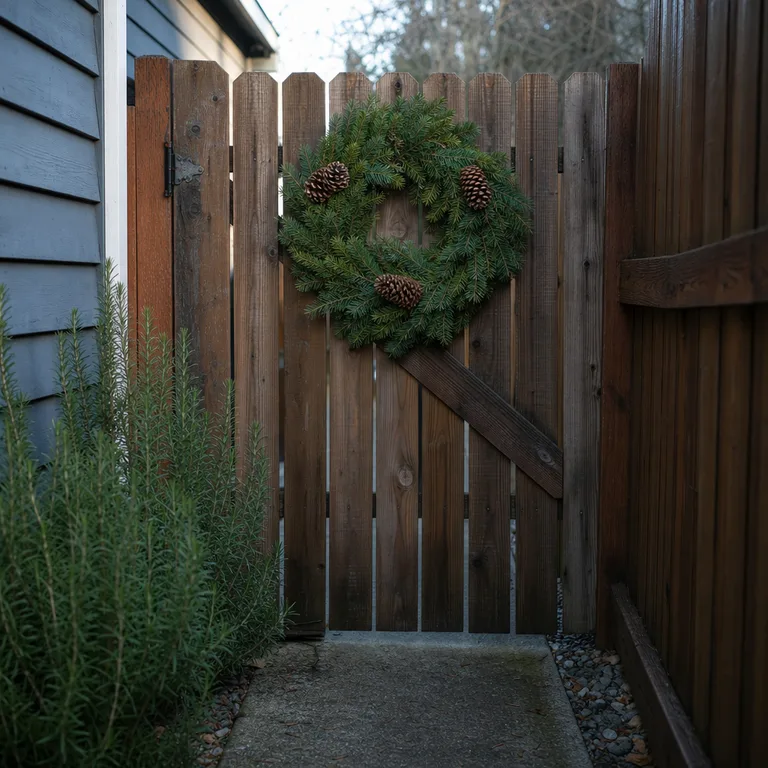
Pinecones add structure and a seasonal focal point without requiring the whole wreath to be heavily decorated. Use only cones gathered with permission from a clean area, and check them for moisture, insects, mold, or loose debris before bringing them close to the house.
Wire each cone through its scales or around its base, then fasten that wire firmly to the frame rather than relying on adhesive alone. Keeping the decoration to a few clusters makes the wreath easier to hang and less likely to snag on a gate or door.
Worth knowing: Pinecones become heavier when wet, and cones on an unsheltered wreath may loosen or pull the frame out of shape in prolonged rain or snow.
4.Twig-and-Green Half Wreath With an Open Top
Use a reused twig or wire frame and cover only its lower half with short hardy green bundles. Leave the upper curve bare so the twig structure remains visible, securing each bundle where it overlaps the next.
The exposed top makes the wreath feel lighter and uses fewer clippings than a full ring. It is a practical design for a small garden, a rental patio where decorations need to stay simple, or a gardener who only has a limited amount of permitted pruning material.
Keep the greened section slightly fuller at the bottom and taper it as it rises toward each side. Brown wire or garden twine is less noticeable against a natural frame, though wire is usually the more secure choice for an exposed fence.
Worth knowing: The open structure offers less visual coverage, so an old frame with broken, brittle, or untidy twigs may need replacing rather than disguising.
5.Evergreen Wreath With Dried Seedheads or Flowers
Tuck fully dried, noninvasive seedheads or flower heads into a green wreath after the evergreen base is secure. Place them in small protected groups rather than covering the whole ring, and avoid material that is damp, mildewed, prickly, or known to be toxic within reach of pets.

The dry stems introduce pale color and a softer outline against dark greens without requiring purchased ornaments. Use seedheads and flowers from plants that have finished their season, provided collecting them will not spread unwanted seed into a new area.
Fine wire lets delicate stems sit among the greenery without crushing them. This style is best beneath an eave, on a covered porch, or indoors near a cool window, where rain will not flatten the papery material.
Worth knowing: Dried flowers and seedheads are fragile and fade quickly outdoors, particularly in wet or windy conditions.
6.Ribbon-and-Green Open Ring With a Bare Center
Choose a slim, sound reused metal hoop and attach several small green bundles along one side, leaving most of the circle open. Finish the exposed section with one simple bow, wired or tied firmly enough that it will not twist loose in wind.

The bare center makes this wreath read clearly from a distance while using only a small amount of foliage. A restrained ribbon gives the design a finished look and can hide the joining point between the last green bundle and the uncovered hoop.
Use a ribbon suited to outdoor moisture if the wreath will hang on an uncovered door. Secure the bow directly to the hoop, and keep trailing ends short enough that they will not catch in a door, gate latch, or nearby planting.
Worth knowing: Ribbon often shows weather damage sooner than foliage, so this option is less suitable for a very exposed entrance.
7.Small Bundled-Green Wreath for a Gate or Shed
Make a compact wreath by tying several small evergreen bundles around a narrow reused frame. Keep each bundle similar in size, and overlap them enough to cover the tied stems while leaving a modest, practical ring.
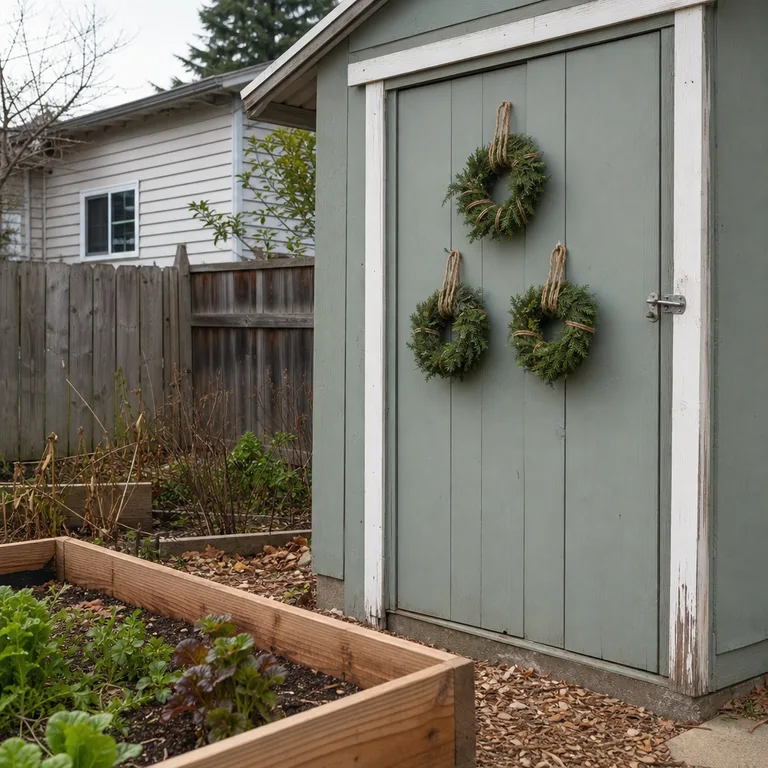
A small wreath suits a shed door, garden gate, patio wall, or other spot where a full front-door display would feel oversized. It also makes good use of limited clippings from routine pruning without stripping one plant bare.
Jute gives the bundles a simple garden look, but use wire beneath it if the wreath will face rain or repeated gate movement. Check that the decoration does not block a latch, scrape against the opening edge, or interfere with a gate swinging freely.
Worth knowing: Small wreaths can disappear on a large dark surface, so they work best where the background contrasts with the foliage or the display is viewed at close range.
About the author
Dana Ruiz, Senior editor
Dana writes about small-space living, storage and low-cost decorating.
Keep reading

7 Narrow Foundation Bed Layouts for the Front of a Small House
October 31, 2026
8 Christmas Porch Planters Using Empty Summer Pots
October 29, 2026

8 Small Front Yard Layouts for a Plain Rectangular Lawn
October 29, 2026

8 Christmas Gift-Wrapping Stations That Pack Away in a Small Home
October 31, 2026