7 Bird Feeder Locations to Evaluate in a Small Backyard
A small backyard can support a modest feeding area when one location is chosen for clear bird movement, manageable cleaning, and the risks around it. These seven site types are candidates to assess against the actual windows, cats, rodents, drainage, shrub cover, and local wildlife guidance in the yard.
As an Amazon Associate I earn from qualifying purchases.
1.A Near-Window Spot Assessed for Collision Risk
A feeder near a window is convenient for watching birds and keeping up with refills, especially from a kitchen or back door. It needs a close look first, though: inspect the pane for strong reflections, nearby flight routes, and corners where birds may see a false passage through the glass.
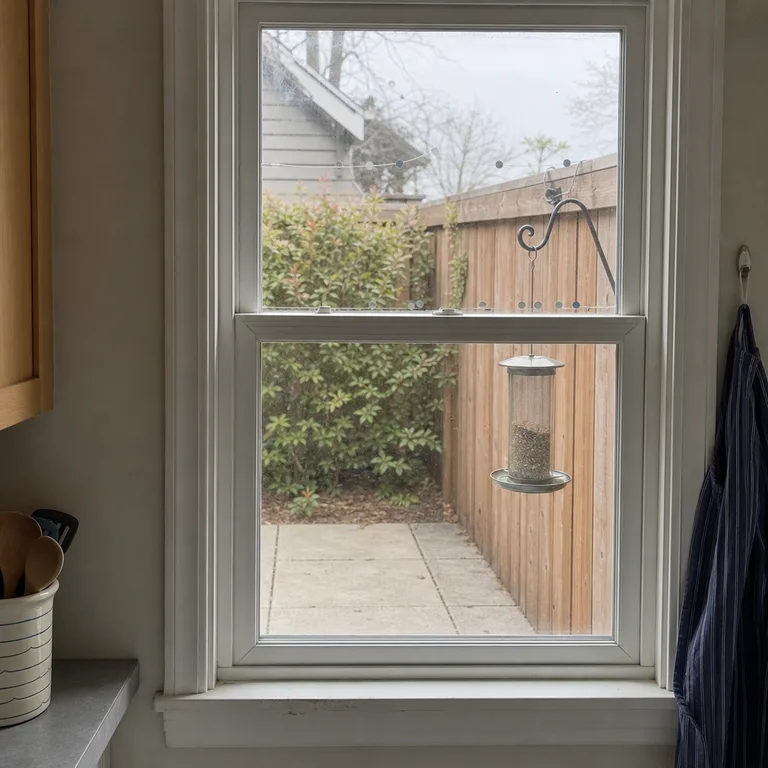
Apply a visible bird-strike deterrent to the outside of the specific window if the glass is a concern, and keep the feeder easy to remove for washing. A reused hook, existing overhang, or simple hanger may be enough if it holds the feeder securely without relying on loose trim or a fragile screen.
Worth knowing: A near-window feeder is not suitable for every pane; reflective or untreated glass can create a collision hazard that the feeder location alone will not solve.
2.A Pole in an Open Viewing Area
An open part of the yard gives a pole-mounted feeder clear visibility from the house and makes spilled seed easier to spot. It also avoids burying the feeding point in dense planting, where hidden predators and damp debris can be harder to notice.
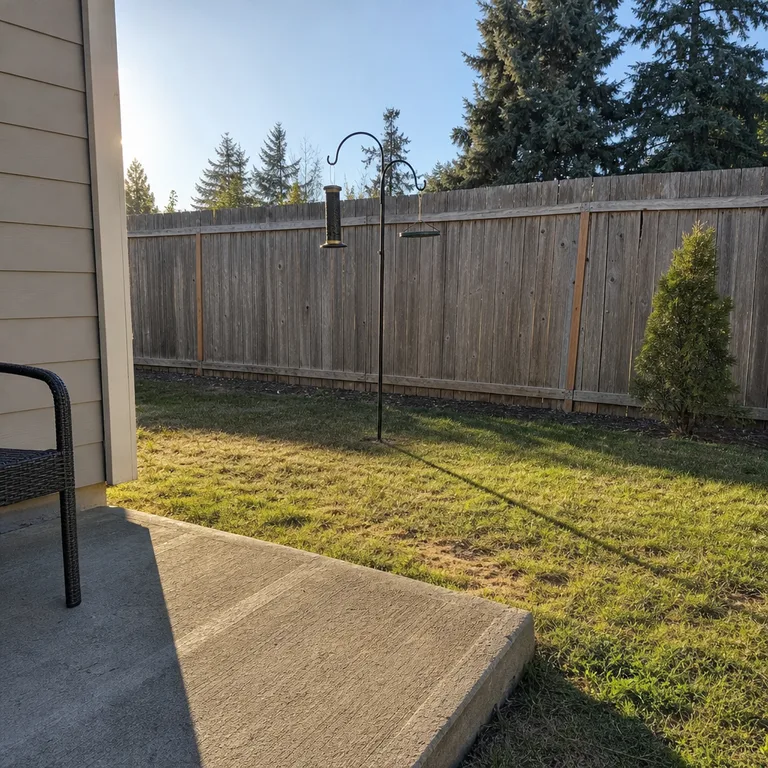
Use a sturdy pole with a secure base rather than adding a feeder to a weak fence or branch. Plan a simple walking route for refilling in wet weather, and check whether cats, squirrels, or local wildlife concerns make this open patch less practical than it first appears.
Worth knowing: A pole can become awkward to maintain if the ground turns muddy, shifts with frost, or sits in a route used heavily by pets and children.
3.The Edge of Shrub Cover, Not Deep Inside It
The visible outer edge of a shrub border can give small birds a quick place to retreat without concealing the feeder completely. This balance lets the feeding point feel sheltered while still allowing the area beneath it to be checked for seed buildup, droppings, and signs of predators.
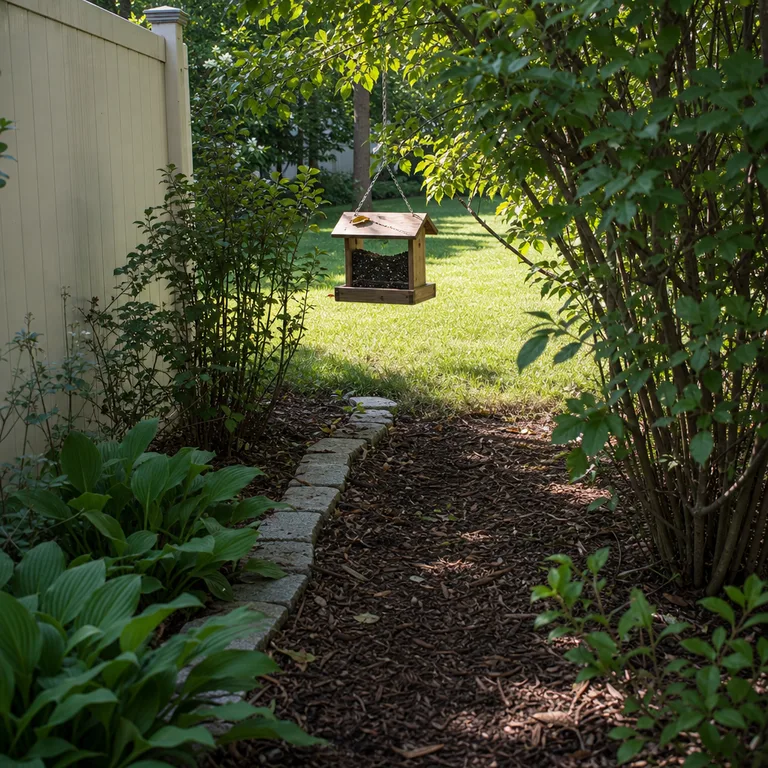
Hang the feeder where it can be reached from a path or open side of the bed, not from the deepest part of the shrubs. Existing branches or a simple hanger can reduce the need for new hardware, but prune only in a season and manner appropriate for the plants and any nesting activity.
Worth knowing: Dense shrubs can still create hiding places for cats or make cleaning difficult, so this placement needs regular observation rather than a one-time setup.
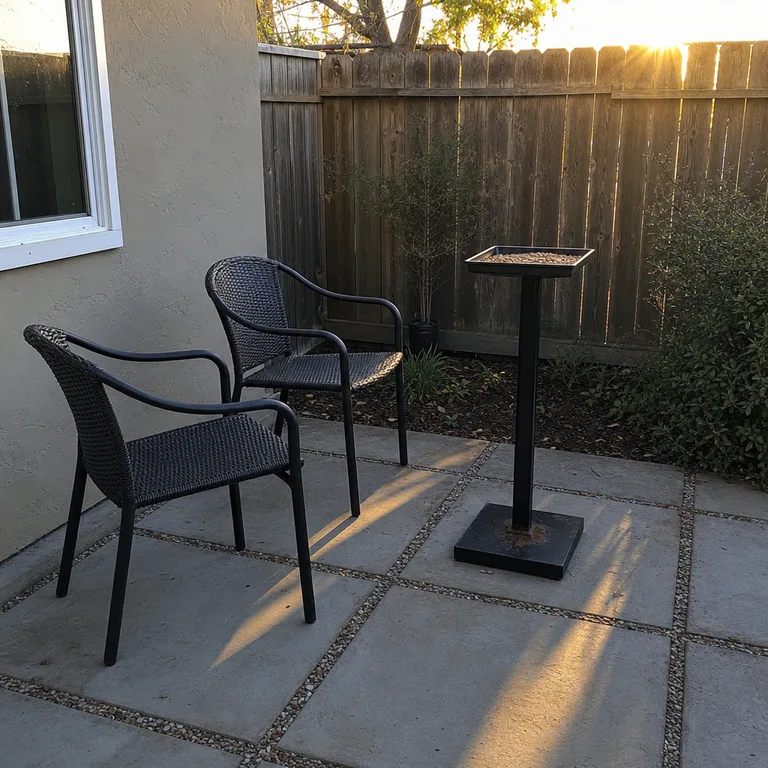
4.A Stable Stand at the Patio Edge
A freestanding feeder stand at the edge of a patio keeps filling and cleanup close to the house. It can work well where there is a level surface beside, rather than within, the seating area, so seed hulls and bird activity do not take over the patio.
Choose a stand with a broad, stable base and place it where rain can drain away instead of pooling around the feet. A tray beneath the feeder can contain some mess, and an existing paver or firm gravel area may be more reliable than setting a stand directly on lawn.
Worth knowing: This location may not suit a compact patio used for meals or frequent entertaining, since scattered seed and droppings require ongoing cleanup.
Related: 12 Small Patio Seating Ideas on a Budget
5.A Garden-Bed Edge With a Clear Refill Path
A feeder at the outer edge of a planting bed can use a small strip of garden space without blocking the lawn or patio. Placing it beside stepping stones or a firm path makes refilling less likely to compact soil, crush plants, or turn into a muddy chore.
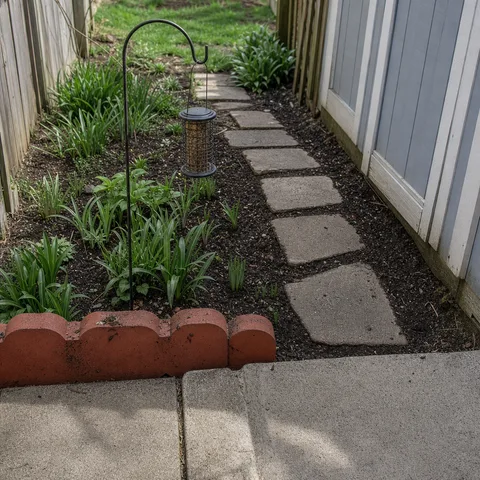
Use a simple shepherd hook or existing support where the feeder stays outside the reach of tall seasonal growth. Keep irrigation spray away from seed and feeder parts, and leave enough open ground below to rake up hulls or remove a tray for washing.
Worth knowing: Plants change through the year, and a clear spot in spring may become inaccessible once perennials, vegetables, or ornamental grasses fill out.
6.A Purpose-Made Window Feeder on a Low-Risk Pane
A purpose-made window feeder gives a close view of birds and can be especially useful where there is little ground space. Choose a reachable ground-floor pane so the tray can be removed and washed often, and check that the feeder attaches to solid glass rather than a screen, loose trim, or a surface with failing paint.
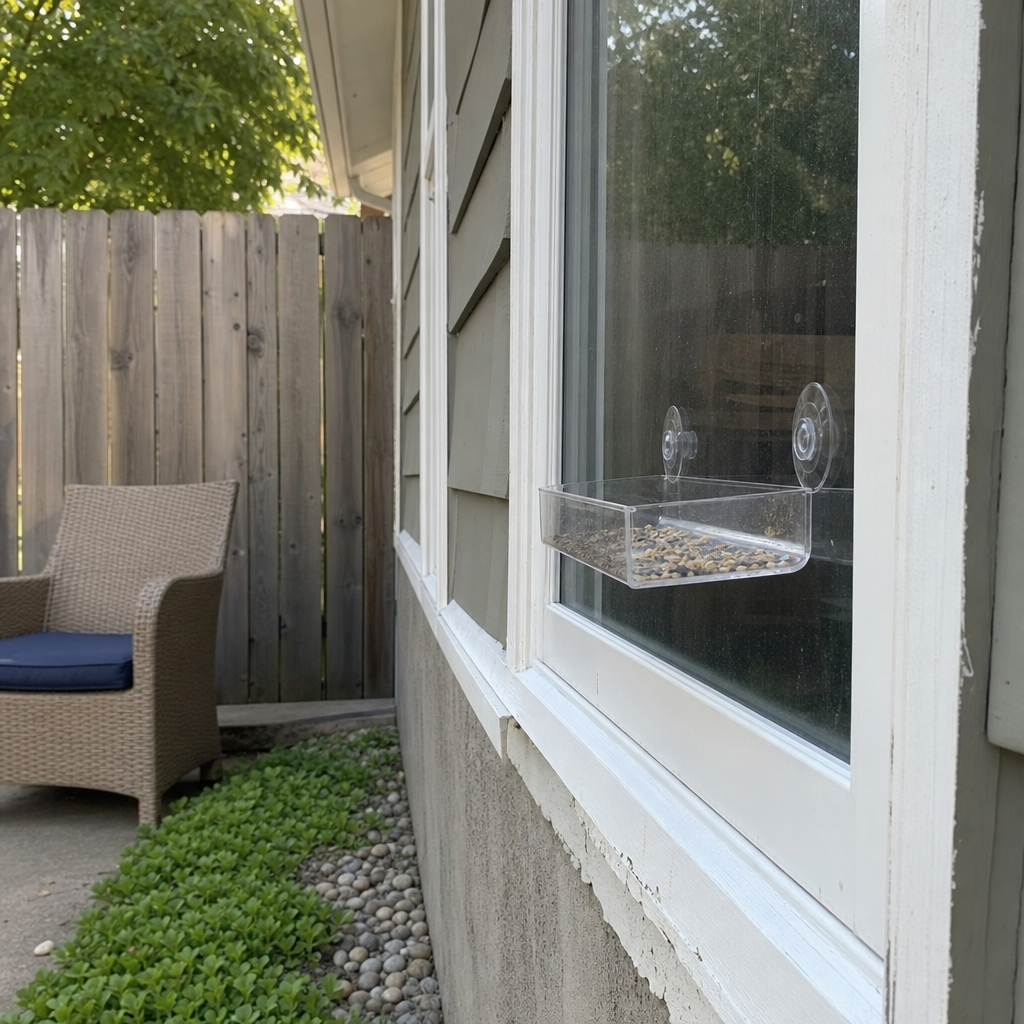
Treat the collision question as part of the installation, not as an afterthought. Inspect reflections at different times of day, use appropriate visible deterrent measures on the exterior of the pane when needed, and regularly check suction cups and attachment points for wear.
Worth knowing: Suction-cup feeders require frequent cleaning and attachment checks, and they are a poor fit for windows that present an unresolved bird-strike risk.
7.A Ground-Feeding Patch Only When Conditions Allow
A contained ground-feeding patch can serve birds that naturally feed low, but it is the most conditional option in a small yard. It needs a dry, visible area that is manageable for cleanup and does not sit beside pet traffic, a downspout, dense hiding cover, or a place where rodents are already active.
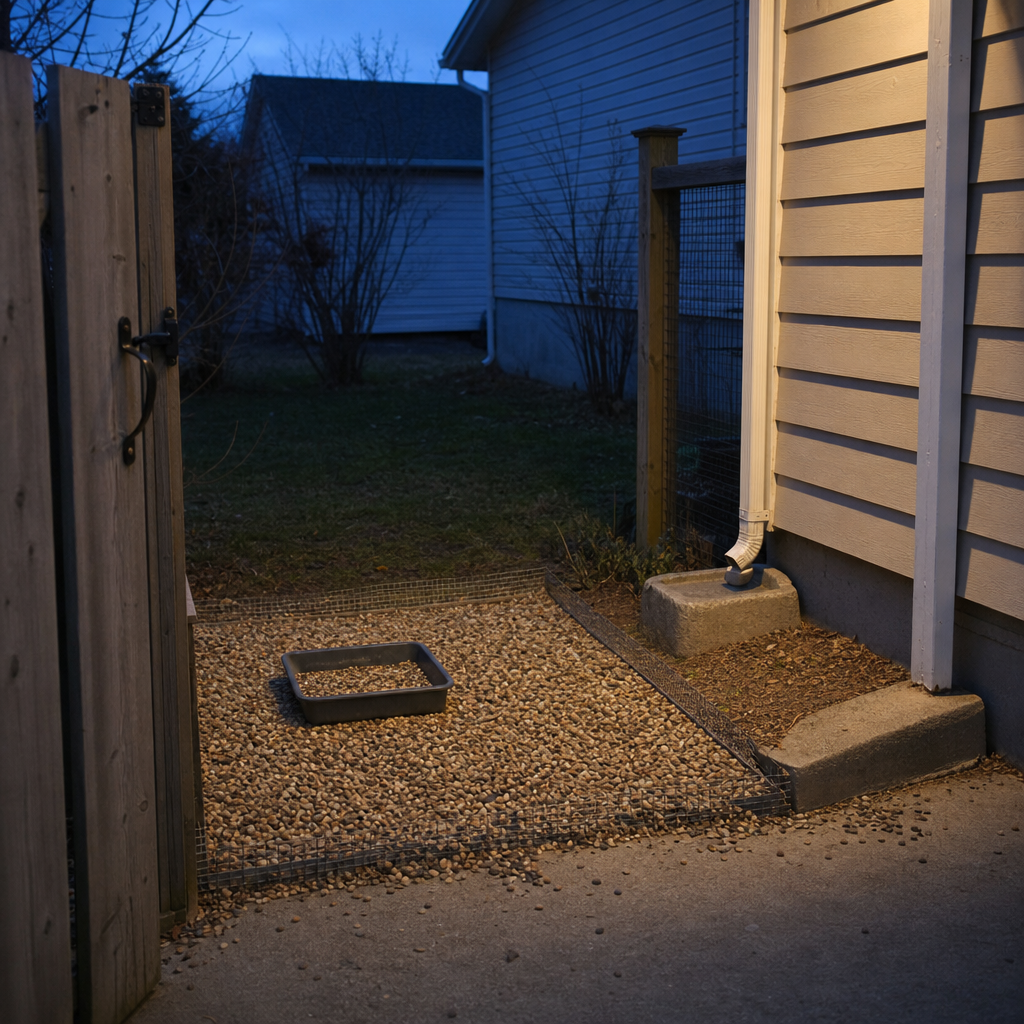
Use a removable shallow tray or defined surface rather than scattering seed broadly across soil or lawn. Follow local wildlife guidance, offer only an amount that can be cleared promptly, and stop using the area if seed accumulation, pests, or damp conditions become persistent.
Worth knowing: Ground feeding can attract rodents and create sanitation problems quickly, so it may not be appropriate in small yards with drainage, pet, or local wildlife restrictions.
About the author
Dana Ruiz, Senior editor
Dana writes about small-space living, storage and low-cost decorating.
Keep reading
7 Narrow Foundation Bed Layouts for the Front of a Small House
October 31, 2026
8 Christmas Porch Planters Using Empty Summer Pots
October 29, 2026

8 Small Front Yard Layouts for a Plain Rectangular Lawn
October 29, 2026
8 Christmas Gift-Wrapping Stations That Pack Away in a Small Home
October 31, 2026