6 Sewing Setups for a Small Bedroom Without a Craft Room
A small bedroom sewing area works best when the machine sits on a stable surface, with a clear path behind and beside it for fabric to feed without catching on the bed or wardrobe. These six setups use existing furniture or compact additions that can be cleared away when the room needs to function as a bedroom again.
As an Amazon Associate I earn from qualifying purchases.
1.Use a Sturdy Existing Desk Facing Into the Room
Turn a solid bedroom desk so its longest clear edge faces the open part of the room. Put the machine over the desk’s strongest section, usually close to the side supports, and leave the space behind and beside it open for fabric to move freely.
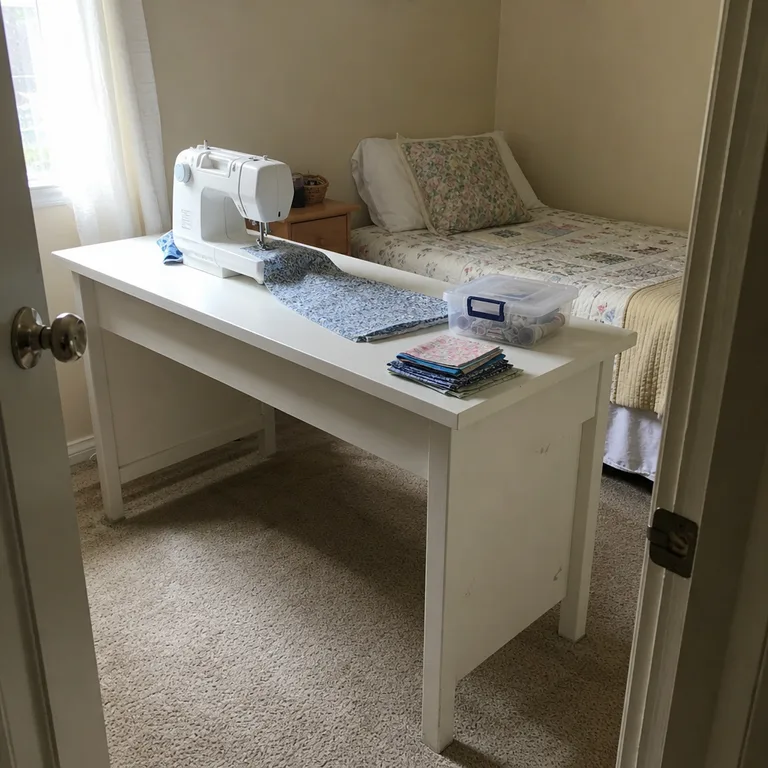
This layout makes a desk feel less like a cramped craft corner because the project can extend into the room rather than bunching against a wall. A lidded drawer caddy or small box can hold thread, clips, scissors, and needles, then return to a drawer when sewing is finished.
Check the desk for side-to-side movement before using it. Add furniture pads only if they help level the desk; they should not make the legs slide on hard flooring.
Worth knowing: A lightweight desk may wobble under machine vibration, and a desk beside a busy bed route can make long fabric awkward to manage.
2.Set Up at a Clear Dresser-Height Table Only When It Is Stable
A separate dresser-height worktable can serve as a temporary machine surface if it is deep enough for the machine and has sturdy legs or a solid base. Clear the top completely so fabric does not catch on decorative items, handles, or stacked storage.
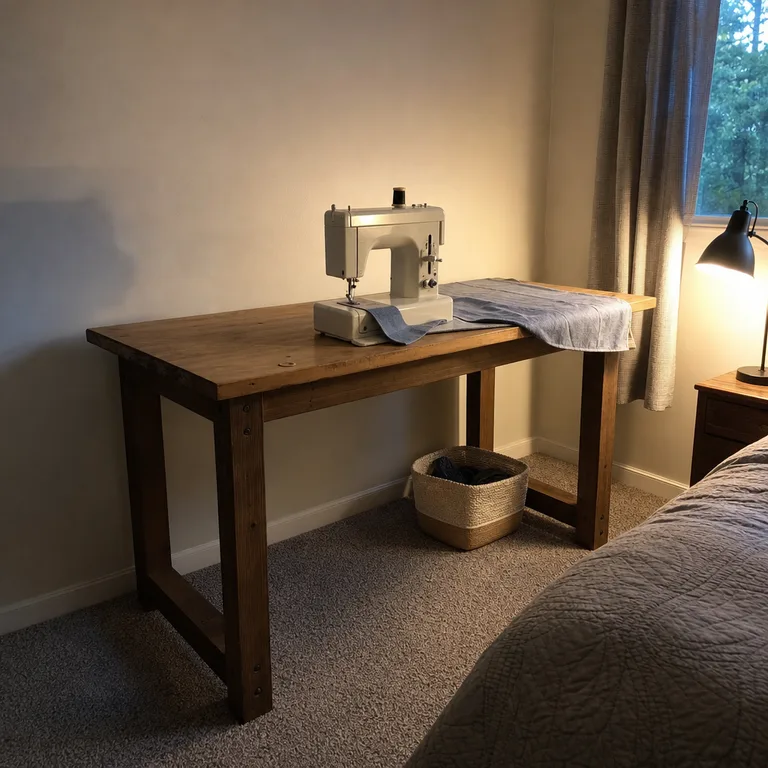
The higher surface can be comfortable for standing while pressing seams or making quick repairs, and a basket below can contain the active project. Keep sharp tools in a closing case rather than loose in the basket, especially in a shared bedroom.
Protect a finish that scratches easily with a grippy pad beneath the machine, but do not rely on a pad to correct an unstable table. Skip any piece that flexes, rocks, or has a top that is not meant to carry the machine’s weight.
Worth knowing: Dresser-height surfaces can be too tall for comfortable seated sewing and may leave little room for a chair to tuck in.
3.Open a Stable Folding Table Along a Clear Wall
A folding worktable can make a useful weekend sewing station when it opens fully, locks securely, and leaves an uninterrupted run for fabric. Place it along a clear wall with a walking lane between the table and bed, rather than blocking the room’s main route.
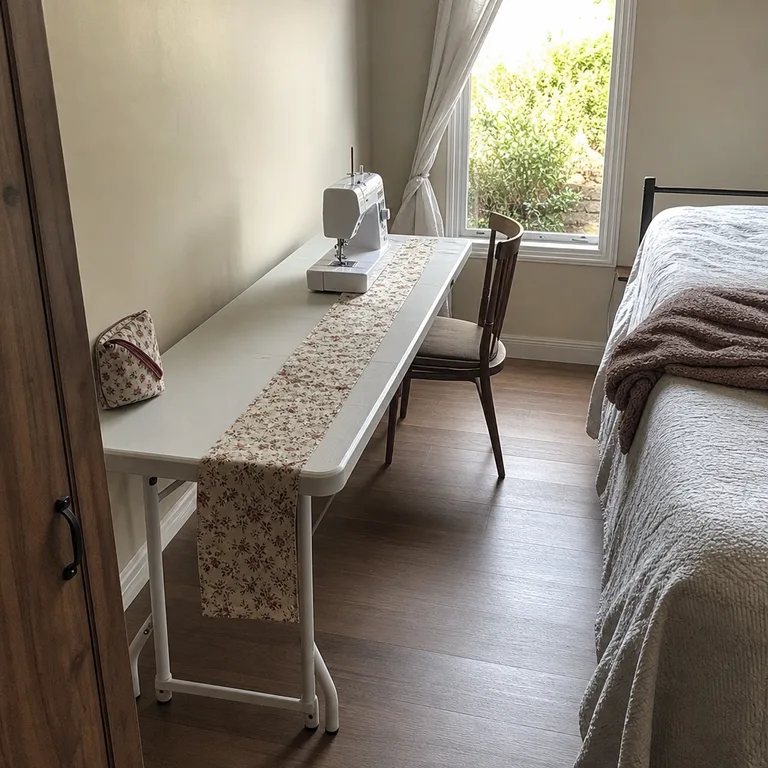
This setup gives a machine more side space than a narrow desk and can fold away behind furniture after the project is packed up. Use a zippered project bag for the current fabric, pattern pieces, and thread so the whole setup can be cleared without scattering supplies.
Test the table’s locks and joints each time it is opened, and use a chair that sits at a practical height for the machine. Avoid placing heavy bins on one end of the table, which can make a lightweight folding frame less steady.
Worth knowing: Folding tables vary widely in stiffness, so some are better for light mending than for long sessions with a vibrating machine.
4.Roll Out a Machine Trolley With a Rated Top
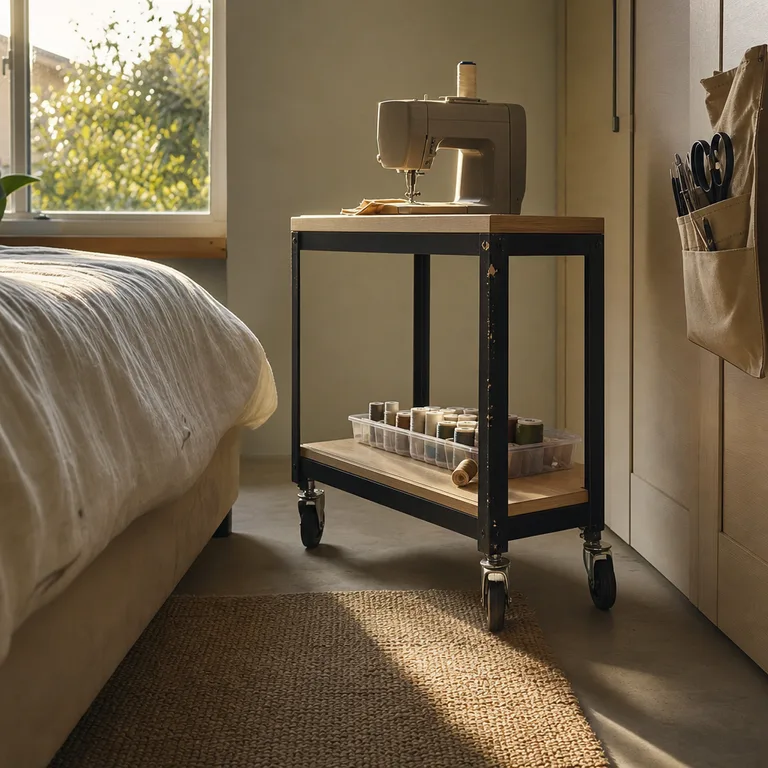
A compact trolley can keep the sewing machine, foot pedal, and a small tool kit together when bedroom floor space must stay flexible. Choose one with a top rated for the machine’s weight and casters that lock firmly before any sewing begins.
Keep only the current project on the top and use the lower shelf for a thread tray, fabric pouch, or manual. That keeps the trolley easier to move back to a wardrobe or wall after use, without turning it into a rolling pile of supplies.
Roll it over smooth flooring where possible, since thick rugs and uneven thresholds can make a loaded trolley difficult to control. Confirm that it is parked on level ground and that all wheel locks are engaged before using the foot pedal.
Worth knowing: A narrow trolley offers limited support for large fabric pieces and may not be stable enough for a heavier machine.
5.Borrow the Dining Table for a Packed-Away Sewing Session
For occasional projects, a sturdy dining table can offer the broad, clear surface needed to feed fabric without folding it over a bed. Set the machine on a padded, non-slip mat to reduce surface scuffs and help keep it from shifting.
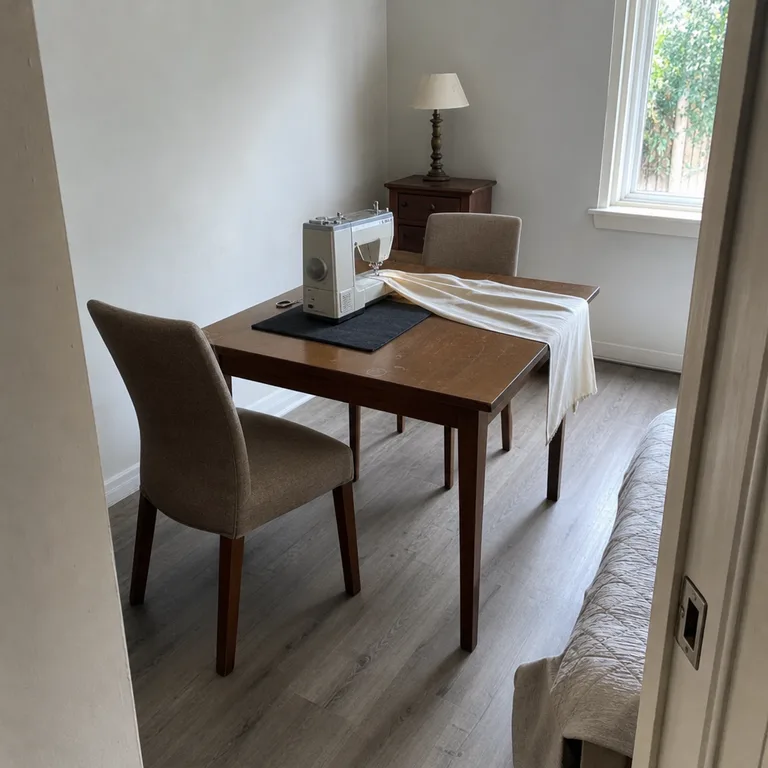
Treat this as a session-based setup: bring out the machine and one contained project, then pack everything away at the end. A snap-lid container for pins and a protective case for a rotary cutter keep sharp tools contained while the table returns to normal use.
Choose a table with enough room for the machine, fabric, and a safe place to set scissors without crowding someone’s meal space or bedroom walkway. Carry the machine with both hands and store it securely after each session rather than leaving it on an edge.
Worth knowing: This setup depends on another room or household surface being available, so it is less convenient for short, spontaneous sewing tasks.
6.Reserve One Small Corner Table for the Machine
A small corner table can give the sewing machine a consistent home without taking over the whole bedroom. Angle the machine toward open floor space so fabric can feed away from the wardrobe, and keep the table close enough to daylight for threading and checking stitches.
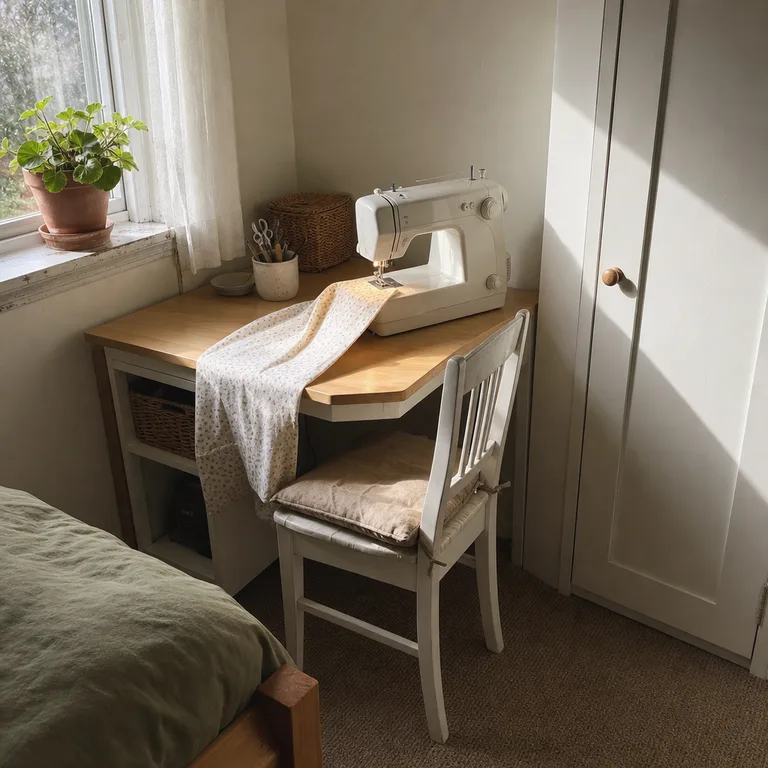
Use a tabletop organizer or a securely placed organizer beside the machine for the few tools used every time: thread, clips, seam ripper, small scissors, and measuring tape. A task lamp can help on darker days, while a cover keeps dust off the machine between projects.
This arrangement works best in a corner that is not also needed for opening drawers, making the bed, or accessing a window. Keep the cord routed where it cannot become a trip hazard, and put needles and blades away in a locking or lidded container.
Worth knowing: A dedicated corner table stays visible even when not in use, so it suits rooms with one reliably available corner rather than a fully flexible layout.
About the author
Dana Ruiz, Senior editor
Dana writes about small-space living, storage and low-cost decorating.
Keep reading
8 Christmas Gift-Wrapping Stations That Pack Away in a Small Home
October 31, 2026
7 Small Bedroom Layouts With Sloped Ceilings
October 31, 2026
8 Christmas Buffet Setups for a Small Kitchen Without an Island
October 29, 2026
7 Rewear Clothes Stations for a Small Bedroom Without a Chair Pile
October 29, 2026