6 Outdoor Rug Placements That Make a Small Patio Easier to Use
One outdoor rug can make a compact patio feel more settled when it supports chair movement without blocking a door, drain, or route to the garden. These placements use the same existing rug in different ways, with room for rain drying and the practical limits of a small outdoor space.
As an Amazon Associate I earn from qualifying purchases.
1.Set the Rug Under the Front Legs of Two Chairs
Place the rug beneath the front legs of two chairs, with bare patio behind each one. This visually connects the seats without making the whole seating area feel boxed in.
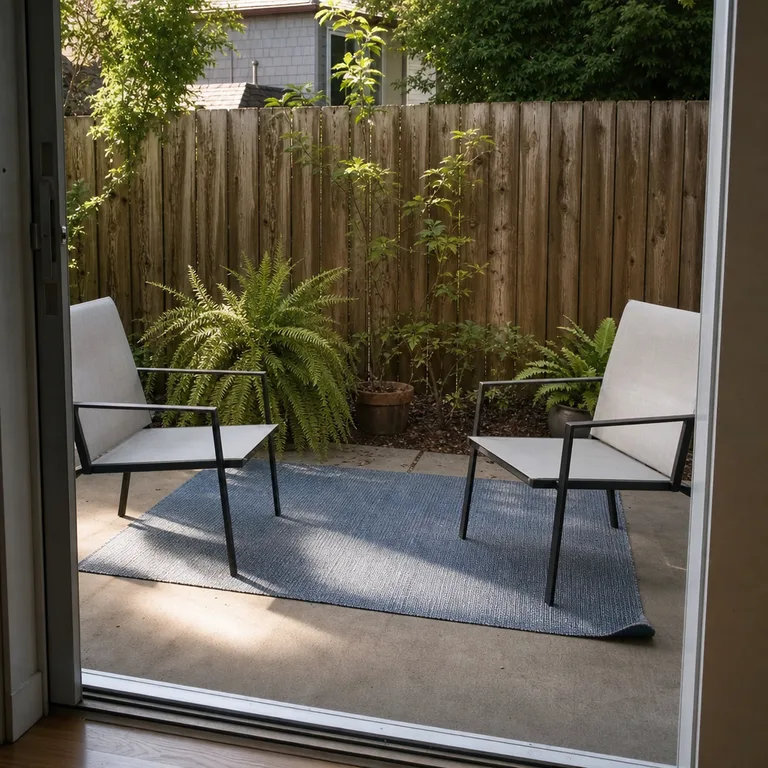
The exposed surface behind the chairs gives people a place to step and shift a chair without catching its back legs on the rug edge. It also leaves more of the rug accessible for sweeping or lifting after rain.
Use this layout when the chairs face each other or sit at an easy angle for conversation. Check that the rug is rated for outdoor use and has a suitable nonslip backing for the patio surface, especially on smooth concrete or pavers.
Worth knowing: This arrangement does not work well if chairs need to be pulled far backward to reach a table behind them.
Related: 12 Small Patio Seating Ideas on a Budget
2.Center the Rug Under a Small Table and Leave Pullout Room
Center an outdoor rug under a compact café table, but stop it short of the usual chair positions. The table gets a defined place while chairs can move across the bare patio instead of dragging over a raised edge.
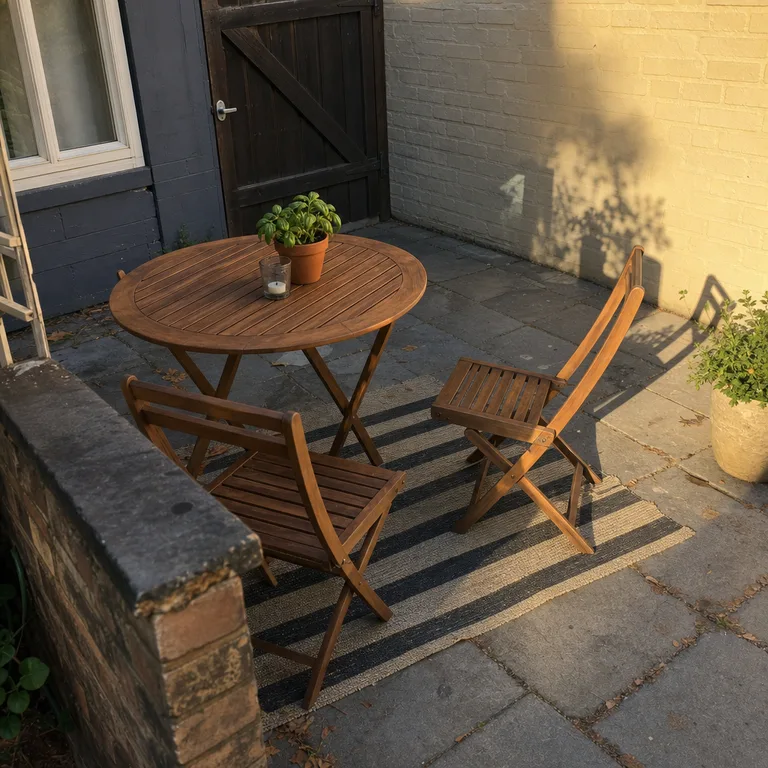
This placement is especially useful for folding or lightweight chairs, which can catch more easily than heavier seating. Leaving clear space around the rug also makes crumbs, leaves, and rainwater easier to deal with.
Keep the rug square to the table if the patio is narrow, or turn it only when the angled corners do not intrude into the walking route. Test each chair position before settling on the layout, including the space needed when someone stands up.
Worth knowing: A very small rug may look disconnected beneath a table if it does not extend beyond the table base at all.
3.Use a Narrow Rug as a Bench-Front Landing Strip
Lay a narrow rug parallel to a fixed bench rather than trying to slide it underneath. It gives feet a softer landing spot and adds a finished line along a plain bench wall or fence.
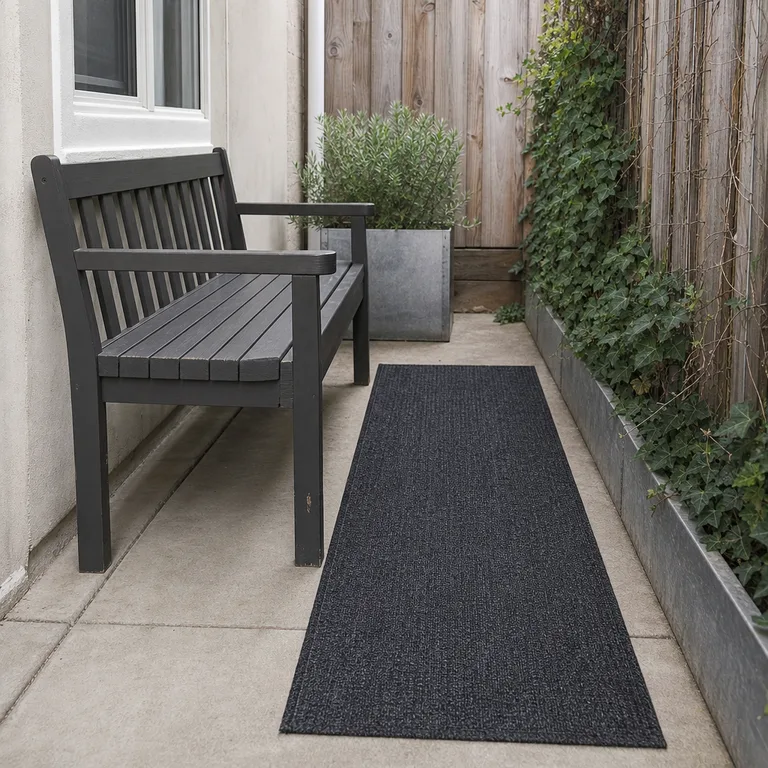
Keeping the bench legs on bare paving helps with sweeping, and it avoids holding damp debris in the tight space underneath. A runner also uses less of the patio width, so the route past the bench stays open.
Set the rug far enough from the bench that it can be lifted out easily for drying. A flatwoven outdoor rug is usually simpler here than a thick, absorbent style, particularly in a wet climate or a patio with limited sun.
Worth knowing: A runner can become a trip point if it sits across the only route between the door and garden.
4.Tuck a Rectangle Into One Seating Corner
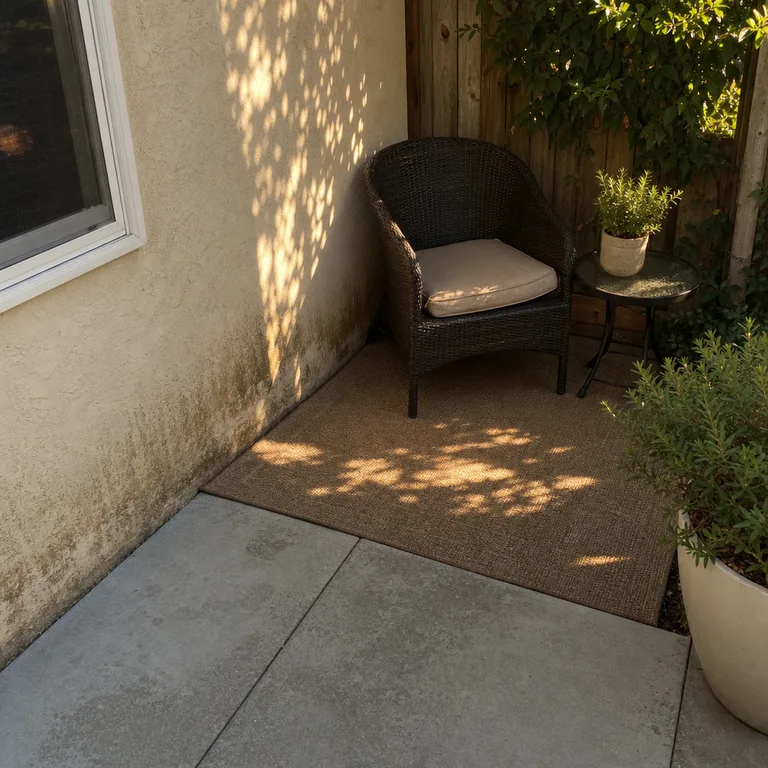
Move the rug into one corner and use it to hold a single chair with a small side table. The main patio stays clear, while the corner becomes an intentional reading or coffee spot instead of leftover space.
Keep the rug square to the walls for a calmer look on a compact patio. An angled placement can work when it follows the chair position, but its corners should not project into the central walkway.
This is a practical choice for one existing rug that is too small to serve a full seating group. Place it where it receives enough light and airflow to dry, rather than against a damp wall with little sun.
Worth knowing: A corner rug will not unify separate chairs placed across the patio.
5.Keep a Clear Strip Between the Door and the Rug
Place the rug beyond the door swing and leave a bare strip of paving at the threshold. Treat the rug as the start of the sitting area, not as an oversized doormat.
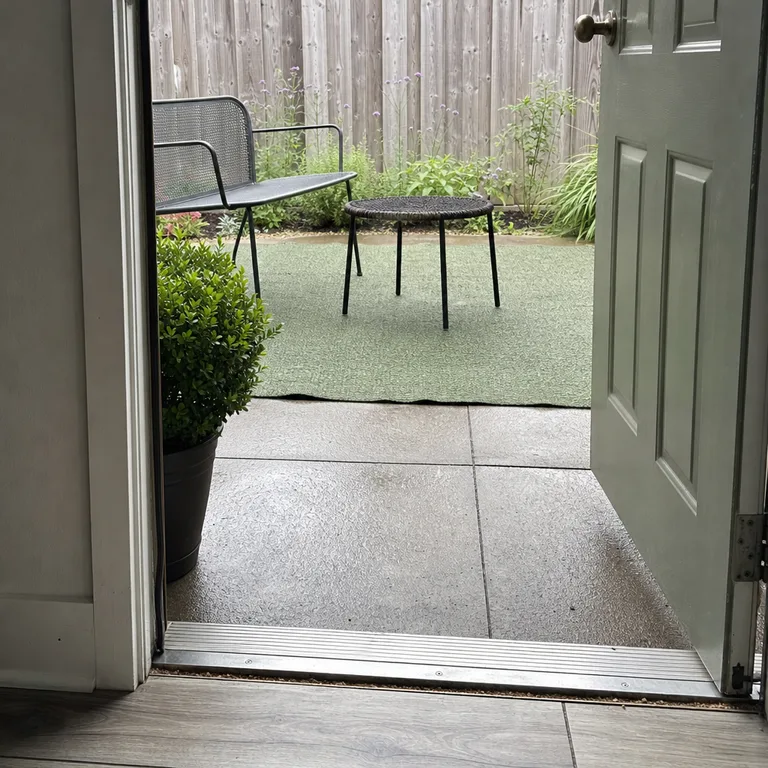
A clear threshold is easier to sweep and less likely to trap wet leaves, grit, or water beside the door. It also gives the door room to open fully and keeps the rug from bunching against the frame.
Check the door from both open and closed positions, including any screen door or outward swing. Keep drainage gaps, channels, and the threshold itself uncovered so water can move away from the house.
Worth knowing: This layout may leave too little usable rug area on an especially shallow patio.
6.Move the Rug to the Covered Dry Zone and Leave the Wet Edge Bare
Put the rug in the covered or more sheltered part of the patio, leaving the rain-exposed edge bare. This keeps the softest surface where people sit while allowing the open section to handle direct rainfall and garden traffic.
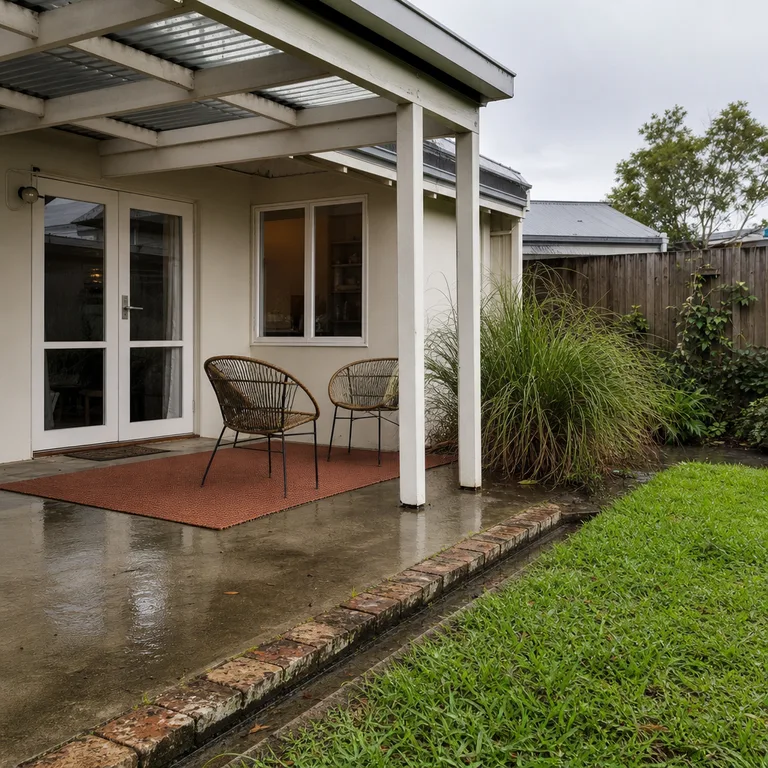
A bare wet edge makes drains, slopes, and standing water easier to see. It also reduces the chance that the rug will stay damp underneath after a shower, which can lead to mildew or staining on some patio surfaces.
Use this placement when a roof overhang, awning, or sheltered wall provides reliable cover without blocking needed airflow. Lift the rug periodically to check that the patio beneath it is drying fully, especially during long wet spells.
Worth knowing: Even under cover, a rug may still get wet from wind-driven rain and will need occasional removal for a full dry-out.
About the author
Dana Ruiz, Senior editor
Dana writes about small-space living, storage and low-cost decorating.
Keep reading
7 Narrow Foundation Bed Layouts for the Front of a Small House
October 31, 2026
8 Christmas Porch Planters Using Empty Summer Pots
October 29, 2026
8 Small Front Yard Layouts for a Plain Rectangular Lawn
October 29, 2026
8 Christmas Gift-Wrapping Stations That Pack Away in a Small Home
October 31, 2026