10 Small Bathroom Ideas That Keep the Floor Clear
A compact bathroom feels easier to use when the open strip of floor around the toilet, vanity, shower, and door is protected from visual and physical clutter. These renter-aware layout ideas shift useful functions upward, inward, or behind existing fixtures while preserving cleaning access and safe movement.
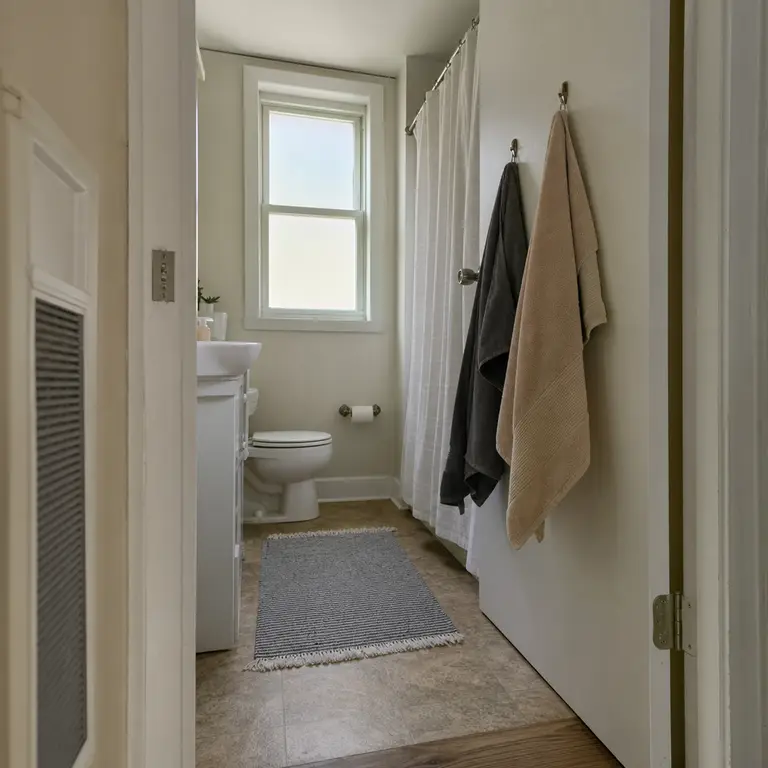
1.Use the wall above the toilet for shallow storage
The wall above the toilet can hold a shallow cabinet or open shelf, moving a few daily essentials away from the floor and sink area. Keep the unit high enough that the tank lid can still be lifted and the toilet can be cleaned without awkward reaching.
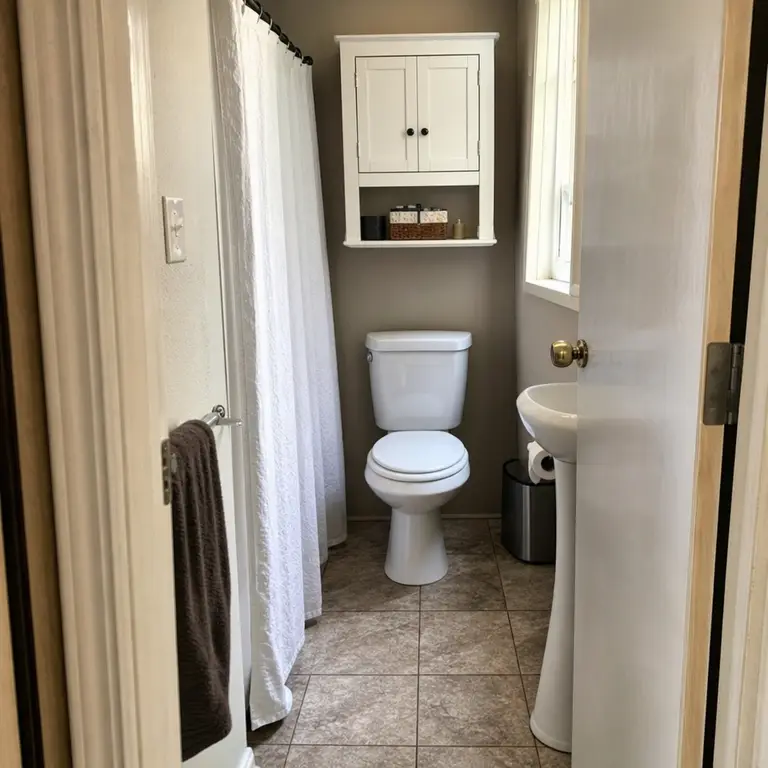
Choose a moisture-suitable piece with a modest depth so it does not loom over the fixture. Secure mounting matters here: use appropriate anchors or attach to solid wall framing where possible, and check the rental agreement before making holes.
Worth knowing: This only works when there is clear wall space above the toilet and the unit can be mounted securely.
Related: 12 Small Bathroom Storage Ideas When You Have No Linen Closet
2.Replace a floor cabinet with a wall-mounted vanity
A wall-mounted vanity reveals the floor under the sink, which makes a narrow bathroom feel less blocked and gives a mop or vacuum a clear route. It can also make the sink zone look lighter than a cabinet that runs all the way to the floor.
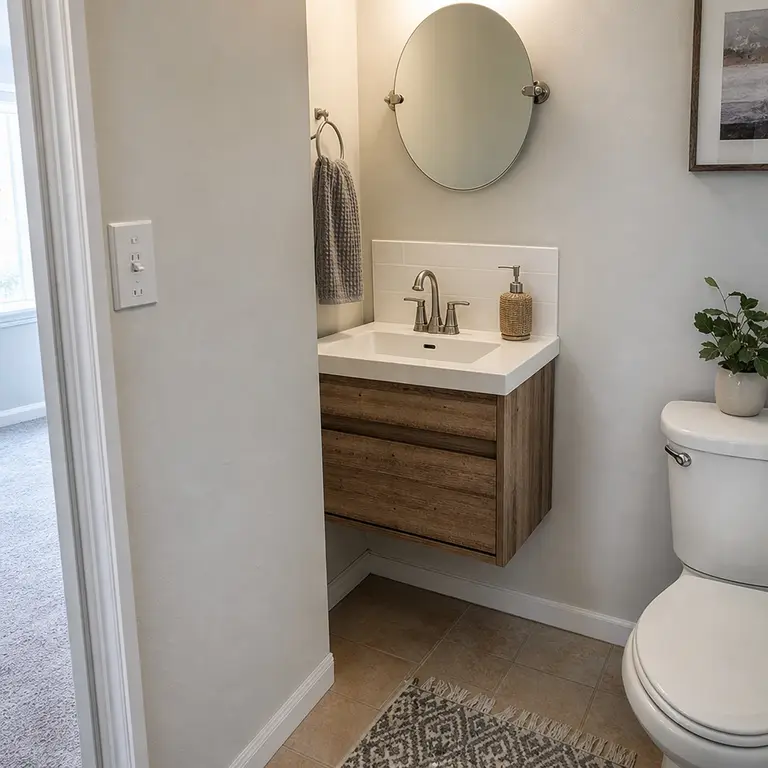
This is a larger rental upgrade, so look for a compact unit that works with the existing sink and plumbing position rather than requiring a full rearrangement. Proper support is essential because a vanity carries the weight of the basin as well as its contents.
Worth knowing: Wall structure, plumbing placement, and landlord approval can make this impractical in many rentals.
3.Choose a narrow over-the-door rack
The back of the bathroom door is useful for lightweight towels and small grooming tools that would otherwise need a stool, stand, or floor basket. A narrow rack keeps those items contained in a spot that is already out of the main walking area.
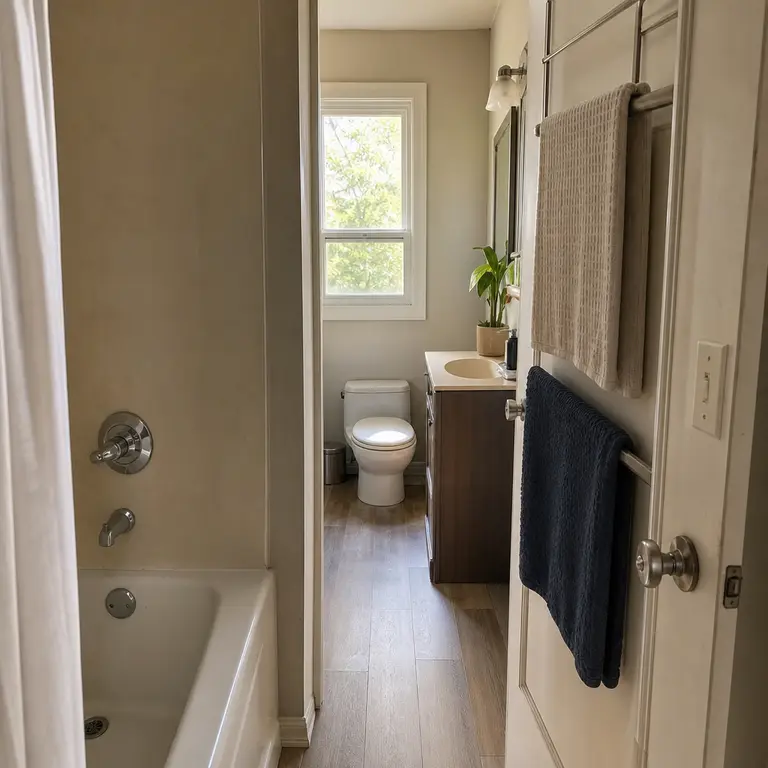
Test the door through its full swing after fitting the rack. It should not hit the toilet, vanity, wall, or shower enclosure, and it should leave the latch able to close normally.
Worth knowing: A rack can make a tight door swing worse if the bathroom fixtures sit close to the door.
4.Fit a recessed or surface-mounted medicine cabinet
A medicine cabinet gathers the small items used at the sink behind a mirror instead of spreading them across the vanity. Clearing that visible surface helps a compact room look calmer without adding anything to the floor.
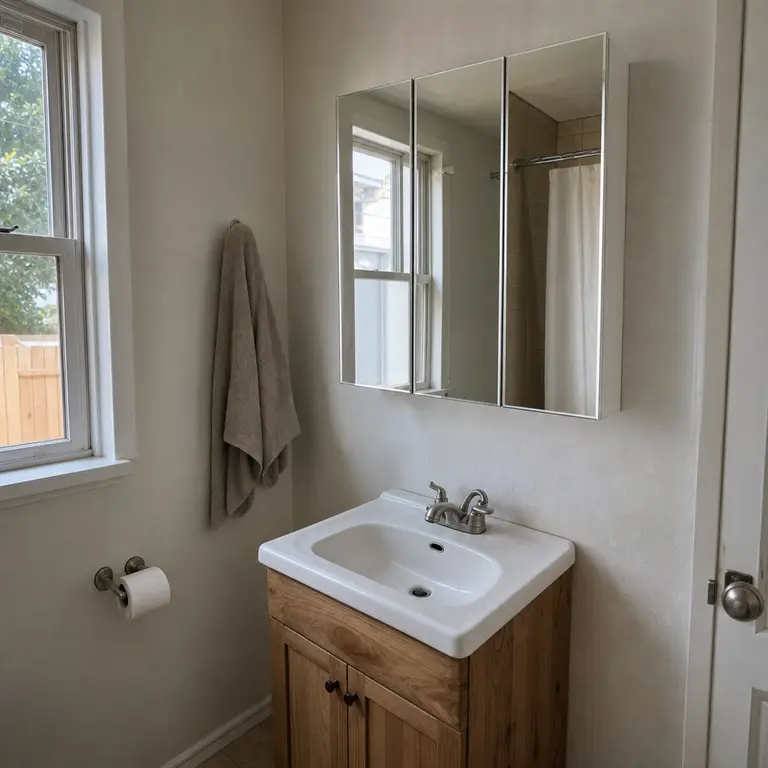
A surface-mounted model is usually the simpler option because it avoids opening the wall. Recessed cabinets sit flatter, but they need enough wall depth and can conflict with wiring, pipes, or rental restrictions.
Worth knowing: Recessed installation is not a simple renter project and may require professional approval or help.
5.Hang towel bars and hooks behind the door
Hanging towels behind the door keeps them off a hamper, stool, or the edge of the tub. It also gives each towel a defined place, so the floor stays clearer around the toilet and sink.
Use hooks or a bar that allow damp fabric to hang open rather than bunching into a thick fold. Position them so towels do not brush the toilet, trail onto the floor, or get pinched when the door closes.
Worth knowing: Behind-door hooks are less useful when the door must stay open for ventilation or there is little clearance behind it.
6.Use a shower caddy that attaches inside the shower
Keep bath bottles inside the shower footprint with a tension caddy, suction caddy, or securely mounted corner unit. This removes loose containers from the floor beside the tub or shower entry, where they make cleaning and stepping around harder.
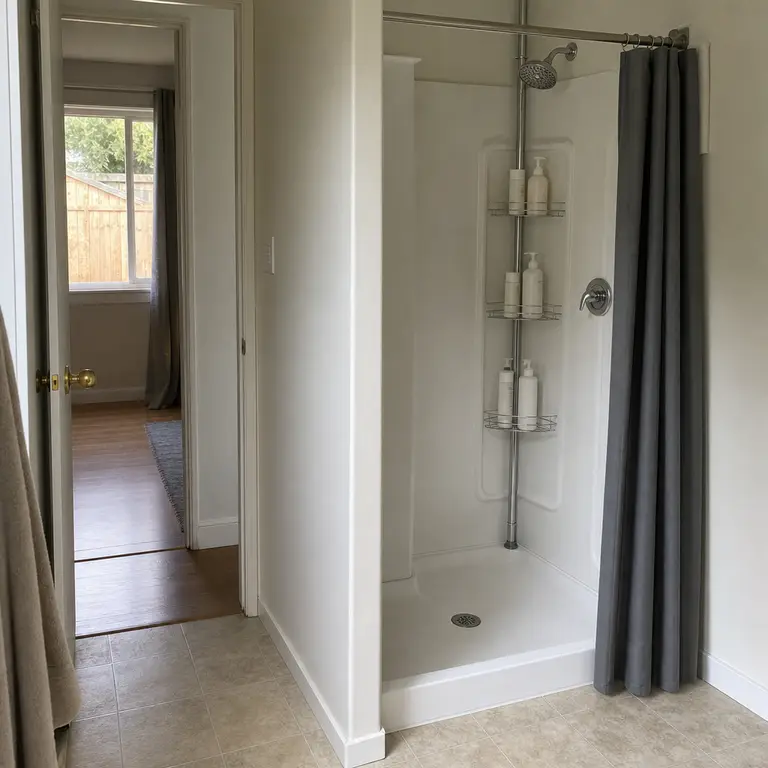
Choose rust-resistant materials suited to constant humidity, and avoid overloading suction-mounted pieces. A tension pole should sit firmly between stable surfaces, while adhesive and drilled options need a clean, suitable wall surface.
Worth knowing: Suction and adhesive caddies can fail on uneven tile or in persistently damp conditions.
7.Move the toilet paper holder onto the wall
A wall-mounted toilet paper holder clears the small patch of floor beside the toilet that a freestanding stand occupies. That open space makes it easier to reach around the base when cleaning and reduces one more object in a tight path.
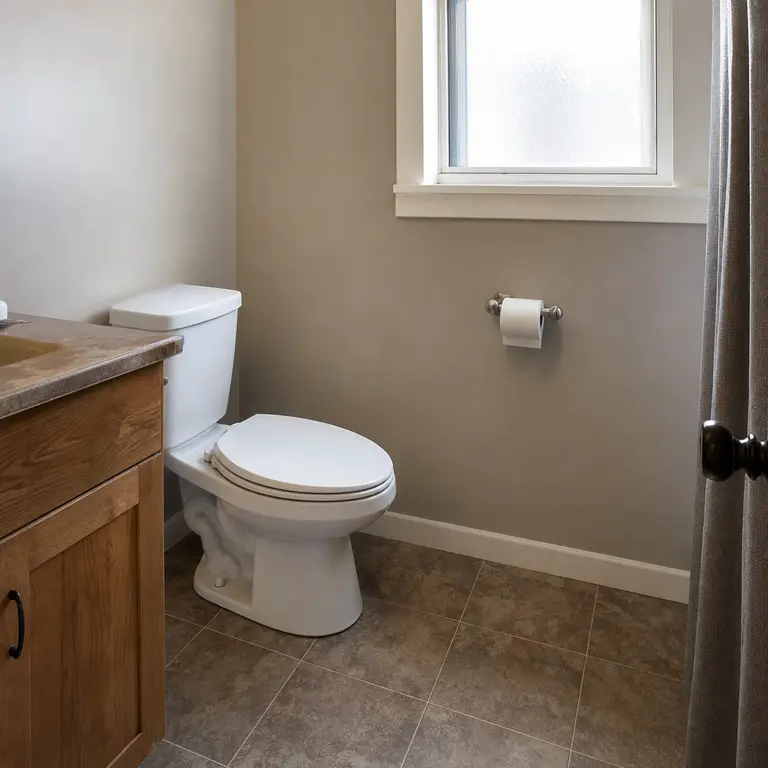
Place the holder within comfortable reach from the seat without setting it where knees, the door, or a nearby vanity will hit it. If drilling is not allowed, a narrow vertical dispenser may be an alternative, but it still needs a stable place outside the walking route.
Worth knowing: Some toilet placements leave too little side-wall space for a holder that is both reachable and out of the way.
8.Install a slim ledge above the sink zone
A very shallow ledge or rail-mounted basket above the sink can hold the few items used at the mirror, leaving the vanity top more open. This works best as a landing spot for small necessities rather than a shelf for heavy bottles or bulk supplies.
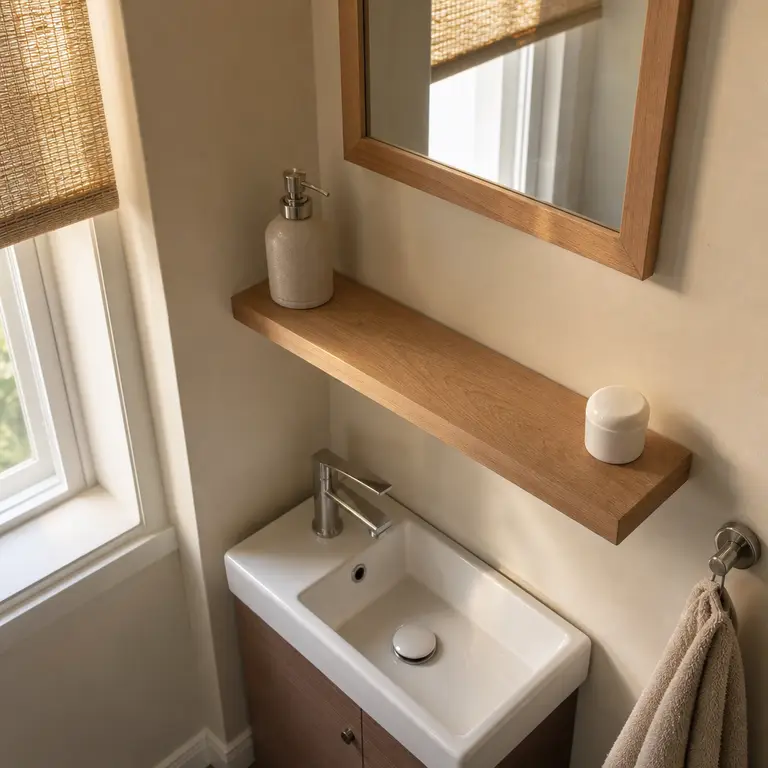
Keep the ledge high enough to preserve elbow and shoulder room at the sink, but low enough to reach without stretching. Its projection should stay shallow so nobody bumps it while using the mirror, especially in a bathroom with a narrow passage.
Worth knowing: A ledge can feel intrusive if the sink wall is already close to the opposite fixture.
9.Keep the laundry hamper outside the bathroom
A laundry hamper often takes up the central floor strip that makes a compact bathroom usable. Moving it to a bedroom closet, hall, or laundry area can reopen the route between the door, toilet, sink, and bathing area.
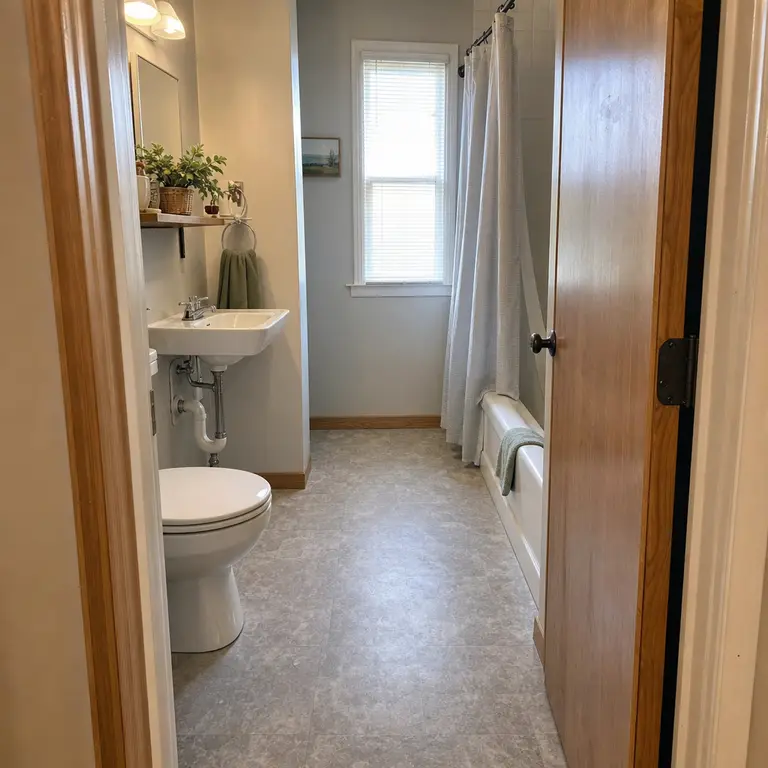
Choose an alternate spot that suits the household routine and has reasonable airflow for damp towels or clothing. In a shared home, a lidded or divided hamper outside the bathroom can keep the room from becoming a holding area for laundry.
Worth knowing: This requires a nearby place for laundry that does not create clutter in another high-traffic area.
10.Use one narrow rolling cart only where it can park away
When wall mounting is not permitted, one narrow rolling cart can provide flexible support without permanently claiming a floor corner. It can be pulled closer while the sink is in use and moved aside for cleaning, as long as it has a reliable parking place.
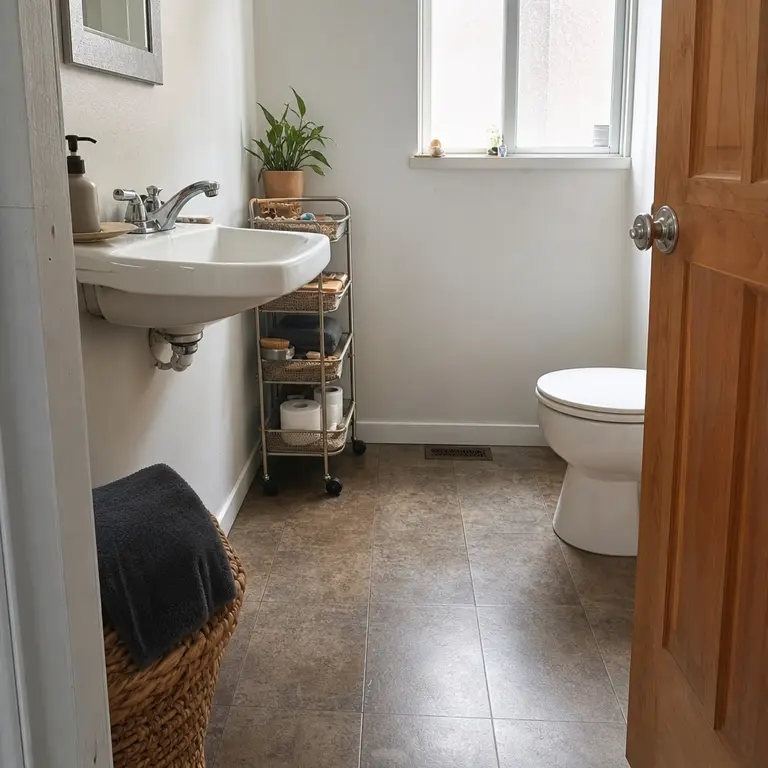
Keep the cart light enough to move easily and avoid filling it until it becomes hard to steer. Its parked position must remain outside the door swing, shower entry, and main exit route, with enough space to clean behind it.
Worth knowing: A rolling cart still consumes floor space and becomes clutter when it has no fixed place to park.
About the author
Dana Ruiz, Senior editor
Dana writes about small-space living, storage and low-cost decorating.
Keep reading
10 Home Office Nook Ideas for a Small Living Room
September 18, 2026
12 Small Entryway Ideas for Homes With No Foyer
September 17, 2026
10 Small Patio Dining Ideas Without a Big Furniture Set
September 19, 2026
12 Under-Sink Storage Ideas That Work Around Pipes
September 19, 2026