10 Charging Station Organization Ideas That Hide Everyday Cable Clutter
A shared charging station gives phones, tablets, headphones, and their cords one predictable home instead of letting them spread across the living room. These setups use accessible furniture and open airflow so powered equipment stays easy to reach, inspect, and unplug.
As an Amazon Associate I earn from qualifying purchases.
1.Use a Console Drawer With a Cable Pass-Through
Turn a shallow console drawer into a device drop zone by adding a cable grommet at the back and placing a suitable power strip inside. Phones and tablets can sit in the drawer while their cords stay gathered instead of spilling onto the console top.
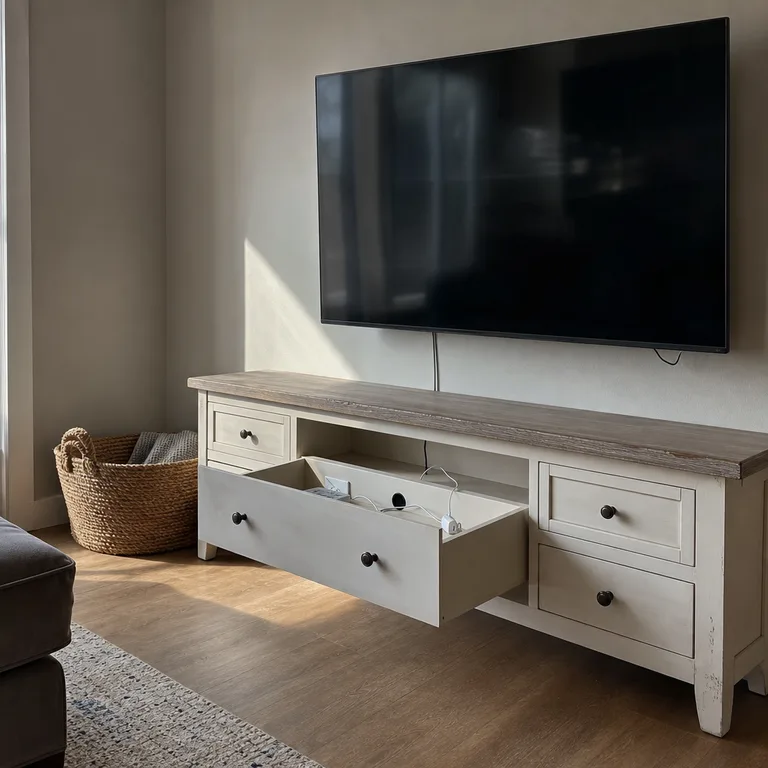
Keep the drawer partly open whenever equipment is charging so heat can escape and plugs remain visible. A simple tray or adjustable drawer divider keeps each cord from tangling with remotes, batteries, and other small items.
Worth knowing: This works only if the drawer can stay open during charging and the console has enough rear clearance for cords without pinching them.
2.Create an Open Basket Charging Shelf
Set an open wire basket or loosely woven basket on a low media-console shelf, then place a charging hub inside with cords routed through a sleeve. The basket gives family devices a clear home without turning the room into a row of visible chargers.
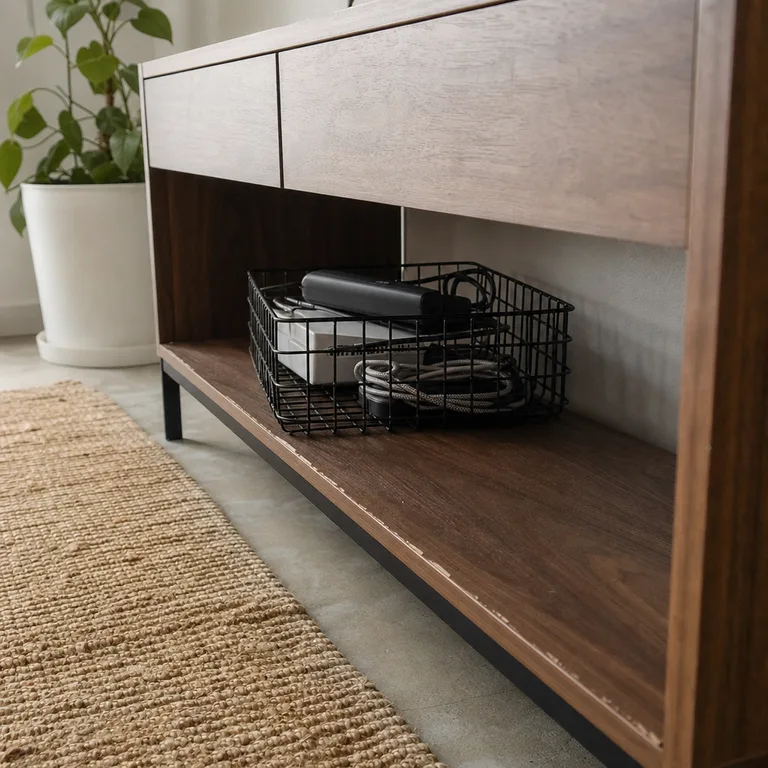
Choose a basket with open sides and leave its top uncovered so the hub can ventilate. Keep the shelf easy to reach, since a charging spot that requires moving decor or crouching behind furniture will quickly become a cord pile again.
Worth knowing: A basket will contain visual clutter, but it will not fully hide devices that need to remain connected and accessible.
3.Turn a Side Table Shelf Into a Family Charging Spot
Use the lower open shelf of a sofa side table for a power strip and the extra length of charging cords. Short charging leads can run from the shelf to the tabletop, where a phone or e-reader is easy to pick up without crossing the floor.
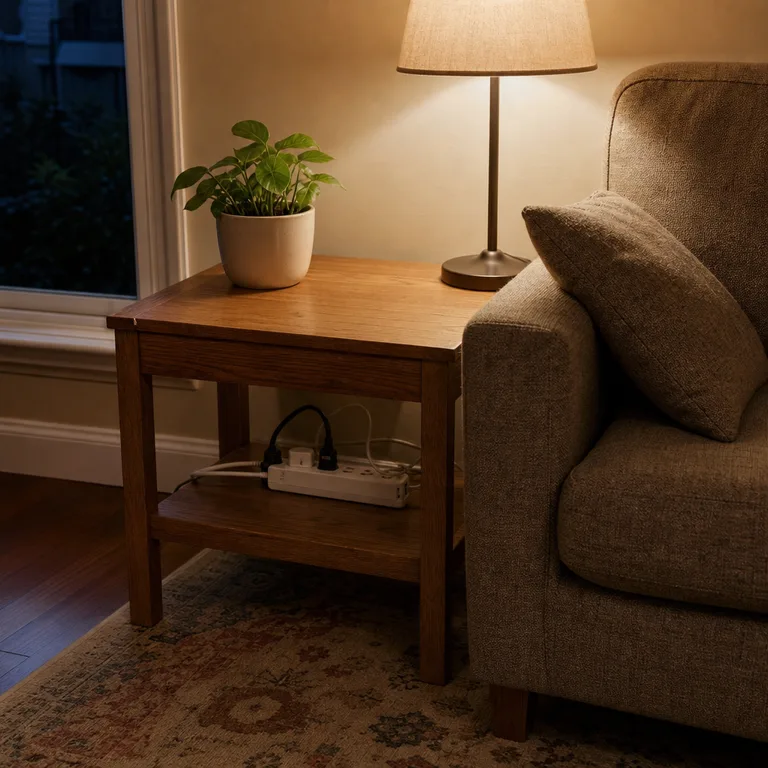
This arrangement keeps the active chargers close to where people actually sit. Secure cords along the inside table leg with clips or reusable ties so feet, pets, and vacuum cleaners are less likely to snag them.
Worth knowing: A side-table station handles only a few regularly used devices and can look busy if every family member leaves equipment on the tabletop.
4.Add a Charging Drawer to a Storage Ottoman
A storage ottoman can hold a small charging setup only when it has a proper cable opening and enough room around the equipment. Keep cords organized in a pouch or divider so they do not tangle with blankets, games, or other soft items.
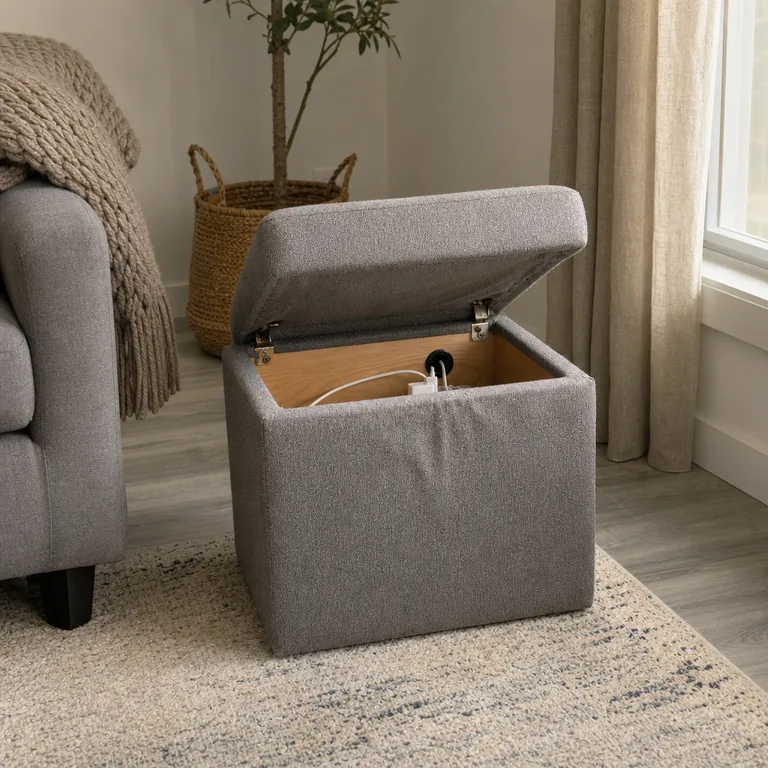
Leave the lid unlatched and partly open while anything is powered, rather than treating the ottoman as a sealed cable box. This can make a compact living room feel tidier because chargers disappear when they are not in use.
Worth knowing: A closed upholstered ottoman is not a safe place for powered charging equipment, so this setup requires supervision and an open lid during use.
Related: 10 Blanket Storage Ideas for a Living Room Without Spare Closets
5.Mount a Power Strip Behind the Media Console
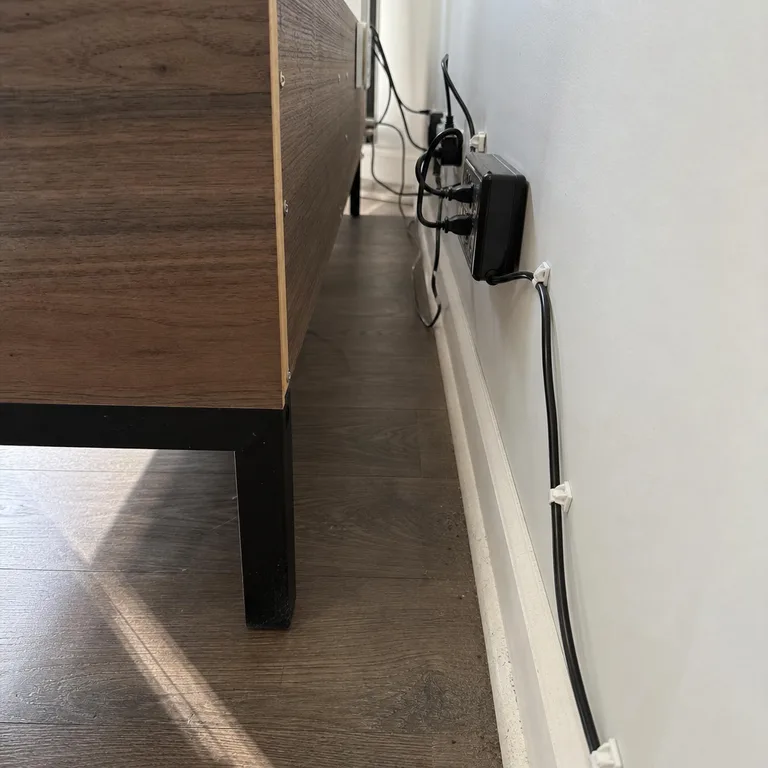
Mount a compatible surge protector or power strip to the rear of the media console, then guide each cable along the back with adhesive clips. This removes the loose bundle that often collects beneath televisions, game systems, lamps, and speakers.
Leave enough slack to pull the console away from the wall for cleaning or troubleshooting. Group cords by purpose, such as television equipment on one side and household charging leads on the other, so an unplugged device is easier to identify.
Worth knowing: This is more of an installation job than a quick tidy, and adhesive clips may not hold well on dusty, textured, or heat-exposed surfaces.
6.Use a Wall Pocket Near the Entry
Hang sturdy wall pockets near the living-room entry for unplugged tablets, headphones, and small accessories that otherwise land on the nearest table. Run one charging lead from a nearby outlet in a surface-mounted cord cover, keeping the route away from the main walking path.
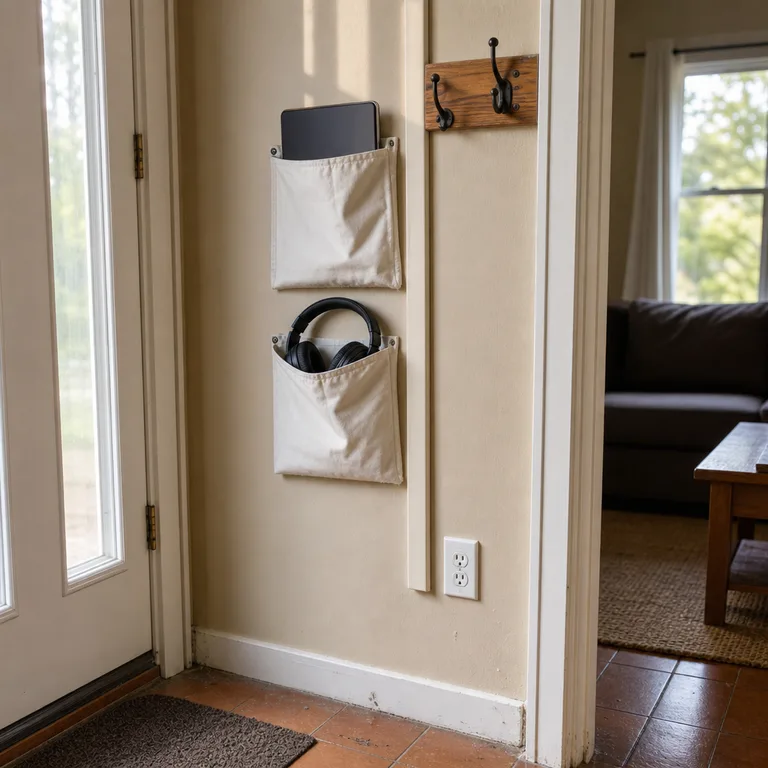
This creates a useful handoff point for devices coming into and leaving a shared room. Place the pockets at a height children can reach if they will use the station, but keep cords and the outlet area clear of bags, coats, and shoes.
Worth knowing: Wall pockets work best for light devices and accessories, and renters may need removable hanging hardware or permission to install a cord cover.
7.Build a Charging Tray Into a Bookcase Shelf
Dedicate one reachable bookcase shelf to a shallow tray that holds phones, earbuds, watches, and a compact charging hub. The tray gives every small item a boundary, making it less likely that cables will drift across books and decorative objects.
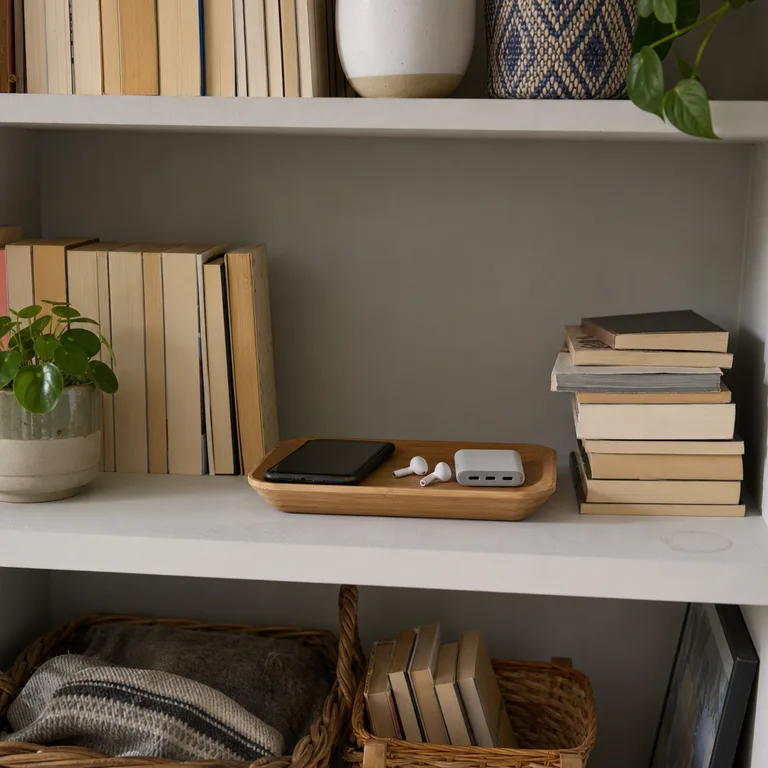
Use a rear cable opening if the bookcase has one, or route the cord neatly down the side of the unit. Keep paper, fabric, and crowded stacks away from the powered hub so plugs remain visible and airflow is not blocked.
Worth knowing: A bookcase station can look cluttered in an open-plan room unless the shelf is kept for charging items rather than becoming general storage.
8.Hide Loose Cords Inside a Ventilated Cable Box
Place a vented cable box beside an outlet to contain extra cord length and a power strip while leaving the switches and plugs reachable. It is a straightforward fix for the knot of wires that gathers beside a sofa or under a console.
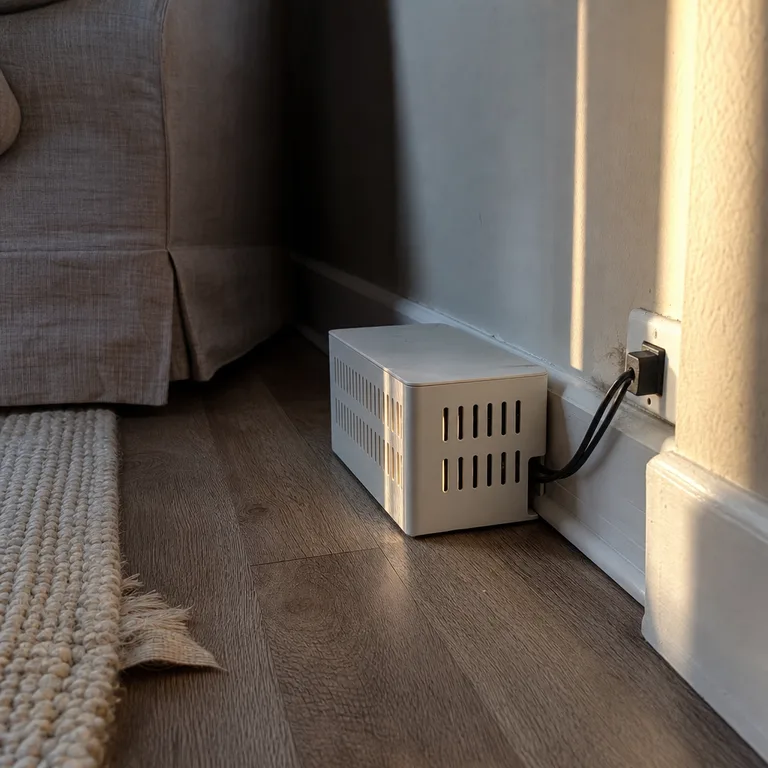
Choose a box large enough that cords do not need to be tightly packed or sharply bent. Check the contents regularly for dust, damaged cables, or warm plugs, especially in homes with pets that may investigate loose wiring.
Worth knowing: A cable box manages excess length but does not replace safe outlet use, compatible equipment, or access to plugs when something needs to be unplugged quickly.
9.Add a Clip-On Charger Holder to the Sofa Arm
Attach a clip-on phone holder to the sofa arm for one active charging spot, then secure the lead along the rear frame with cable clips or reusable ties. This keeps a charging phone off cushions, armrests, and the floor, where it can be knocked over or buried under a throw.
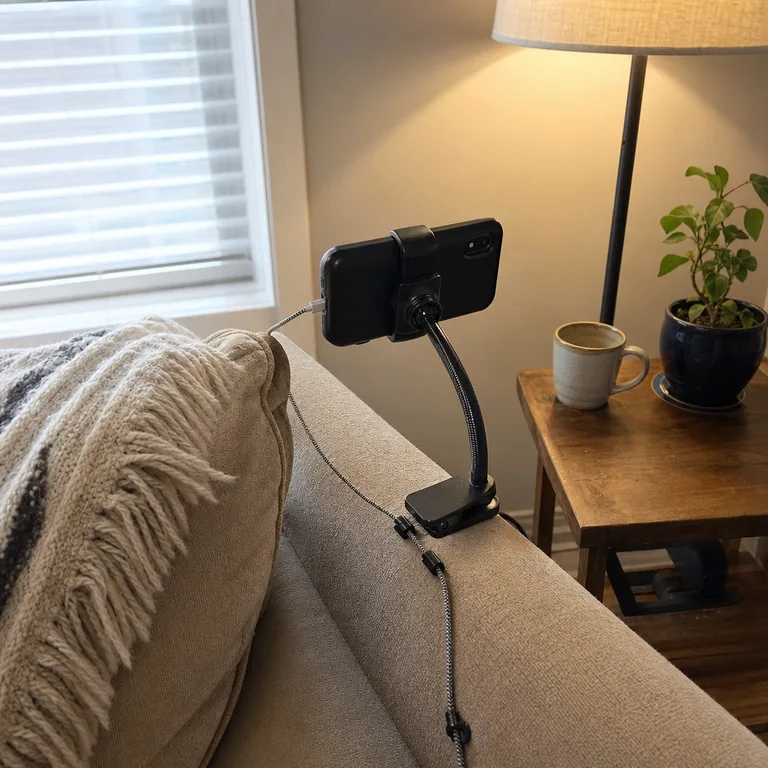
Use this for the device someone wants beside them in the evening, while the main station handles everything else. A right-angle cable can sit more neatly against the holder and reduce strain where the cord meets the phone.
Worth knowing: Not every sofa arm is firm or narrow enough for a clip-on holder, and the holder may leave pressure marks on delicate upholstery.
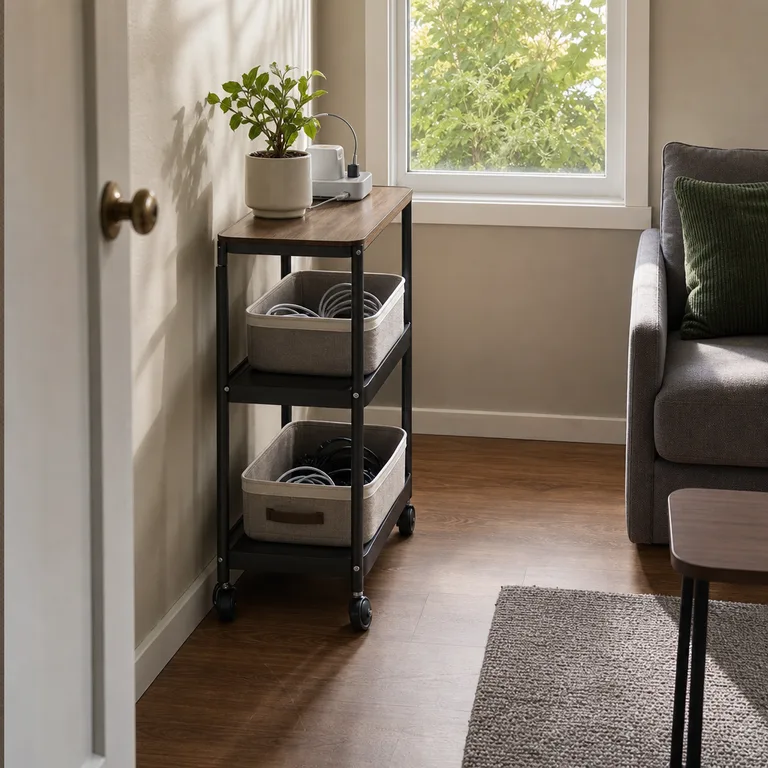
Keep the top tier open and avoid filling the cart with fabric or papers around powered equipment. Small labeled bins can separate cord types without requiring a complicated system that other household members will ignore.
Worth knowing: A rolling cart needs a stable parking spot and clear floor space, so it may be awkward in narrow rooms or homes with uneven flooring.
About the author
Dana Ruiz, Senior editor
Dana writes about small-space living, storage and low-cost decorating.
Keep reading
10 Baking Sheet Storage Ideas for Narrow Kitchen Cabinets
October 6, 2026
10 Blanket Storage Ideas for a Living Room Without Spare Closets
October 6, 2026
10 Food Container Storage Ideas That Keep Every Lid Easy to Find
October 4, 2026
10 Small Living Room Ideas for Keeping a Pet Bed Out of the Walkway
October 6, 2026