10 Budget Ways to Refresh a Brick Fireplace Without Painting the Brick
Sound brick can stay exactly as it is while the wall, hearth, and accessories around it take on a more intentional role in the room. These updates preserve manufacturer clearances and keep combustible materials away from the firebox, focusing instead on removable layers, balanced scale, and useful styling.
As an Amazon Associate I earn from qualifying purchases.
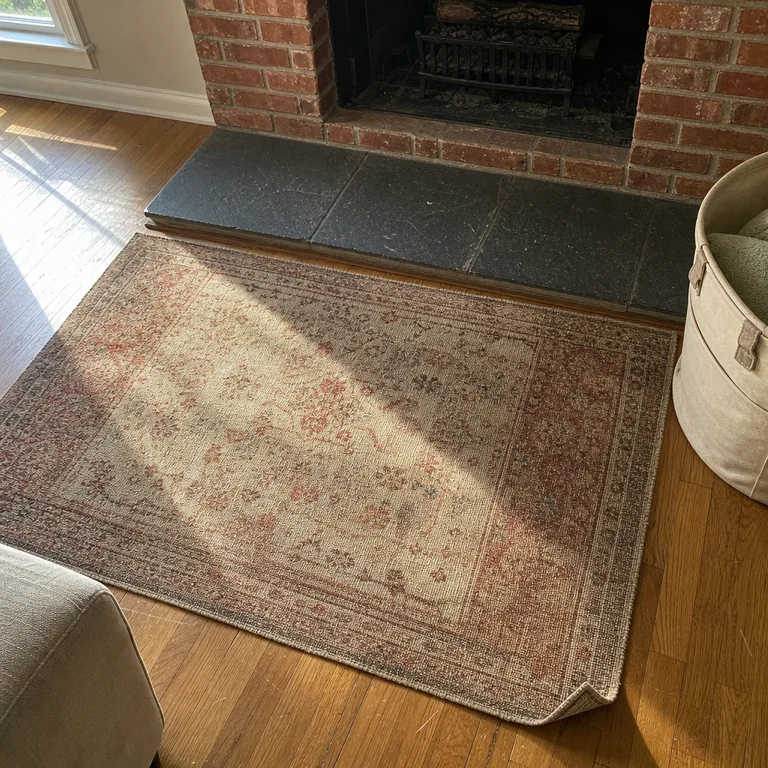
1.Hang one oversized artwork above the mantel
A single large piece of art gives a busy brick surface one clear focal point. A muted landscape, abstract print, or vintage-style image can soften red or brown brick without trying to match every color in it.
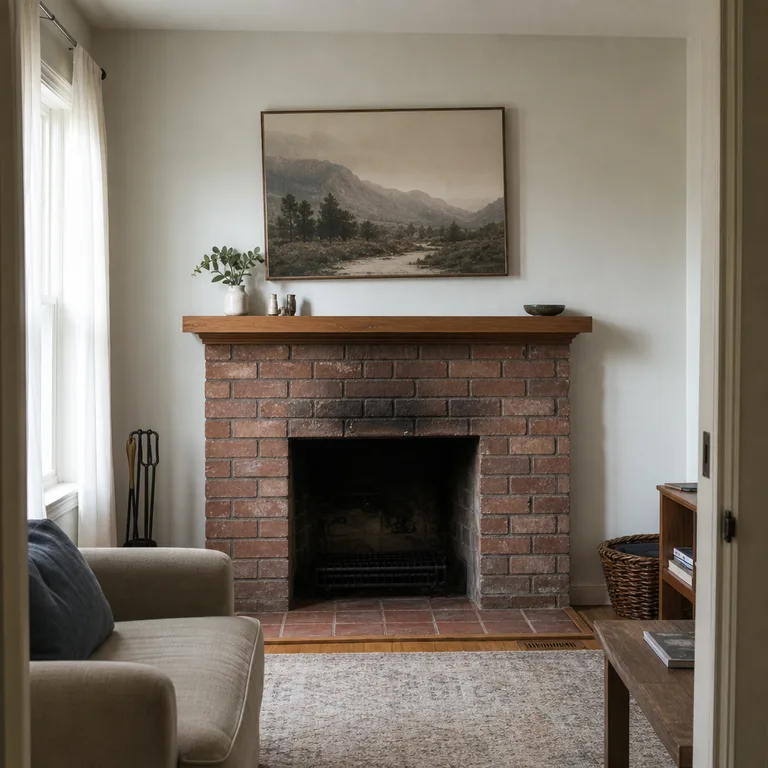
Use an existing frame with a larger mat, look for a secondhand frame, or print a public-domain image in a scale that suits the mantel. Center it over the mantel rather than the firebox if those two features are not aligned, and use hardware rated for the wall and frame weight.
Keep the styling around it spare: one or two low objects on the mantel are usually enough when the artwork is doing the visual work.
Worth knowing: A large frame can feel too heavy above a very shallow mantel or may need secure wall anchors, especially in older plaster walls.
2.Use a low leaning mirror to brighten a dark brick wall
A tall mirror can reflect a window, lamp, or lighter opposite wall, making a dark brick fireplace feel less dominant. Its vertical shape also adds height where a low, wide fireplace seems to pull the room downward.
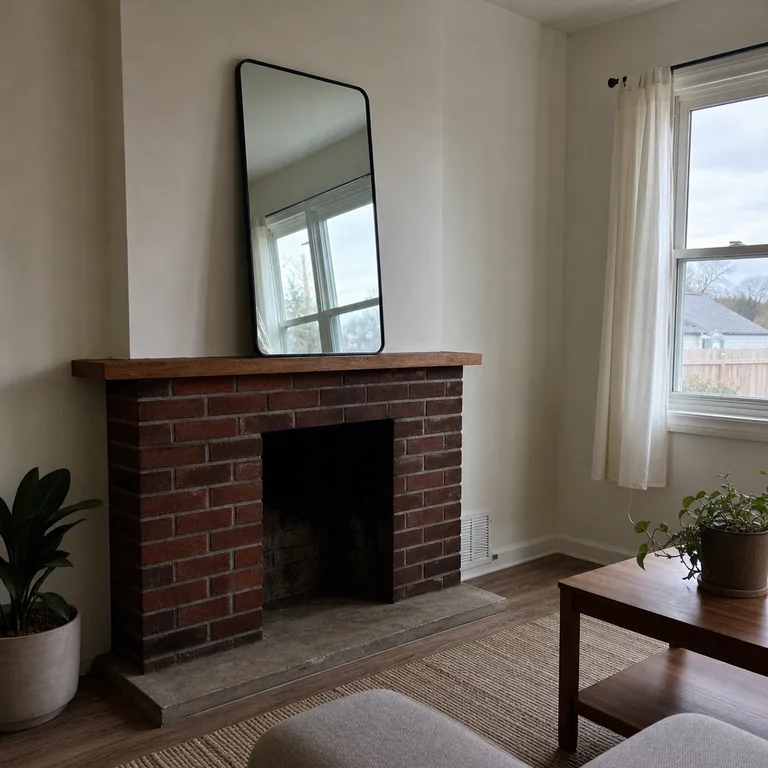
A secondhand mirror, a basic full-length mirror, or a rescued frame fitted with mirror glass can work well. Let it lean only if it is secured against slipping or tipping; otherwise, hang it properly above the mantel.
Choose a simple dark, wood, or aged-metal frame that stands out from the brick without adding another busy pattern.
Worth knowing: A mirror reflects whatever faces it, so it will not improve the room if it mainly doubles a television, cluttered shelf, or dim corner.
3.Frame the fireplace with matching slim bookcases
Two narrow bookcases can make a fireplace wall look more settled, particularly when there are awkward strips of blank wall on either side. They add useful storage while giving the brick a more intentional architectural frame.
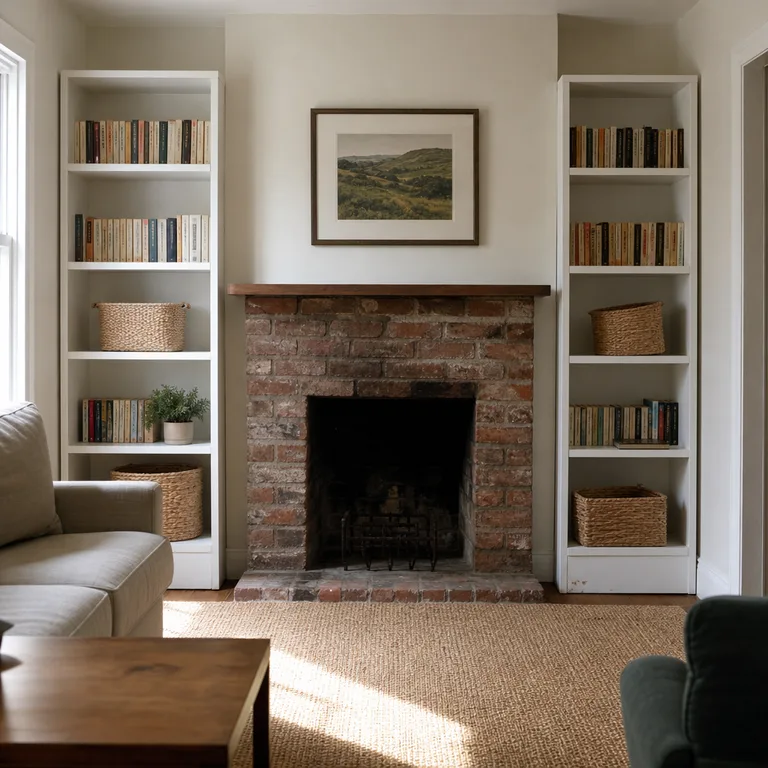
Look for a matching pair secondhand, reuse shelves from another room, or paint two plain bookcases the same color as the nearby wall. Fill them with books, baskets, and a small number of larger decorative pieces so the shelves do not compete with the brick texture.
Keep freestanding units well clear of the firebox, hearth, and any required manufacturer clearances. Anchor tall bookcases to the wall, especially in homes with children or pets.
Worth knowing: This approach needs enough side-wall width and may make a small room feel tighter if the shelves project too far into the seating area.
4.Add closed storage beside one side of the hearth
A low cabinet on one side of the fireplace can solve an empty-wall problem without forcing the whole wall into symmetry. Closed doors hide remotes, games, kindling, or everyday clutter that otherwise collects near the hearth.
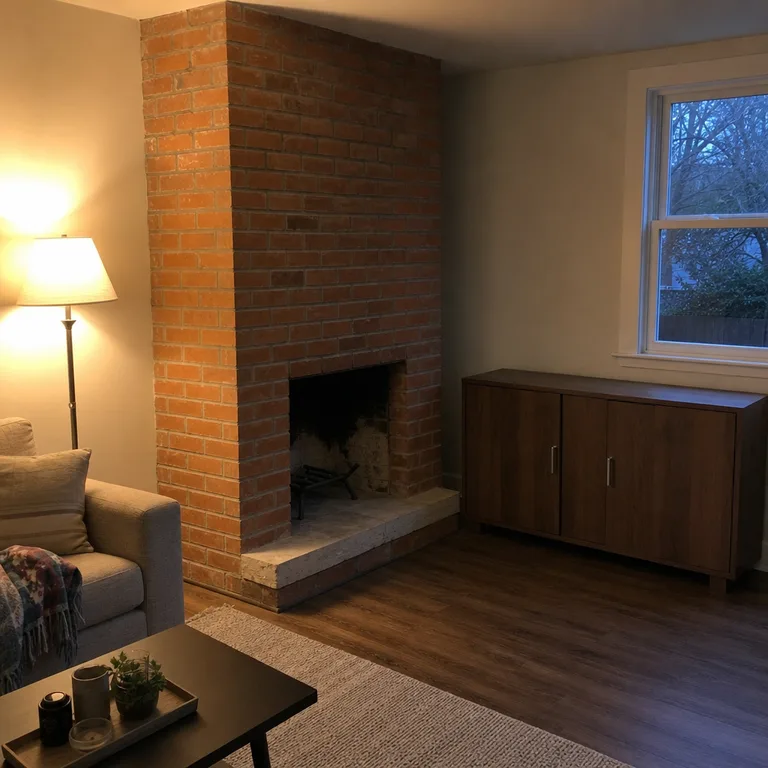
A simple secondhand cabinet, low console, or repurposed base unit can be enough if its height does not interrupt the fireplace composition. Updating worn hardware and using felt pads under the feet can make an older piece look more deliberate while protecting the floor.
Choose a finish that relates to the mantel, floor, or other wood furniture rather than trying to match the brick exactly. Place the cabinet away from heat and outside the hearth area so it remains a furnishing, not a fire hazard.
Worth knowing: One-sided storage works best when the fireplace wall already has an uneven layout; a centered fireplace with equal empty walls may look more balanced with a pair of lower pieces.
5.Lay a substantial hearth rug in front of the brick
A rug placed on the living-room side of the hearth defines the fireplace as a destination instead of a hard strip of brick and stone. Pattern and color at floor level can also distract from a hearth that looks cold, stained, or visually heavy.
Try a low-pile washable rug, flatweave, or durable vintage-style pattern that can handle ash, shoes, and regular vacuuming. A rug pad helps it stay flat on wood or smooth flooring, but the rug should stay outside the fireplace's required clearances.
Pull one or two front furniture legs onto the rug if the room layout allows. This makes the fireplace area connect to the seating rather than sit apart from it.
Worth knowing: A rug is not suitable directly in front of an active fire if it falls within required clearances or is likely to catch sparks, soot, and debris.
6.Fill the empty firebox with a woven basket and logs
When the fireplace is dormant for the season, the dark opening can become part of the decor instead of a blank hole. A basket of clean, dry logs adds warmth and texture while leaving the surrounding brick unchanged.
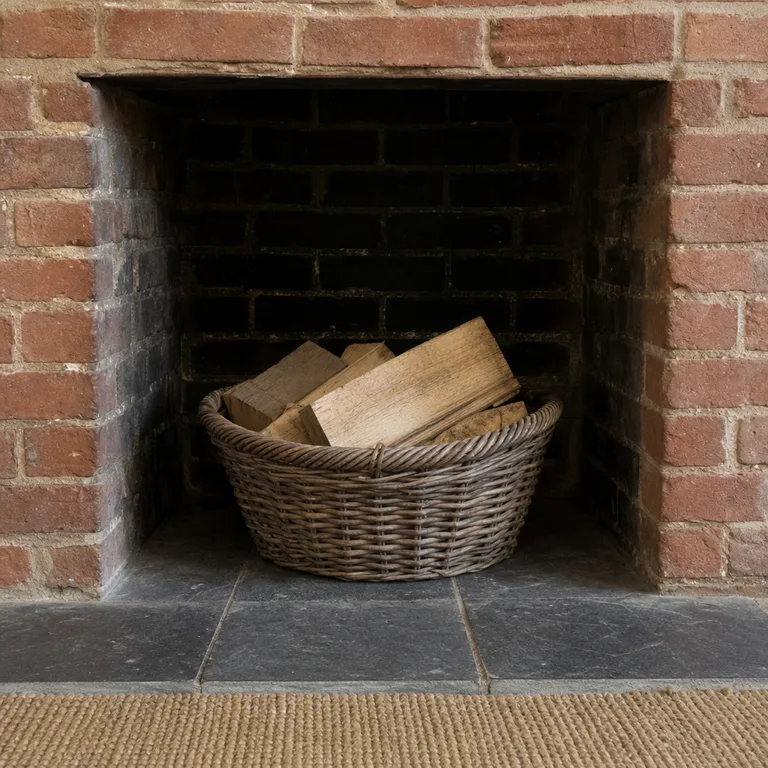
Use a basket that fits comfortably inside the opening without scraping the firebrick, then arrange a small amount of wood loosely rather than packing it tightly. If logs are not practical, a group of battery-operated candles made for decorative use can create a softer look.
Remove all styling from the firebox before using the fireplace. Store wood in a dry place and avoid bringing damp logs indoors, since moisture can make a basket and hearth area messy.
Worth knowing: This is strictly an off-season display and must be fully removed before the fireplace is lit or inspected.
7.Place a simple firescreen in front of the opening
A plain black metal firescreen creates a clean outline against warm-toned brick. It can make an uneven or soot-darkened opening look more finished even when no fire is burning.
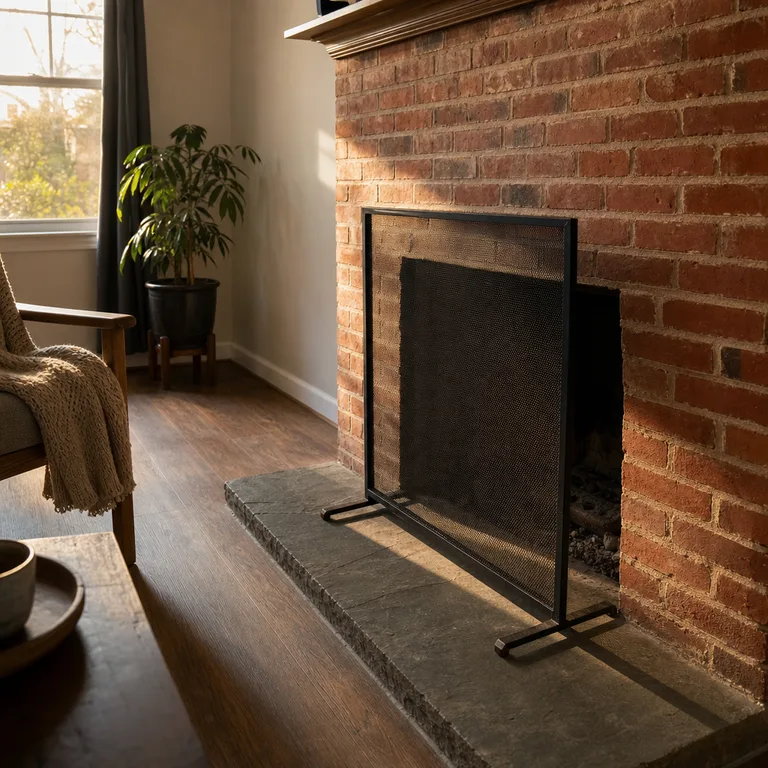
Choose a screen sized for the opening and hearth, with stable feet and mesh that suits how the fireplace is used. Secondhand screens are often easy to refresh with gentle cleaning if the metal and hinges are sound.
For a wood-burning fireplace, a screen is a practical layer for containing sparks, but it does not replace safe operation, maintenance, or the requirements for the specific appliance.
Worth knowing: A screen can visually crowd a very shallow hearth, and it should not be treated as a substitute for a properly fitted fireplace door where one is needed.
8.Build a grouped display from mismatched mantel pieces
A small mantel grouping can make plain brick feel styled without covering it. Combine a few different-height pieces, such as ceramic vessels, framed photos, and a natural branch, to create a simple rhythm across the wood shelf.
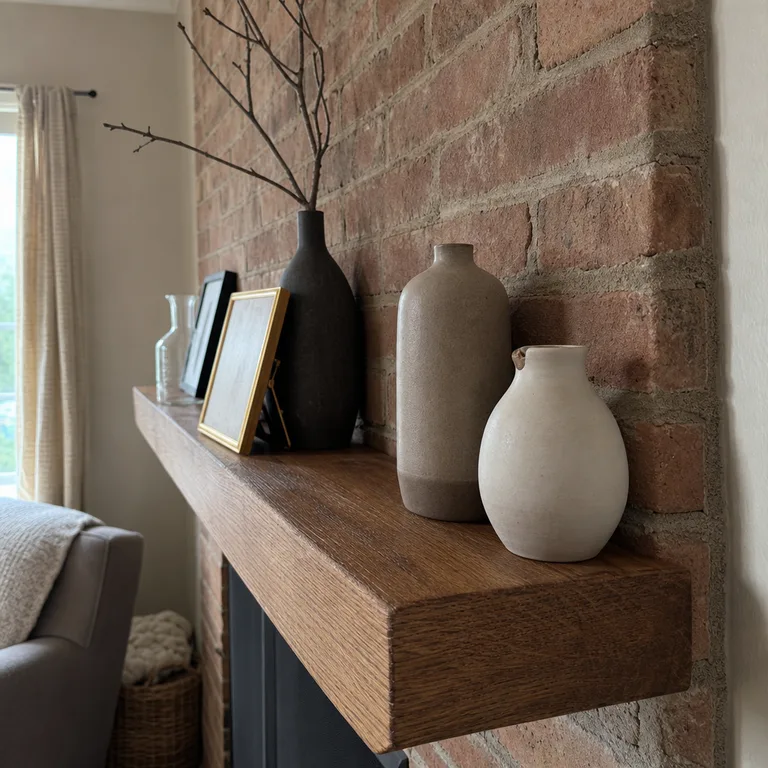
Use items already in the house or thrifted pieces in a limited palette of clay, cream, wood, brass, or dark glass. Vary the heights, overlap one or two objects slightly, and leave some exposed mantel surface so the display does not become a row of unrelated items.
Keep framed photos and branches away from heat, and remove lightweight decor before lighting the fire if the mantel gets warm. A shallow mantel usually looks better with fewer, larger pieces than many small collectibles.
Worth knowing: This treatment depends on having a usable mantel; a very narrow ledge may only safely hold one or two small items.
9.Add plug-in sconces on the side wall
Plug-in sconces add a layer of evening light that makes a fireplace wall feel intentional after dark. Mounting them on the painted side walls, rather than drilling into the brick, keeps the brick intact and avoids a more difficult installation.
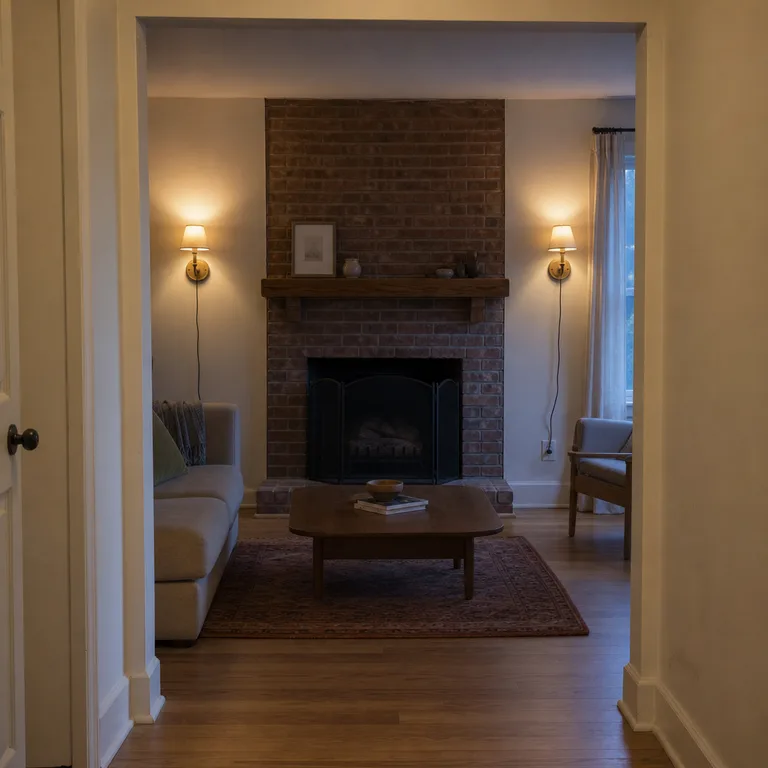
Choose a pair with shades that direct light softly up and down or outward across the wall. Route cords neatly to outlets with paintable cord covers where appropriate, and follow the fixture instructions rather than hiding cords under rugs or through doorways.
Place sconces where they will light the surround without sitting too close to the firebox or interfering with mantel clearance. Warm bulbs usually flatter brick better than stark, cool light.
Worth knowing: This idea requires nearby outlets and may not suit rentals that restrict wall mounting or visible cord channels.
10.Create a separate painted accent panel above the mantel
Painting only the drywall above the mantel gives the fireplace a stronger backdrop while leaving every brick surface untouched. A grounded color such as olive, charcoal, muted blue, or warm clay can make the mantel and artwork read more clearly.
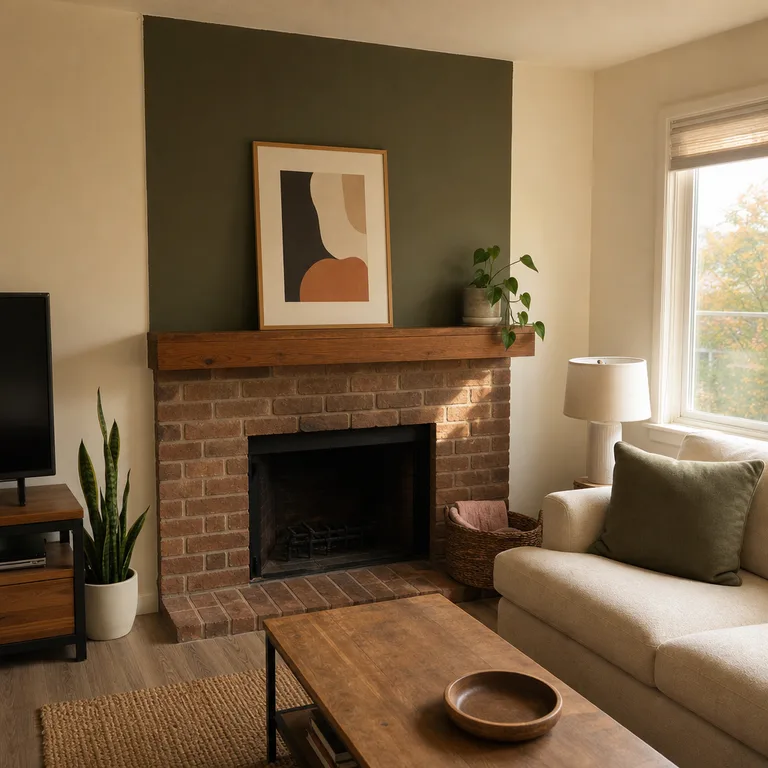
Mark a simple rectangle that begins above the mantel and is proportioned to the fireplace below. Use the existing wall color around it as a border, and keep the edge crisp with careful taping or a steady angled brush.
This is a useful option when the brick is sound but the upper wall feels disconnected from the hearth. It can also help a television or large artwork above the mantel look less isolated against a large pale wall.
Worth knowing: An accent panel can emphasize an awkwardly off-center mantel or low ceiling, so test the outline with removable tape before painting.
Related: 10 Ways to Decorate Around a TV Without Buying a New Console
About the author
Dana Ruiz, Senior editor
Dana writes about small-space living, storage and low-cost decorating.
Keep reading
8 Ways to Update a Builder-Grade Bathroom Mirror Without Replacing It
November 2, 2026
9 Budget Bedroom Accent Wall Ideas for a Plain Room
November 1, 2026
8 Winter Porch Decorating Ideas That Still Work After Christmas
November 2, 2026
8 Christmas Card Displays for Small Homes With No Spare Shelf
November 2, 2026