9 Budget Bedroom Accent Wall Ideas for a Plain Room
A single finished wall can give a plain bedroom a focal point without changing the bed frame or replacing working furniture. These options range from paint-led patterns to lightweight panels and tiles, with notes on wall condition, lease approval, and upkeep.
As an Amazon Associate I earn from qualifying purchases.
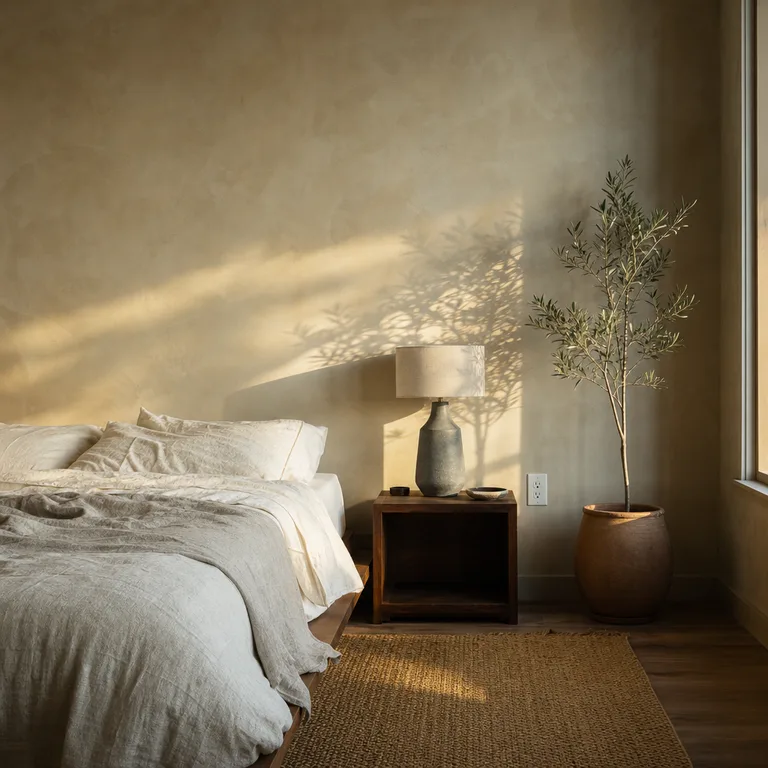
1.Paint One Wall in a Deep Matte Contrast Color
A deep matte color gives a plain wall visual weight, especially behind pale bedding, light wood, or mixed furniture. Choose a shade that relates to something already in the room, such as the curtains, rug, or a throw, so the wall feels deliberate rather than isolated.
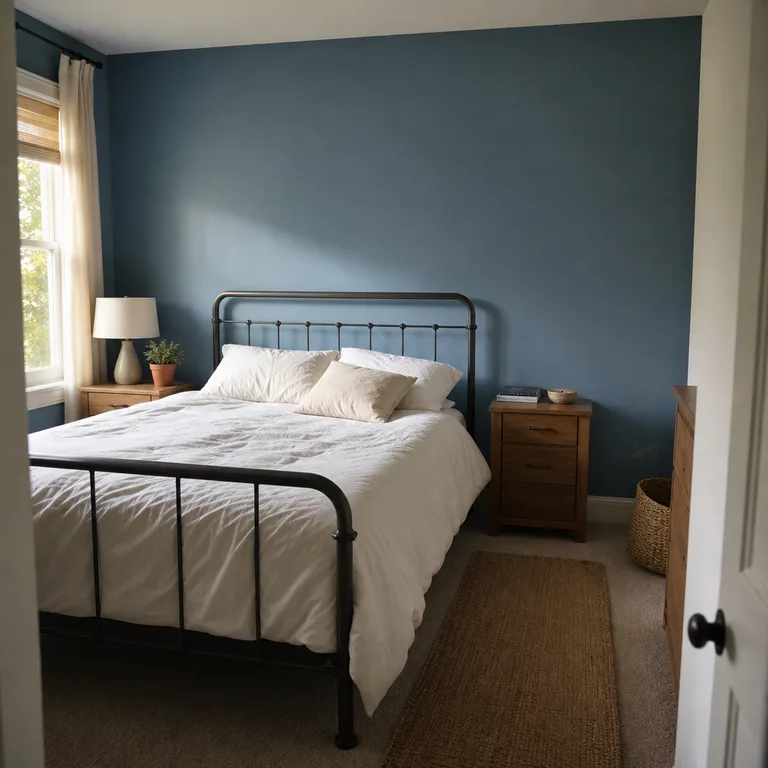
This is one of the simpler weekend updates because it uses a familiar finish and keeps the whole wall readable. Patch dents and cracks, sand glossy areas, and clean off dust first; dark matte paint can make uneven drywall and rough repairs more noticeable in side light.
Worth knowing: A full dark wall can make a small room feel more enclosed if it has little natural light, and renters will need clear approval before painting.
2.Use Broad Painted Stripes for Height
Broad vertical stripes create a taller-looking rhythm on a low or narrow wall without adding bulk to the room. Two quiet colors, such as warm white and muted green, keep the pattern calm enough for a bedroom.
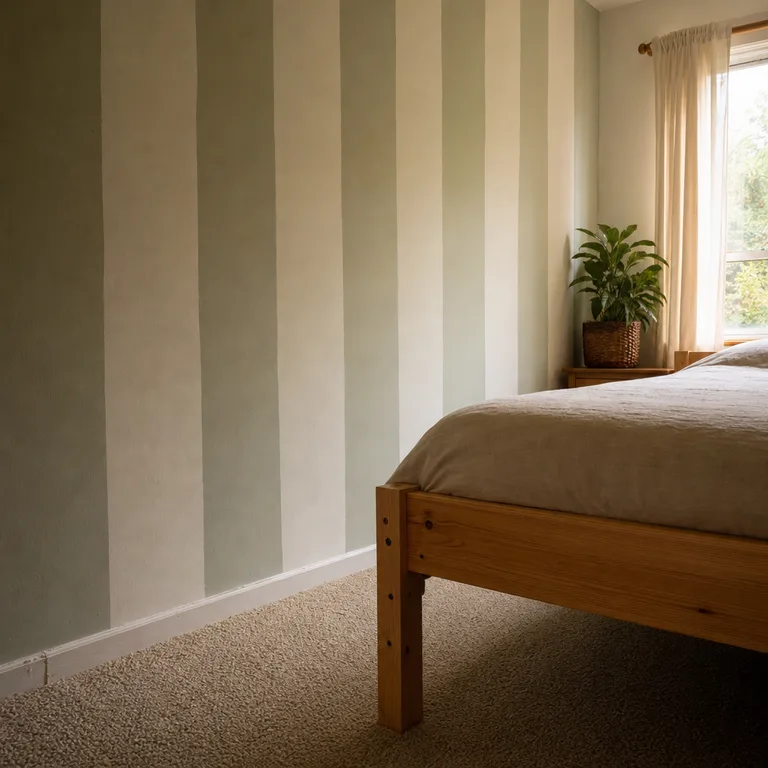
Mark the layout carefully and use good-quality tape pressed firmly along the edges. A limited stripe count is usually easier to live with than a tightly packed pattern, and leftover wall paint can often supply one of the colors.
Worth knowing: Uneven tape lines and walls that are not square can show up in a striped design, so this takes more measuring and patience than painting one solid color.
3.Cover the Wall With a Simple Stenciled Repeat
A repeated stencil brings pattern to an otherwise blank wall while still letting the furniture remain simple. Leaf, dot, arch, or block motifs work well when the repeat is small enough to read as texture from across the room.
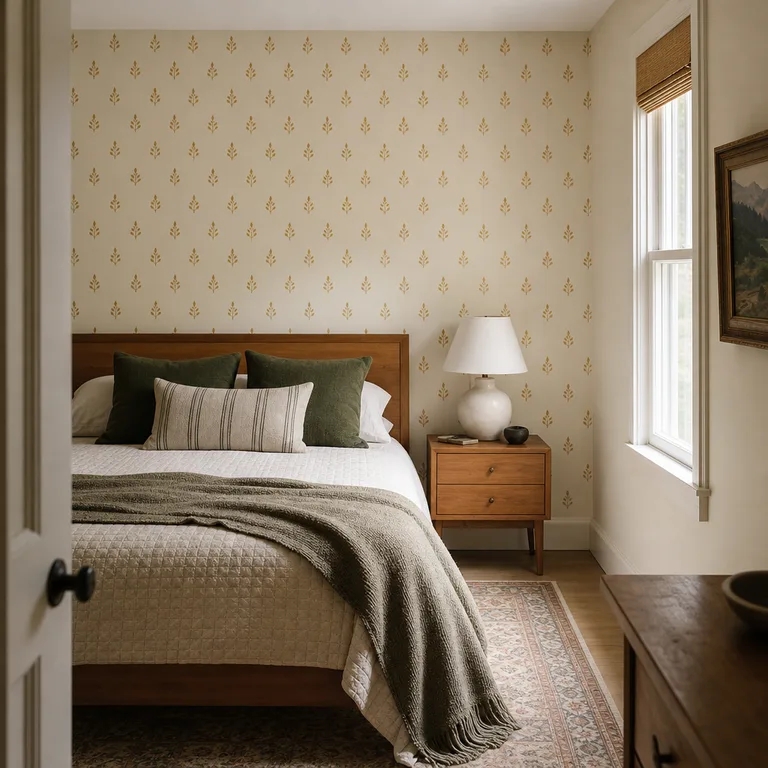
Reusable stencils and a small amount of paint make this a practical reuse-first project, particularly when sample paint or leftover paint is available. Work in sections with a nearly dry foam roller, and test the pressure on cardboard first to reduce paint bleeding under the stencil.
Worth knowing: Stencil work is time-consuming, and textured walls or flaky paint make crisp repeated shapes harder to achieve.
4.Apply Peel-and-Stick Wallpaper in a Small-Scale Print
A small-scale wallpaper print can make the wall feel finished without becoming the room's only feature. Faded florals, small checks, and simple botanical repeats work with existing plain bedding and do not require changing a basic bed frame.
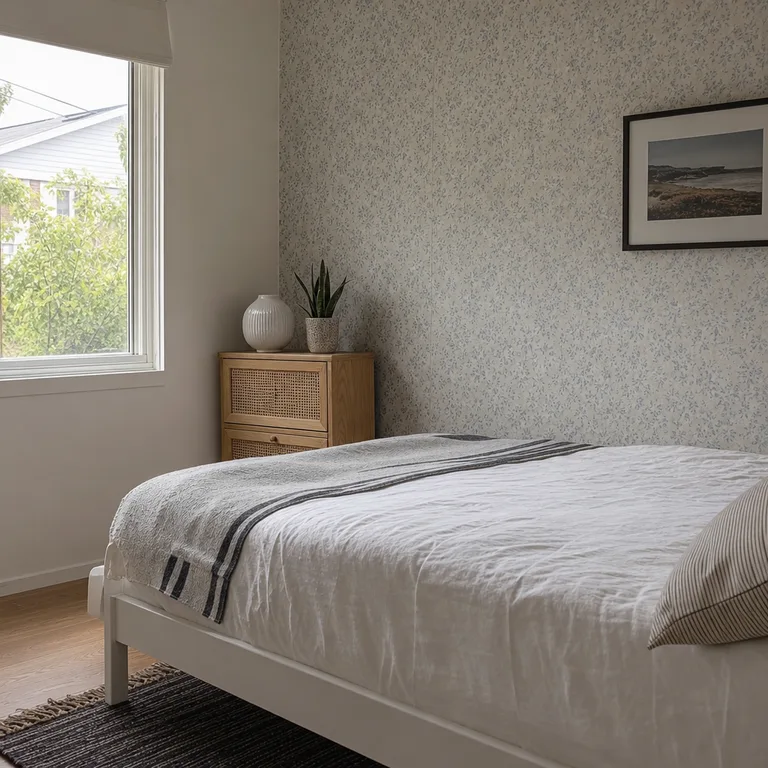
Use the wall's height and width to plan the pattern placement before cutting, then start from a straight reference line rather than assuming a corner is level. A smoothing tool, a sharp blade, and patient seam matching matter more than rushing through a large sheet.
Worth knowing: Peel-and-stick wallpaper may not adhere well to textured walls, peeling paint, or humid rooms, and removing it can still affect weak or poorly bonded paint.
5.Create a Cloudy Limewash-Style Painted Finish
A limewash-style painted treatment replaces a flat block of color with soft movement and layered depth. It is useful in a bedroom with plain furniture because the wall itself supplies warmth without needing more objects or decor.
Apply related tones in loose, overlapping brush strokes rather than aiming for a perfectly even coat. Use a sample board or a hidden area of the wall first, since the existing paint sheen and the room's changing daylight can affect how the finish reads.
Worth knowing: This finish is intentionally varied, so it is not the best choice for anyone who wants a uniform painted wall or has little tolerance for visible brush movement.
6.Install Painted MDF Beadboard Panels
MDF beadboard adds full-wall vertical texture while keeping the room's color scheme simple. Painting it to coordinate with baseboards or trim gives a modest bedroom a more built-in appearance without replacing the existing furniture.
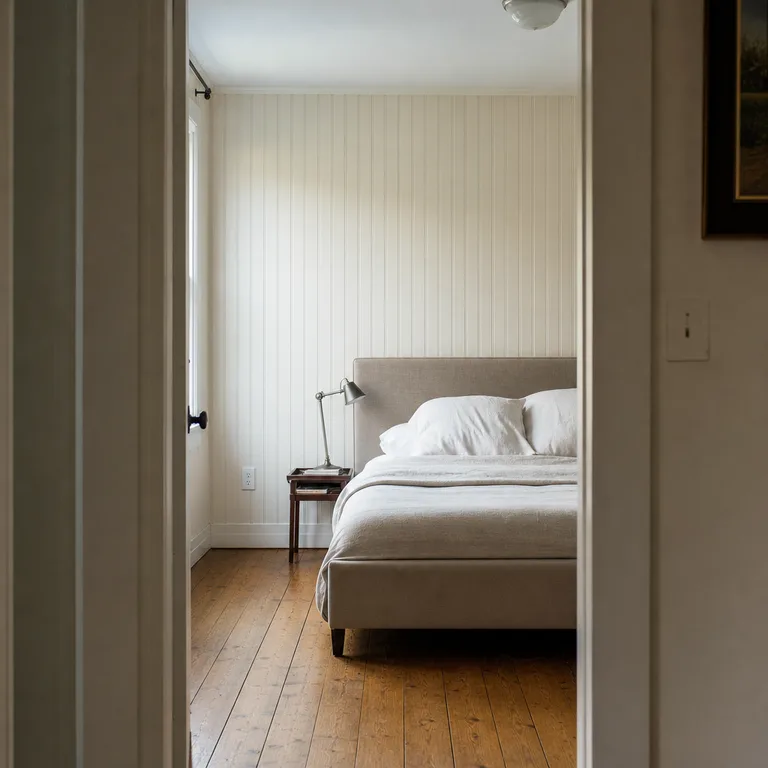
Panels can be cut around outlets and attached with a suitable adhesive and fasteners, then finished with caulk where needed. Measure carefully around trim, and keep seams and panel edges planned before installation so the layout does not end with an awkward narrow piece.
Worth knowing: Cutting panels, handling outlets safely, and getting clean edges make this a more involved weekend project; MDF also needs protection from persistent dampness.
7.Space Narrow Battens Across the Full Wall
Narrow timber battens make a painted wall feel more structured through repeated shadow lines and visible grain. Leave them natural for contrast against a muted wall color, or paint them to create a quieter tone-on-tone treatment.
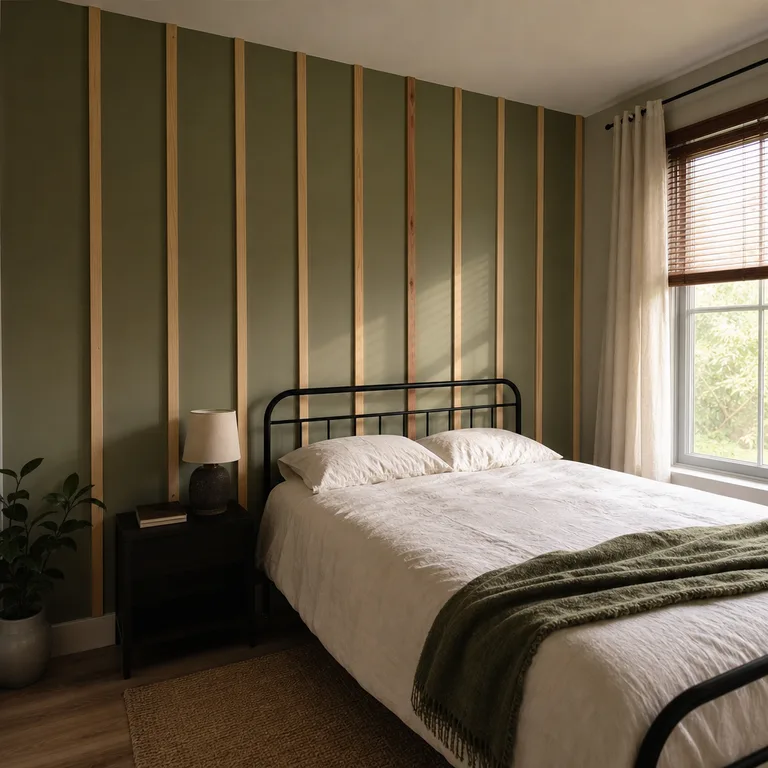
Use affordable lattice-style strips and lay out the spacing on the floor or with pencil marks before fixing anything to the wall. Check for studs where fasteners are needed, and account for baseboards, outlets, and uneven ceiling lines rather than forcing every strip into the same length.
Worth knowing: The look depends on even spacing, so bowed walls and inaccurate layout are noticeable; attaching battens can also leave holes or adhesive residue when removed.
8.Make a Warm Cork Tile Wall
Cork tiles bring a warm, speckled texture that softens the harder surfaces often found in a plain bedroom. The natural variation keeps a full wall from looking flat, and cork can slightly reduce the sharp echo of an otherwise bare room.
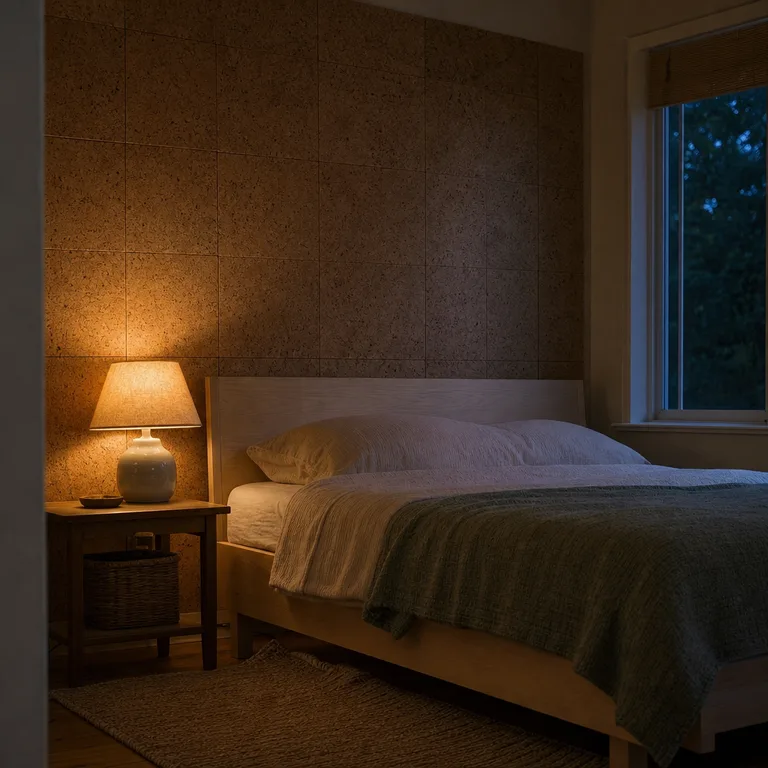
Choose tiles with similar thickness and arrange a few on the floor first to mix the color variation across the wall. The surface needs to be clean, flat, and dry for adhesive to hold well, so address condensation or damp patches before starting.
Worth knowing: Cork can dent or discolor over time and is not suited to walls that regularly become damp; removal may also damage paint or drywall paper.
9.Paint a Large Checkerboard Across the Wall
An oversized checkerboard gives a bedroom a clear focal point using only paint, tape, and careful layout. Dusty rose with beige, soft blue with warm white, or two nearby neutrals create a graphic effect without making the space feel like a playroom.
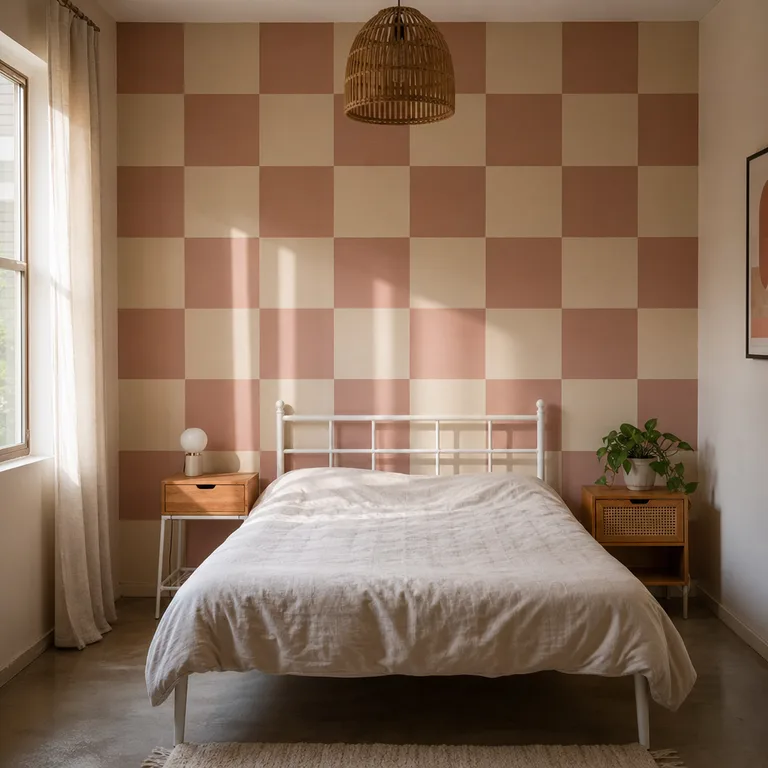
Start with a level grid and mark every square before applying paint. Paint the lighter base color first, then tape off alternating squares once it has cured according to the paint instructions; related tones are more forgiving than high-contrast colors if a few edges are imperfect.
Worth knowing: A checkerboard is a strong visual choice that may compete with busy bedding, patterned curtains, or a crowded wall, and it requires precise measuring to look balanced.
About the author
Dana Ruiz, Senior editor
Dana writes about small-space living, storage and low-cost decorating.
Keep reading
8 Homework Station Ideas for Two Kids Sharing One Bedroom
November 1, 2026
8 Small Kitchen Layout Ideas for Two People Cooking Together
November 1, 2026
10 Garden Fence Decorating Ideas That Don't Depend on Climbing Plants
November 1, 2026
8 Drainage Checks for Patio Plant Pots That Stay Too Wet
November 1, 2026