10 Budget Herb Garden Ideas for a Sunny Patio
A sunny patio can hold a useful, manageable selection of cooking herbs without turning into a crowded collection of matching pots. These container arrangements group herbs by growth habit, moisture needs, and access from the kitchen, while keeping drainage, heat, and seasonal care practical for beginners.
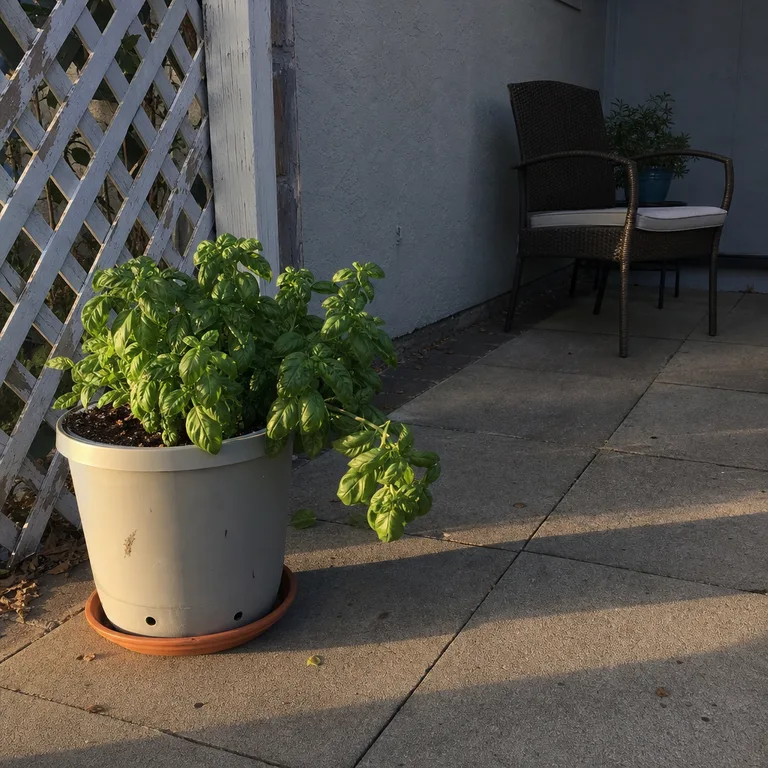
1.Start with a Three-Pot Everyday Herb Station
Put basil, flat-leaf parsley, and chives in three separate containers close to the patio door. This creates a small group of herbs that suit many everyday meals without committing the whole patio to gardening.
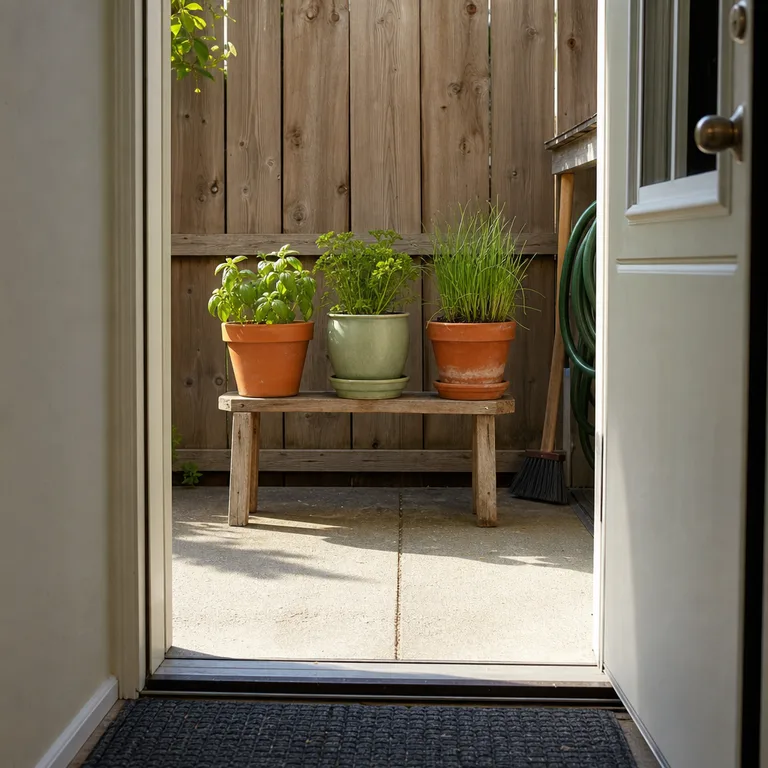
Separate pots make care simpler because basil often wants more warmth and regular moisture, while chives can tolerate a little more drying between waterings. Use containers with drainage holes, inexpensive potting mix, and any sturdy stand, step, or tray that keeps the pots easy to reach.
Choose pots that are large enough to hold moisture for more than a few hours in full sun, but not so heavy that they become difficult to move. Cutting herbs regularly helps keep the station compact and productive-looking.
Worth knowing: Basil is sensitive to cool weather, so this group may need protection or a move indoors during chilly spells.
Related: 12 Container Garden Ideas for a Small Patio on a Budget
2.Use One Deep Planter for Rosemary and Thyme
Plant rosemary and thyme together in a deep planter with open drainage. Both prefer sunny conditions and soil that is allowed to dry somewhat between thorough waterings, making them a more compatible pairing than rosemary and parsley.
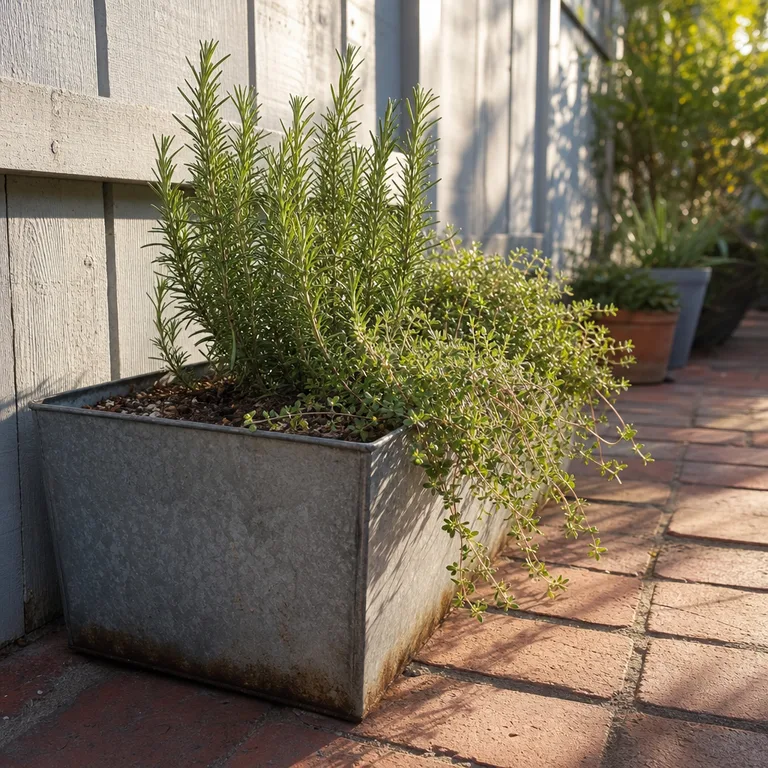
A rectangular planter makes a tidy edge along a patio wall or fence, with upright rosemary adding height and thyme softening the rim. A secondhand trough, sturdy tub, or basic outdoor planter can work if excess water has a clear way to escape.
Use a free-draining potting mix rather than garden soil, which can compact in containers. Set the planter where it receives strong sun but is not positioned in a low spot where rainwater collects around the base.
Worth knowing: Rosemary can outgrow a shared planter over time and may eventually need a container of its own.
Related: 15 Budget Landscaping Ideas That Make a Small Yard Feel Finished
3.Contain Mint in Its Own Pot
Give mint its own pot rather than adding it to a mixed herb planter. Its roots spread quickly and can take up space needed by slower-growing herbs such as thyme, parsley, or rosemary.
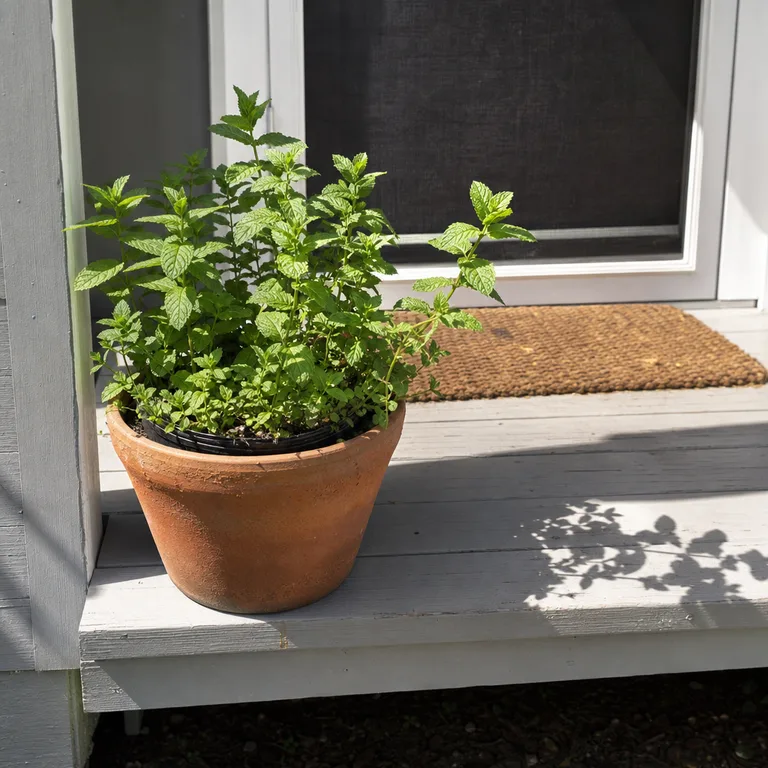
A wide pot by a patio step makes mint easy to snip for drinks, salads, and sauces. An ordinary nursery pot set inside a more decorative outer container is a low-cost way to get the look of a larger planter while keeping the plant contained.
Mint handles more moisture than many Mediterranean herbs, so place it where it can be watered without soaking nearby drought-tolerant pots. It can also take some afternoon shade in very hot weather.
Worth knowing: Mint still needs regular trimming and occasional division to stay neat, even when its roots are contained.
4.Make a Salad-Herb Window Box at Railing Height
Use a securely mounted railing planter for parsley, chervil, and compact chives. Keeping the box at hand height makes it easier to cut a little at a time while cooking, rather than treating herbs as a distant garden task.
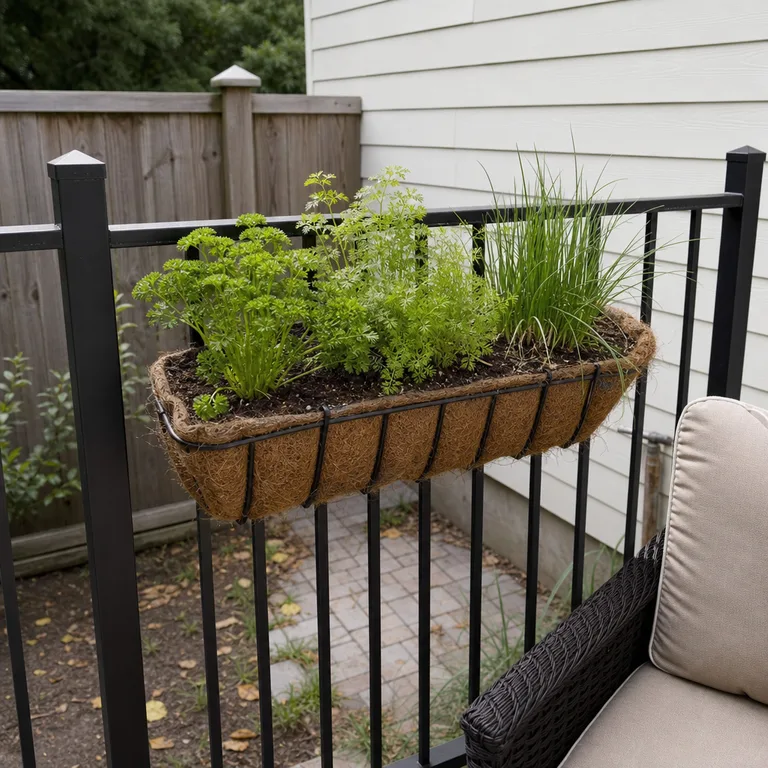
These herbs give the planter different leaf shapes without requiring a large collection of pots. A coconut-fiber liner or simple plastic window box can be used as long as it drains freely and is attached with brackets made for the railing.
Check that runoff will not stain paving, drip onto a neighbor's space, or cause problems for a downstairs patio. Chervil appreciates protection from harsh afternoon heat, so a location with morning sun can be especially useful in warm areas.
Worth knowing: A full window box becomes heavy after watering and must be properly secured, which may not be allowed on every rental balcony or railing.
Related: 12 Budget Balcony Ideas for a Comfortable Outdoor Corner
5.Grow Basil in a Warm, Moveable Bucket Planter
Plant basil in a lightweight bucket or similar reused container with drainage holes near the bottom. A moveable pot lets the plant follow the sun on a partly shaded patio and can be shifted closer to shelter during rough weather.
Basil's broad leaves create a full, useful focal point without expensive planters. A saucer can protect patio surfaces, but empty standing water after rain so the roots do not stay wet for long periods.
Use a clean container that has not held harmful substances, and add several drainage holes rather than relying on one small opening. Pinching off growing tips encourages branching and helps prevent the plant from becoming tall and sparse.
Worth knowing: Lightweight containers dry out quickly in hot, windy weather and may need frequent watering.
6.Tuck Oregano into a Sunny Patio Edge
Set oregano in a low, broad pot along a bright patio edge where its stems can trail without blocking a walkway. The low shape works well beside a wall, step, or seating area that needs a little soft greenery.
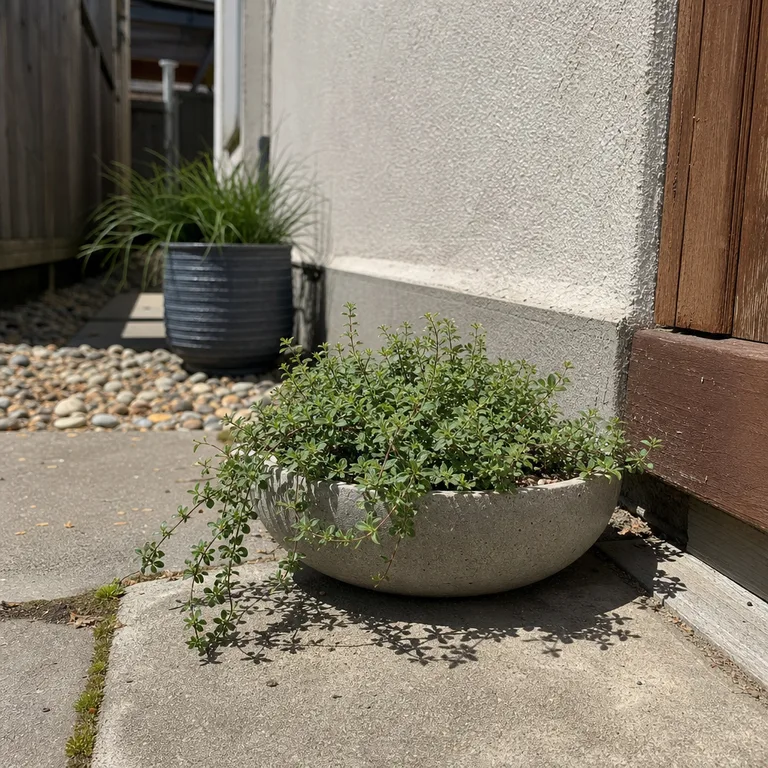
Oregano prefers sun and does best when excess water can drain away quickly. A shallow-looking bowl is suitable only if it still has enough depth for roots and several drainage holes; choose a slightly deeper pot if the bowl is mostly decorative.
Keep it out of a damp, shaded corner where rain lingers on the leaves and soil. A gravelly top layer can help reduce soil splash and gives the container a finished look using a simple material.
Worth knowing: Oregano can become woody and thin in the center after a while, so it benefits from seasonal trimming or replacement.
7.Set Up a Vertical Shelf for Small Herb Pots
Use a narrow outdoor shelf to hold small pots of cilantro, dill, and parsley when floor space is limited. This creates a compact herb area without installing permanent built-ins or filling the patio with large containers.
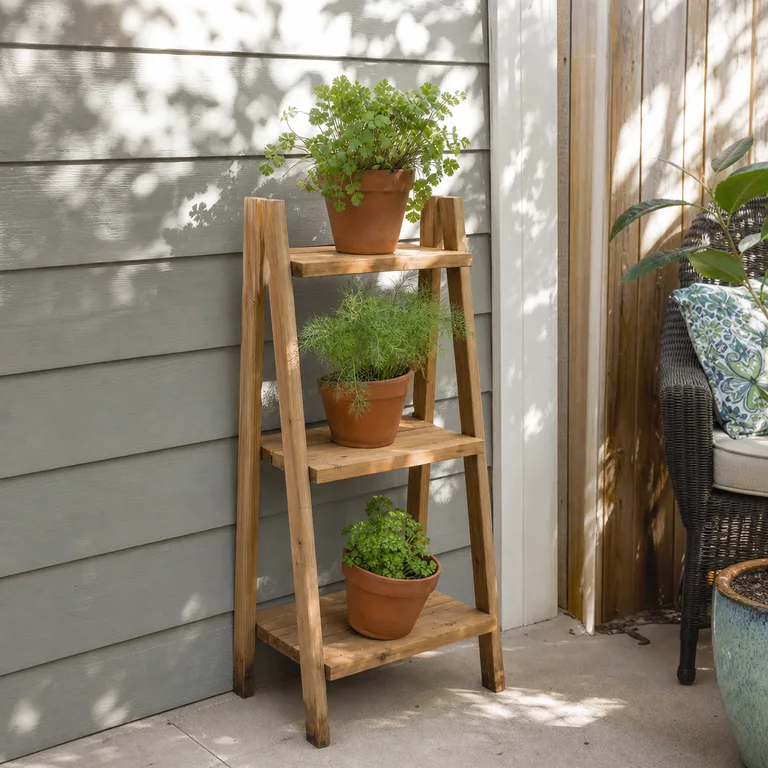
Put the pots that dry fastest where they can be checked easily, since upper shelves are often warmer and more exposed to wind. Parsley generally works well in a stable lower spot, while cilantro and dill can be grown in separate containers so they can be replaced or moved as needed.
A basic wood shelf can be protected from constant wet ground by setting its feet on pavers or risers. Leave enough gap between pots for air circulation and for lifting each one out to water thoroughly.
Worth knowing: Small pots on open shelving dry rapidly and can blow over in exposed locations unless the shelf is stable and protected from strong wind.
8.Plant a Pizza-Herb Trough Near the Grill
Group oregano, thyme, and sage in a long trough near an outdoor cooking area. These herbs enjoy sun and comparatively dry soil, so they can share one planter more easily than herbs with higher moisture needs.
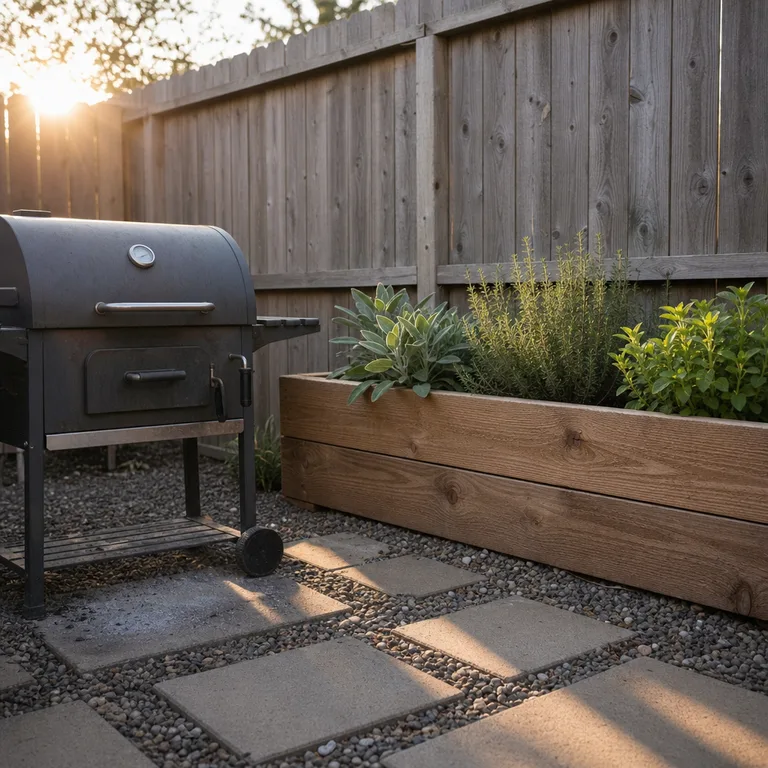
The trough gives a practical reason for the planting location: leaves are close by when grilling or making simple tomato-based dishes. Sage adds larger gray-green foliage, while thyme and oregano fill lower spaces and can trail over an edge.
Keep the planter far enough from the grill that it will not be exposed to direct heat, grease, or repeated smoke. A wood trough can be built from leftover exterior-safe boards, or an existing planter can be repurposed if it has drainage.
Worth knowing: The planter still needs a sunny site; herbs placed beside a grill in deep shade will become less dense and flavorful.
9.Use a Shallow Bowl for Cut-and-Come-Again Cilantro
Sow cilantro across a wide container with adequate root depth instead of growing one crowded plant in a tiny pot. A broad surface makes it easy to cut a small handful from several stems while leaving younger growth behind.
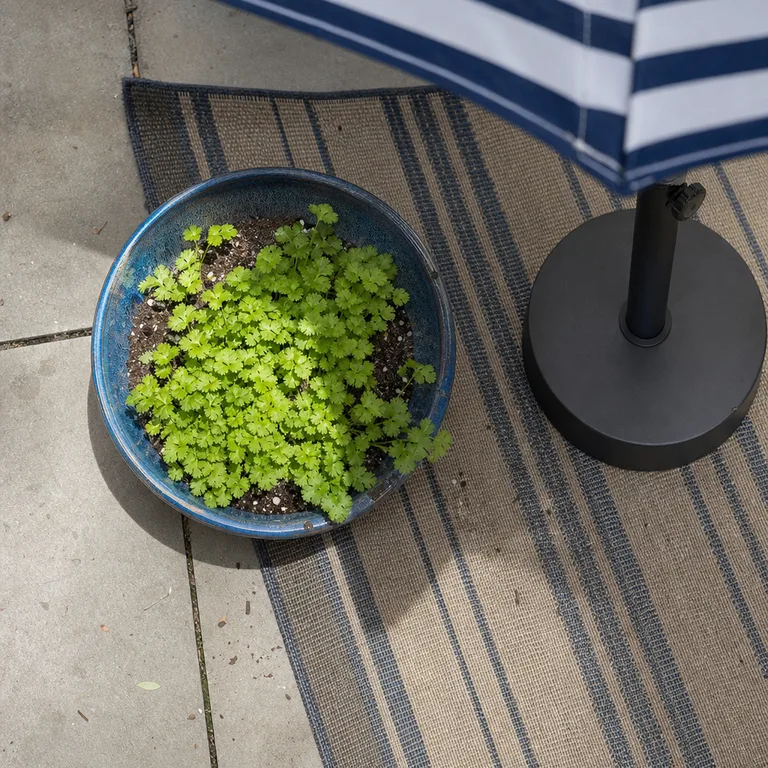
Cilantro can bolt quickly in heat, so give it morning sun and afternoon shade where summers are hot. On a fully sunny patio, placing the container near an umbrella or taller planter can reduce the harshest late-day exposure without making the site completely shady.
Sow a new small section of seed every so often rather than relying on a single plant for the season. This inexpensive approach keeps the bowl manageable and avoids waiting for one older cilantro plant to recover after repeated cutting.
Worth knowing: Even with partial afternoon shade, cilantro tends to be short-lived during hot weather and may need regular reseeding.
10.Keep Tender Herbs in a Portable Crate Garden
Place separate pots of basil, parsley, and cilantro inside a slatted crate or open tray. The crate keeps the group visually tidy but allows each herb to remain in its own soil, so watering can be adjusted pot by pot.
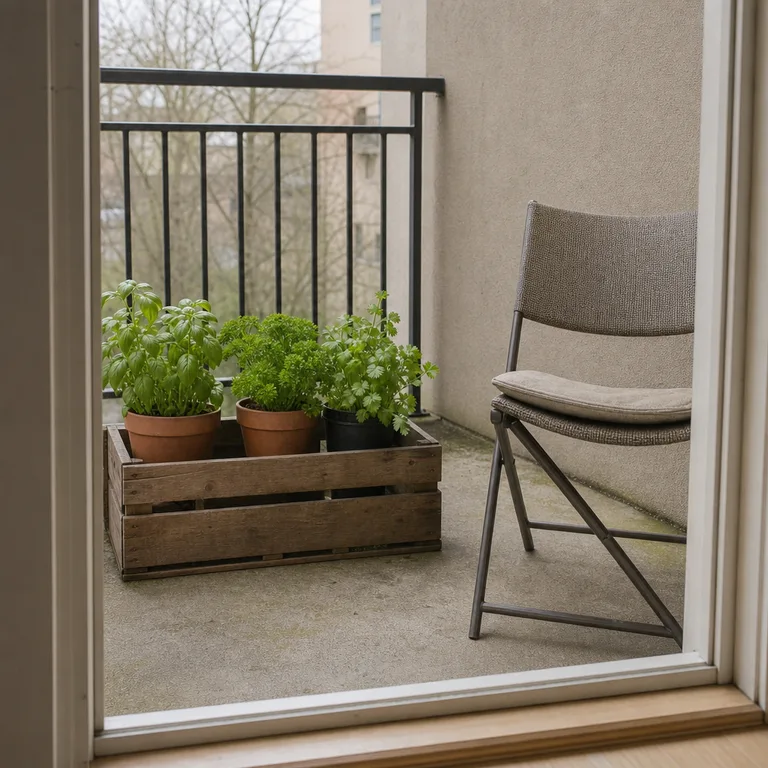
This is useful for renters or anyone who wants to bring a small herb collection closer to the kitchen, shift it out of heavy rain, or tuck it against shelter during a cold snap. Reused wooden crates work well if they are sound, while a sturdy plastic tray is easier to clean and less affected by wet weather.
Choose pots that sit securely without wedging them so tightly that water cannot drain. Lift the crate carefully after watering, since several damp containers together can be much heavier than they appear.
Worth knowing: A crate garden is portable only while the individual pots remain small enough to lift safely.
About the author
Dana Ruiz, Senior editor
Dana writes about small-space living, storage and low-cost decorating.
Keep reading
10 Small Pollinator Garden Ideas You Can Start in One Corner
September 24, 2026
10 Cottage-Style Patio Ideas You Can Build Around What You Own
September 23, 2026
10 Shade Garden Ideas for a Small Yard on a Budget
September 22, 2026
10 Under-Bed Storage Ideas That Are Easy to Reach
September 23, 2026