8 Spare Cable Storage Ideas for a Drawer Full of Unplugged Cords
A drawer full of unplugged cords is easier to manage when each cable has a visible identity and a defined place, rather than one large tangle. These storage ideas keep bends gentle, separate adapters from data cables, and make damaged cords easier to pull from reuse.
As an Amazon Associate I earn from qualifying purchases.
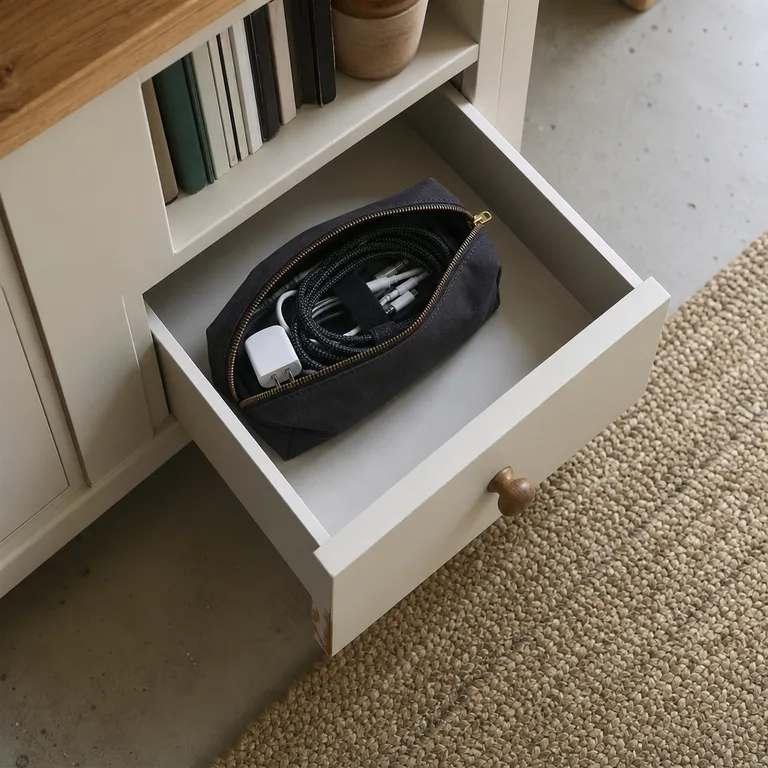
1.Give Each Spare Cable Its Own Labeled Sleeve
Reuse small fabric pouches, clear zip bags, or leftover packaging sleeves to give each spare cable its own container. Label the sleeve by the device it fits or the connector type, rather than relying on a cable’s color or shape.
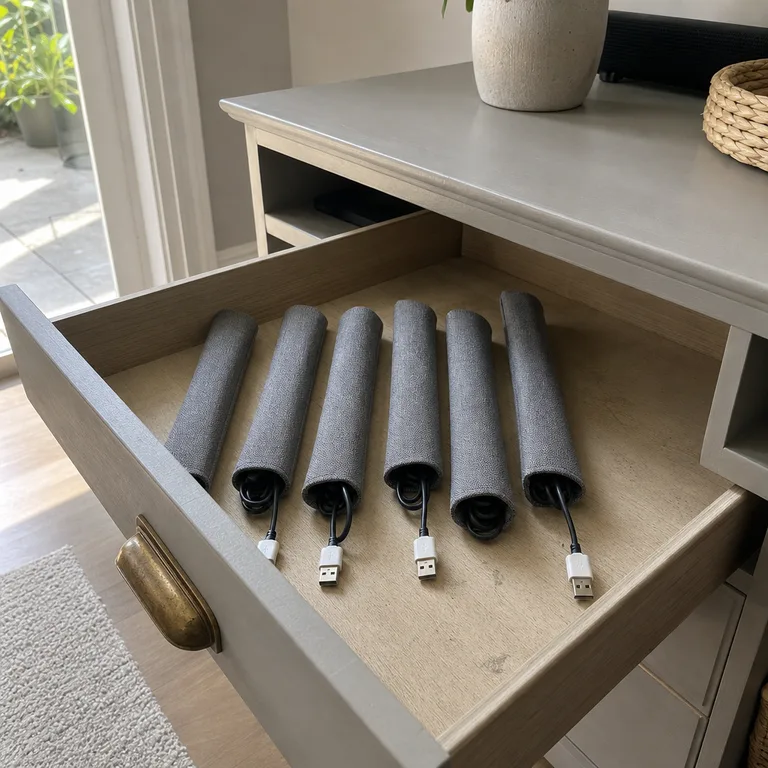
Individual sleeves stop connector ends from catching on other cords and make it easy to lift out one item without upsetting the whole drawer. Coil each cable in broad loops, leaving slack near both ends so the wire is not sharply bent at the connector.
Worth knowing: Sleeves use more drawer space than loose coils, so they work best for a shallow collection of cables rather than a large stockpile.
2.Secure Loose Coils With Reusable Cable Ties
For cables that do not need a container, make a loose coil and fasten it with a reusable hook-and-loop tie or soft silicone strap. Keep the tie around the middle of the coil, not pulled tightly over the connector ends.
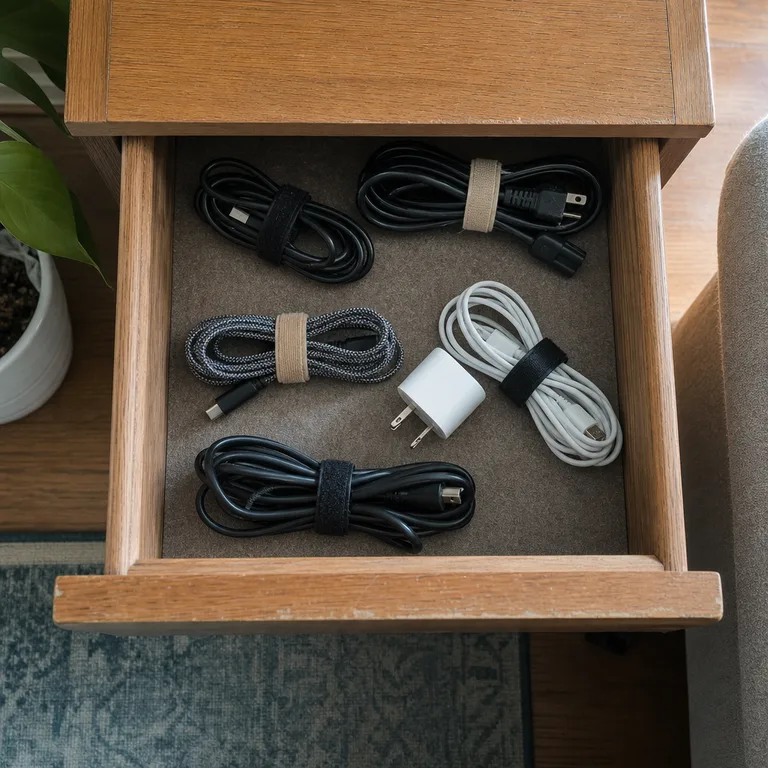
This is a quick way to tame a mixed drawer while keeping each cord visible. Group similar items together, such as short USB cables in one area and longer extension cords in another, so the drawer can be sorted without buying a full organizer.
Worth knowing: Cable ties keep cords neat but do not identify them on their own, so similar black cables may still need a tag or separate section.
3.Create Shallow Divider Lanes for Cable Types
Add low drawer dividers or shallow trays to create lanes for broad cable categories: charging leads, video cables, adapters, and extension cords. The lanes should be wide enough to remove one coil without pulling up the neighboring category.
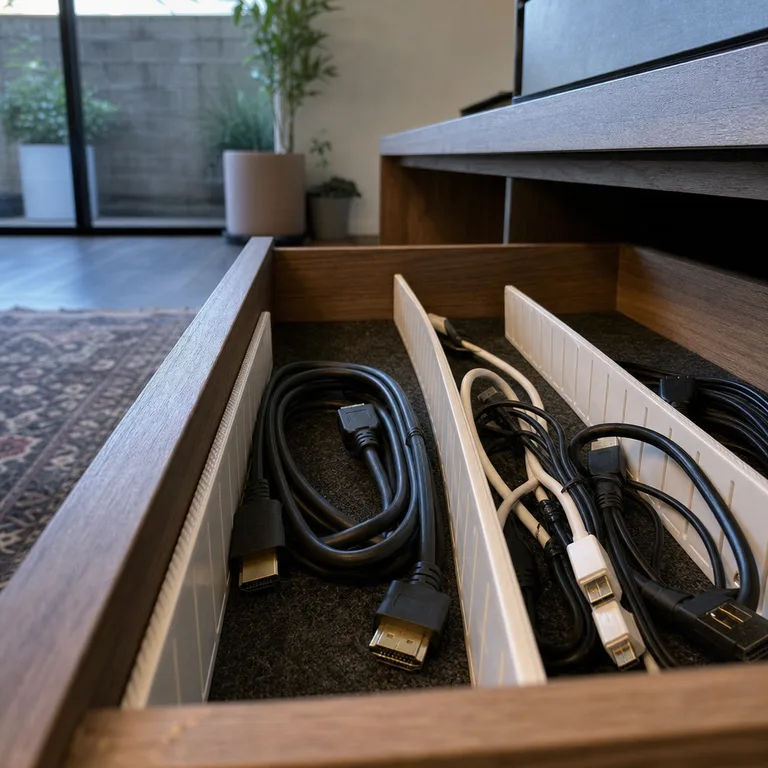
A divided layout makes the drawer easier to scan at a glance and prevents long cords from crossing over smaller pieces. Adjustable dividers are useful when the collection changes, while repurposed small boxes can make fixed lanes at little cost.
Worth knowing: This method sorts by cable type, not by the exact device a cord belongs to, so uncommon connectors can still be hard to identify.
4.Store Device-Specific Cords in Labeled Small Boxes
Put the charger, matching cord, and any removable adapter for one inactive device into a small lidded box. Label the outside with the device name or purpose, such as an old camera, speaker, or e-reader, so the kit stays intact.

Keeping a complete set together avoids the common problem of finding a power adapter with no matching cable. Reuse sturdy gift boxes or small shipping boxes, and add a simple paper label that can be changed if the device leaves the home.
Worth knowing: Boxes are less efficient for cords used often, since opening several lids can be slower than reaching into a divided drawer.
5.Keep Occasional-Use Cables in a Travel Pouch
Assign one zip pouch to travel-only and occasional-use cords, such as a spare charging lead, compact adapter, or headphones cable. Store the pouch in a drawer or cabinet away from daily-use chargers so the two groups do not mix.
A pouch makes packing simpler because the occasional items already live together. Check the contents ahead of a trip for frayed insulation, cracked plugs, or missing pieces, and remove damaged cords rather than trying to repair them.
Worth knowing: A travel pouch can become another catchall unless its contents are limited to items that truly leave the house occasionally.
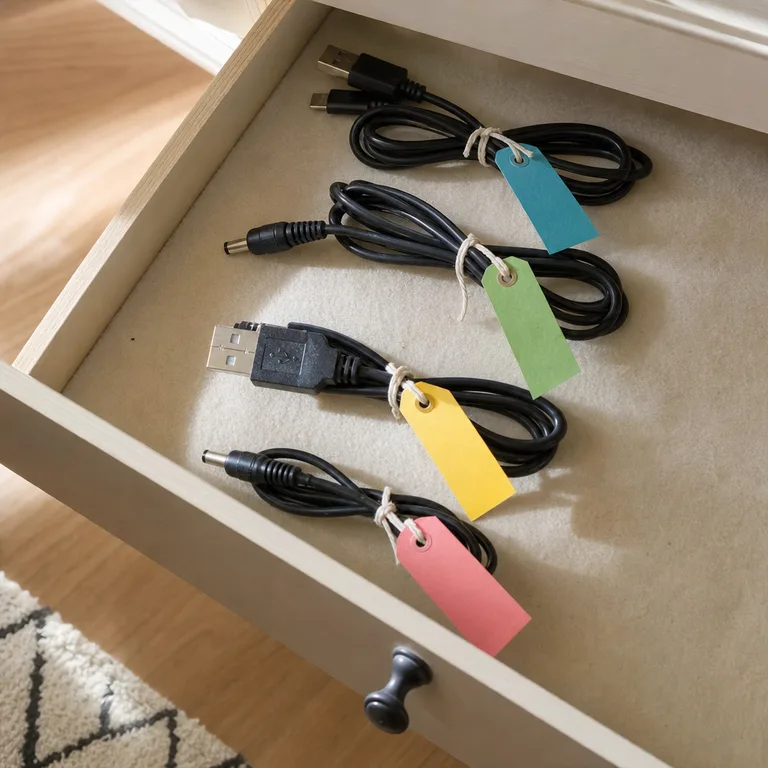
Tags solve the identification problem without requiring every cable to have its own box. They are especially helpful for older device cords and specialty adapters that are used too rarely to recognize on sight.
Worth knowing: Paper tags can tear or detach with frequent handling, so this option needs an occasional refresh.
7.Use a Divided Photo Case for Individual Cord Kits
A clear photo-style storage case can hold one small cable kit in each compartment. Place a short cord, compact adapter, and loose connector tip in separate sections so the small parts remain visible instead of drifting around a drawer.
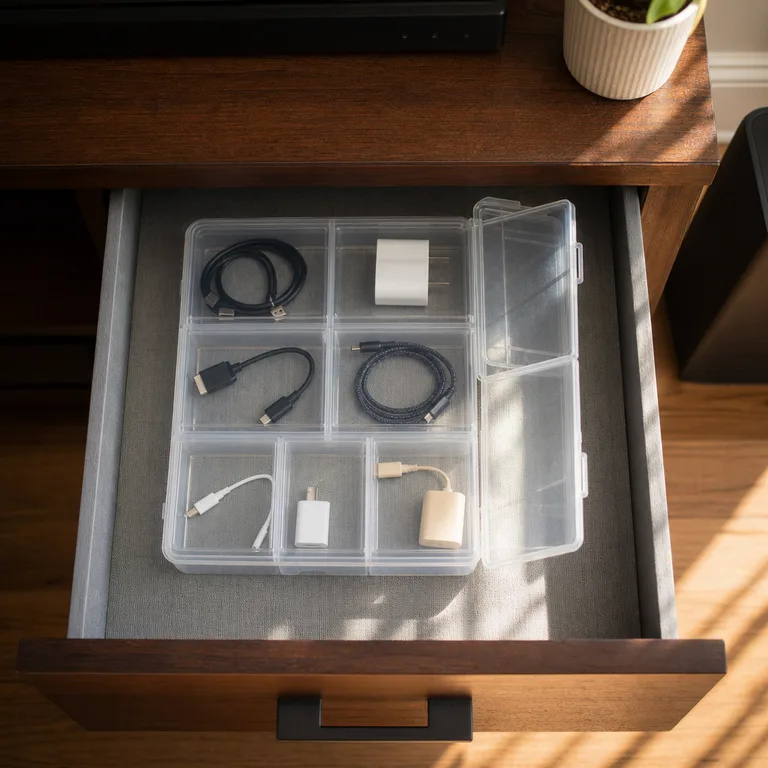
Clear compartments make it easier to compare similar items without opening several boxes. Choose a case with compartments large enough for broad, gentle coils; forcing a cable into a tight square can strain its ends over time.
Worth knowing: Photo cases are best for short cords and small adapters, not bulky power bricks or long extension cables.
8.Wrap Loose Coils With Reused Cardboard Sleeves
Cut clean cardboard from a shipping box into flat sleeves wide enough for a cable to wrap around loosely. Add a small slit to hold the loose end, then write the cable’s purpose on the outside while leaving the connector easy to see.

This reuse-friendly approach separates cords without adding bulky containers, and the flat wraps stack neatly in a drawer. Replace a sleeve when it bends, tears, or begins to catch on connectors, and avoid taping directly onto cable insulation.
Worth knowing: Cardboard sleeves can wear out in humid areas or drawers that are opened often, so they are not as durable as plastic or fabric organizers.
About the author
Dana Ruiz, Senior editor
Dana writes about small-space living, storage and low-cost decorating.
Keep reading
9 Kids' School Paper Organization Ideas That Separate Forms From Keepsakes
October 31, 2026

7 Remote Control Storage Ideas for a Shared Living Room
October 29, 2026

8 Belt Storage Ideas That Fit an Existing Bedroom Closet
October 29, 2026

8 Christmas Gift-Wrapping Stations That Pack Away in a Small Home
October 31, 2026