8 Indoor Doormat Pairings for a Front Door With a Bold Color
A small indoor mat can make a painted front door feel intentional without changing the door itself. These pairings use washable-looking textures, grounded neutrals, and modest patterns while keeping threshold clearance, door swing, and slip-resistant backing in view.
As an Amazon Associate I earn from qualifying purchases.
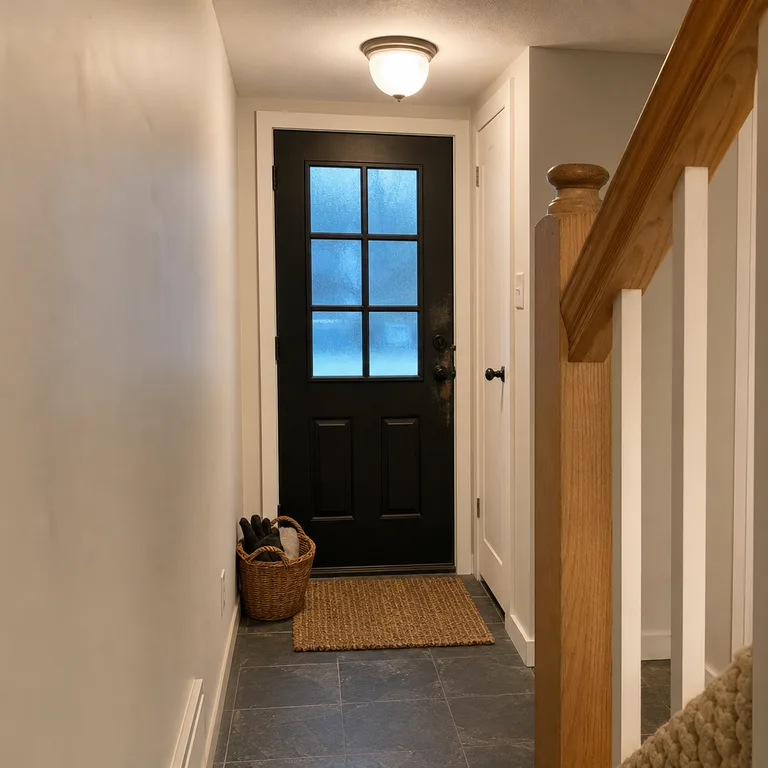
1.Pair a Red Door With a Charcoal Flatweave Mat
A charcoal flatweave mat gives a red front door a quieter base. The dark neutral keeps the door as the focal point while working with black hardware, pale flooring, or brick-toned details nearby.
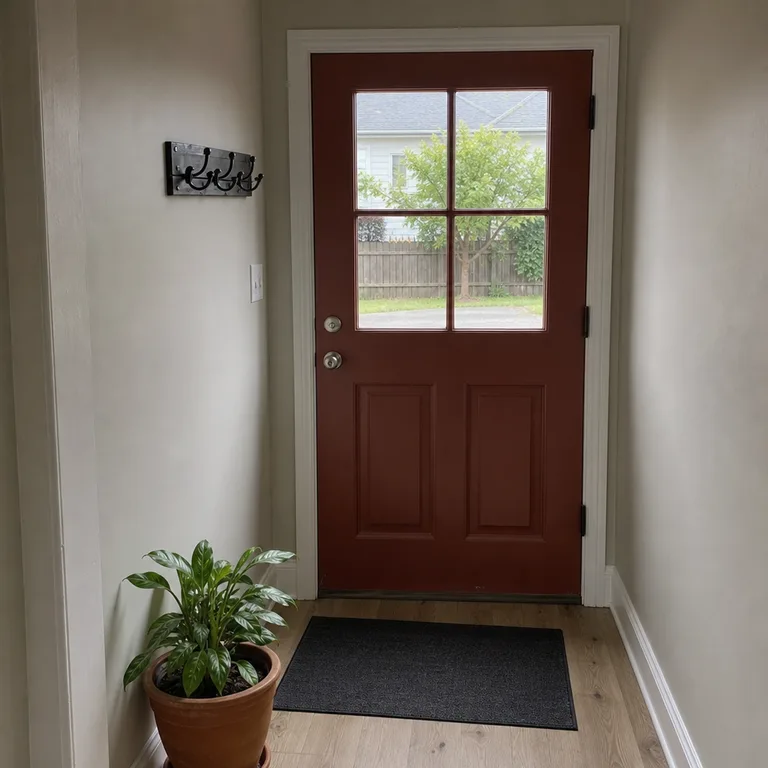
Choose a simple woven mat rather than a thick pile, especially in a narrow entry where the door opens inward. Reuse a dark low-profile rug cut or a mat already on hand if it sits flat, then add a non-slip pad only if it does not interfere with door travel.
Worth knowing: Charcoal hides some everyday marks but can show pale lint, pet hair, and tracked-in salt in wet or snowy climates.
2.Warm a Blue Door With a Natural Tan Coir-Look Mat
Natural tan softens a medium or deep blue door and keeps a compact entry from feeling cold. It is an easy pairing for beige tile, light wood trim, woven baskets, and other warm neutral pieces already in the hall.
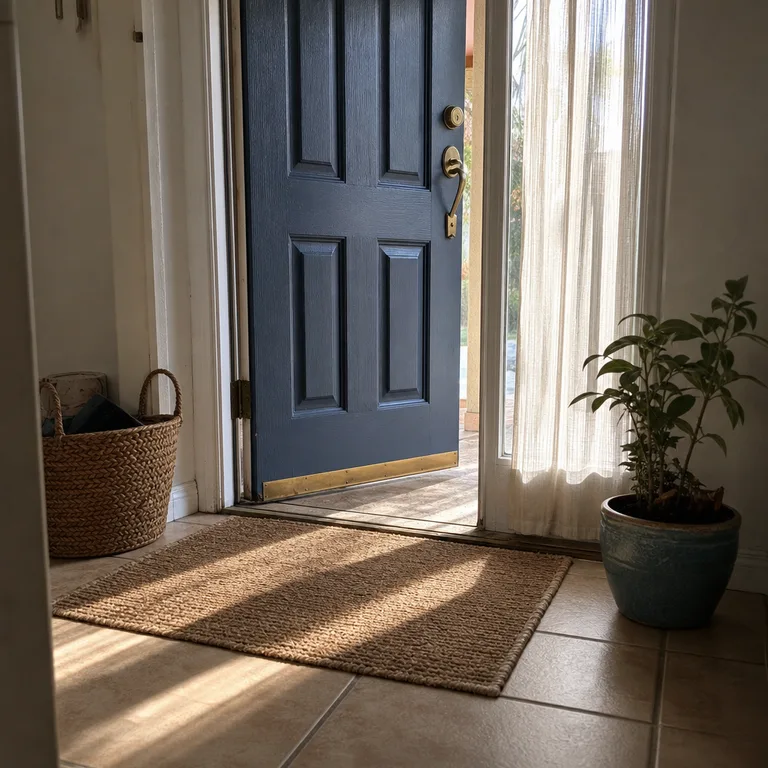
For an indoor location, look for a low-shed coir-look or woven synthetic mat rather than rough outdoor coir that drops fibers. A mat near a rain-exposed threshold also needs time to dry between wet shoes, so use an exterior scraper mat outside when the entry arrangement allows.
Worth knowing: Natural-looking fibers can stain and may hold moisture, making them less practical for an entry that regularly receives wet footwear.
3.Use a Cream Stripe Mat With a Green Door
A cream mat with narrow stripes brightens the area below a green door without asking the room to compete with it. Olive, charcoal, or muted tan stripes connect especially well to a sage or deeper green finish while keeping the pattern restrained.
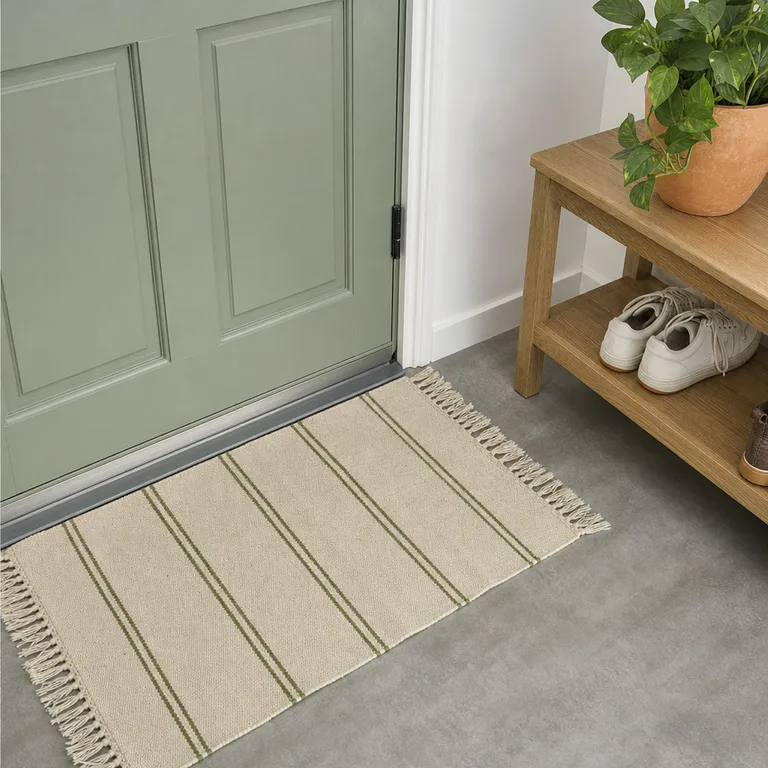
A flatweave cotton-blend or washable synthetic style is usually easier to fit under an inward-swinging door than a fringed rug. Keep the stripes narrow and the mat close to the door width so the small entry still reads as open floor rather than a patchwork of pattern.
Worth knowing: Cream shows mud and dark shoe marks quickly, so it needs regular shaking, washing when allowed by its care label, or a second mat outside.
4.Set a Yellow Door Against a Soft Gray Mat
Soft gray grounds a yellow door and takes some visual heat out of a sunny entry. Heathered gray is more forgiving than a solid pale gray because its mixed fibers make everyday dust and minor marks less obvious.
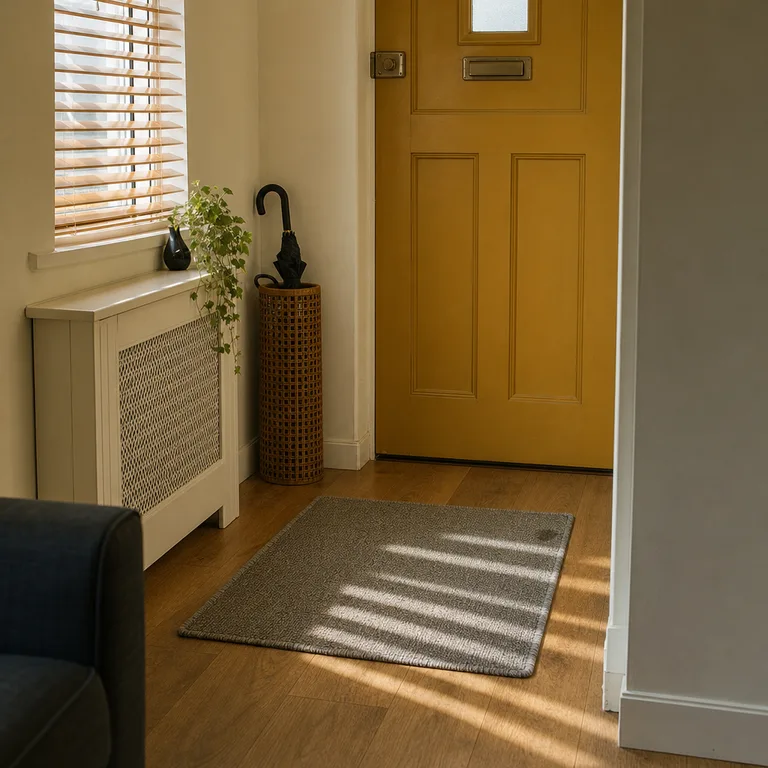
Use a low-profile mat with a subtle weave instead of a bold graphic, letting the door provide the strong color. In a hall with direct afternoon sun, gray also avoids adding more warmth to the floor area and works with both cool white and cream walls.
Worth knowing: Very dark gray can make a small, low-light entry feel heavy, particularly when paired with a mustard rather than a bright yellow door.
5.Add a Warm Woven Mat to a Black Door
A black front door benefits from the softness of an oatmeal, tan, or warm woven mat. The contrast makes the entrance feel less stark, while the texture adds interest without introducing another strong color.
Choose a tightly woven mat with a stable backing for smooth tile, laminate, or vinyl. If the mat shifts, use a thin rug gripper sized smaller than the mat so its edges stay flat; thick rubber layers can create a trip point or stop the door from clearing.
Worth knowing: Open weaves catch grit and can be harder to vacuum thoroughly than a flatter, denser mat.
6.Give a Teal Door a Rust-Accent Mat
A mostly cream or natural mat with a small rust border brings out the warmth within a teal door. Because the warm color appears only as an accent, the pairing adds character without filling a compact entry with competing color.
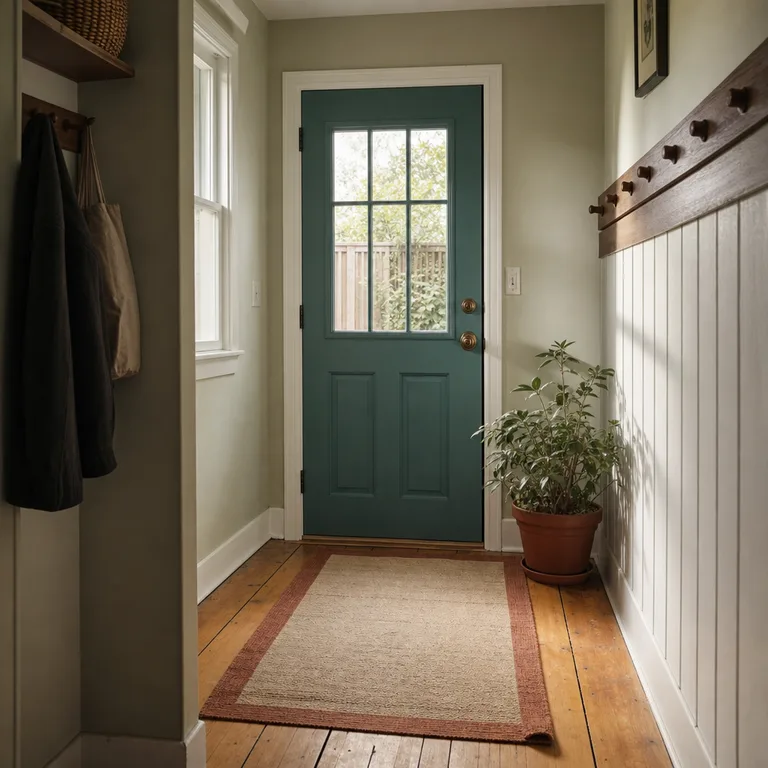
A bordered flatweave is a practical way to try this look without changing the fixed door finish or painting nearby walls. Keep the center of the mat light and the border modest, then repeat rust only in a small pot, catchall, or existing wood tone if the space needs another connection.
Worth knowing: Rust accents can look overly autumnal in a very cool-toned entry, so this pairing is best when there are warm woods, clay, or beige flooring nearby.
7.Lighten a Burgundy Door With an Oatmeal Mat
An oatmeal mat lifts the depth of a burgundy door and gives the threshold a softer, more relaxed contrast. It works particularly well with dark laminate, walnut tones, off-white walls, and aged brass or black hardware.
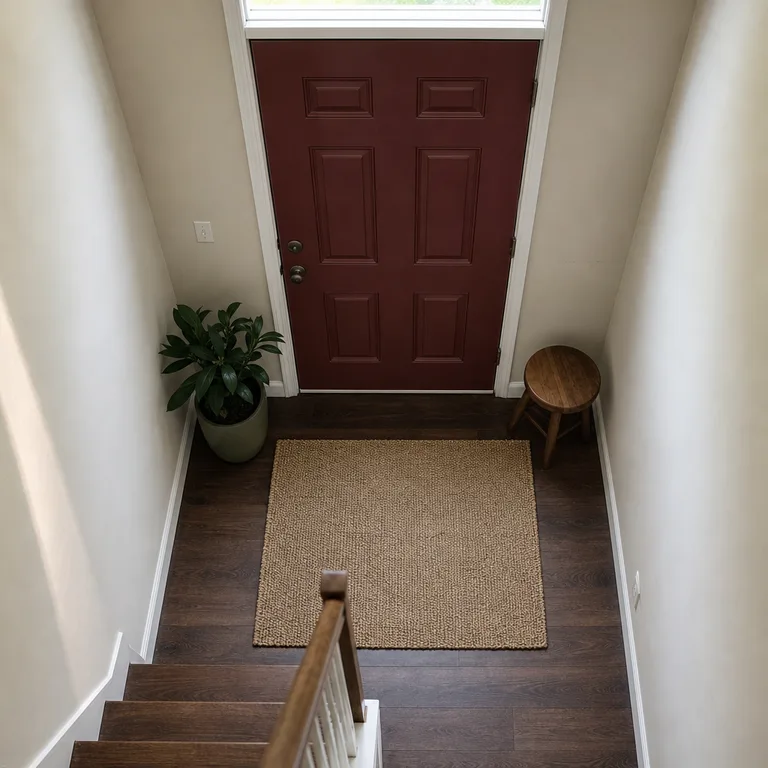
Look for a washable woven mat or a tightly looped low-pile option, depending on the door clearance. Oatmeal is more forgiving than bright white, and a subtle flecked weave can disguise minor wear while keeping the overall effect light.
Worth knowing: Light oatmeal fibers still show dirt sooner than charcoal or navy, so they are not the lowest-maintenance choice for a heavily used family entry.
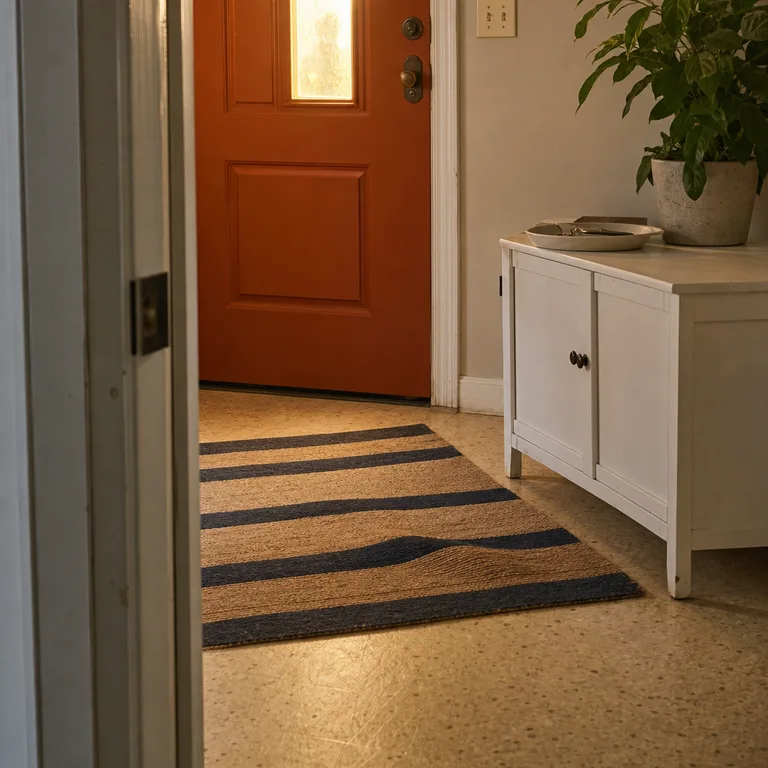
This is a useful rental-friendly update because the mat can shift the color balance without making a permanent change to the door or walls. Choose broad, simple stripes on a low-profile mat, and position it so the door can open fully without catching the edge.
Worth knowing: A high-contrast striped mat can make an already busy entry feel crowded, especially alongside patterned tile or a bold runner.
About the author
Dana Ruiz, Senior editor
Dana writes about small-space living, storage and low-cost decorating.
Keep reading
8 Budget Interior Door Makeovers for Plain Flat Doors
October 29, 2026

10 Christmas Stocking Displays for Small Homes With No Mantel
October 29, 2026
8 Christmas Gift-Wrapping Stations That Pack Away in a Small Home
October 31, 2026
9 Kids' School Paper Organization Ideas That Separate Forms From Keepsakes
October 31, 2026