8 Cleaning Cloth Storage Systems That Separate Clean, Used and Damp Cloths
A cloth rotation works best when clean, damp, and used cloths have separate homes that fit the actual kitchen routine. These compact systems keep cleaning items away from food storage while allowing damp cloths to air-dry before laundry, following each fabric’s care label.
As an Amazon Associate I earn from qualifying purchases.
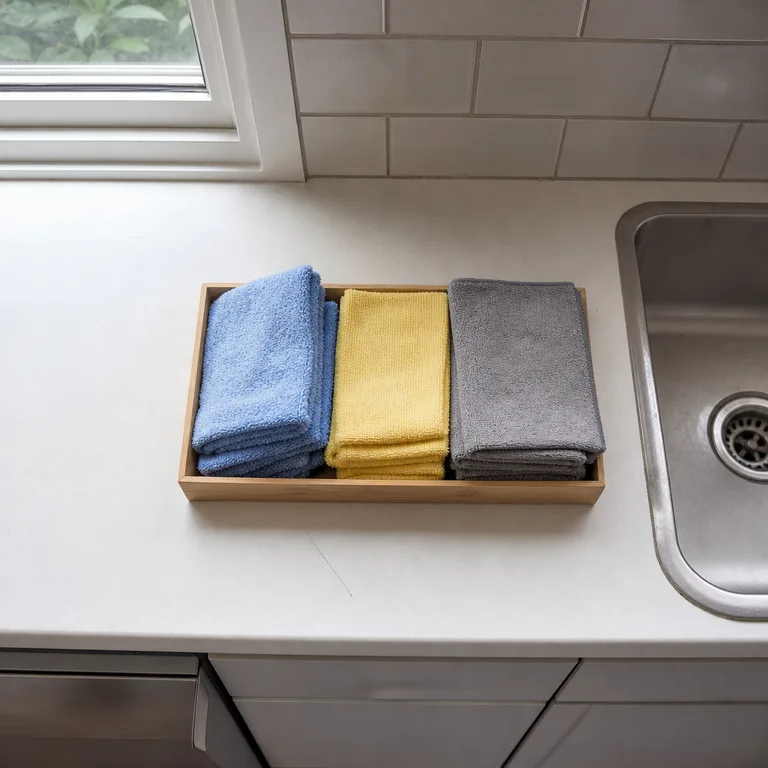
1.Fold Clean Cloths in a Shallow Drawer Tray
A low-sided tray in a lower drawer gives freshly laundered cloths one contained, clean home. Fold them by size or fabric so dish cloths, counter cloths, and larger cleaning rags are easy to grab without disturbing the whole stack.
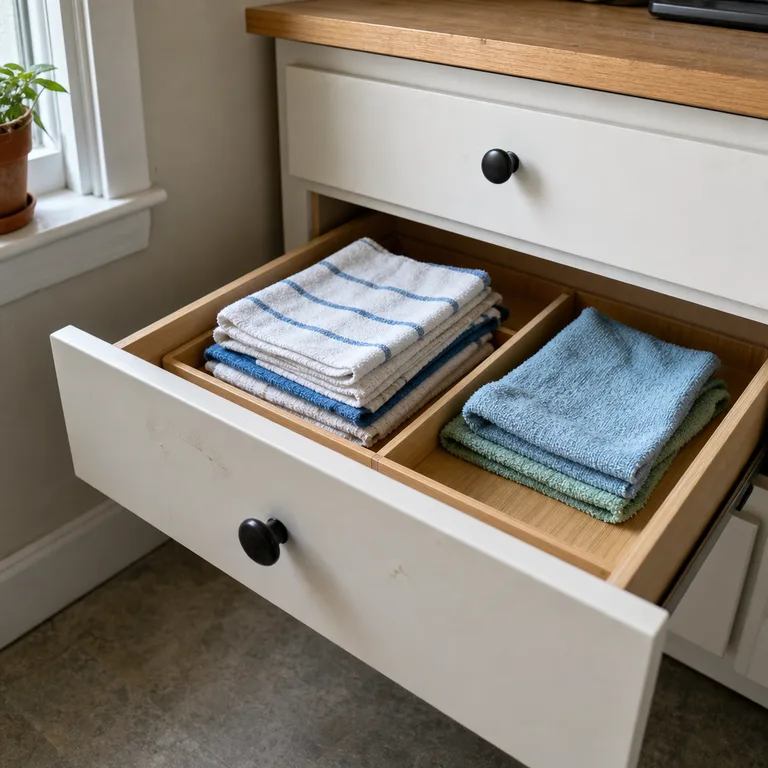
Use a drawer away from cutlery, food-prep tools, and loose pantry items. A basic tray or a few shallow dividers are enough; the goal is to keep the clean supply separate rather than build a complicated organizer.
Worth knowing: This only works if there is a spare drawer, and the drawer should stay dry and free of crumbs or leaking cleaning supplies.
2.Assign Small Boxes to Specific Cleaning Tasks
Set small boxes inside the under-sink cabinet for cloths assigned to distinct jobs, such as dishes, counters, or floor spills. Simple removable clips, symbols, or color markers make the categories clear without permanently labeling the cabinet.
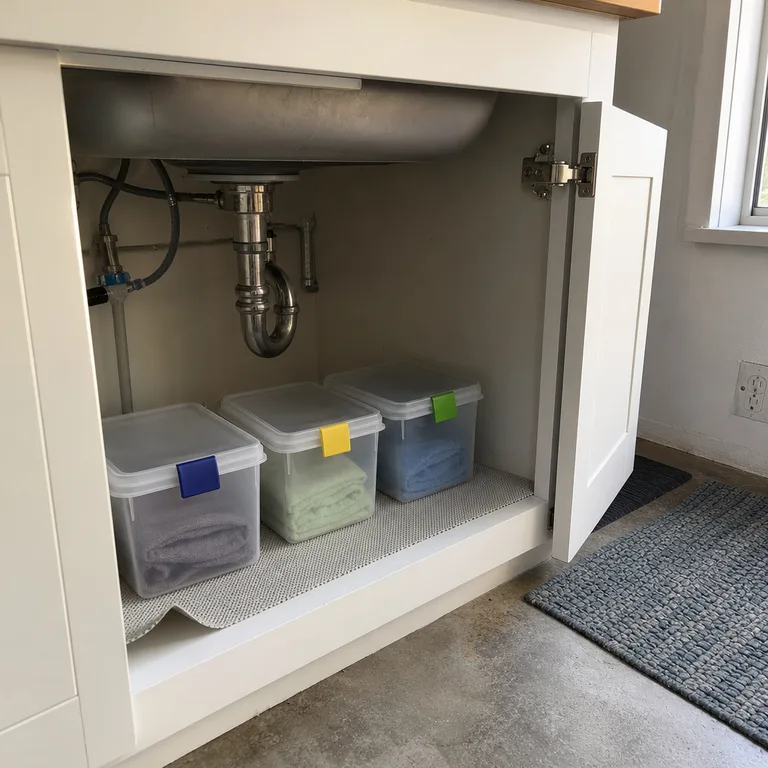
Choose compact boxes that fit around plumbing rather than trying to fill every gap. Keep them on one side of the cabinet and reserve the other side for cleaners, with no food or food-storage items mixed into the space.
Worth knowing: Lidded boxes are best for dry clean cloths; damp cloths need airflow instead of being sealed away.
3.Use a Ventilated Basket for Fully Used Cloths
An open-weave basket creates a clear drop spot for cloths that are finished for the day and ready for laundry. Place it in a dry cabinet corner, near the kitchen exit, or along the route to the laundry area so used cloths do not return to the clean stack.
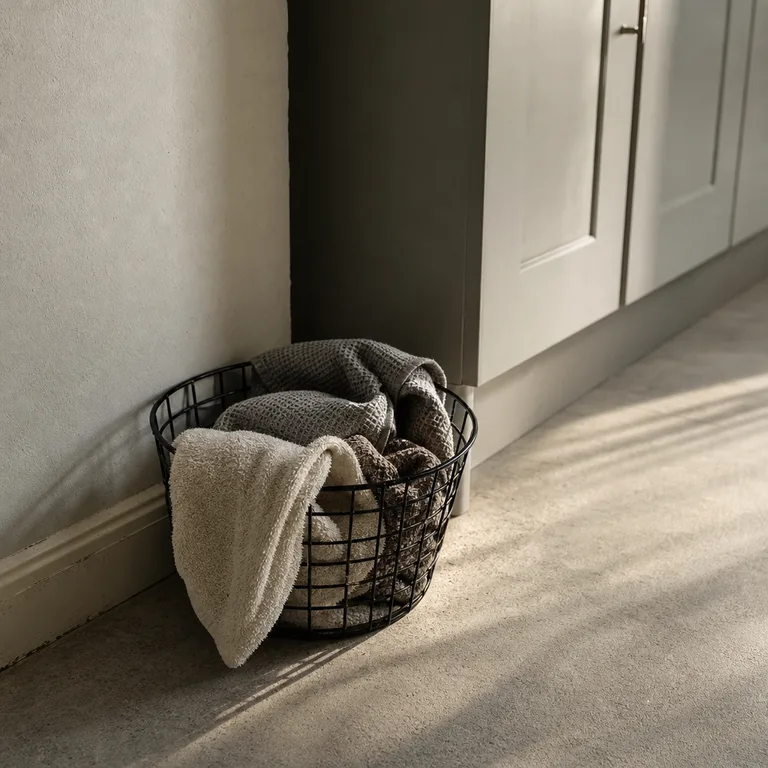
A small wire, mesh, or open plastic basket is usually sufficient and can be repurposed from another room. Empty it regularly, especially when cloths have been used for messy spills, and let anything damp dry elsewhere first.
Worth knowing: A ventilated basket does not solve odor from cloths left wet too long, so it needs regular emptying.
4.Add a Drying Rail Inside a Cabinet Door
A short rail or a pair of hooks on the inside of a cabinet door gives the current damp cloths a place to hang separately. Spacing them apart lets air reach more of the fabric and keeps wet material off the counter edge.
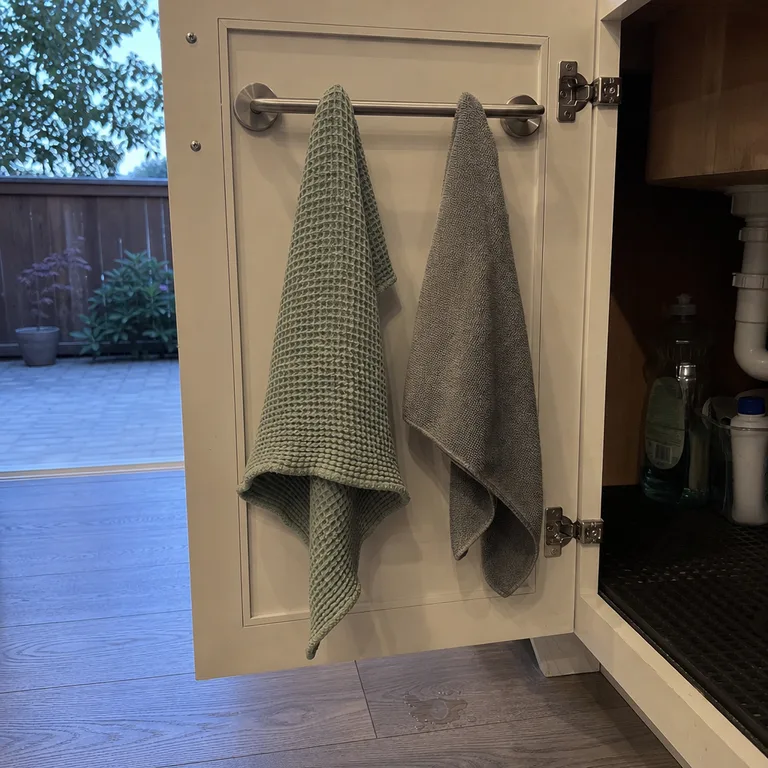
Measure the door panel and check where plumbing sits before attaching anything. Adhesive hooks can suit rentals when allowed, while a screwed-in rail may be sturdier for a door that sees daily use; in either case, confirm the door can still close freely.
Worth knowing: A closed under-sink cabinet may have limited airflow, particularly in humid kitchens, so cloths may dry slowly there.
5.Sort the Clean Stack by Cloth Color
Use different cloth colors to show the intended job, such as one color for dishes and another for counter cleaning. The visual cue makes a shared kitchen simpler to manage and reduces the chance of pulling a cloth from the wrong pile.
This system can be as simple as buying replacement cloths in a few colors over time and stacking them in a drawer or tray. Wash every cloth according to its care label and its use; color is only an organizing aid, not a hygiene measure.
Worth knowing: Color coding becomes less useful when everyone in the household does not follow the same task assignments.
6.Carry Daily Cloths in a Washable Caddy
Keep only the day’s clean working cloths in a small handled caddy near the sink or dining table. It contains the active supply without leaving every spare cloth on the counter, and it can move easily when cleaning shifts around the kitchen.
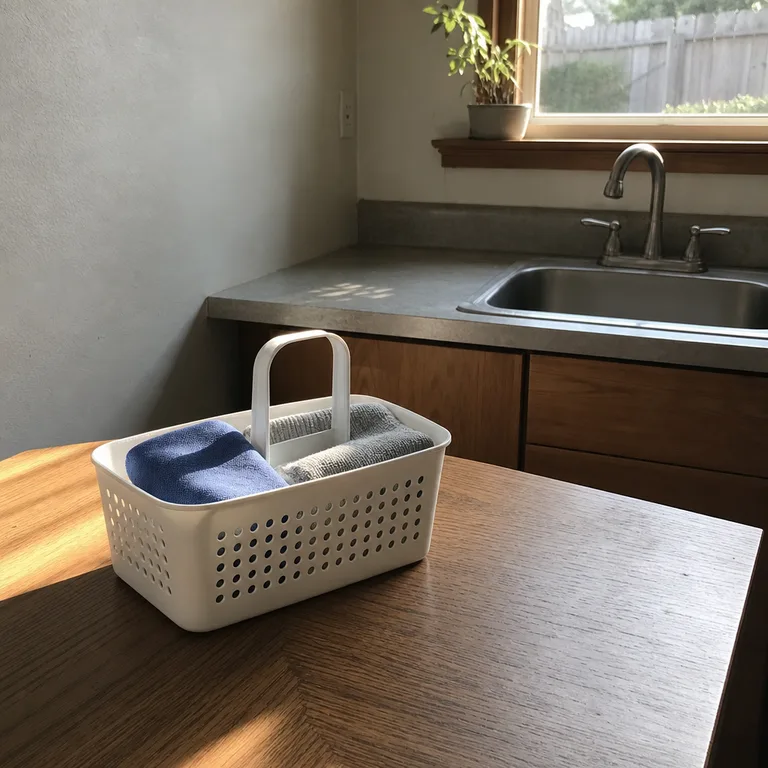
A perforated plastic tote is practical because crumbs and moisture are less likely to collect in hidden corners. Choose one that can be rinsed or washed, and keep only clean, dry cloths inside it rather than treating it as a catch-all bin.
Worth knowing: A caddy uses visible counter or table space, which may not suit a very small kitchen.
7.Keep a Transfer Bag by the Laundry Route
Hang a breathable, washable bag near the kitchen exit, utility closet, or path to the washing machine for dry used cloths. This gives finished cloths a direct route out of the kitchen instead of letting them build up under the sink.
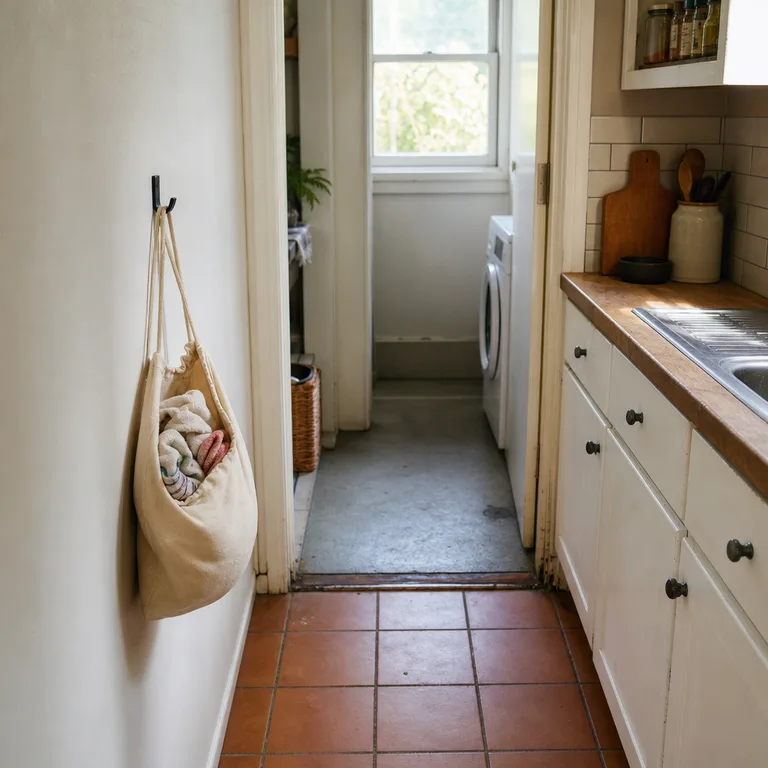
A canvas or mesh bag on a wall hook uses vertical space and separates cleaning cloths from clean linens. Choose a location that does not block a walkway, and launder the bag itself when it starts to collect dust or residue.
Worth knowing: This setup depends on cloths being allowed to dry first, since a bag is not a good place to hold wet fabric for long.
8.Limit the Counter to a Daily Cloth Kit
Set out a small working kit near the sink: one clean cloth, one cloth that is drying, and one defined place for the currently damp cloth. The rest stay in their clean drawer or move through the used-cloth route, making the daily turnover easy to see.
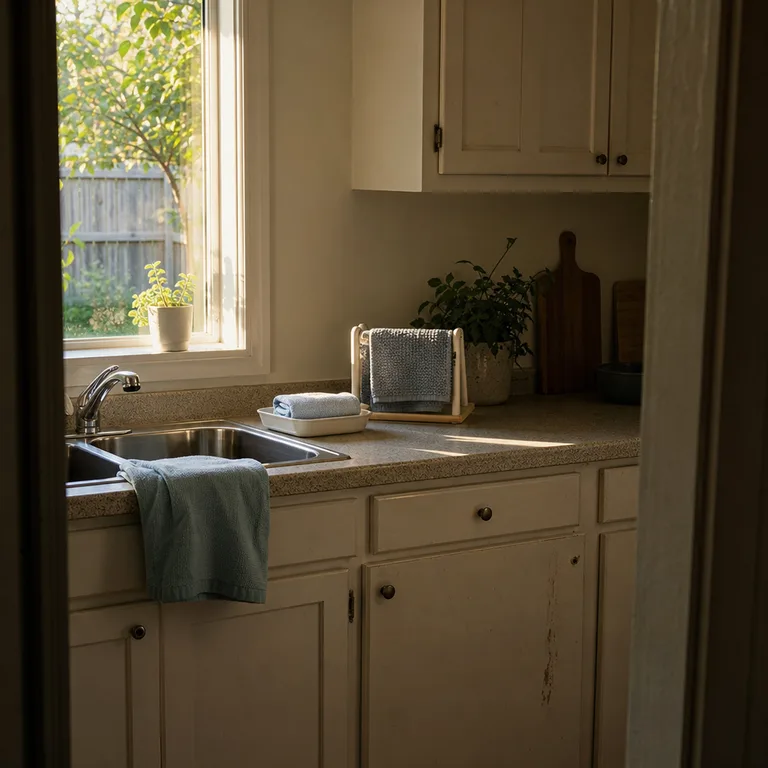
A narrow tray and a compact drying stand can keep the arrangement from spreading across the counter. Put the tray outside the food-prep zone, and clear it at the end of the day so damp cloths are hung to dry or moved into laundry when appropriate.
Worth knowing: A daily kit requires a brief reset each day, or it can gradually turn back into a pile of mixed-condition cloths.
About the author
Dana Ruiz, Senior editor
Dana writes about small-space living, storage and low-cost decorating.
Keep reading
9 Kids' School Paper Organization Ideas That Separate Forms From Keepsakes
October 31, 2026
7 Remote Control Storage Ideas for a Shared Living Room
October 29, 2026
8 Belt Storage Ideas That Fit an Existing Bedroom Closet
October 29, 2026

8 Christmas Gift-Wrapping Stations That Pack Away in a Small Home
October 31, 2026