7 Easy Ways to Style a Bed With Two Separate Duvets
Two separate duvets can look intentional rather than divided when the folds, pillow colours, and top layers give both sides a shared structure. These seven finished arrangements include a quick morning reset and practical sizing guidance, without treating one setup as right for every couple.
As an Amazon Associate I earn from qualifying purchases.
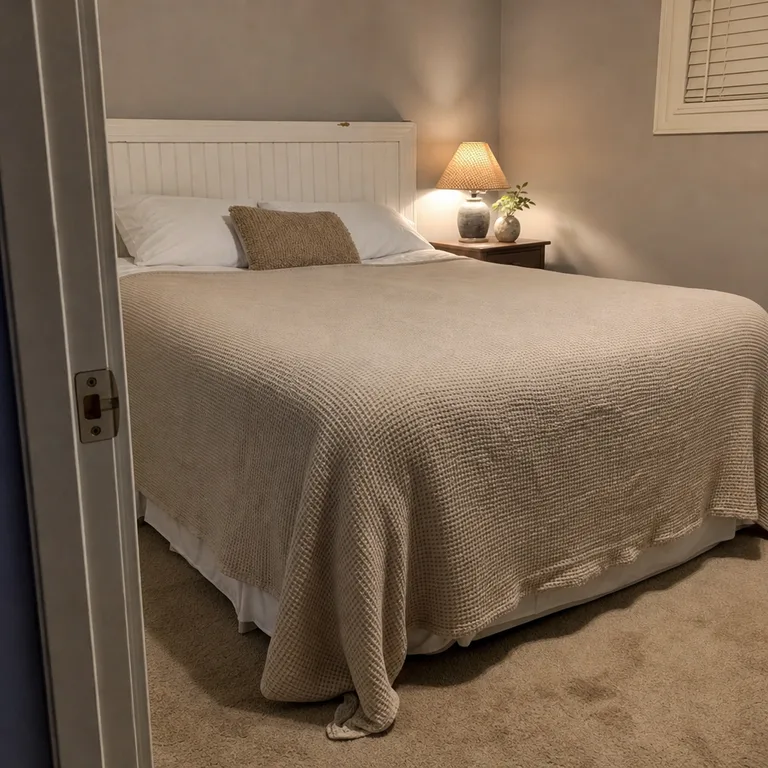
1Fold Two Matching Duvets Lengthwise Down the Bed
Use matching duvet covers and fold each duvet lengthwise into a neat panel. Set the panels side by side from head to foot, leaving a slim, even line between them so the arrangement reads as symmetrical rather than accidental.
Choose duvet inserts and covers that fit each person without extending so far that the folded panels swamp the mattress. In the morning, shake each duvet straight, make one long fold, and align the outer edges with the bed; this is a quick reset with very little extra layering.
Worth knowing: This look leaves more of the mattress and sheet visible, so it can feel sparse on a very large bed or in a room that suits fuller bedding.
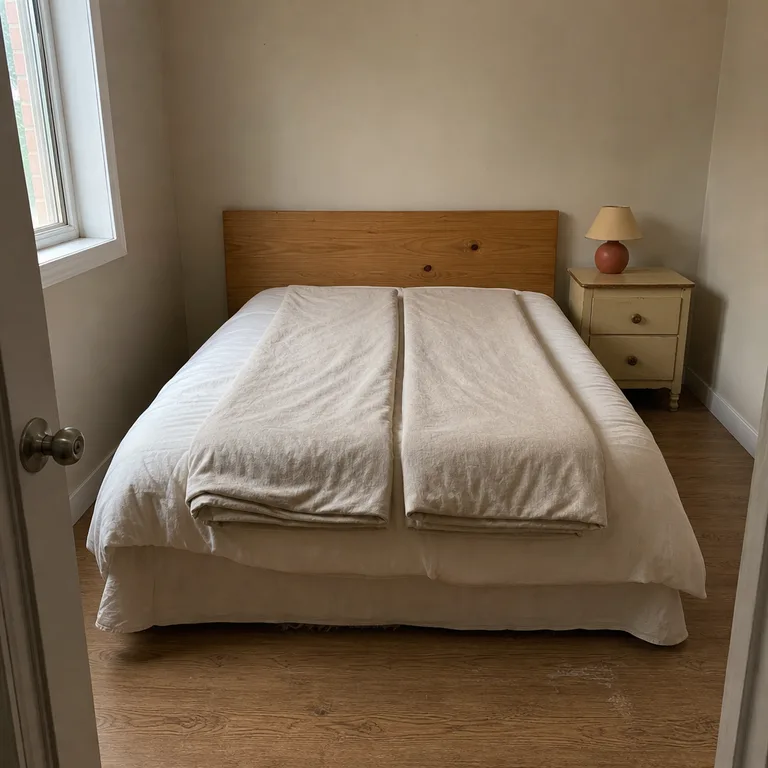
2Spread Two Matching Duvets Flat With a Clean Centre Line
Lay two matching duvets flat across their own halves of the bed and bring their inside edges together in a straight centre join. The result has the coverage of a fully made bed while still showing the practical split between the two covers.
Select covers in the same colour and fabric weight, then use matching sleeping pillows to keep the top of the bed orderly. Each morning, pull the duvets toward the foot, smooth outward from the centre, and straighten the join last.
Worth knowing: The centre line remains visible, especially in strong side light, so this arrangement works best for couples comfortable with the split being part of the design.
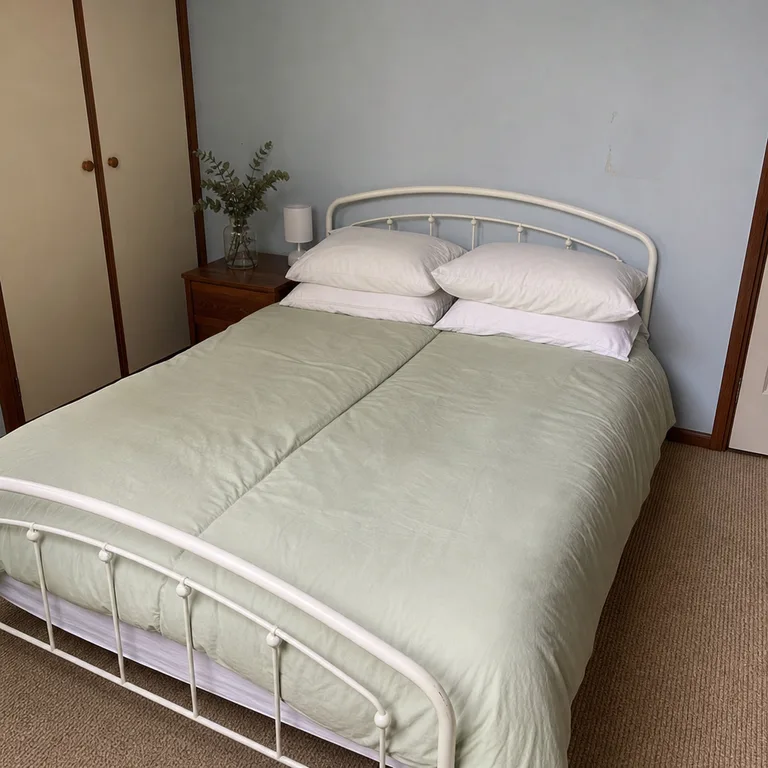
3Pair Different Duvet Colours With One Pillow Colour
Give each side its own duvet colour, then repeat one pillowcase or sham colour across the head of the bed. That repeated shade links the two halves and makes contrasting covers look like a deliberate palette.
Keep the duvet colours similarly muted or choose colours that already appear elsewhere in the room, such as in artwork, a rug, or curtains. For the reset, smooth each side separately and line up the shared pillows in one row so they become the visual bridge.
Worth knowing: High-contrast colours can make the bed look busier, particularly in a small bedroom with several other patterns already in view.
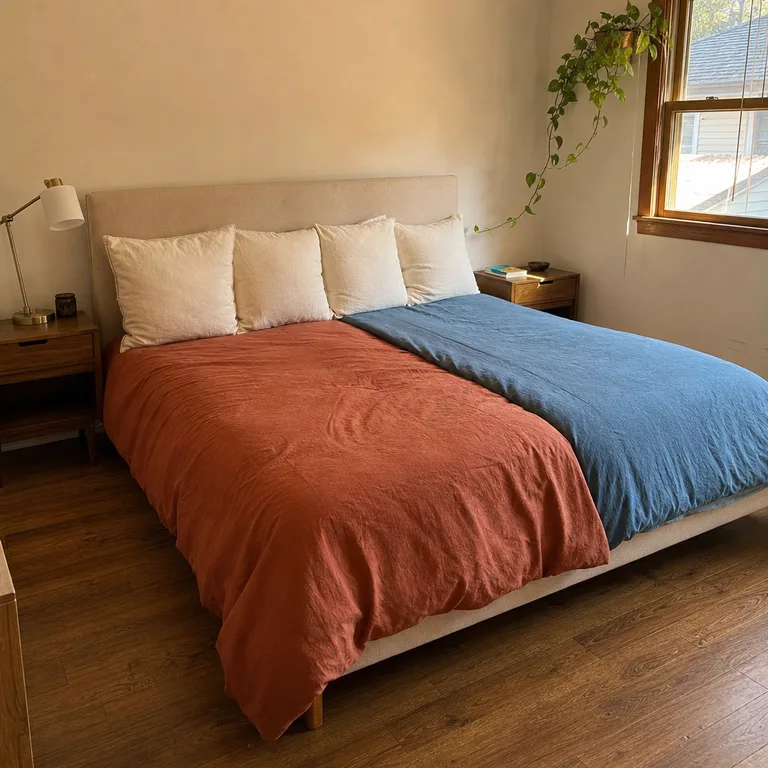
4Lay a Light Coverlet Across Both Duvets for Daytime
Keep the separate duvets underneath, then pull a lightweight coverlet across the entire bed during the day. A full-width top layer softens the centre split and gives the bed one continuous silhouette.
Choose a breathable coverlet that is wide enough to cover both duvets without needing to be stretched tight. Spread it after smoothing the individual covers, and reserve it as a daytime layer if each person prefers the duvets arranged differently at night.
Worth knowing: A coverlet adds one more piece to fold back or remove at bedtime, and a heavy version may be impractical in a warm room.
5Match the Turn-Downs at the Head of the Bed
Turn both duvets down by the same amount at the head of the bed to reveal a shared sheet beneath. The matching folded edges create a tailored finish even when each duvet is handled independently.
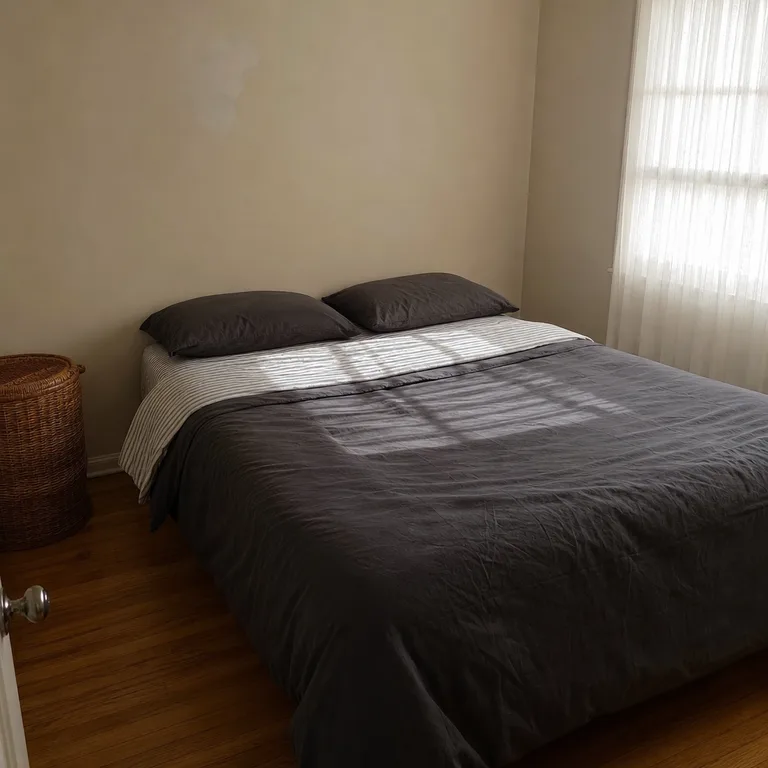
This works especially well with a sheet in a subtle stripe, small pattern, or contrasting solid that deserves to be seen. Use duvets that are easy to lift and smooth, then place sleeping pillows in balanced pairs above the two folded edges.
Worth knowing: The exposed sheet needs regular laundering and smoothing, so this is less forgiving when the bed is made in a rush.
6Tuck Two Quilts Independently Along Each Side
Replace bulky duvets with two lighter quilts, one for each side, and tuck each quilt loosely along its outside edge. Leave the centre edges untucked and straight to preserve the two-part arrangement without adding bulk.
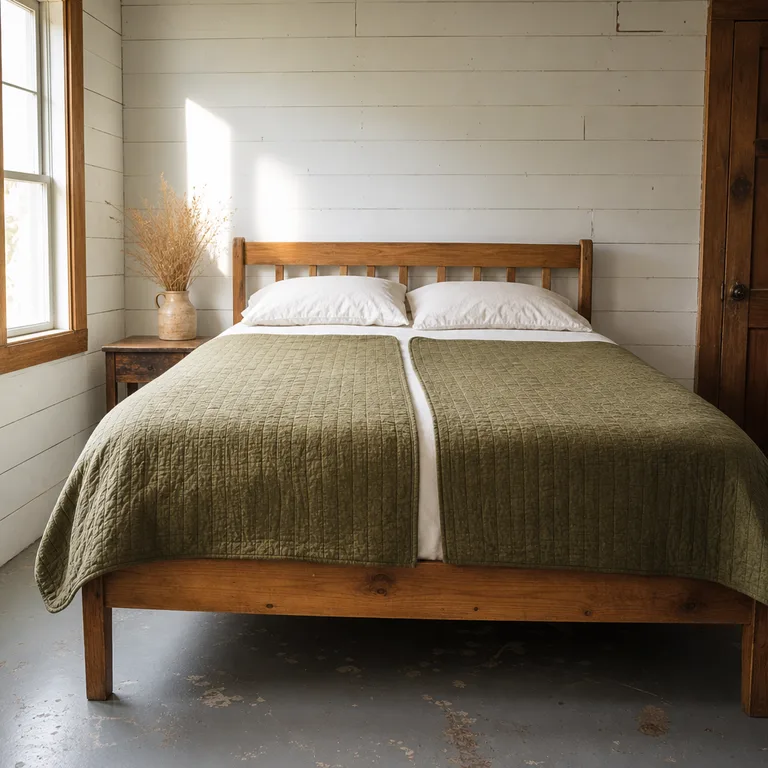
This low-profile option suits warm bedrooms, guest rooms, or beds with a visible wood or metal frame. Choose quilts with enough width to cover each sleeper’s side and reach the outer edge, then tuck only enough fabric to keep the sides from looking loose.
Worth knowing: Lighter quilts may need extra blankets during colder weather, and tucked edges take longer to remake than a simple folded duvet.
7Fold Both Duvets at the Foot to Show the Sheets
Make the bed with a well-fitted sheet, then fold each duvet into a wide band at the foot. Most of the mattress is left visible, while the matching folded bands clearly show that the two covers belong together.
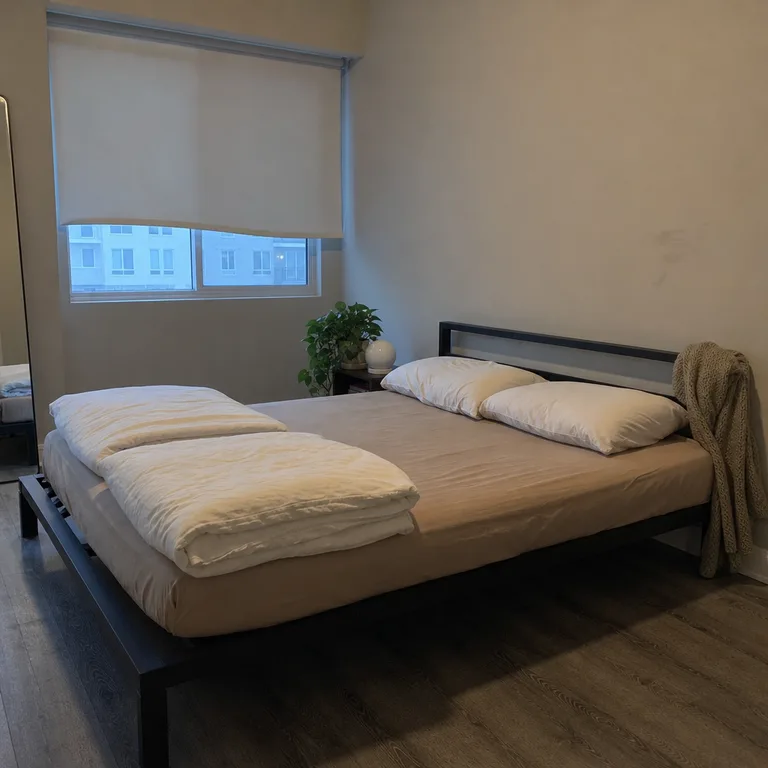
A coloured or softly patterned sheet gives this arrangement more purpose, while plain white duvets keep the foot of the bed calm. For the morning reset, smooth the sheet first, fold each duvet to a matching depth, and level both bands with the mattress edge.
Worth knowing: This arrangement provides less daytime coverage across the bed, so it can look unfinished if the visible sheet is wrinkled or poorly fitted.
About the author
Dana Ruiz, Senior editor
Dana writes about small-space living, storage and low-cost decorating.
Keep reading
9 Budget Gingerbread-Inspired Christmas Decor Ideas
November 13, 2026
9 Budget Mirror Placement Ideas for a Better Room View
November 12, 2026
9 Budget Organic Modern Living Room Ideas With Warm Wood
November 12, 2026
7 Relaxed Blue and White Room Schemes on a Budget
November 12, 2026