7 Ways to Store an Unfinished Jigsaw Puzzle Without Losing the Table
An unfinished jigsaw puzzle can move off a dining or work table without breaking up when its completed footprint, loose-piece area, and route to storage are measured first. These options range from rigid supports that keep every section flat to rollable systems suited only to puzzles whose pieces and progress can safely tolerate gentle pressure.
As an Amazon Associate I earn from qualifying purchases.
1.Slide a rigid backing board onto a flat closet or cabinet top
Build the puzzle on a rigid sheet such as foam core, hardboard, or another flat panel that is larger than the finished puzzle. Leave a border around the puzzle for loose pieces, then move the entire board to a level cabinet top or closet shelf when the table is needed.
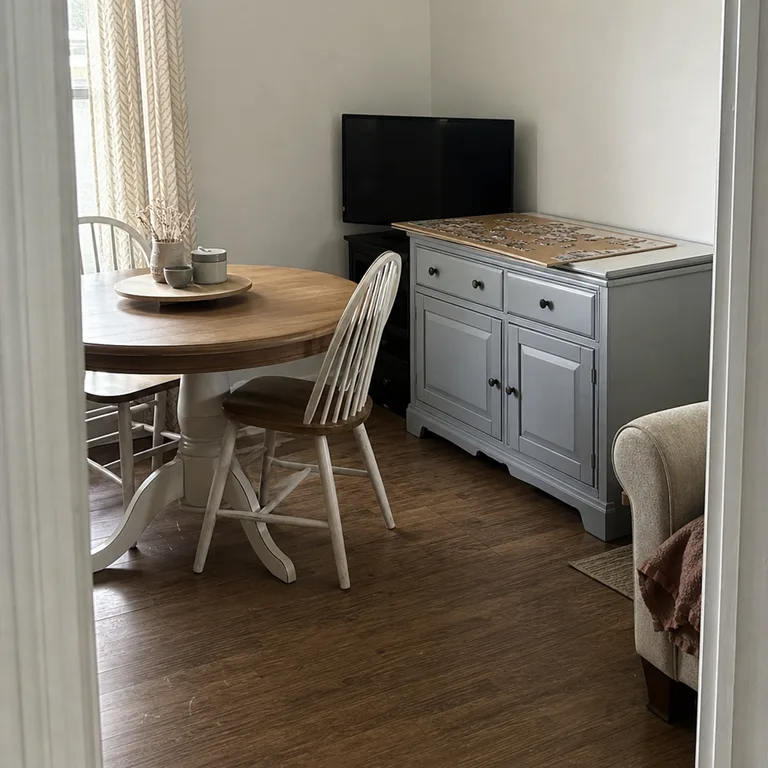
A rigid surface keeps connected sections from flexing, which makes it one of the safer choices for a partly completed puzzle. Reuse an existing board where possible, and add a non-slip layer underneath only if the storage surface is slick. Choose a spot away from pets, door swings, and items that may be set on top of the board.
Worth knowing: This only works when there is a truly flat storage surface deep enough to support the whole board without overhang.
2.Use a lidded puzzle case beside the dining table
A flat lidded puzzle case can hold both the assembled area and loose pieces in one enclosed place. Select one with interior dimensions that exceed the puzzle footprint, including the space needed for sorting pieces around the edges.
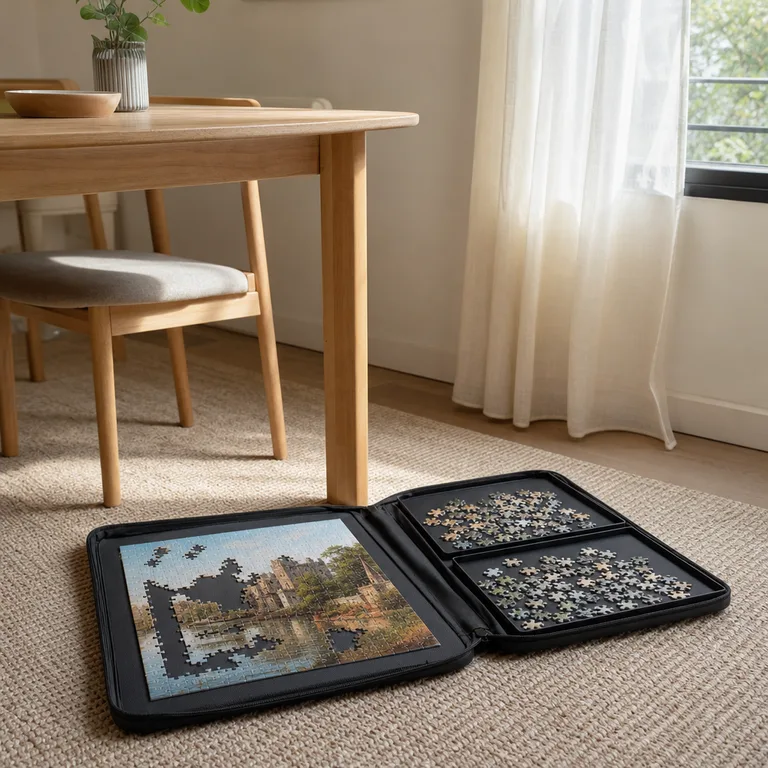
The lid helps protect the work from dust, pets, and accidental bumps, while keeping the setup close to the table for the next session. A purpose-made case is convenient, but a shallow reusable case with a secure, non-compressing lid can serve the same role if the puzzle fits comfortably inside.
Worth knowing: Some cases are too shallow for raised or loosely connected sections, and a tight lid can shift pieces when closed.
3.Roll a flexible puzzle mat only when the puzzle can tolerate it
A felt roll-up mat can clear a table when there is no room to store a full-size board flat. The puzzle stays on the mat, which is rolled around a tube and held with straps before being placed in a dry, low-traffic spot.
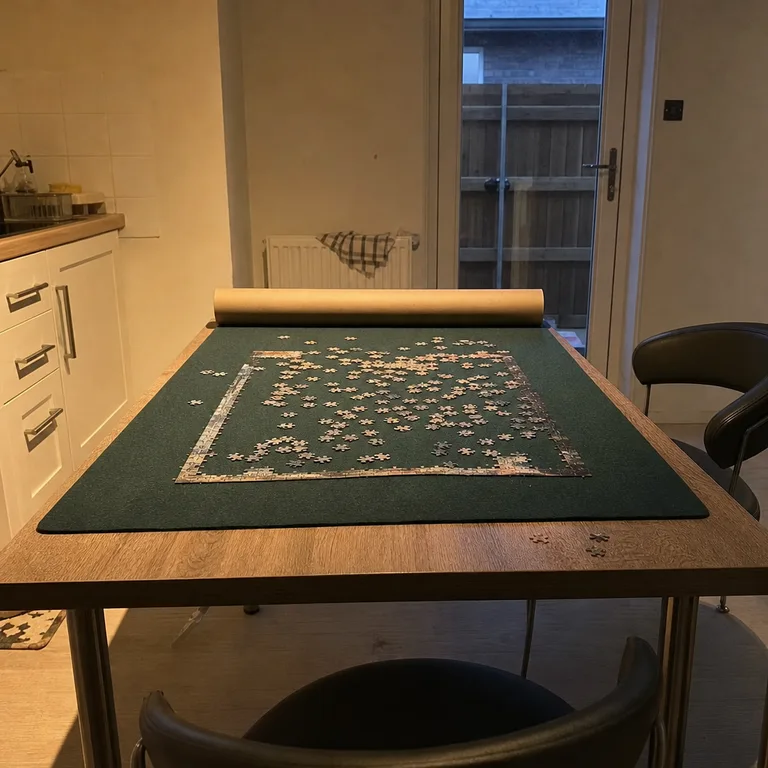
This approach takes less floor and shelf space than a rigid board, and it can suit puzzles with firmly interlocking, standard-thickness pieces. Test a small connected section first rather than assuming the full puzzle will stay together. Keep loose pieces in a separate lidded container so they do not scatter during rolling.
Worth knowing: Rolling can disturb, bend, or separate thick, warped, delicate, or loosely fitting pieces, so it is not reliable for every puzzle.
4.Keep a small puzzle inside a shallow handled tray
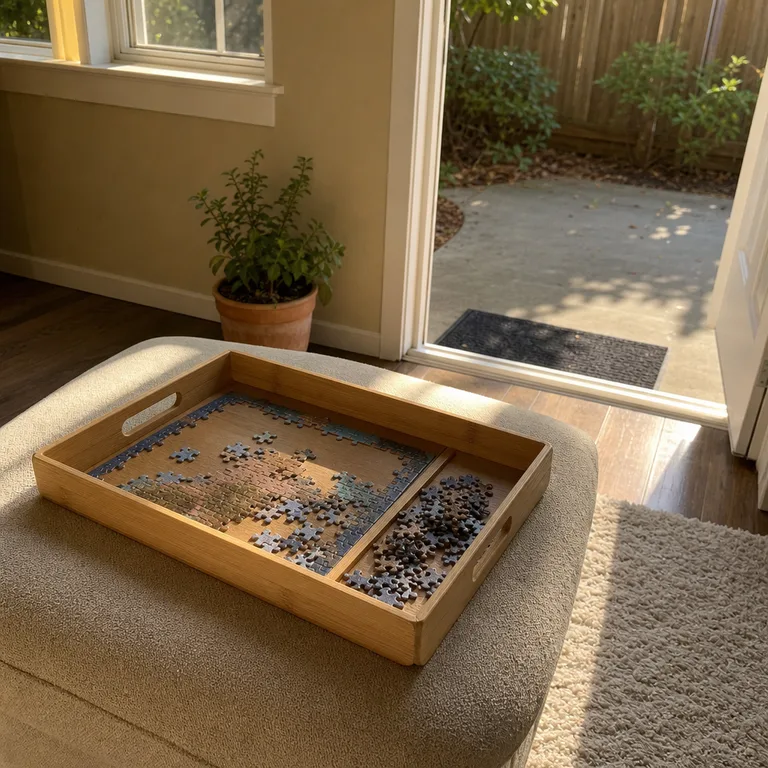
A shallow tray with a firm base and raised sides can turn a compact puzzle into a portable project. Keep the loose pieces inside the rim or in a small container set in one corner, then carry the tray level to a shelf, ottoman, or another room.
The raised edge makes this method more secure than moving a puzzle directly on a tabletop or lap desk. A serving tray already at home can work if it is wide enough and does not flex; add small corner bumpers underneath if the tray tends to slide on furniture.
Worth knowing: A tray is best for small puzzles, since a larger one becomes awkward to carry and may bend if its base is not rigid.
5.Park a backing board on an unused flat shelf
A wide, clear shelf can hold a puzzle board flat between sessions without requiring a separate storage product. Measure both the shelf depth and width, then use a board that sits fully supported rather than hanging over the front edge.
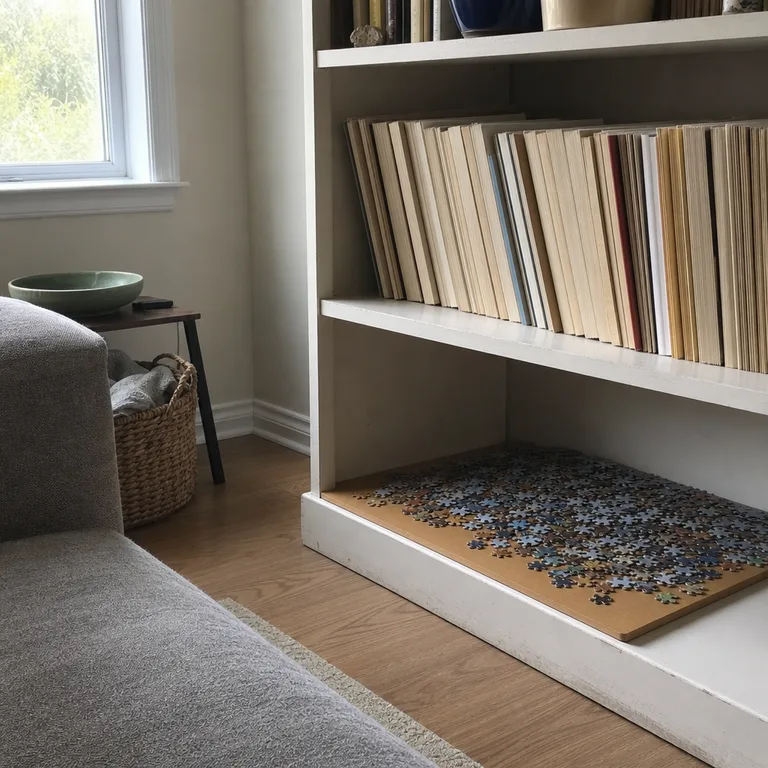
A lower bookcase shelf or sturdy utility shelf keeps the project accessible while freeing the dining table for daily use. Clear books, baskets, and decorative objects away from the board so nothing catches a puzzle edge or presses onto loose pieces. Check that the shelf is level, particularly on older furniture or uneven floors.
Worth knowing: Many shelves are too shallow for a full puzzle board, and an exposed shelf still leaves the puzzle vulnerable to dust and curious pets.
6.Store a thin rigid board beneath a sofa with clear floor space
If the sofa has enough open clearance beneath it, slide a thin rigid puzzle board into that unused space. Cover the board with fabric, a clean pillowcase, or a fitted sleeve to reduce dust, then pull it out by a handle or strap attached to the cover rather than tugging at the puzzle itself.
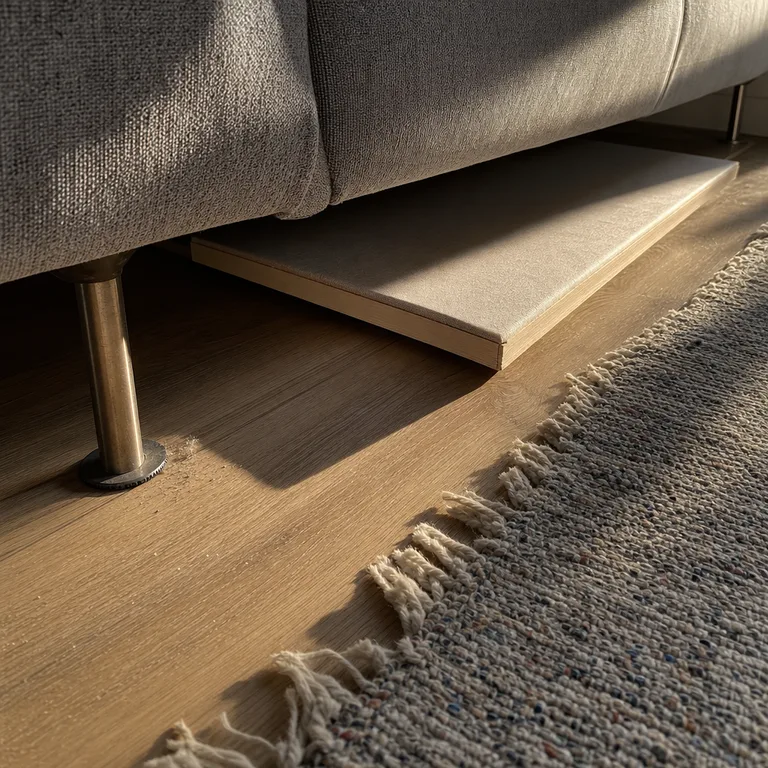
Under-sofa storage keeps the puzzle close to the living area without taking over a closet or shelf. It works best with a smooth, fully flat route from the table to the sofa; rug edges, low furniture legs, and uneven flooring can catch the corners as the board moves.
Worth knowing: This method is unsuitable for sofas with limited clearance, active pets, damp floors, or a route that requires bending the board around obstacles.
7.Protect a board inside a flat art-storage sleeve
Place a rigid puzzle board inside a large flat art-storage sleeve or portfolio, then slide it into a closet or stand it upright only if the puzzle is well supported and the sleeve stays straight. The sleeve should be larger than the board so the edges do not compress the puzzle as it goes in or out.
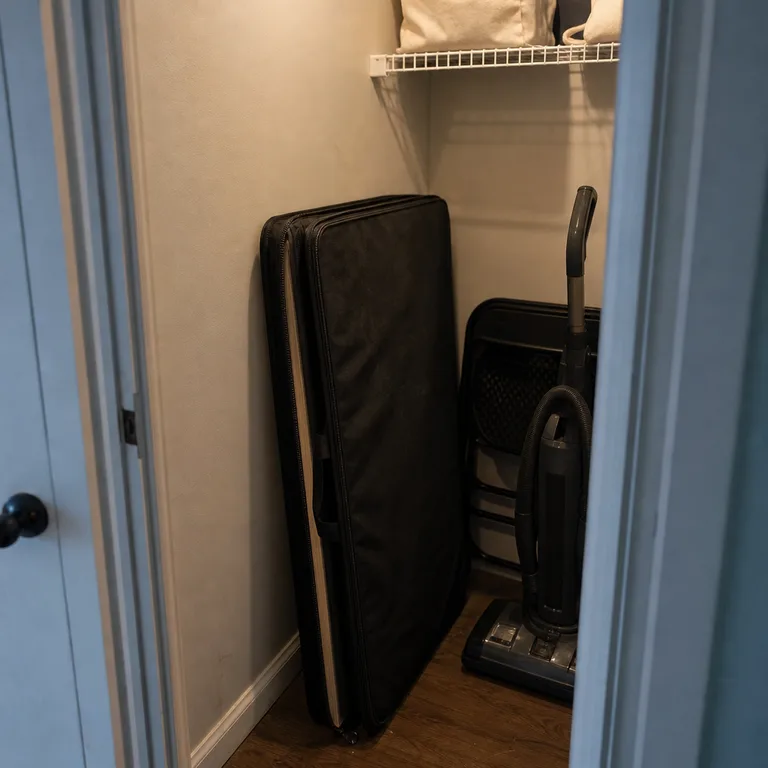
This gives a board a cleaner outer layer and makes it easier to move without brushing loose pieces against other stored items. Reuse an oversized portfolio or flat zippered pouch if it opens wide enough; a separate rigid panel inside the sleeve prevents the project from flexing.
Worth knowing: An upright sleeve can allow loose pieces or weakly connected sections to shift, so flat storage remains safer for an unfinished puzzle.
About the author
Dana Ruiz, Senior editor
Dana writes about small-space living, storage and low-cost decorating.
Keep reading
9 Kids' School Paper Organization Ideas That Separate Forms From Keepsakes
October 31, 2026
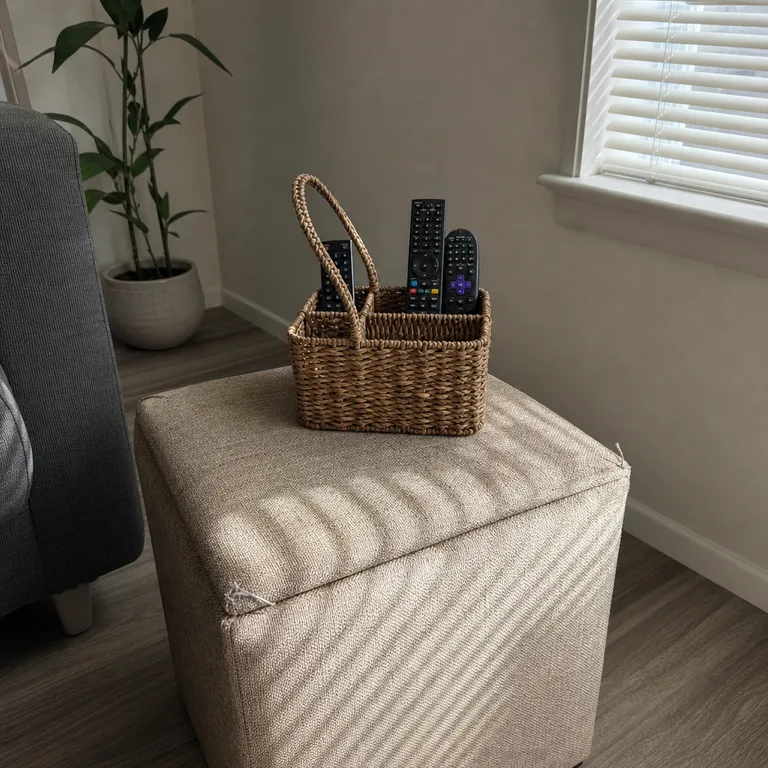
7 Remote Control Storage Ideas for a Shared Living Room
October 29, 2026
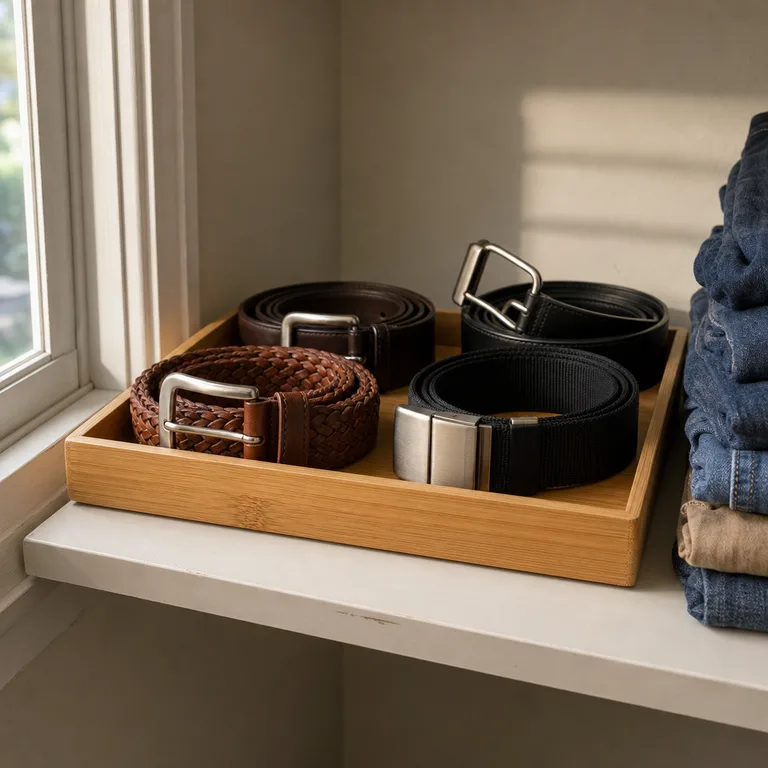
8 Belt Storage Ideas That Fit an Existing Bedroom Closet
October 29, 2026
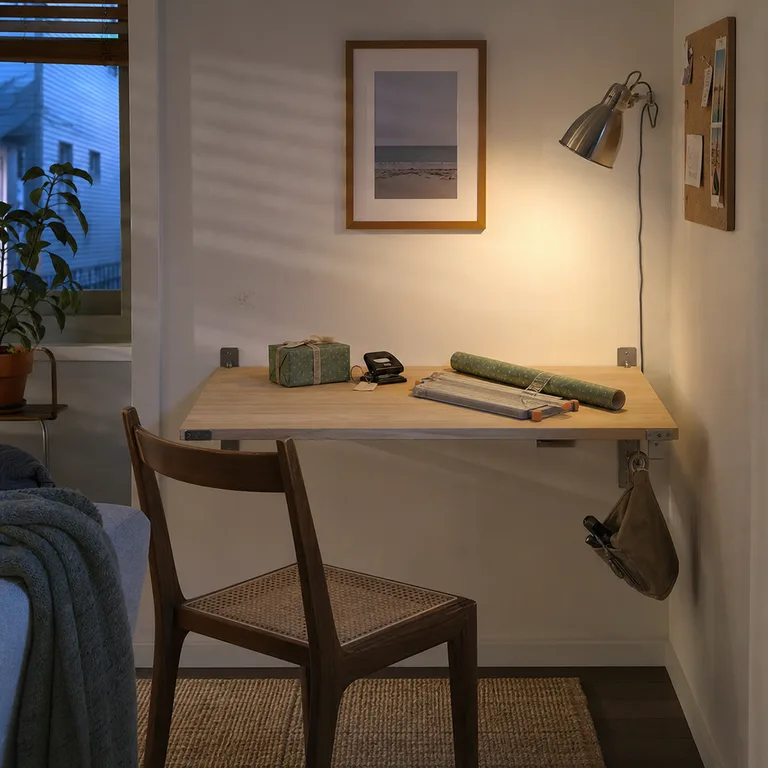
8 Christmas Gift-Wrapping Stations That Pack Away in a Small Home
October 31, 2026