6 Knife Storage Options for a Small Kitchen Without a Countertop Block
A small kitchen can keep a few useful knives close at hand without giving a countertop block permanent space. These options focus on purpose-made storage that protects blade edges, keeps retrieval predictable, and fits the drawer, wall, or cabinet space already available.
As an Amazon Associate I earn from qualifying purchases.
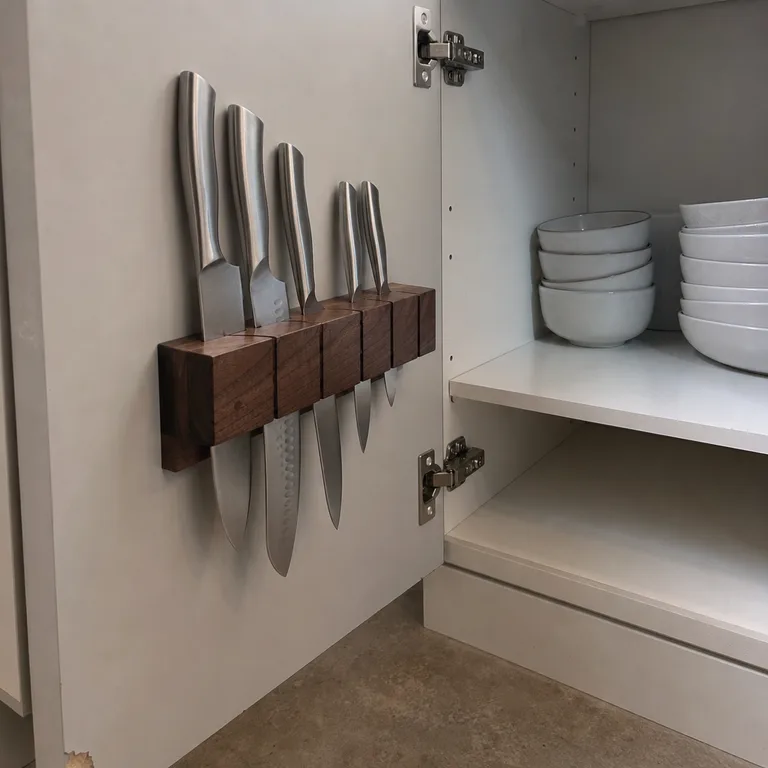
1.Use a fitted drawer knife insert with individual slots
A fitted drawer insert gives each knife a defined place, so blades do not knock together with utensils or slide loose when the drawer opens. It also keeps the counter clear while putting everyday knives in one easy-to-reach location.
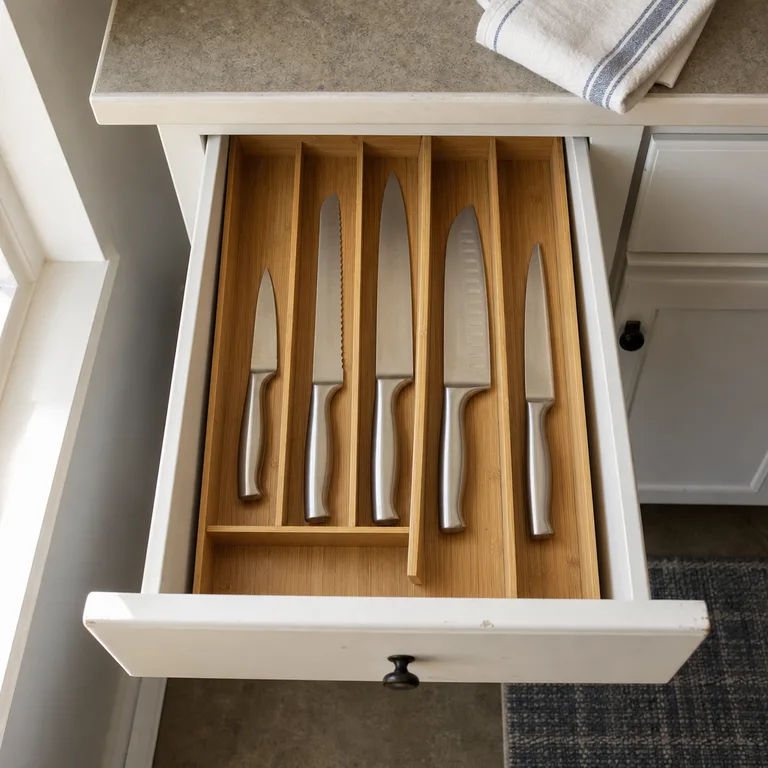
Choose an insert made specifically for knives and compare its slot layout with the knives that are actually kept. Check the drawer’s interior depth, usable width, and clearance below the counter, especially in shallow drawers where taller handles may keep the drawer from closing.
Worth knowing: This only works well when the drawer and the insert both fit the knife collection; oversized knives or crowded slots can make safe retrieval difficult.
2.Pair individual blade sheaths with a divided drawer
Individual blade sheaths allow a small knife collection to share a utility drawer without leaving sharp edges exposed. A divided layout stops handles, utensils, and sheathed knives from shifting into one tangled pile.
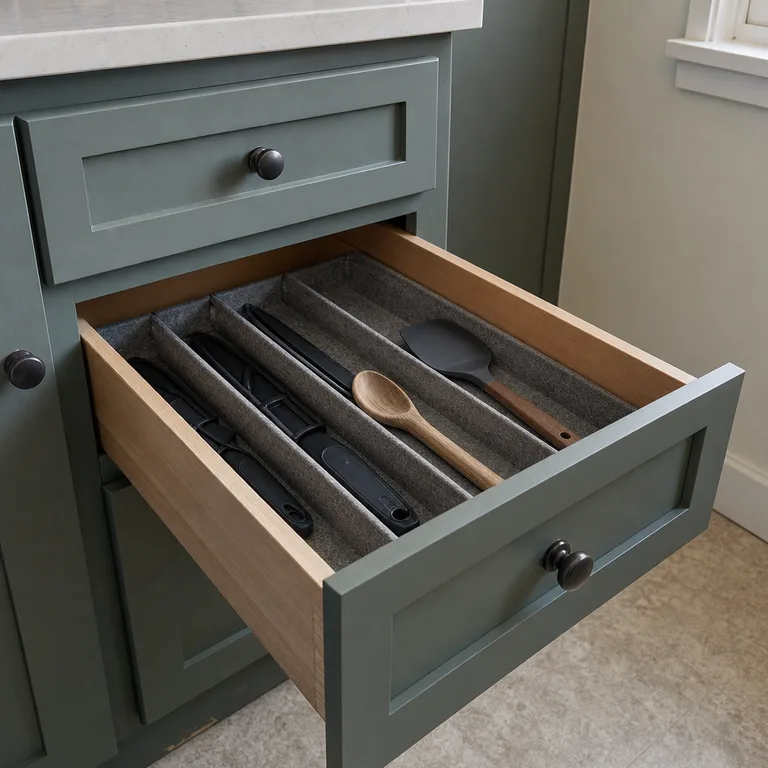
Use guards made for kitchen knives and match each sheath closely to the blade it covers. Set dividers so there is room to grasp handles without reaching across other items, and keep the drawer lightly packed enough that nothing catches as it opens.
Worth knowing: Every knife needs a snug, intact sheath, and this approach is less convenient when the drawer is frequently overfilled with other tools.
3.Mount a purpose-made magnetic knife strip on a clear wall section
A purpose-made magnetic strip turns an unused wall or backsplash section into knife storage without taking up drawer or counter space. Keeping each knife visible can also make it easier to return the right tool to the same spot.
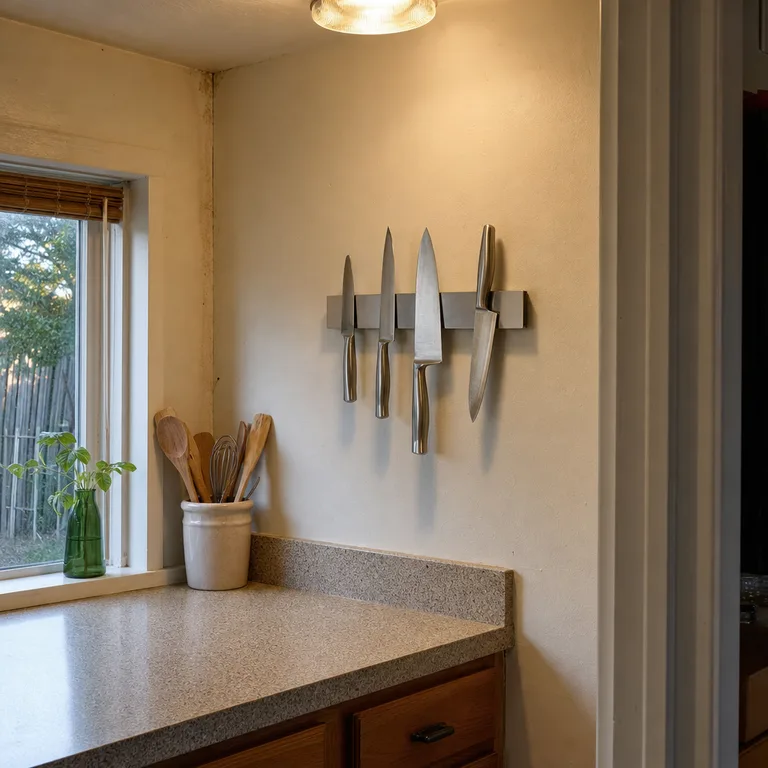
Fasten the strip according to its mounting instructions, using suitable anchors or studs for the wall construction. Place it away from a busy walkway, sink splashes, and the reach of young children, with enough open space around it to lift knives off safely rather than pulling them sideways into nearby objects.
Worth knowing: A wall strip leaves knives visible and requires secure installation, so it may not suit rentals, homes with young children, or narrow passageways.
4.Fit an approved knife rack inside a cabinet
An inside-cabinet rack stores knives behind a closed door, freeing both the countertop and a drawer. It can be especially useful in a small kitchen where lower drawers are needed for pots, dishes, or food storage.
Use a rack designed for the specific cabinet location, whether it mounts to a door or an interior side panel. Confirm that shelf contents, hinges, and the cabinet door all clear the handles, then install it firmly using the maker’s instructions so the rack does not loosen with repeated opening.
Worth knowing: Cabinet-door racks can interfere with shelves or door movement, and installation may be unsuitable for thin cabinet doors or rental cabinetry.
5.Store a small set in a compact enclosed knife case
A compact enclosed case keeps a limited set of knives contained when daily access is less important than keeping blades out of sight. It fits well on a high cabinet shelf or in a lightly used drawer, and it can also make an occasional move or shared kitchen setup more orderly.
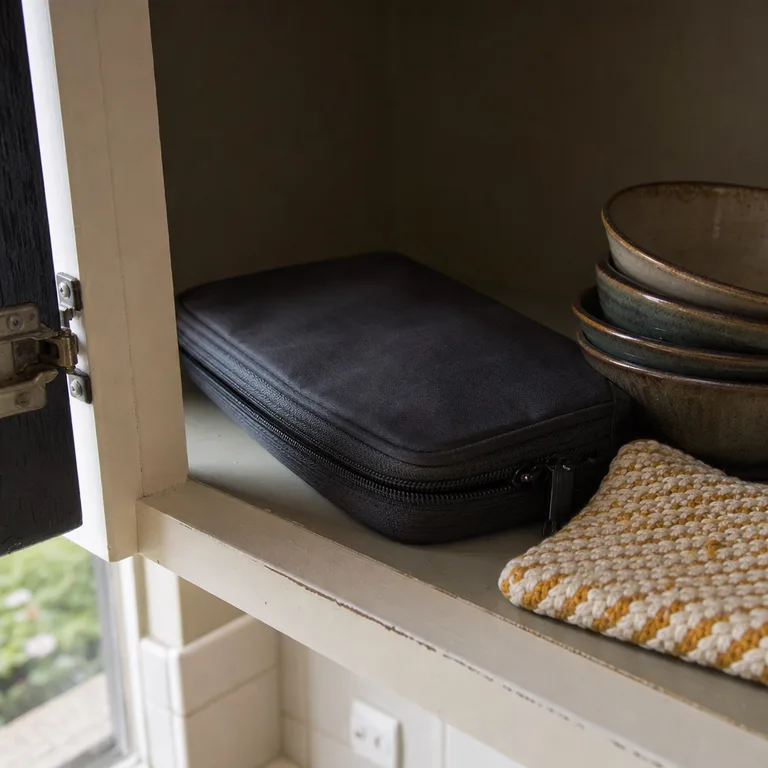
Choose a case with separate protected compartments or sleeves rather than placing uncovered knives together. Keep it in a stable, dry location and reserve it for knives that do not need to be grabbed during every meal-prep task.
Worth knowing: Opening and closing a case adds a step, so it is generally less practical for the knife used most often.
6.Choose a horizontal drawer knife tray for shallow storage
A horizontal knife tray stores blades flat in separate channels, making good use of a wide, shallow drawer that cannot accommodate an upright insert. The layout keeps handles visible and avoids devoting countertop space to a block.
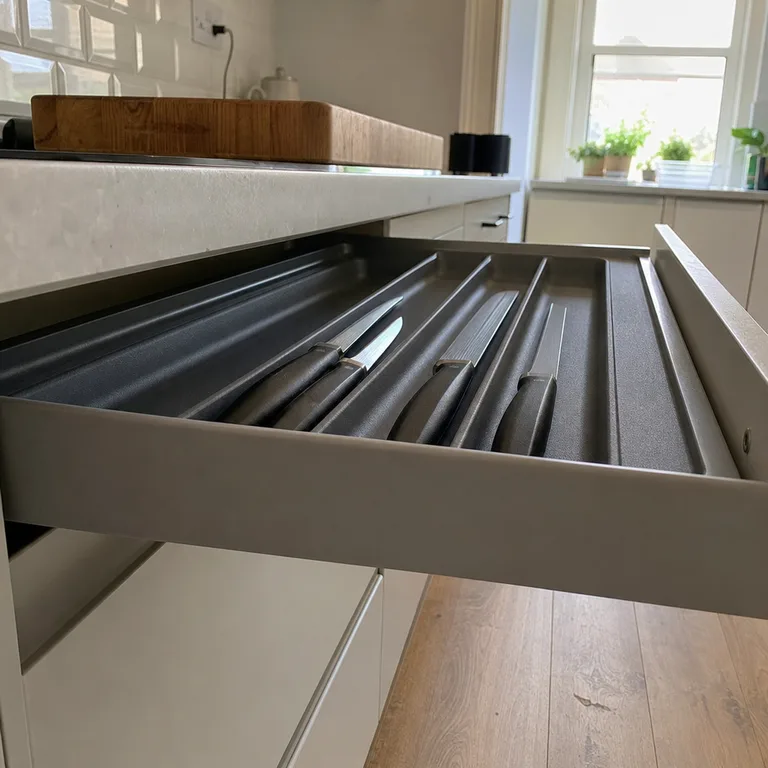
Select a tray made for knife storage, then measure the drawer’s inside width and the longest knife before committing to a layout. Leave enough room for the drawer to close fully, and avoid adding loose utensils on top of the tray where they could obstruct the channels.
Worth knowing: A horizontal tray needs a relatively wide drawer and may not hold long knives if the drawer is short from front to back.
About the author
Dana Ruiz, Senior editor
Dana writes about small-space living, storage and low-cost decorating.
Keep reading
9 Kids' School Paper Organization Ideas That Separate Forms From Keepsakes
October 31, 2026
7 Remote Control Storage Ideas for a Shared Living Room
October 29, 2026
8 Belt Storage Ideas That Fit an Existing Bedroom Closet
October 29, 2026
8 Christmas Gift-Wrapping Stations That Pack Away in a Small Home
October 31, 2026