10 Jewelry Storage Ideas That Fit Inside an Existing Bedroom Drawer
A bedroom drawer can hold a small jewelry collection neatly when each type has its own shallow, soft-sided zone. These ideas use removable organizers and simple inserts, so the arrangement can change as the collection does without adding a vanity or wall display.
As an Amazon Associate I earn from qualifying purchases.
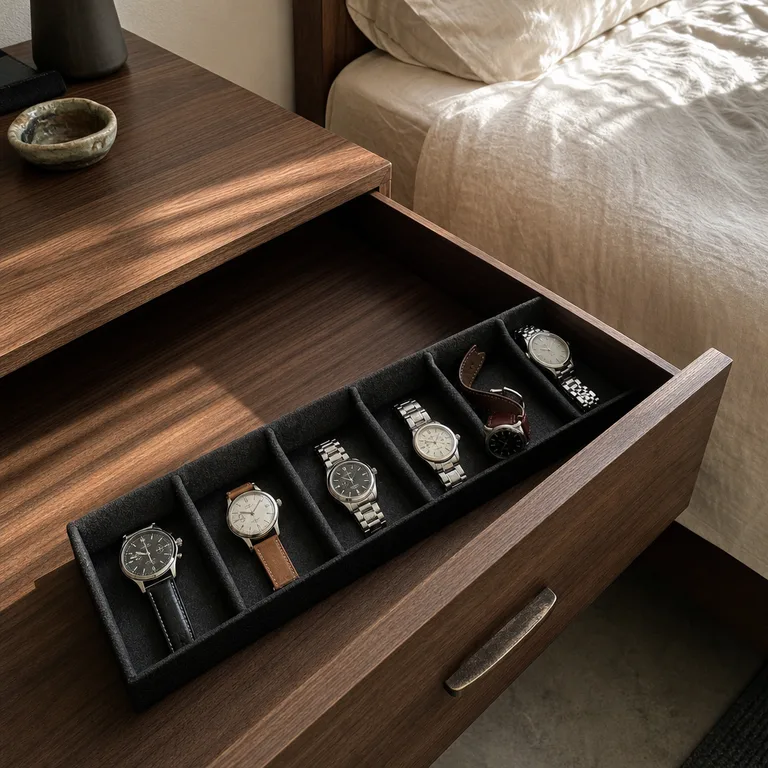
1.Add a shallow compartment tray for mixed small pieces
A low compartment tray gives rings, pendants, pins, and small earrings separate places without taking over the whole drawer. It makes small pieces easier to see at a glance and stops loose items from sliding into one another whenever the drawer opens.
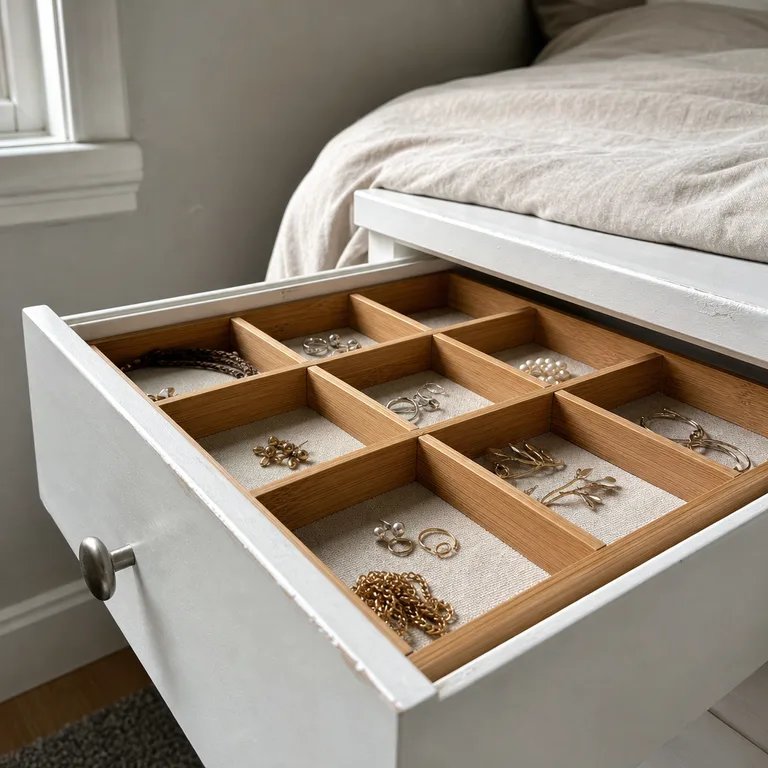
Choose a tray that leaves room for the drawer to close and use a soft liner beneath it if the drawer bottom is rough. Reuse a small divided box or tray already at home, or add simple dividers to create sections sized for the pieces that tend to get lost.
Worth knowing: A compartment tray works best for small pieces; long chains and wide bracelets need a different kind of storage.
2.Use a soft ring roll along one drawer edge
A narrow ring roll uses an unused strip along the side or front of a drawer. Keeping rings upright makes it easier to choose one without moving the rest of the collection.
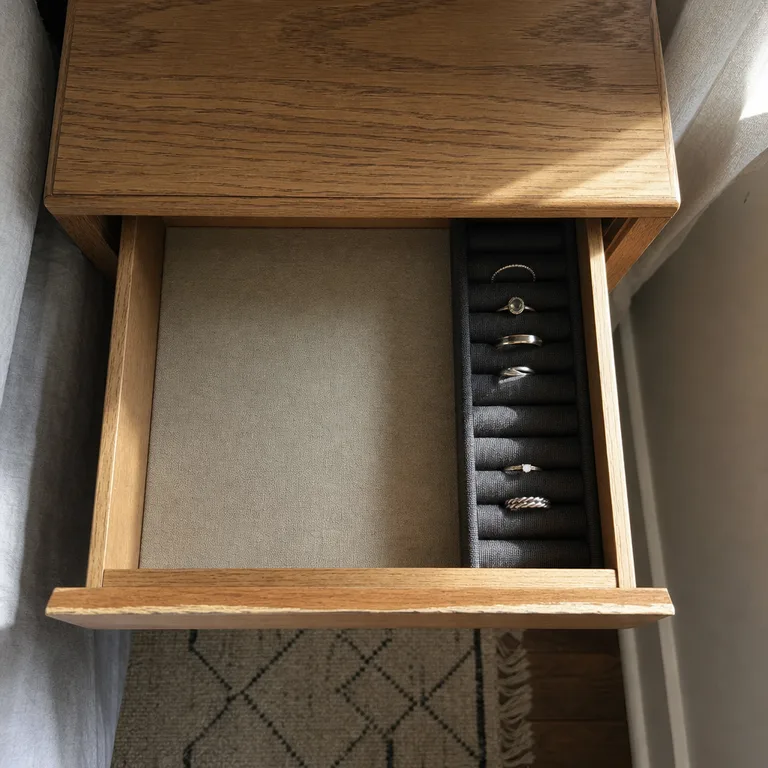
Use a removable fabric roll rather than a fixed insert so the layout can change later. Check that the material is smooth and nonabrasive, and leave enough clearance above the rings for the drawer to shut without catching.
Worth knowing: Very wide bands or tall settings may not fit securely in the narrow slots of a standard ring roll.
3.Store each necklace in its own flat sleeve
Place one necklace in each flat fabric pouch or sleeve, fastening the clasp and laying the chain as straight as possible. This separates chains that would otherwise knot together in a shared tray.
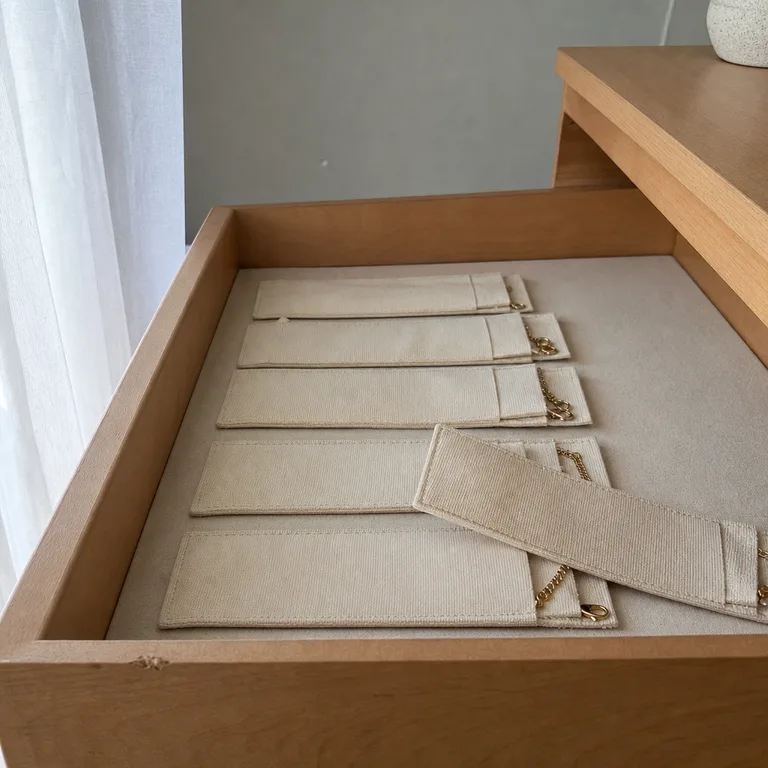
Arrange the sleeves in one layer so they can be lifted out individually. Soft pouches already used for gifts or small accessories can work, provided the fabric is clean and does not have rough seams or hardware inside.
Worth knowing: This method takes more drawer surface than storing several necklaces together, so it suits a small collection best.
4.Stand earring cards in a small lidded box
Mount paired studs and lightweight drop earrings on individual cards, then stand the cards in a small divided box. The box keeps tiny backs and hooks contained while the upright rows make each pair easier to find.
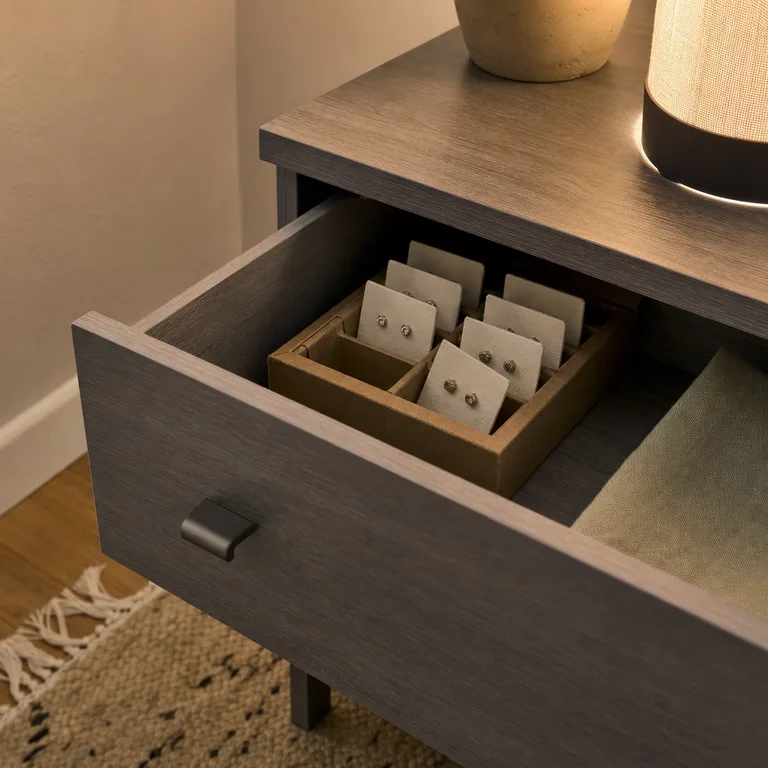
A reused small gift box can work when fitted with simple dividers or folded card strips. A lid is useful in a drawer shared with other items because it protects the cards from being disturbed when the drawer is opened quickly.
Worth knowing: Large hoops and heavy statement earrings may bend the cards or need wider individual compartments.
5.Make one padded row for watches
Give watches one dedicated row with soft dividers between them. Separating metal bracelets, leather straps, and watch faces reduces the chance that they will rub together in a loose pile.
A low felt divider insert is usually enough for watches laid flat or loosely fastened. Keep the row near the back or side of the drawer if daily jewelry needs the most accessible space at the front.
Worth knowing: Watches with rigid or bulky bands may need more depth than a shallow drawer can provide.
6.Group occasional pieces in small travel cases
Small zip cases keep matching occasion pieces together, such as earrings and a necklace worn for formal events. Storing these cases at the back of the drawer clears the front area for jewelry used through the week.
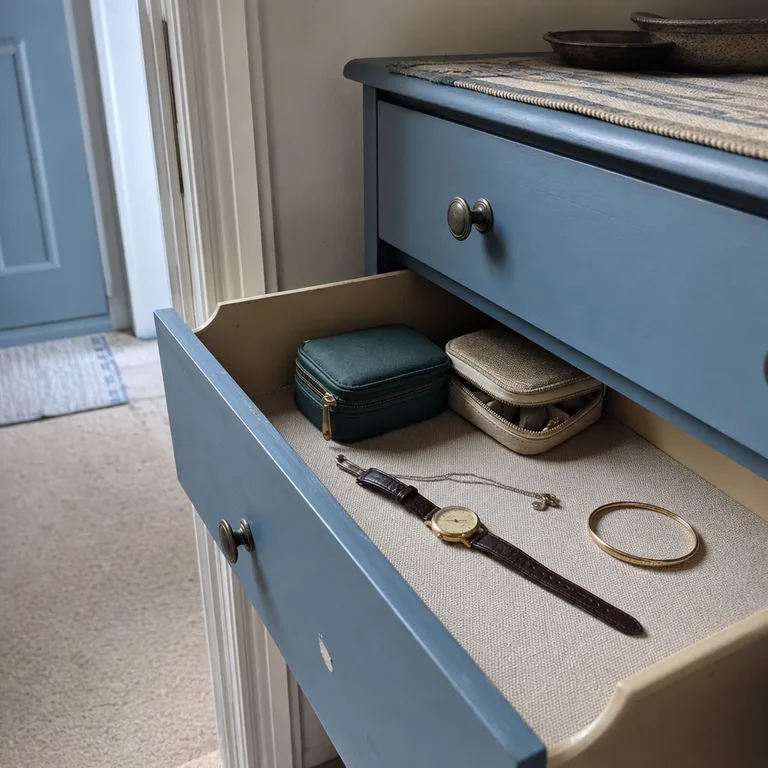
Reuse compact travel cases that have soft interiors and working closures. Group pieces by outfit or event rather than by metal if that makes the collection quicker to use, but avoid overfilling each case.
Worth knowing: Travel cases can hide items from view, so they are better for pieces used occasionally than everyday favorites.
7.Give delicate pieces individual soft pouches
Store delicate jewelry one item at a time in soft pouches, especially pieces with pearls, fragile stones, fine chains, or easily marked surfaces. Individual storage prevents hard edges and clasps from contacting more vulnerable pieces.
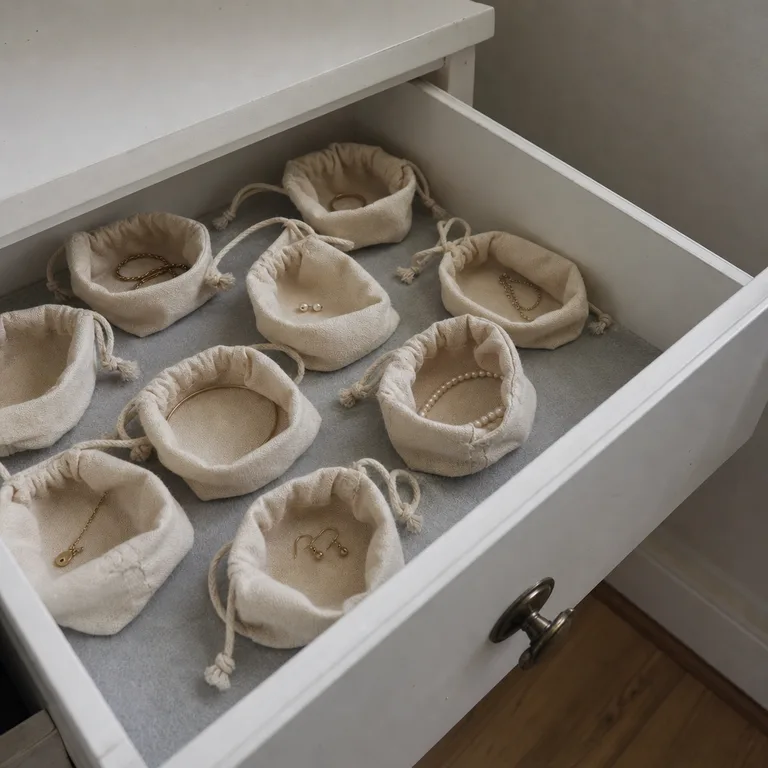
Cotton or soft fabric pouches can be arranged in a loose grid inside the drawer, with a label added outside if needed. Follow the care guidance for each material, since some jewelry should be stored differently depending on its metal, stone, setting, or finish.
Worth knowing: Pouches protect pieces from contact but make it less convenient to see the full collection at once.
8.Set removable dishes aside for everyday pairs
Use a few small shallow dishes near the front of the drawer for the rings, earrings, and necklace worn most often. The dishes act as simple catchalls, and they can be lifted out while getting ready rather than searched through.
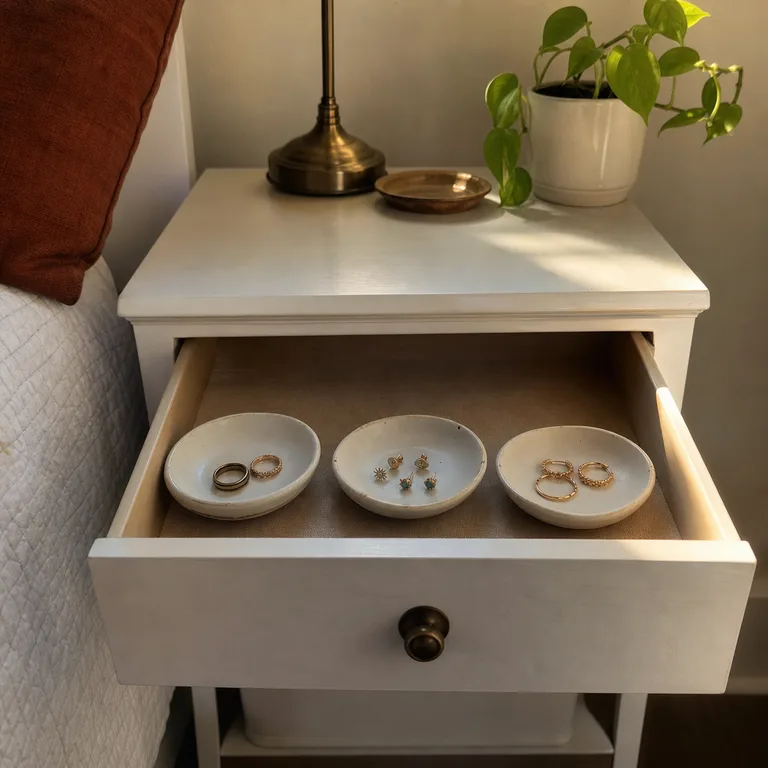
Choose low dishes with smooth interiors and enough space between them that jewelry does not overlap. Repurpose small ceramic dishes already on hand, but avoid tall bowls that can block the drawer from closing.
Worth knowing: Open dishes are best for a few daily items and will not prevent pieces inside the same dish from touching.
9.Use fabric-lined cushions for structured watches
Fabric-covered watch cushions support watches with firm bands and help them keep a tidy shape in a deeper drawer. Place each cushion in a low tray or insert so the watches stay separated rather than rolling together.
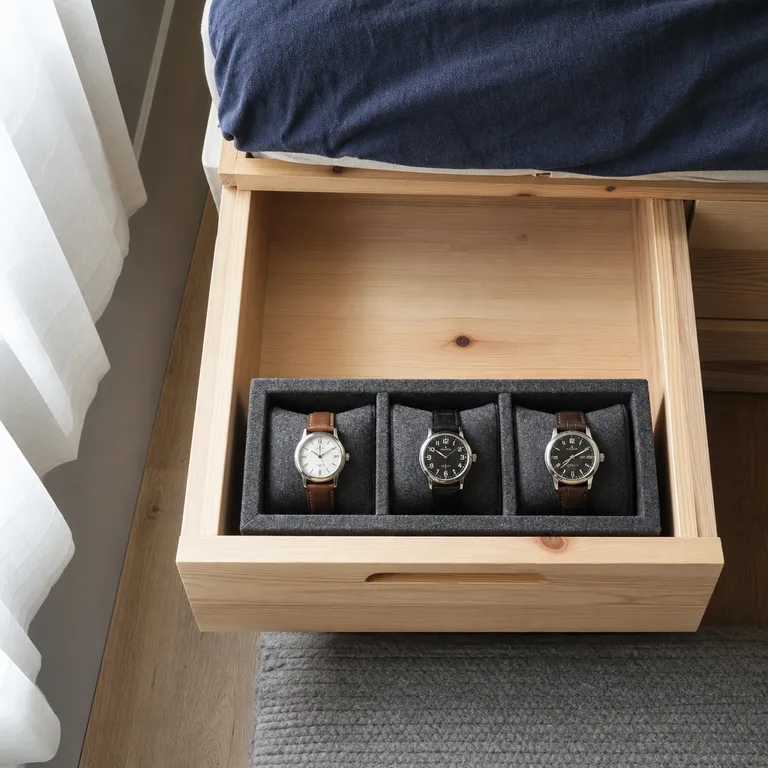
Test the drawer carefully after arranging the cushions, since the watch face and band need clear space above them. A removable insert is easier to adjust than building a permanent holder into the drawer.
Worth knowing: This setup only works when the drawer has enough depth to close without pressing on the watches.
10.Line up bracelets in low padded channels
Low padded channels keep bangles, chain bracelets, and cord styles in parallel rows instead of overlapping. The layout makes individual bracelets easier to lift out and stops a stack from shifting across the drawer.
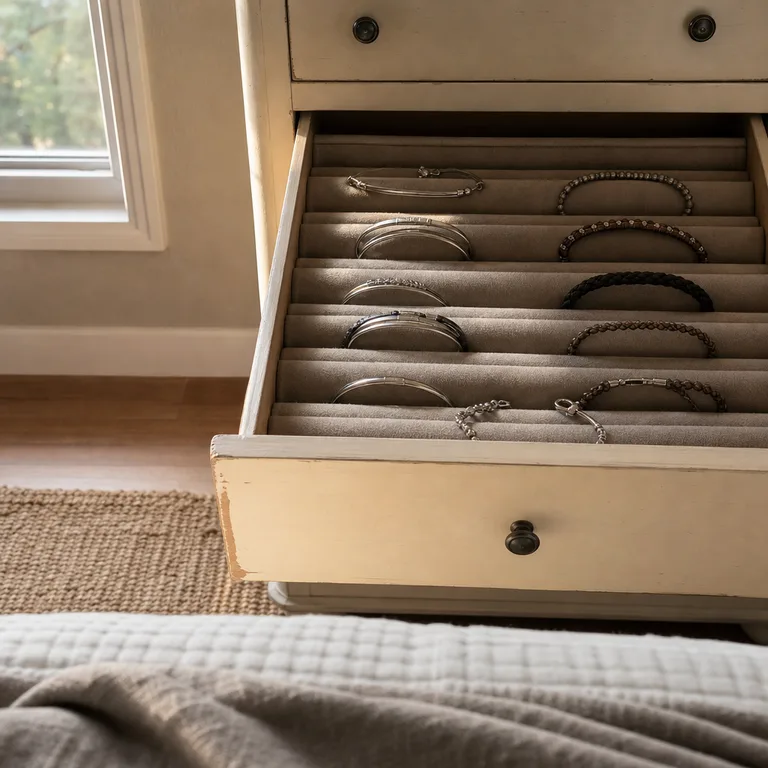
Use a shallow channel insert sized to the drawer, or create low rows with soft dividers and a nonabrasive liner. Keep the channels below the drawer edge and test the closure, particularly with chunky cuffs or bracelets that have raised clasps.
Worth knowing: Very wide cuffs and irregularly shaped bracelets may not sit flat enough for low channels.
About the author
Dana Ruiz, Senior editor
Dana writes about small-space living, storage and low-cost decorating.
Keep reading
9 Kids' School Paper Organization Ideas That Separate Forms From Keepsakes
October 31, 2026
7 Remote Control Storage Ideas for a Shared Living Room
October 29, 2026
8 Belt Storage Ideas That Fit an Existing Bedroom Closet
October 29, 2026
8 Christmas Gift-Wrapping Stations That Pack Away in a Small Home
October 31, 2026