8 Bath Toy Storage Ideas That Leave Room for Toys to Drain
Bath toys need open storage that lets water escape without taking over the shelves and drawers used for dry toiletries. These eight setups keep the two categories apart while making it easier to rinse, drain, and put toys away after bath time.
As an Amazon Associate I earn from qualifying purchases.
1.Use a purpose-made scoop basket beside the tub
Mount or place a scoop-style basket beside the tub so toys can be gathered in one motion at the end of bath time. Drainage holes let excess water leave the toy group rather than collecting in a solid bin.
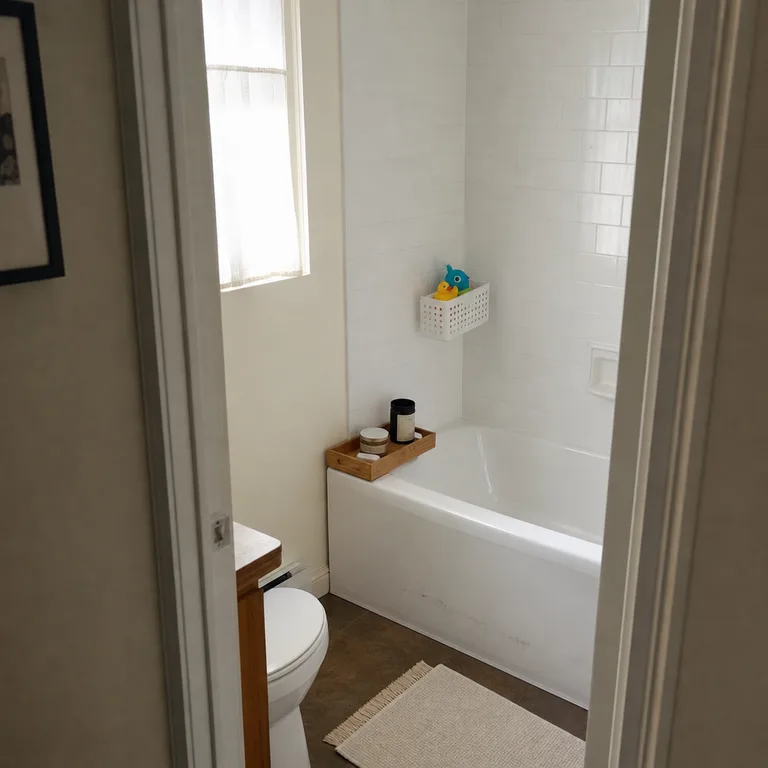
Keep toothbrushes, creams, and other dry toiletries on the vanity or in a separate tray well outside the splash zone. A scoop basket is a simple choice for young children because it makes cleanup part of the routine without requiring them to sort every toy.
Choose a removable model that can be rinsed and cleaned separately, and follow its mounting directions for tile, fiberglass, or painted walls. Reusing a small perforated kitchen or utility basket can work if its edges are smooth and it can be secured safely.
Worth knowing: Adhesive-mounted baskets may loosen on textured tile, damp walls, or surfaces that are not cleaned and dried as directed.
2.Hang a ventilated mesh holder where it can drip into the tub
A mesh holder keeps wet toys visible and exposed to air while allowing drips to fall back into the tub. Hang it where it does not block the faucet, grab bar, or the area adults need to use while bathing a child.
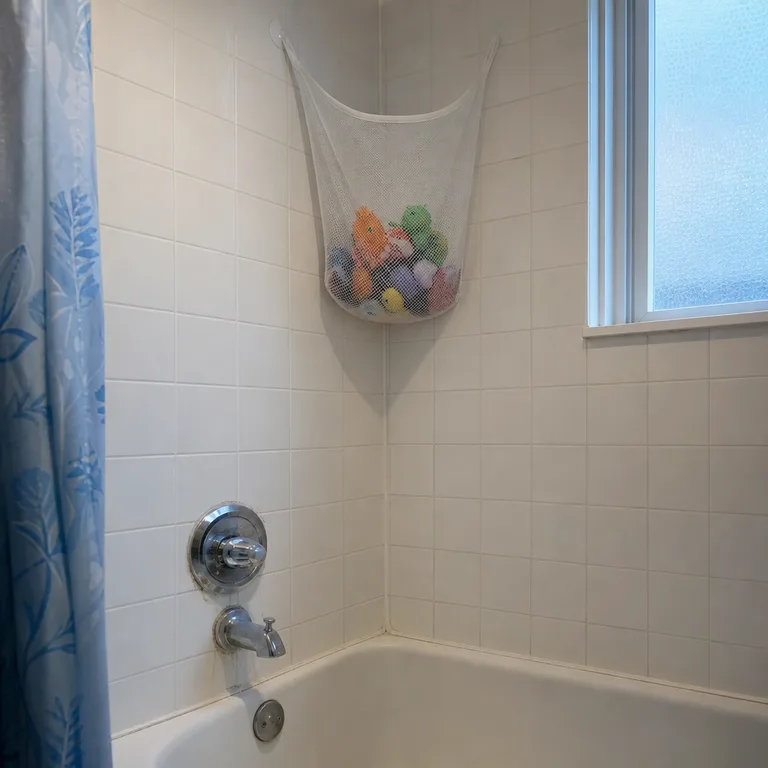
This setup preserves the medicine cabinet, vanity, and under-sink storage for dry goods. It also works well for a small collection of lightweight toys that can be spread out instead of packed into a deep container.
Use hooks and a holder rated for bathroom conditions, following the manufacturer’s instructions for the wall surface. Take the mesh down regularly to rinse it, since soap residue can collect in the fabric even when the toys drain well.
Worth knowing: Mesh can sag with a large toy collection and may take longer to dry in a bathroom with limited ventilation.
3.Set a perforated removable caddy on a drain tray
Use a perforated caddy for wet toys and place it on a shallow drain tray at one end of the vanity or another protected surface. The open sides help water escape, while the tray contains drips instead of letting them sit directly on the counter.
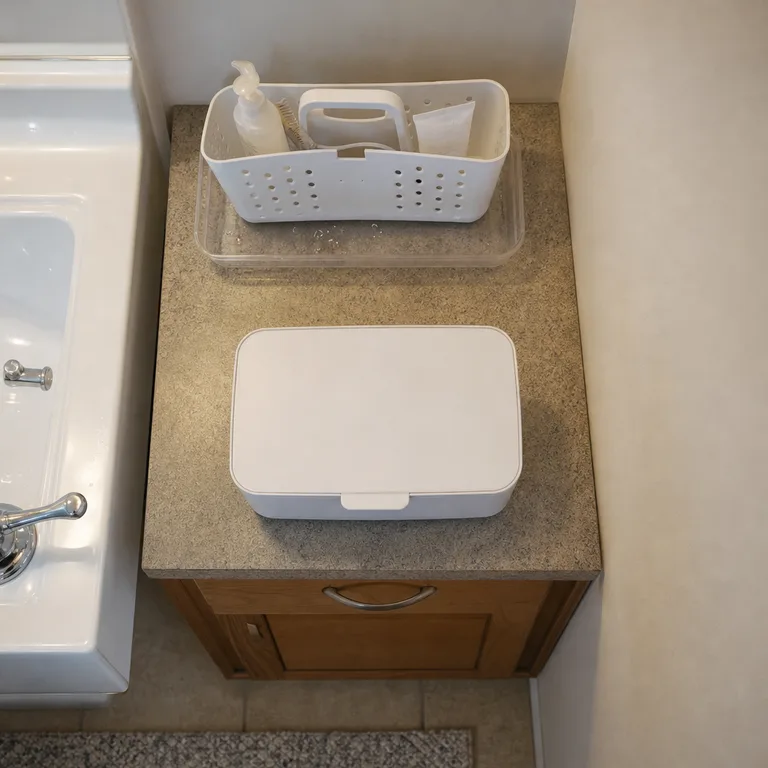
A lift-out caddy makes cleaning less awkward than wiping around a fixed organizer. Keeping a closed toiletry bin at the other end of the counter creates a clear wet-and-dry division in a small bathroom.
Look for a caddy with smooth plastic surfaces and handles that are easy to rinse. Empty the tray after use and dry the counter beneath it, especially if the vanity is laminate, wood, or another material that can be damaged by standing water.
Worth knowing: This arrangement uses valuable counter space and needs frequent tray emptying to avoid pooled water.
4.Add a small hanging basket to an open wall section
A compact open-wire basket can hold a limited set of toys off the floor without taking space from the vanity or towel cabinet. Its open construction gives the toys airflow and makes it easy to see when the basket needs to be emptied and cleaned.
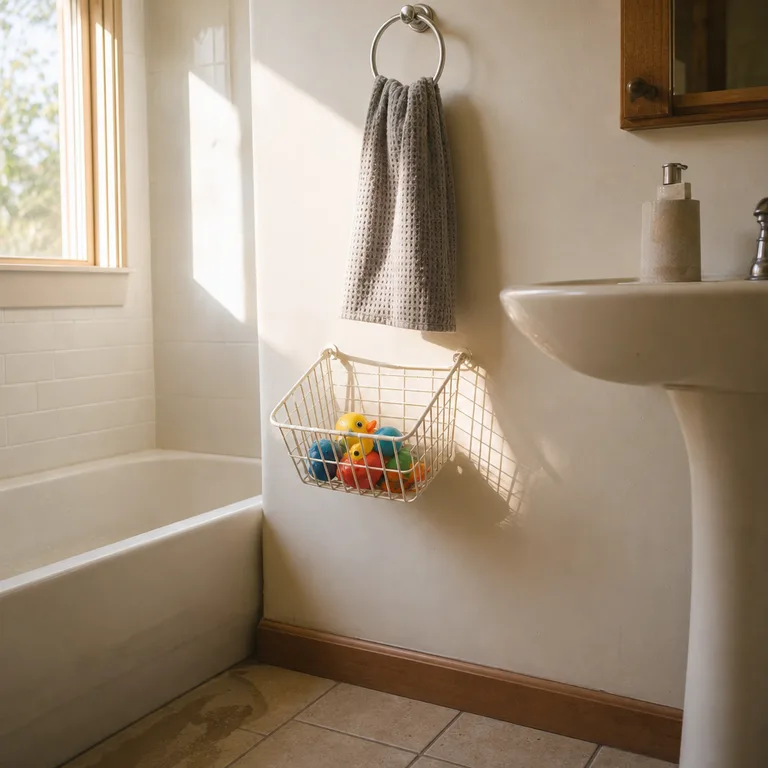
Place it on an open wall section away from towel hooks so wet toys do not brush against dry linens. Keeping the collection intentionally small prevents a wall basket from becoming heavy, crowded storage.
Match the mounting hardware to the wall type and the basket’s intended load. A basket that can be lifted from its bracket is easier to wash, while a removable liner should not trap water underneath the toys.
Worth knowing: Wire baskets need secure mounting, and renters may be limited by rules against drilling into tile or drywall.
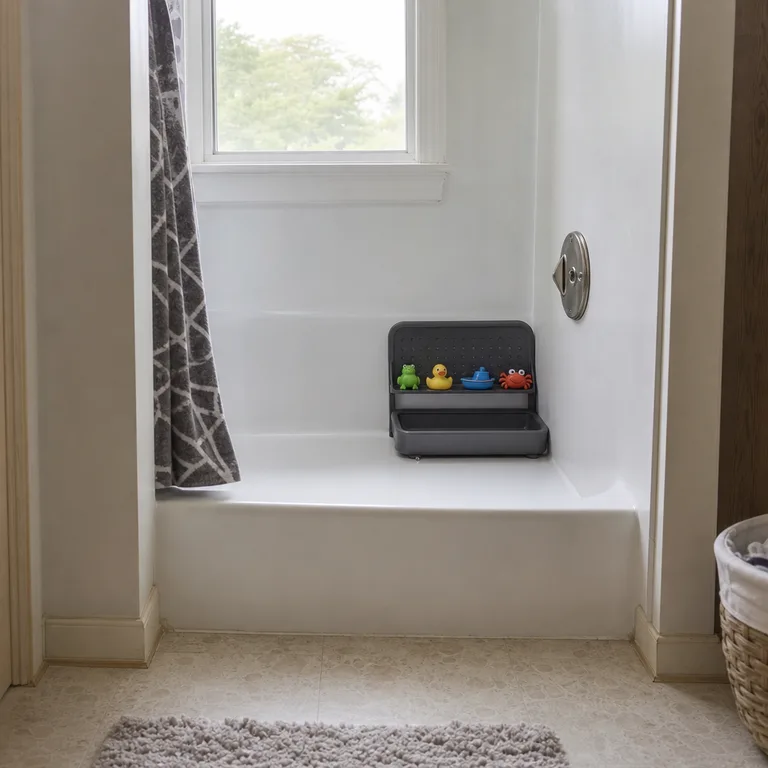
5.Place a freestanding drain tray in an unused tub corner
A low drain tray in a quiet tub corner gives wet toys a designated place without moving them onto the bathroom counter. Raised sections hold toys above the catch basin so water can run off after they have been rinsed.
This is useful when wall mounting is not practical or allowed. The toys stay inside the bathing area, while under-sink bins and cabinets remain available for dry supplies such as backup soap and toilet paper.
Choose a tray that sits steadily on the tub surface and can be lifted out for cleaning. Rinse the tray and empty any collected water often, particularly in bathrooms with hard water or slow drying conditions.
Worth knowing: A tray inside the tub must be moved or positioned carefully so it does not interfere with bathing, cleaning, or safe footing.
6.Sort rinse-ready toys in a divided basket
A divided basket separates small squeeze toys from cups, boats, and larger pieces. That makes it easier to rinse each group and prevents small items from disappearing beneath a pile of bulkier toys.
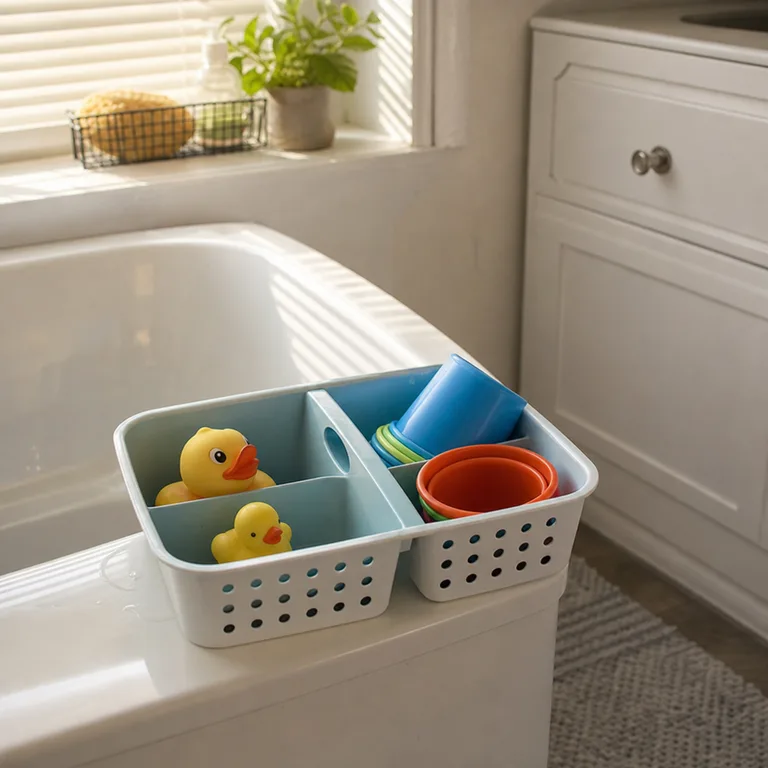
Set the basket on a tub ledge only while it is stable and out of the way, or move it to a secure draining spot after the bath. With toys grouped in one removable container, the vanity drawer and cabinet can stay reserved for toiletries that need to remain dry.
Use simple dividers rather than tightly fitted compartments, which can be harder to clean. Check squeeze toys individually for retained water according to their cleaning instructions, since an open basket improves drainage around toys but cannot clean their interiors.
Worth knowing: A divided basket adds sorting steps, which may not suit a rushed evening routine or very young children cleaning up independently.
7.Choose a tub-edge organizer made for the rim
A tub-edge organizer made to fit the rim keeps a few toys within reach and allows water to drain back into the bath. It separates toys from the closed cabinet where dry toiletries, medicines, or grooming supplies may be stored.
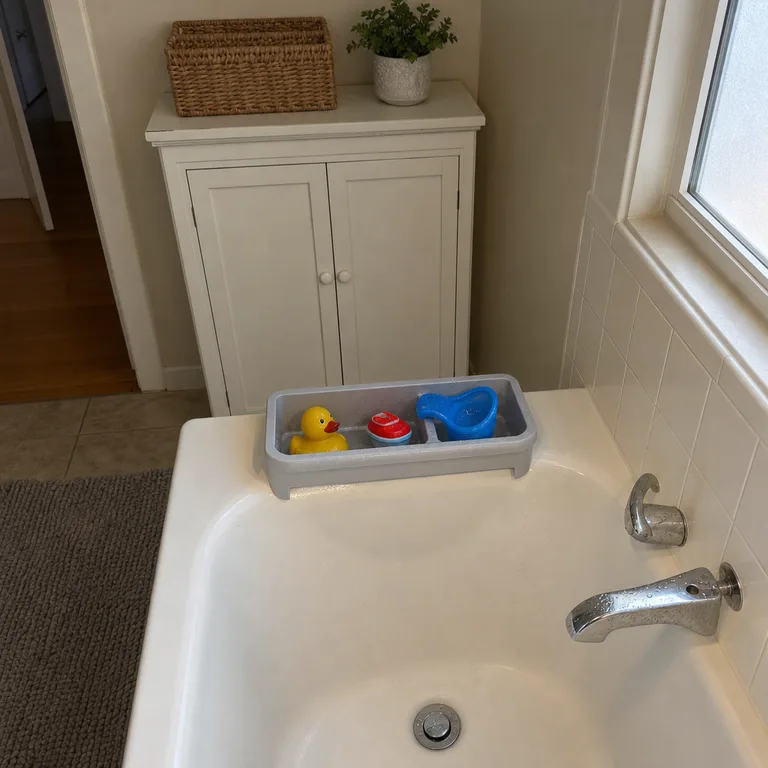
Choose one designed for the shape and thickness of the tub rim rather than balancing a general storage bin across the edge. A small organizer also helps limit the number of toys left in the bathroom at one time.
Follow the stated attachment and weight instructions, and check that the organizer does not shift when toys are removed. Clean beneath it regularly because water and soap film can collect where plastic rests against the tub surface.
Worth knowing: Not every organizer fits every tub, particularly tubs with narrow, curved, textured, or sloped rims.
8.Keep only a rotating selection in the bathroom
Keep a small active set of toys in an open draining bin near the tub, and store clean, dry extras elsewhere. Fewer toys around the bath leave more room for family toiletries and make it easier to notice when an item needs rinsing or cleaning.
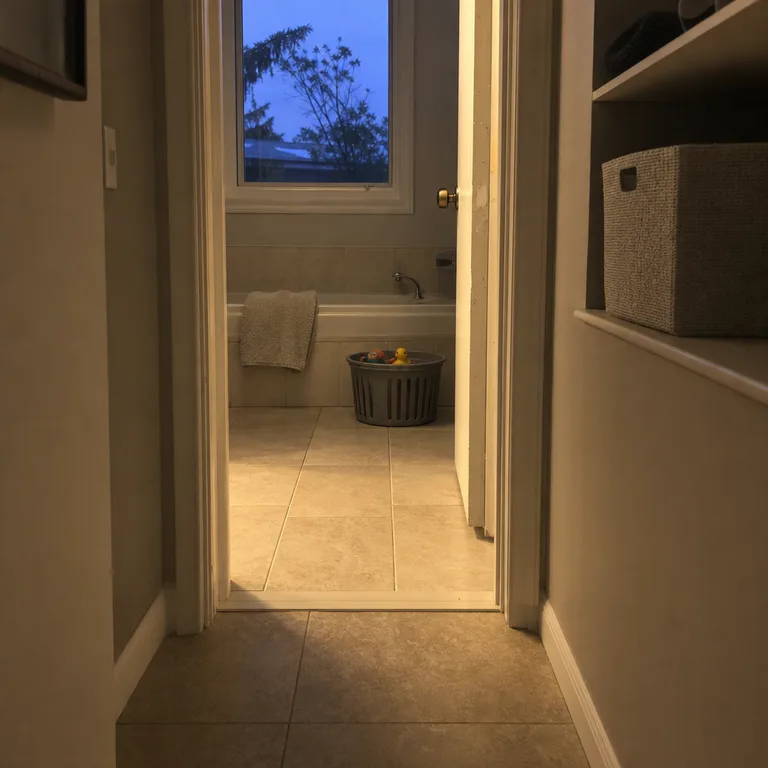
Rotate the selection every so often rather than trying to fit the whole collection into one wet storage spot. A labeled closet bin outside the splash-prone bathroom can hold the extras once they are fully dry.
Use a slotted or perforated bin for the active set, and choose a separate dry container for stored toys. This approach is especially helpful in a shared bathroom where the floor and counter need to stay clear for daily use.
Worth knowing: Extra toys need a dry storage location outside the bathroom, which may be difficult in homes with very limited closet space.
About the author
Dana Ruiz, Senior editor
Dana writes about small-space living, storage and low-cost decorating.
Keep reading
8 Hair Tool Storage Ideas for a Small Bathroom After Tools Cool
October 17, 2026
7 Christmas Tree Base Covers That Work With the Stand You Already Have
October 17, 2026
7 Christmas Morning Gift-Opening Setups for a Small Living Room
October 17, 2026

7 Small Living Room Layout Adjustments That Keep Windows Easy to Open
October 17, 2026