10 Thanksgiving Centerpiece Ideas Using Everyday Dishes
A low Thanksgiving centerpiece can come together from everyday bowls, trays, linens, fruit, and pantry ingredients without taking over a compact dining table. Each arrangement stays easy to lift aside for serving, keeps sightlines open, and uses a shallow footprint suited to an ordinary kitchen table.
As an Amazon Associate I earn from qualifying purchases.
1.Layer a Shallow Serving Tray With Mini Bowls of Fruit
Set a few small bowls of apples, pears, clementines, or nuts on a flat serving tray. Tuck a folded napkin beneath one bowl or along the tray edge to bring in autumn color without raising the arrangement.
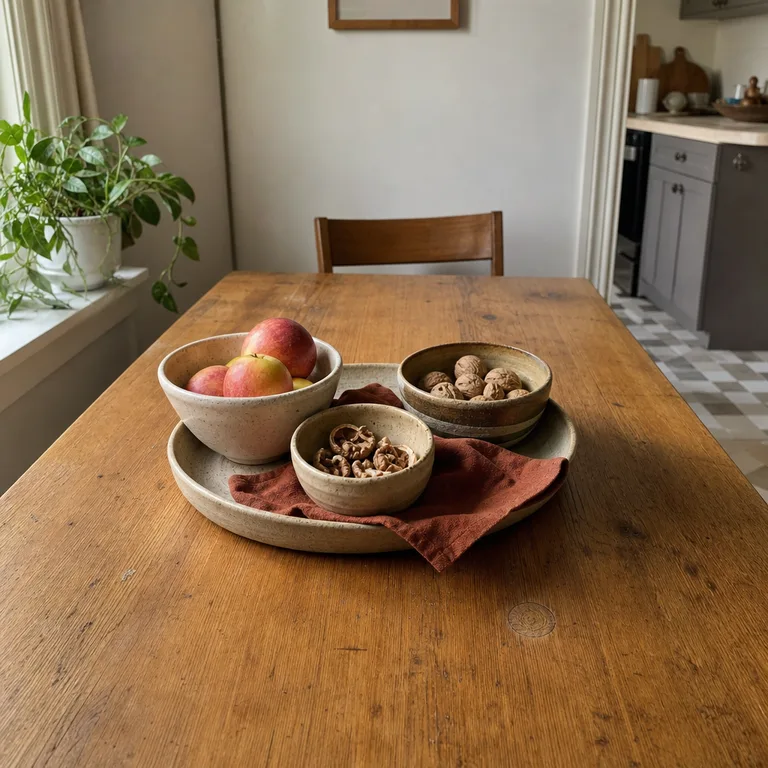
The tray keeps several loose pieces looking intentional, while the bowls add texture without blocking anyone across the table. Use fruit that will be served later, and choose a tray with a stable base so the whole centerpiece can move to a counter when platters come out.
Worth knowing: Skip very round fruit on a shallow tray unless the bowls contain it securely; loose apples and pears can roll when the tray is carried.
2.Use a Pie Plate as a Low Candle and Greenery Base
Place short unscented candles in a spare pie plate and arrange a loose ring of clipped branches or faux greenery around them. Keeping the candles low makes the table feel warm without putting a visual barrier between guests.
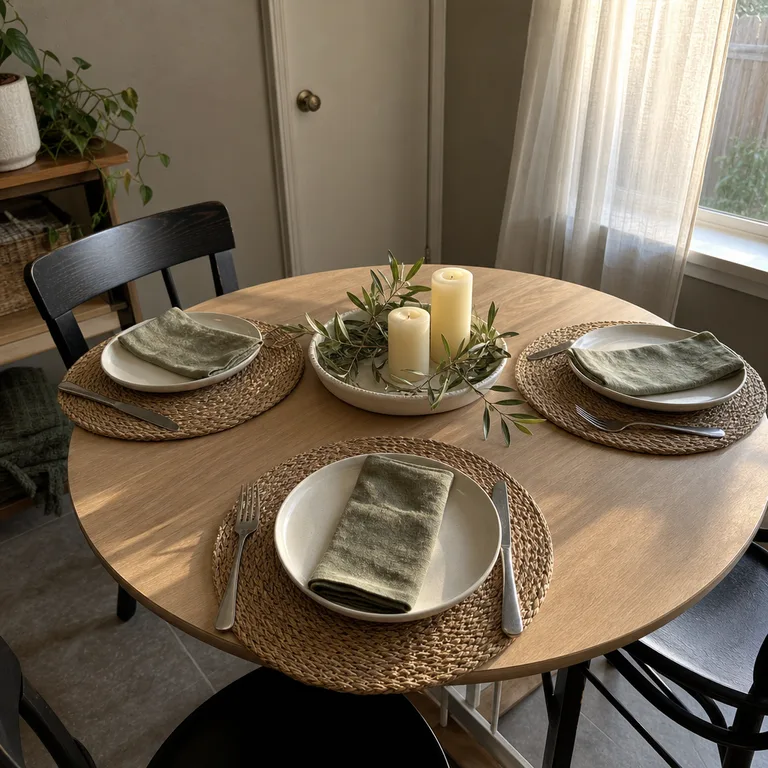
A pie plate gives wax drips, leaves, and small stems a clear boundary, which is useful on a small table. Cut branches from a landscape only where permitted, or use a few reusable faux stems instead of buying a large bouquet.
Worth knowing: Never leave candles unattended, and keep dry leaves and greenery far enough from flames to prevent a fire hazard.
3.Fill a Mixing Bowl With Squash and a Folded Tea Towel
Use a broad mixing bowl to hold a small group of squash, gourds, or sturdy seasonal fruit. Fold a checked or solid tea towel under the bowl, letting a little fabric show around the base.
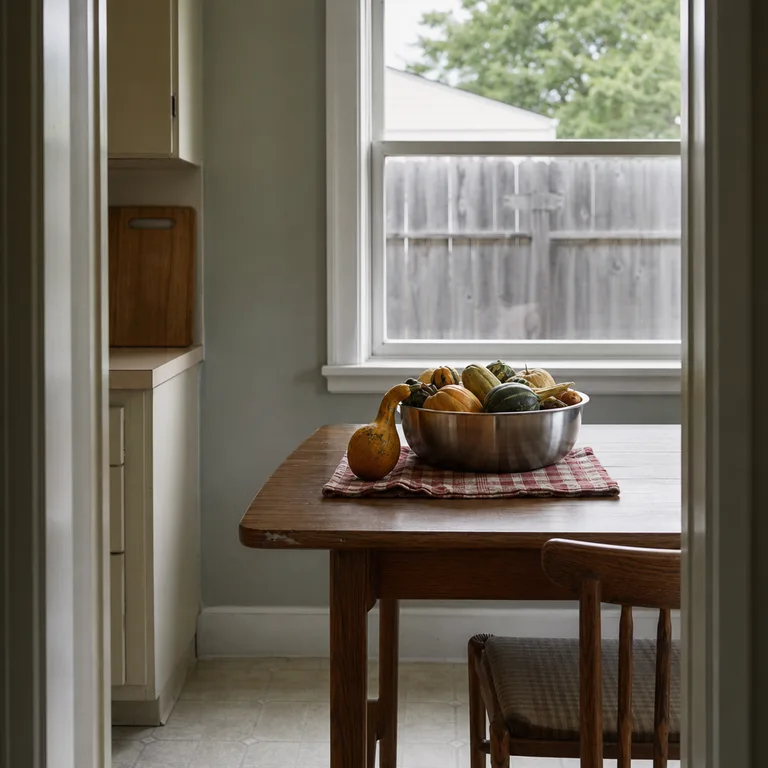
The bowl contains irregular shapes that would otherwise scatter across the table, and its weight helps the centerpiece stay put. A mixing bowl already has a casual kitchen look that suits an ordinary Thanksgiving meal and can return to food prep after the holiday.
Worth knowing: Real squash can show soft spots over time, so inspect it before setting the table and avoid using anything damp or deteriorating.
4.Arrange Pantry Jars on a Wooden Cutting Board
Group a few clean pantry jars filled with dried beans, lentils, popcorn kernels, or cinnamon sticks on a wooden cutting board. Choose jars of different widths rather than dramatically different heights to keep the display low.
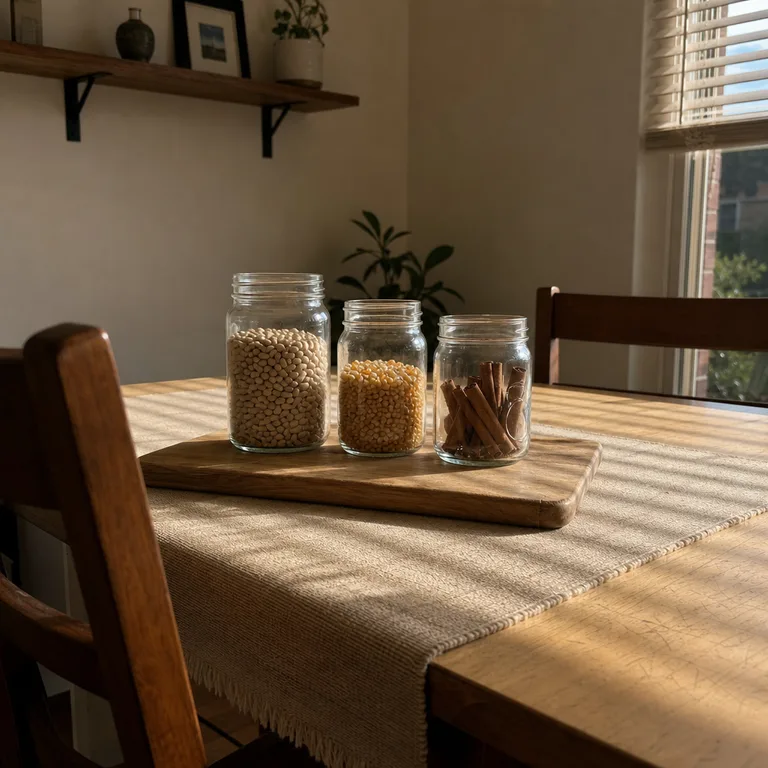
The clear glass brings warm, natural color to the table without requiring flowers or specialty decor. A scratched cutting board also grounds the jars and makes the cluster easy to shift when serving dishes need the space.
Use ingredients that are still fresh enough for the kitchen, then return them to the pantry after the meal. A linen napkin or runner beneath the board softens the look if the tabletop feels bare.
Worth knowing: Avoid using jars with loose or poorly fitting lids if the centerpiece may be moved around children, pets, or a crowded table.
5.Turn a Rimmed Baking Sheet Into a Candle Tray
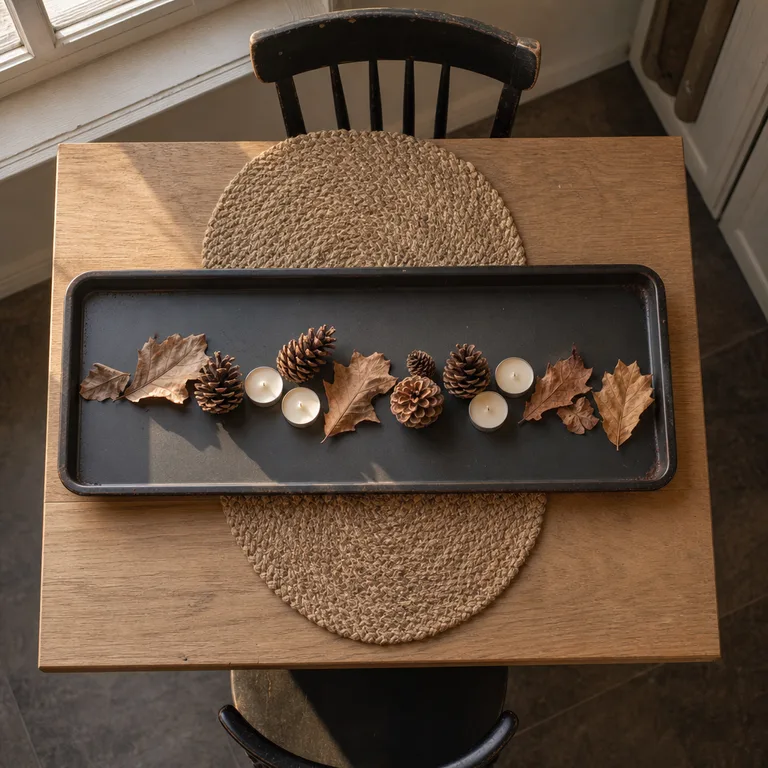
Lay a small rimmed baking sheet lengthwise in the center of the table and fill it with tea lights, pinecones, and a few dry leaves. The raised edge keeps the arrangement contained and gives the tray a practical, unfussy look.
This works especially well on a narrow table because the pieces can form a low line instead of a wide cluster. An older baking sheet with a little wear is fine here; it reads as useful kitchenware rather than something that needs to look perfect.
Worth knowing: Tea lights still need heat-safe spacing and supervision, and dry leaves or pinecones should not touch the candle cups.
6.Nestle Mini Pumpkins in a Colander
Fill a metal or ceramic colander with mini pumpkins and place it over a folded linen napkin. Let the handles stay visible so it looks like a useful kitchen piece rather than a permanent display.
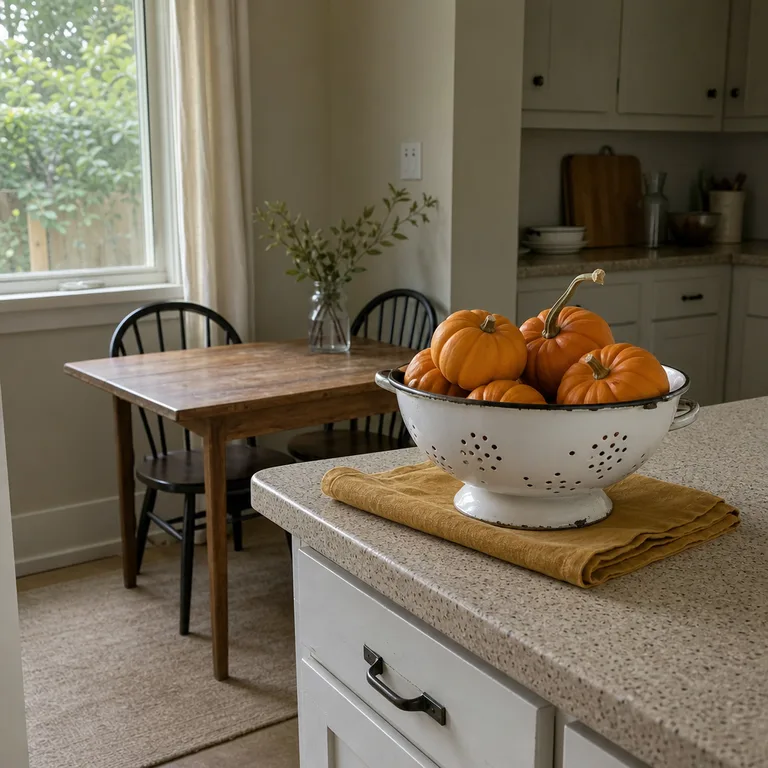
The openings in the colander add texture while keeping the pumpkins from feeling like one solid block of orange. It is also easy to carry away by the handles if the table needs room for serving bowls or a family-style meal.
Worth knowing: Check the underside of metal colanders for rough edges that could scratch a wood or laminate tabletop; a napkin beneath it helps protect the surface.
7.Make a Leafy Centerpiece in a Casserole Dish
Use a shallow oval casserole dish as a long base for clipped leafy branches, faux foliage, and a few small glass votives. Keep stems trimmed below the rim so the arrangement stays low enough for conversation.
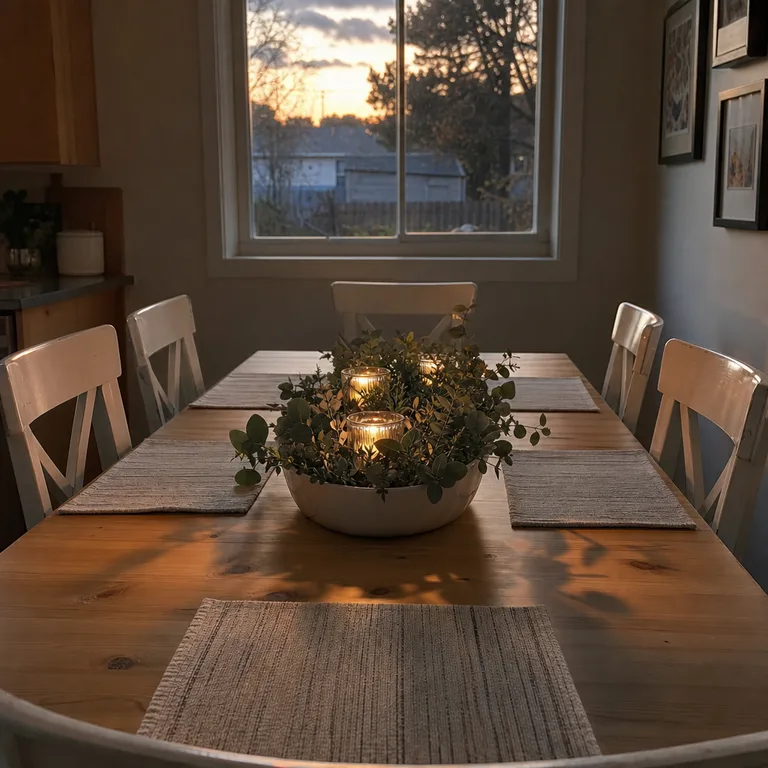
The long shape fits the center of a rectangular table and leaves place settings clear around the sides. A casserole dish is sturdy, easy to wash, and shallow enough that it does not dominate a compact table.
For fresh branches, use only non-irritating, non-toxic varieties if children or pets will be nearby. Faux foliage is often simpler for a meal that needs to be set up well ahead of time.
Worth knowing: Fresh cut greenery can shed, wilt, or leave moisture on the dish, so line the base discreetly or assemble it shortly before guests arrive.
8.Stack Plates and Napkins Into a Harvest Pedestal
Stack a dinner plate, a smaller salad plate, and a folded napkin, then set a small bowl of pears or clementines on top. Use dishes that coordinate with the place settings so the centerpiece feels connected to the rest of the table.
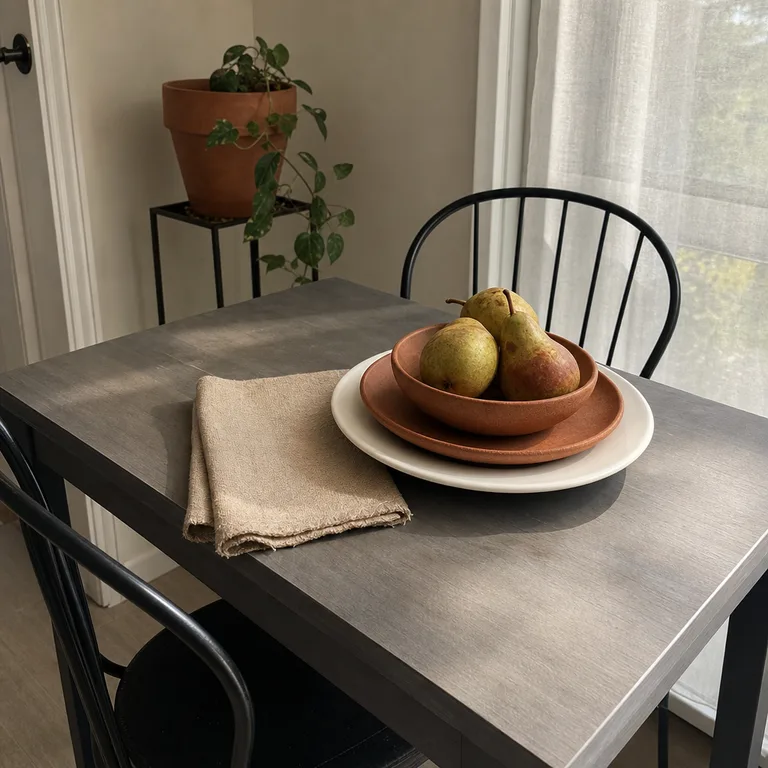
This creates a little height without becoming a tall centerpiece, and every layer is an item already suited to the table. Choose a shallow bowl and a modest amount of fruit so the stack stays stable and does not crowd a compact tabletop.
Worth knowing: This arrangement uses dishes that may be needed for extra guests or dessert, so it is less convenient for a larger meal with limited dinnerware.
Related: 12 Budget Dining Table Styling Ideas for Everyday Meals
9.Set a Bread Basket Inside a Large Bowl
Place a linen-lined bread basket inside a wide serving bowl, then tuck a few rosemary sprigs or clean leaves around the basket. The centerpiece becomes part of the meal instead of taking up space solely for decoration.
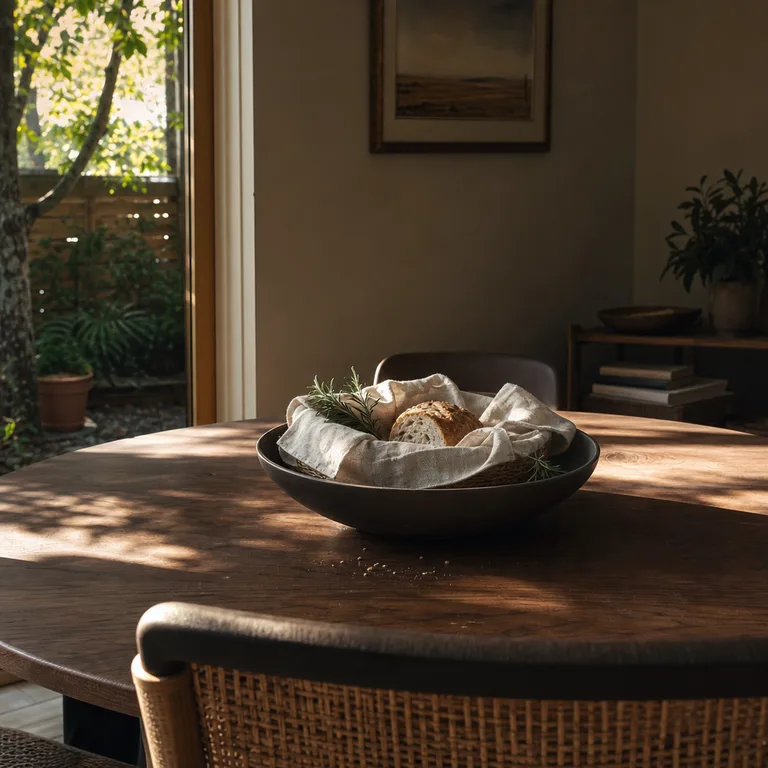
A large bowl catches crumbs and gives a simple bread basket more presence on the table. It also makes passing and clearing easier: lift the basket out for serving, then use the bowl for salad, fruit, or another dish later in the meal.
Worth knowing: Keep real herbs away from bread if guests have allergies or strong food sensitivities, and use only clean, food-safe greenery around anything edible.
10.Gather Small Vases on a Placemat
Cluster two or three short bud vases on a round woven placemat, using clipped branches, dried seed heads, or a few grocery-store stems. Keep the vase openings and stems below seated eye level.
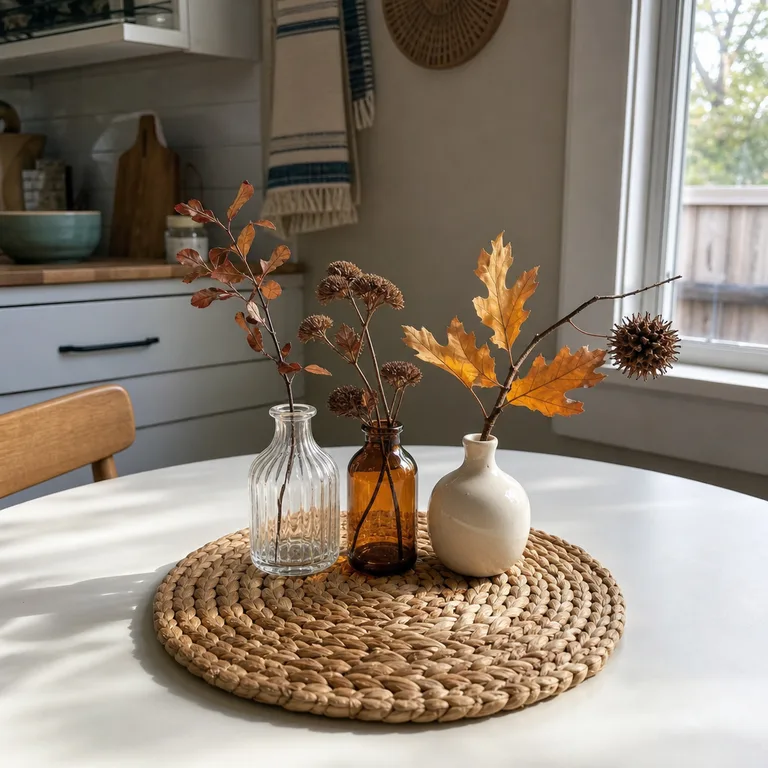
The placemat visually joins mismatched vases into one centerpiece, so there is no need for a matched set. Because each vase is small, the group can be lifted away in a few quick trips when dinner begins.
Use a tray instead of a placemat if the table will be moved or bumped often. For rented homes or delicate tables, place a protective layer beneath any vase that could sweat from water.
Worth knowing: Several small vases require more careful handling than one bowl, especially if they contain water and the table is crowded.
About the author
Dana Ruiz, Senior editor
Dana writes about small-space living, storage and low-cost decorating.
Keep reading
10 Entryway Mirror Styling Ideas Around Furniture You Already Own
September 30, 2026
10 Large Wall Art Ideas That Start With Affordable Materials
September 28, 2026
12 Bathroom Wall Decor Ideas for Awkward Blank Spaces
September 28, 2026
10 Gift Wrap Storage Ideas for Homes Without a Craft Room
September 30, 2026