12 Bookshelf Styling Ideas Using Things You Already Own
A crowded bookshelf can look calmer and more deliberate by changing how existing books, baskets, framed pieces, and everyday objects are grouped. These ideas keep useful storage in place while creating breathing room, with a simple reset routine to prevent shelves from slowly filling up again.
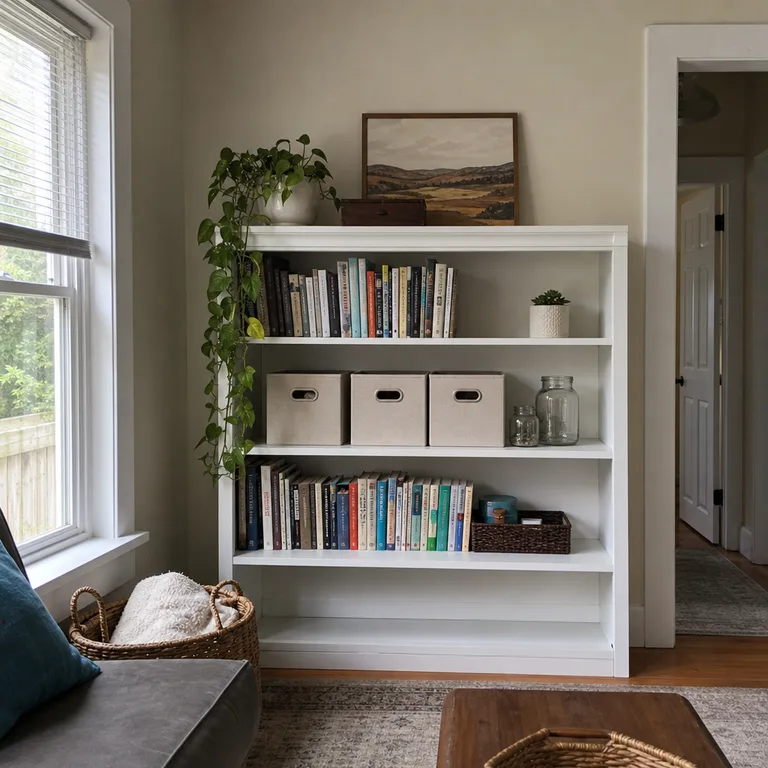
1.Build Book Blocks by Color or Cover Tone
Pull out a few groups of books with related cover tones, such as dark covers, pale paperbacks, or a muted color family. Keep the arrangement loose rather than forcing every book into a strict rainbow, which can make finding titles harder.
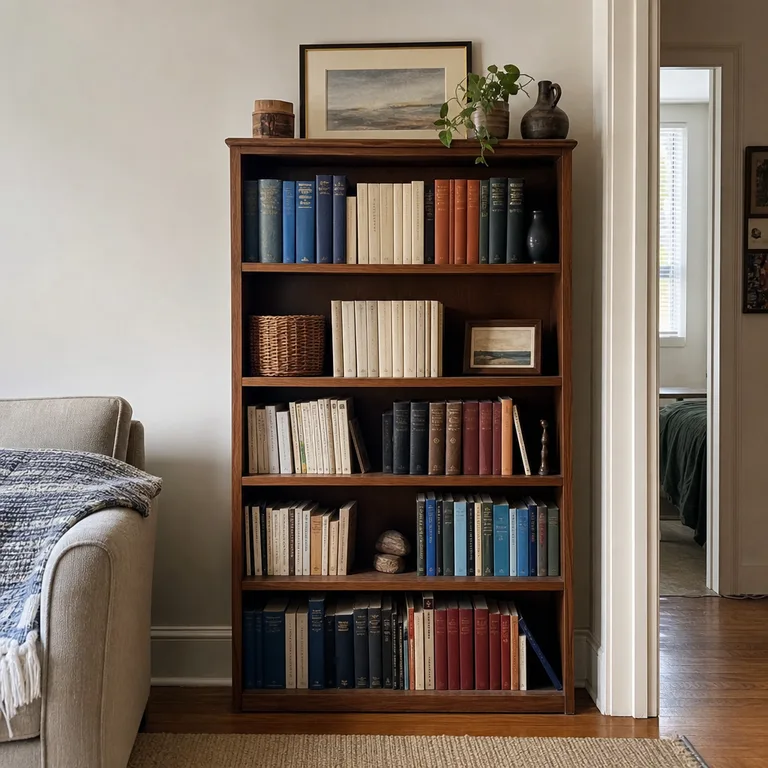
Use this treatment on only part of the bookcase, then leave frequently read books in a practical order nearby. Repeating a few calm color blocks gives a mixed collection more rhythm without sacrificing the shelves’ main purpose.
Worth knowing: Color grouping is less useful for cookbooks, reference books, or any section that needs to stay easy to search.
2.Turn Some Books Horizontal for Useful Display Platforms
Lay a small stack of sturdy books flat and use it as a low platform for one object already on hand, such as a bowl, small plant, or framed photo. A horizontal stack breaks up long upright rows and gives an ordinary item a clearer place.
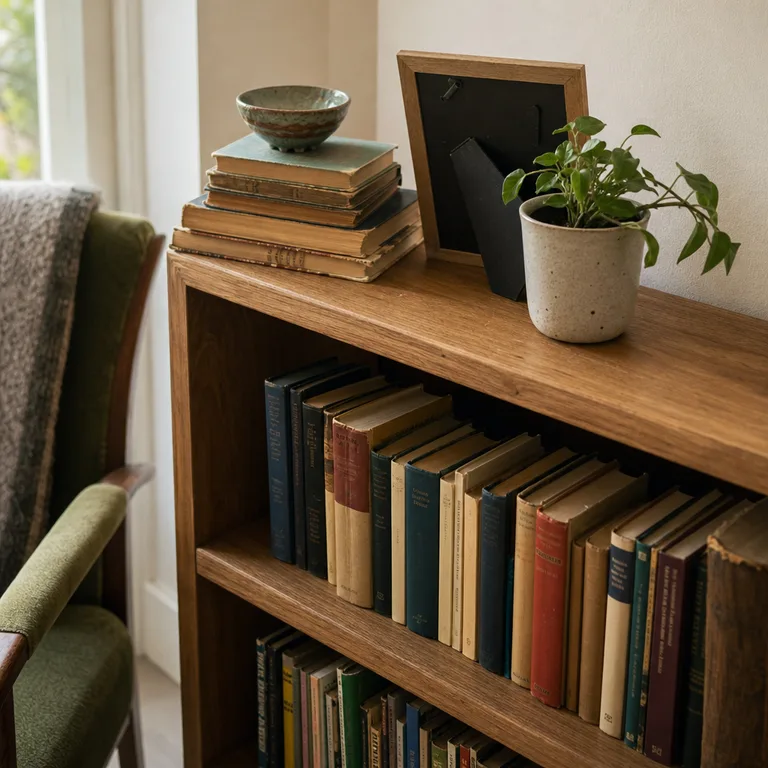
Keep most books vertical so the shelf still holds plenty. Choose books that can handle the weight, and keep the stack stable rather than making it tall or crowded.
Worth knowing: Horizontal stacks take up more shelf width and make individual books less convenient to pull out.
3.Give One Object Its Own Empty Space
Choose one useful or meaningful item, such as a souvenir, clock, bowl, or favorite mug, and clear a small area around it. The empty space helps the object read as a focal point instead of disappearing into a cluster of unrelated things.
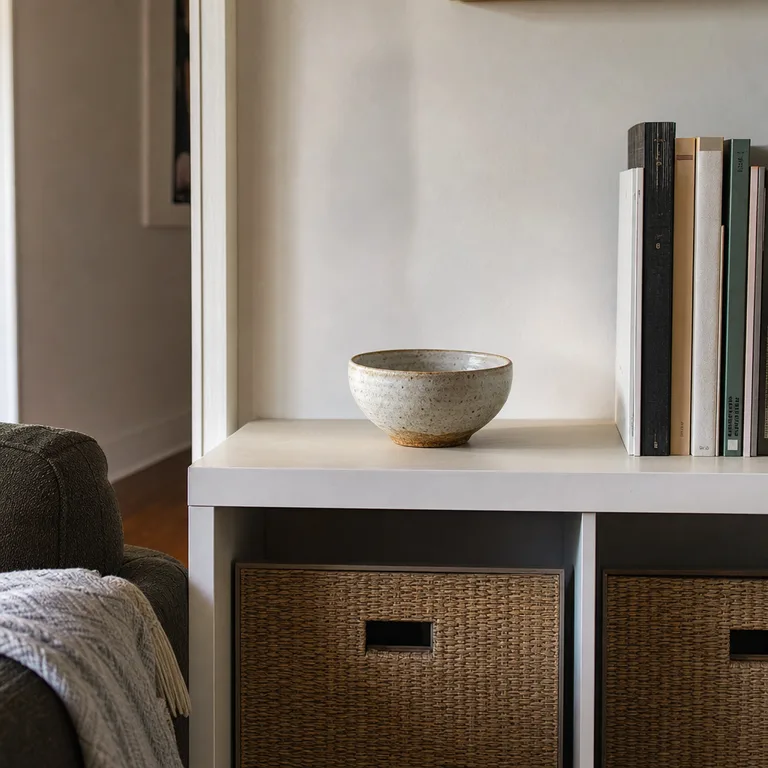
Gather books at one side of the shelf and let the selected piece stand alone or nearly alone. This costs nothing and works especially well with objects that have an interesting shape or a personal connection.
Worth knowing: This approach needs some spare shelf capacity, so it may not suit a bookcase that is full of books that must stay accessible.
4.Use Baskets to Hide Loose Shelf Clutter
Move visually busy items such as remotes, chargers, puzzle pieces, pet supplies, or loose stationery into baskets already around the home. Lower shelves are often the best place for them because they keep daily-use items within reach without putting clutter at eye level.
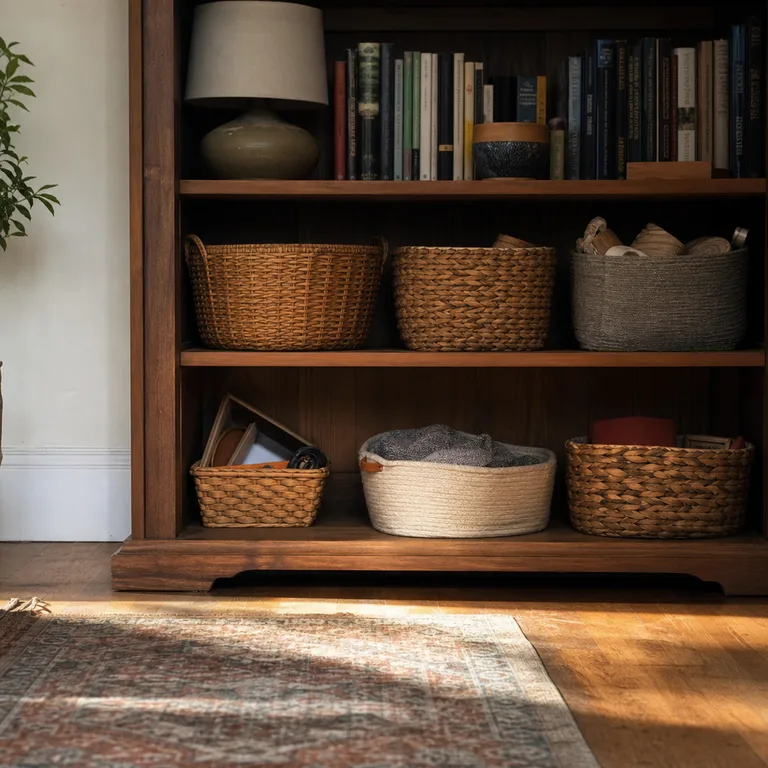
Use containers that fit the shelf securely and do not make it hard to pull items out. A mix of open display above and concealed storage below creates a more settled look while keeping the bookcase useful.
Worth knowing: Baskets can become catch-alls, so they need occasional sorting to stay useful.
5.Create a Repeat Pattern With Matching-Looking Containers
Group similar jars, boxes, tins, or baskets together instead of scattering them across the room. They do not have to be identical; containers with related materials, colors, or shapes can still read as one group.
Try a pair at either end of a shelf or a short row beside books. The repeated forms make plain storage look more intentional and can corral small items that would otherwise spread across the shelves.
Worth knowing: Too many containers in one line can make the shelf feel like a storage unit rather than a bookcase.
6.Lean Small Frames Behind the Books
Place a small existing frame at the back of a shelf, then set a short group of books partly in front of it. This adds height and layering without another wall hole or a separate display surface.
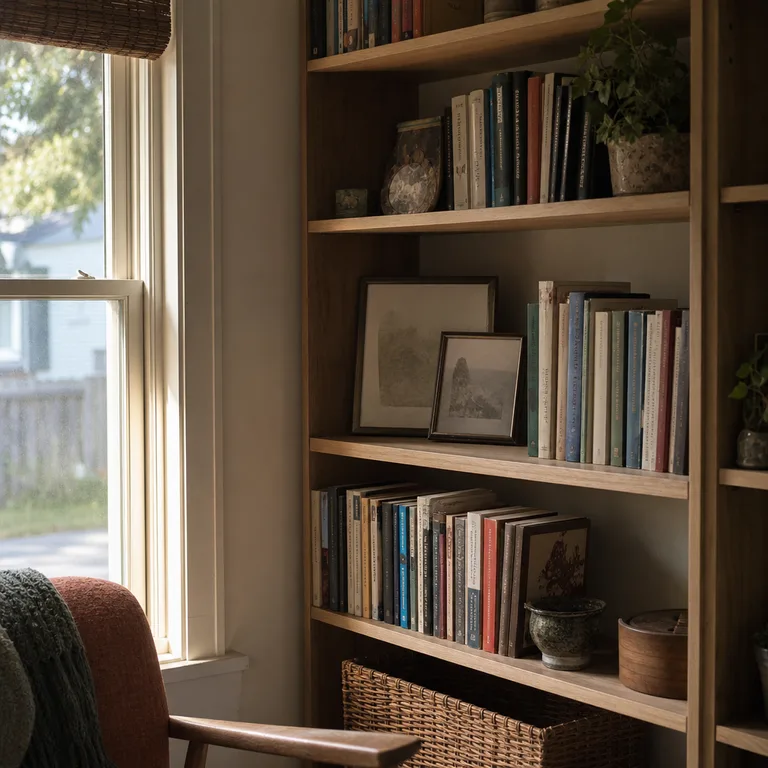
Use simple family photos, postcards, children’s artwork, or old calendar images that deserve to be seen. Keep frames on steadier shelves and away from edges where children, pets, or a passing hand could knock them over.
Worth knowing: Leaning frames can collect dust and may be impractical on shelves that are frequently bumped or used by young children.
7.Make a Shelf for the Books You Are Reading Now
Reserve one easy-to-reach section for current reads, library books, magazines, and books waiting to be returned. Giving active reading material a designated home stops it from landing in uneven piles all over the bookcase.
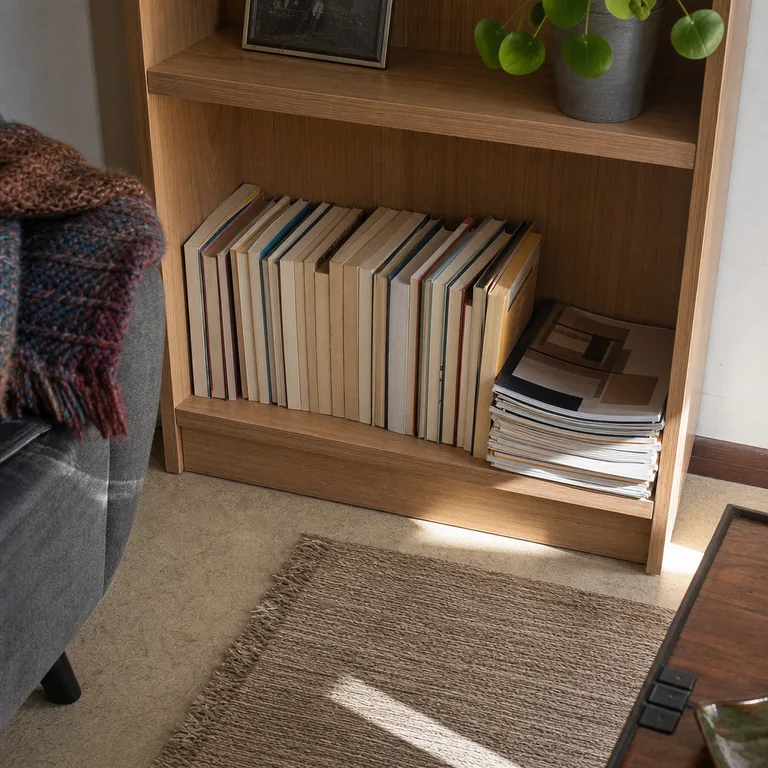
Keep this section simple: a short upright row, a small horizontal stack, or a basket for magazines is enough. It also makes the rest of the shelves easier to style because temporary reading clutter is contained in one place.
Worth knowing: This shelf will look less polished during busy weeks, because it is meant to be used rather than kept perfectly arranged.
8.Use Large Books as Backdrops for Smaller Things
On a deep shelf, stand oversized art books, cookbooks, or reference books toward the back and place one smaller object in front. The tall book spines create a backdrop that gives a plain clock, cup, or small keepsake more presence.
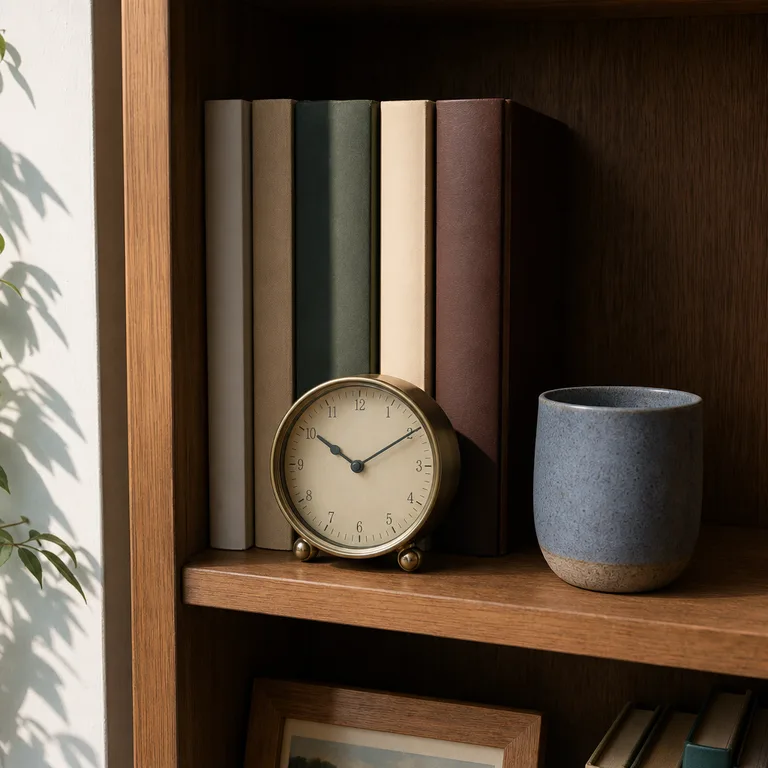
This arrangement works best when the larger books can still be removed without disturbing everything in front. Keep the front object low and stable, especially on shelves that get used often.
Worth knowing: It is not a good fit for shallow shelves or for large books that are used frequently.
9.Keep the Heaviest Books on Lower Shelves
Move dense hardcovers, albums, and heavy reference books toward the lower part of the bookcase. This makes the piece look grounded and reduces strain on lightweight shelves.
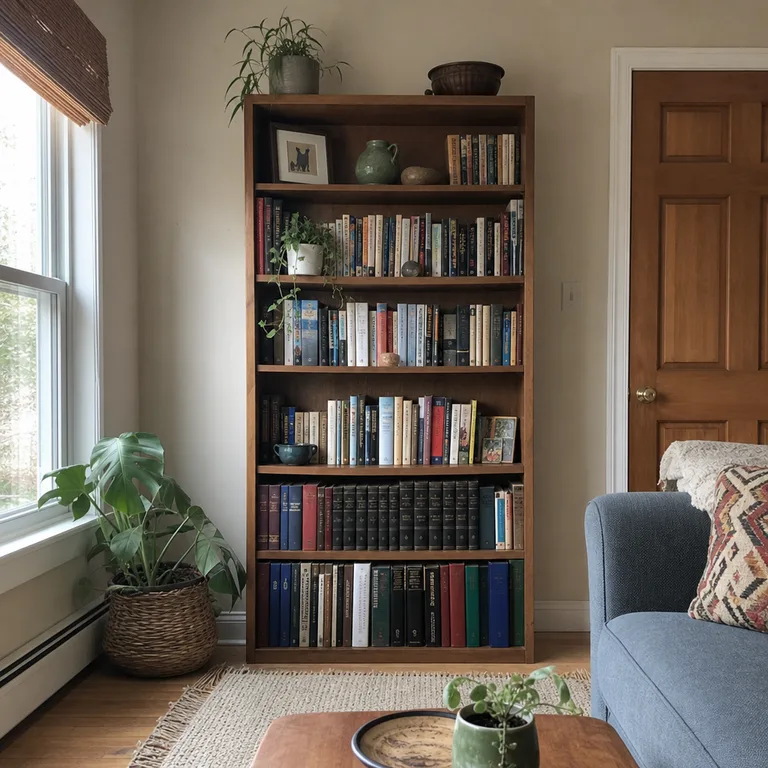
Use upper shelves for paperbacks, small objects, and lighter baskets. Tall freestanding bookcases should be anchored to wall studs or secured with suitable anti-tip hardware, particularly in homes with children or pets.
Worth knowing: Rearranging heavy books can be a tiring job, and very full lower shelves may still need weight limits checked.
10.Leave One Shelf Mostly Open
Clear one shelf down to a short row of books and one object, lamp, or basket. The open area gives the eye a resting place and makes fuller shelves around it look less chaotic.
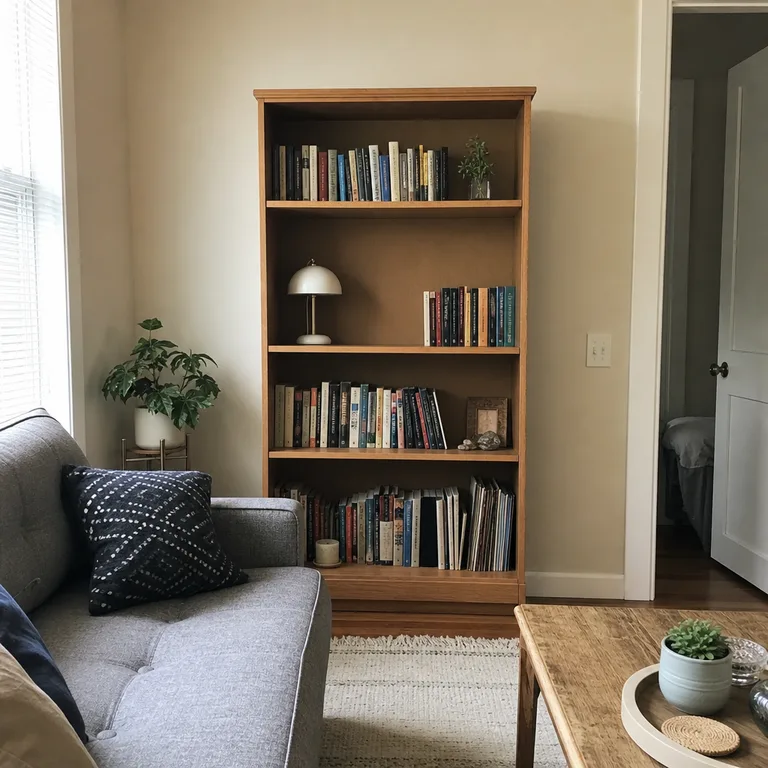
Choose a middle or upper shelf that is visible when entering the room. Store the displaced items in a basket, cabinet, or another practical zone rather than moving clutter to a nearby surface.
Worth knowing: A mostly open shelf only works if less attractive storage has a realistic home elsewhere.
11.Style a Small Collection in One Place
Gather related pieces already scattered around the room, such as small pottery, travel mementos, wooden objects, or brass-colored items. A grouped collection looks purposeful because the shared material or story becomes clear.
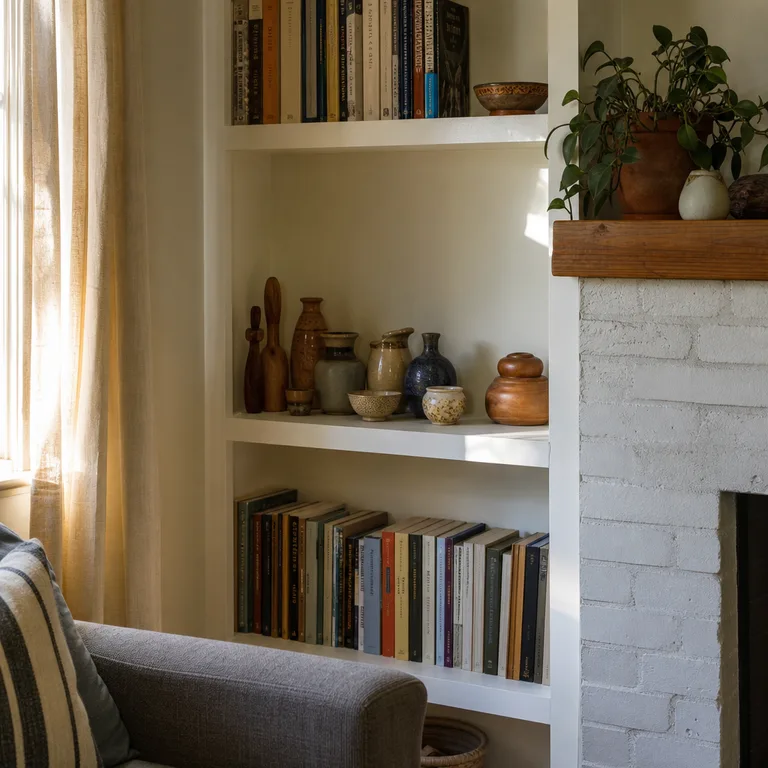
Limit the display to the pieces that fit comfortably without overlapping. Vary their heights slightly, then leave some bare shelf around the group so it feels collected rather than crammed.
Worth knowing: A collection can quickly become cluttered if every sentimental object is added at once.
Related: 12 Thrifted Decor Ideas That Make Mismatched Finds Feel Collected
12.Reset the Shelves During a Regular Tidy-Up
Include the bookcase in a regular room reset: return loose items to baskets, stand up leaning books, remove stray papers, and put objects back in their chosen zones. Small corrections prevent the shelves from needing a long, frustrating overhaul later.
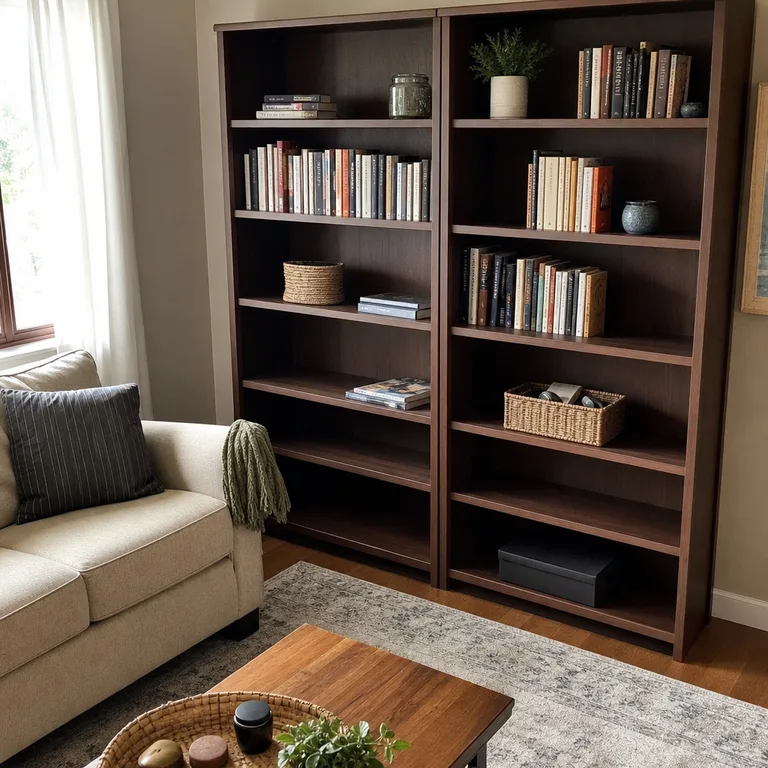
Use the reset to notice what no longer belongs there, such as outdated magazines or items waiting to be repaired or returned. Keep heavier items low, avoid overloading shelves, and check that tall freestanding furniture remains securely anchored.
Worth knowing: A reset maintains the system but cannot solve a storage shortage if the room has more belongings than the shelves can hold.
About the author
Dana Ruiz, Senior editor
Dana writes about small-space living, storage and low-cost decorating.
Keep reading
10 Rattan Accent Ideas That Add Warmth Without a Full Room Makeover
September 20, 2026
12 Playful Striped Decor Ideas You Can Try on a Budget
September 20, 2026
12 Budget Dining Table Styling Ideas for Everyday Meals
September 20, 2026
10 Budget Art Deco Decor Ideas for an Ordinary Living Room
September 19, 2026